 Blaine Siding
 Cedar Siding Isn't a Bad Product — It's a High-Maintenance One
We get asked about cedar siding often enough that it's worth explaining plainly why we don't install it. Cedar is a real, respected building material. It smells good, it ages into a silvery patina that a lot of people love, and it's been used on homes in the Pacific Northwest for well over a century. None of that is in dispute.
What's in dispute is whether cedar makes sense as an exterior cladding choice for a home sitting a few miles from Semiahmoo Bay, inside Whatcom County's wet, marine-influenced weather pattern. We install James Hardie fiber cement on every siding job we take on, and cedar is one of the products we've made a deliberate decision to leave off that list. Here's the honest reasoning, not a sales pitch against a competitor's material.
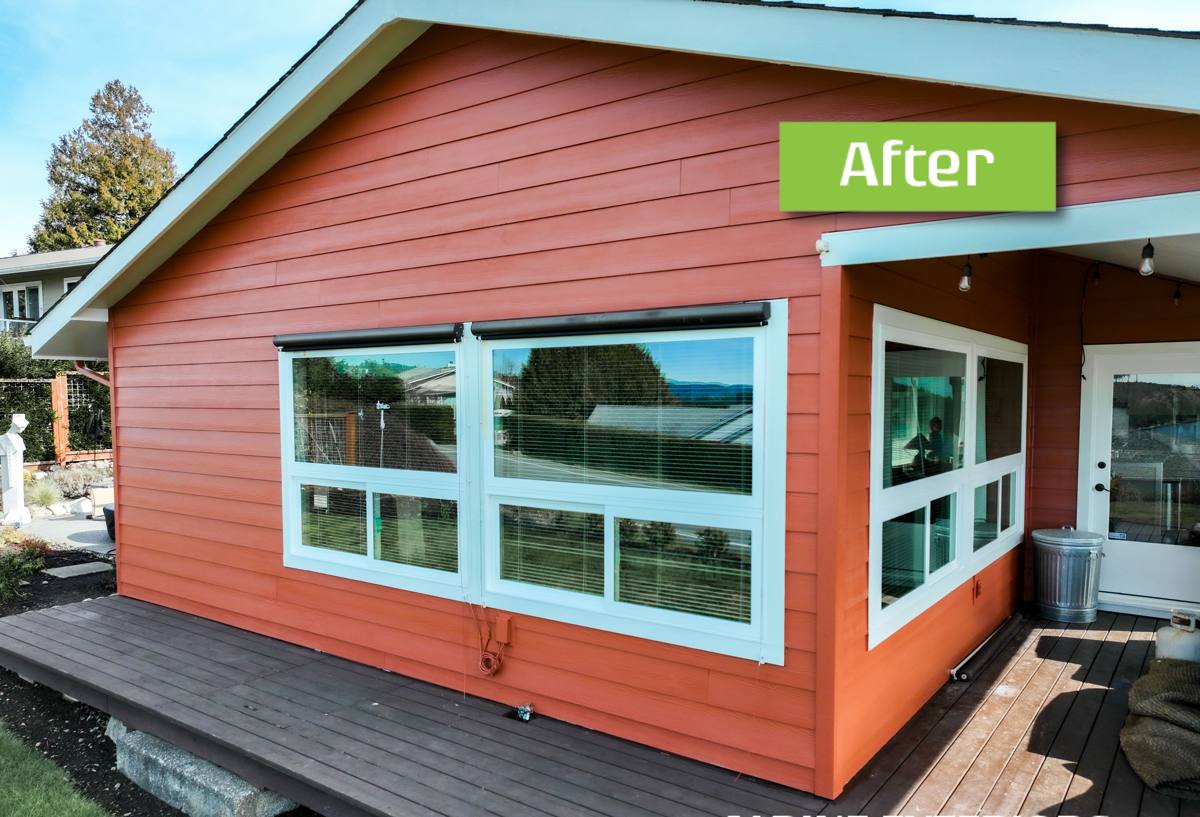
What Cedar Gets Right
Before we get into why we don't install it, it's worth giving credit where it's due:
- Natural appearance — no manufactured product perfectly replicates real wood grain, and cedar is real wood.
- Workability — it cuts, fits, and fastens easily on site, which is part of why it's been a Northwest staple for so long.
- Insulating value — wood has decent natural R-value compared to some claddings.
- Renewable material — cedar is a managed, replantable resource, which matters to some homeowners.
If cedar siding lived in a dry climate, or if homeowners were willing to commit to an aggressive, ongoing maintenance schedule indefinitely, we'd have less to say here. The problem is what happens when you put a wood product on a home in Blaine and then live a normal life — meaning nobody is climbing a ladder every spring to inspect every board.
Blaine's Climate Is Genuinely Hard on Wood Siding
This isn't generic weather talk — it's specific to where you live. Blaine sits at the northwest corner of Washington, right on Boundary Bay and Semiahmoo Bay, which means three things work against wood siding at the same time:
Salt Air
Proximity to Puget Sound and the Salish Sea means airborne salt is a constant, low-level presence on homes throughout Whatcom County's coastal areas. Salt accelerates the breakdown of wood fibers and finishes, and it corrodes fasteners faster than they'd wear inland. A nail or staple that starts to rust under a cedar board isn't a cosmetic problem — it's a structural one, because a failed fastener lets a board move, crack, and let water in.
Driving Rain
Blaine gets a lot of rain, and a meaningful share of it comes in sideways off the water during winter storms. Driving rain doesn't just wet the face of a board — it drives moisture into laps, joints, and end grain, which is exactly where cedar is most vulnerable. Vertical or horizontal, the physics are the same: water finds the seams.
A Long Moss and Algae Season
Because the Pacific Northwest stays cool and damp for so much of the year, north-facing and shaded wall sections rarely get a real chance to dry out between rain events. That's the exact condition moss, algae, and mildew need to take hold. Once organic growth establishes itself on cedar, it holds moisture against the wood continuously, which speeds up rot from the surface inward.
None of this means cedar "fails" on day one. It means the clock starts ticking the moment it's installed, and the maintenance burden required to keep ahead of that clock is significant — and easy to underestimate when you're standing in a showroom looking at a sample board.
The Maintenance Schedule Nobody Mentions at the Estimate
Properly maintained cedar siding needs real, recurring work — not a one-time seal-and-forget:
| Task | Typical Frequency | Why It Matters |
|---|---|---|
| Re-stain or reseal | Every 3–5 years (often 2–3 in coastal exposure) | UV and moisture break down the finish; bare wood absorbs water fast |
| Caulk and joint inspection | Annually | Movement and shrinkage open gaps that let water behind the boards |
| Moss and algae treatment | Annually, more on shaded walls | Organic growth traps moisture against the wood |
| Fastener check | Every few years | Corroding or backed-out fasteners let boards cup and crack |
| Full repaint (if painted rather than stained) | Every 5–7 years | Paint film failure on wood leads to peeling and moisture entry |
Add that up over 20 years and cedar isn't a "buy it and forget it" exterior — it's an exterior that asks for ongoing attention and ongoing spend, in a climate that punishes gaps in that schedule harder than most.
How Cedar Actually Fails
When cedar siding does fail, it's rarely all at once. It's a slow, uneven process:
Checking and Cupping
Wood expands and contracts with moisture cycles. Repeated wet-dry swings — which Blaine's climate delivers constantly — cause boards to check (surface cracking) and cup (warp across the width). Once a board cups, water pools instead of shedding, which speeds up the next stage of damage.
End-Grain Rot
Cut ends absorb water far faster than the face of a board. Every butt joint, every corner cut, every window and door trim intersection is a spot where end grain is exposed unless it's carefully sealed and re-sealed over the life of the siding. This is one of the most common places we see rot start on older cedar homes in this area.
Fastener Corrosion
In a salt-influenced environment, even coated fasteners can corrode faster than inland installations. A corroding fastener loses holding strength, and a loose board is a board that flexes, cracks its finish, and lets water behind the siding.
Hidden Moisture Behind the Cladding
The most expensive cedar failures aren't the boards you can see — they're the sheathing and framing behind boards that have been quietly letting moisture through gaps and cracks for years. By the time staining shows up on interior drywall, the repair is no longer a siding job.
Fire and Insurance Considerations
Wood siding is combustible. That's not a knock on cedar specifically — it's true of any wood cladding — but it's a real factor for homeowners to weigh, and it's part of why some insurers price wildland-urban interface and combustible-exterior homes differently. Whatcom County isn't the dry wildfire country east of the Cascades, but combustibility is still a legitimate line item when you're comparing exterior materials over the long haul, not just an aesthetic preference.
Why We Install James Hardie Instead
We standardized on James Hardie fiber cement because it addresses the specific failure points cedar struggles with in this climate:
- Non-combustible core — fiber cement doesn't feed a fire the way wood cladding can.
- Engineered moisture resistance — Hardie's HZ5 product line is specifically engineered for climates with freeze-thaw cycles and sustained moisture exposure, which describes Whatcom County's weather well.
- Factory-applied ColorPlus finish — the finish is baked on under controlled conditions, not brushed on in the field, and it's backed by its own finish warranty separate from the substrate.
- Dimensionally stable — fiber cement doesn't swell, cup, or check the way wood does through wet-dry cycles.
- Strong transferable warranty — coverage that's meaningful to a future buyer, not just the original homeowner.
Hardie isn't maintenance-free — no exterior cladding truly is — but the maintenance it asks for is periodic washing and the occasional caulk check, not a recurring stain-and-reseal cycle fighting against salt air and driving rain.
Questions to Ask Before You Choose Cedar
If you're still weighing cedar against other options, these are the questions worth answering honestly before you commit:
- Are you willing to budget for re-staining or resealing every 3–5 years, indefinitely?
- Does your home have shaded, north-facing walls that will stay damp longer after rain?
- How close is your property to the water, and how exposed is it to salt-laden wind?
- Do you plan to sell within 10–15 years, and how will a buyer's inspector view the siding's maintenance history?
- Have you priced homeowners insurance with a combustible exterior versus a non-combustible one?
- Who is actually going to do the annual inspection and upkeep — you, or a contractor you'll need to hire repeatedly?
Our Bottom Line
Cedar siding can look genuinely beautiful, and there are homes and climates where it makes more sense than it does here. But we install exteriors that are meant to be lived with, not managed. In a place with Blaine's salt air, driving rain, and long moss season, cedar asks a homeowner to stay on top of a maintenance schedule most people don't realize they're signing up for until years two or three, when the first signs of checking, graying, or soft spots show up. James Hardie fiber cement gives you the durability and long-term value we're comfortable standing behind on every job we take on.
If you're weighing cedar, wood alternatives, or a full siding replacement and want a straight answer about what will actually hold up on your home, we're happy to take a look and walk you through it. Reach out for a free, no-pressure estimate — no obligation, just an honest assessment.