 Blaine Siding
 A Small Peninsula With a Tough Exterior Climate
Point Roberts sits on its own peninsula at the southern tip of the Tsawwassen headland, cut off from the rest of Whatcom County and the continental United States by water and by the Canadian border. That geography is part of what makes it a special place to live, and it's also exactly why homes here take a beating that inland Whatcom County properties never see. Being surrounded on three sides by the Strait of Georgia means near-constant exposure to salt-laden air, wind-driven rain coming straight off the water, and the kind of persistent damp shade that keeps moss and algae established on exterior surfaces almost year-round.
None of that is a reason to avoid building or maintaining a home here — but it is a reason to think carefully about what materials and installation methods go on the outside of it. We work throughout the Blaine and Point Roberts area and see, up close, which exterior systems hold up under this specific combination of stressors and which ones start showing problems within a handful of years.
What Salt Air, Rain, and Moss Actually Do to a House
Salt Air
Airborne salt is corrosive and hygroscopic — it pulls moisture out of the air and holds it against whatever surface it lands on. Over time that accelerates corrosion of exposed fasteners and metal trim, degrades paint and factory finishes faster than inland exposure would, and speeds up the breakdown of materials that aren't formulated to handle it.
Driving Rain
Point Roberts gets rain that doesn't just fall straight down — wind off the strait pushes it sideways into wall assemblies, under trim, and into any gap in flashing or siding laps. Products or installations that rely on caulk and paint film alone to keep water out tend to fail here faster than they would in a more sheltered inland lot.
Moss and Sustained Dampness
Shaded, north-facing walls and roof slopes in this climate stay damp for long stretches, which is exactly what moss and algae need to get established. Once organic growth takes hold on a roof or siding surface, it holds moisture against the material underneath it, which compounds whatever the salt air and rain are already doing.
Siding That's Actually Engineered for This
We install only James Hardie fiber cement siding — we don't offer LP SmartSide, vinyl, Cemplank, Allura, primed spruce, or cedar. That's a deliberate standard, not a lack of options. In a climate like Point Roberts', the differences between these materials aren't cosmetic.
| Material | Behavior in Salt Air & Driving Rain | Long-Term Maintenance |
|---|---|---|
| James Hardie fiber cement | Non-combustible, engineered moisture resistance, factory ColorPlus finish holds color and resists the finish breakdown that salt air accelerates | Low — occasional wash, no repainting for years with ColorPlus |
| Vinyl siding | Can warp, fade, and become brittle faster under UV and temperature swings; seams are a common water entry point in wind-driven rain | Low upfront, but limited repair options and shorter practical lifespan in exposed coastal spots |
| LP SmartSide (engineered wood) | Wood-based core is vulnerable if water gets past the finish; edge and cut-end sealing is critical and easy to miss in the field | Moderate to high — finish and caulk joints need regular inspection |
| Cedar / primed spruce | Natural wood absorbs moisture, moves with humidity, and is a food source for the same organisms that cause moss and rot in this climate | High — regular refinishing, sealing, and rot monitoring required |
Hardie's HZ5 product line is formulated specifically for climates with higher moisture exposure, which fits Point Roberts better than the standard HZ10 line does for a lot of interior regions. It's non-combustible, doesn't swell or rot like wood-based products, and the factory-applied ColorPlus finish is baked on under controlled conditions rather than field-painted — which matters a great deal when the air itself is working against paint adhesion. It also carries a strong transferable warranty, which is worth something on a property that may eventually change hands.
Roofing for a Coastal, Moss-Prone Exposure
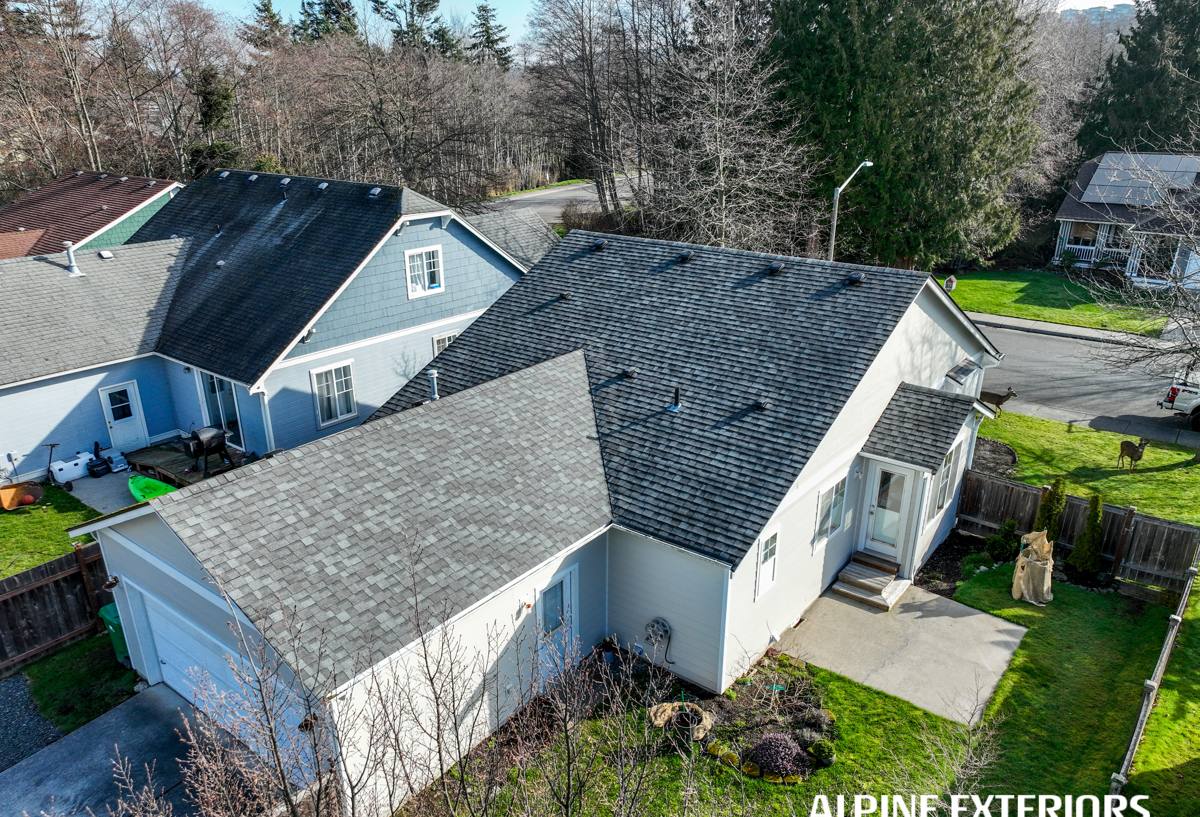
Roofs in Point Roberts face the same combination of salt exposure and sustained dampness as siding does, with the added factor of direct sun and wind on top. Flashing details around chimneys, vents, and valleys matter more here than in drier parts of the state, because a marginal flashing job that might survive for years inland can fail much sooner under this much wind-driven water. We pay close attention to underlayment quality, proper ventilation to reduce trapped moisture in the attic, and flashing that's built to shed water rather than rely on sealant to hold it back. Moss control on the roof deck itself — through material choice, proper ventilation, and periodic cleaning — is part of protecting the investment, not an afterthought.
Windows: The First Line Against Wind-Driven Rain
Windows are one of the most common places water finds its way into a coastal home, and it's rarely the glass itself — it's the flashing and sealing detail around the frame. In a location that gets rain pushed sideways by wind off the water, proper window flashing (integrated correctly with the siding water management system) is not optional. We install windows with attention to how they tie into the surrounding wall assembly, not just how they look once they're in, because a window that's beautiful but poorly flashed will cause problems inside the wall long before anyone notices from outside.
Decks: Built for Moisture, Not Just Looks
Outdoor living spaces in Point Roberts face the same moss and moisture pressure as the rest of the exterior. Framing, fastener choice, and ledger board flashing all matter more here, since trapped moisture under a poorly built deck is a slow, hidden problem until it isn't. We build decking systems with drainage and material choices suited to a damp coastal climate, so the deck holds up to the same conditions the rest of the house has to handle.
Why a Local Crew Matters Here Specifically
Point Roberts is genuinely unusual to work in: it's part of Whatcom County and the state of Washington, but it's only reachable by land through Canada, or by water. That has real practical consequences for exterior contracting — material logistics, scheduling, and crew coordination all take more planning than a typical job across town in Blaine. A contractor unfamiliar with the area can underestimate lead times or show up without the right materials staged in advance. We factor that logistics reality into scheduling from the start, rather than treating Point Roberts like just another stop on the route.
Local experience also means we've actually seen how James Hardie siding, asphalt and metal roofing, and modern windows perform on Point Roberts homes over years, not just in a spec sheet. That's the kind of knowledge that only comes from working in the area repeatedly.
A Simple Seasonal Exterior Checklist for Point Roberts Homes
- Check north-facing and shaded siding and roof sections for moss or algae buildup at least once a year
- Inspect caulking and trim joints around windows and doors for cracking or gaps after winter storms
- Look at roof flashing around chimneys, vents, and valleys for lifted or corroded sections
- Rinse salt residue off siding and windows periodically, especially after windy weather off the water
- Check deck ledger boards and fasteners for corrosion or softness where moisture tends to collect
- Walk the foundation perimeter after heavy rain to confirm water is draining away from the house, not pooling against it
What to Expect When You Work With Us
We handle siding, roofing, windows, and decks as connected parts of one exterior system, which matters in a climate where water management is the whole game. On siding specifically, we install James Hardie fiber cement exclusively — we won't put vinyl, LP SmartSide, or wood siding on a home, because we've made a professional judgment that Hardie's moisture behavior, non-combustible composition, and factory finish are the better long-term fit for what Point Roberts weather does to a house.
If you're planning exterior work on a Point Roberts property — whether it's a full siding replacement, a roof that's showing its age, window upgrades, or a deck rebuild — we're happy to come take a look and talk through what actually makes sense for your specific home and its exposure. There's no cost and no pressure to get a straight answer; fill out the form below to request a free estimate.