 Blaine Siding
 Why Birch Bay Homes Wear Out Faster Than Homes Inland
Birch Bay sits right on the water along the Strait of Georgia, and that location cuts both ways. It's part of what makes the area a great place to live, and it's also what puts extra stress on the outside of every home here. Salt-laden air moves off the water and settles on siding, trim, and fasteners day after day. Add Whatcom County's long, wet winters and the wind that comes with an open shoreline, and you have a climate that is genuinely harder on exterior materials than what a home a few miles inland deals with.
None of this means a Birch Bay home is destined for problems. It means the materials and installation details matter more here than they do elsewhere. We've worked on homes throughout the Blaine and Birch Bay area long enough to know which failure patterns show up first on waterfront and near-waterfront properties, and we build our approach around avoiding them.
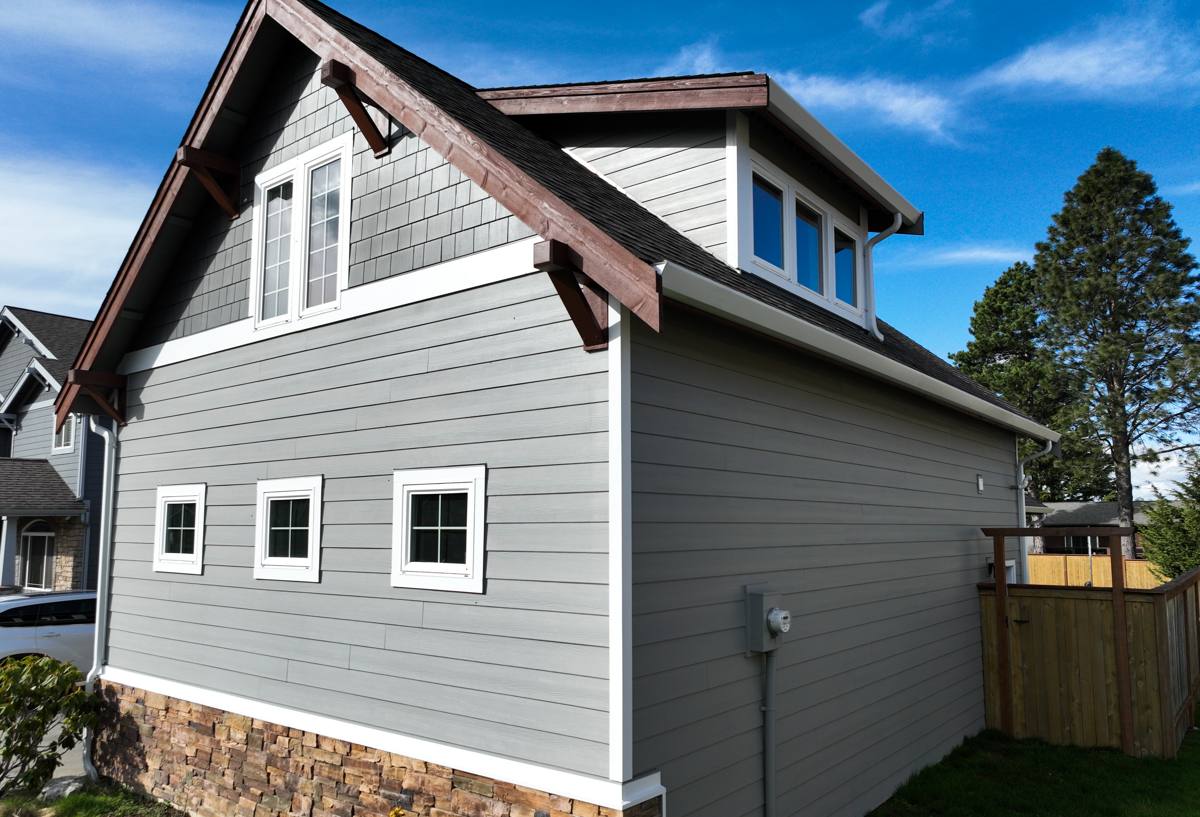
What Salt Air Actually Does to a House
Corrosion of Fasteners and Metal Components
Salt air accelerates corrosion of exposed metal — nail heads, flashing, hose bibs, light fixtures, and any hardware that isn't rated for a marine-adjacent environment. When siding fasteners corrode, they can streak the siding with rust stains and eventually lose their holding strength. This is one of the most common issues we see on older homes near the water that were built or re-sided with standard-grade fasteners.
Degradation of Paint and Finish
Salt crystals are abrasive at a microscopic level, and combined with UV exposure off the open water, they break down painted finishes faster than in a typical inland neighborhood. A paint job that might hold up ten or twelve years elsewhere often needs attention sooner in Birch Bay.
Moisture Intrusion Behind the Cladding
Wind-driven rain off the water pushes moisture into seams, laps, and penetrations that would stay dry in calmer conditions. Once moisture gets behind siding, it doesn't leave quickly in a climate where humidity stays high most of the year. That's where rot, mold, and structural damage start — and it's almost always a housewrap, flashing, or installation detail failure, not just "old siding."
Moss Season and What It Means for Siding
Whatcom County's wet season runs long, and Birch Bay's proximity to the water keeps humidity and shade-driven dampness around even longer in some spots. Moss and algae don't just grow on roofs here — they take hold on north-facing siding, in shaded side yards, and anywhere airflow and sun exposure are limited. Organic growth on siding isn't just cosmetic. It holds moisture against the surface, and on materials that aren't dimensionally stable or properly sealed, that sustained dampness is what eventually leads to swelling, delamination, or rot underneath.
The fix isn't a magic material that never grows moss — nothing does, given enough shade and moisture. The fix is a cladding system that stays dimensionally stable and resists moisture absorption even when it stays damp for extended stretches, paired with a finish that can be cleaned without stripping the color or the substrate underneath.
Why We Install Only James Hardie Fiber Cement
We made a standard for this company: James Hardie fiber cement siding, installed to Hardie's specifications, on every job. In a climate like Birch Bay's, that standard isn't a sales pitch — it's a response to what we've seen fail and what holds up.
- Non-combustible material that doesn't rely on paint film integrity to resist moisture the way wood-based products do.
- Dimensionally stable under repeated wet-dry cycling, so it doesn't swell, warp, or cup the way engineered wood products can when sustained moisture gets involved.
- ColorPlus factory-applied finish, baked on under controlled conditions rather than field-applied paint, which holds color and resists the fading and chalking that salt air and UV exposure accelerate.
- HZ5 and HZ10 product engineering built specifically for damp, humid, freeze-prone climates — which is a closer match to Whatcom County's coastal conditions than a generic siding spec.
- A strong transferable warranty backed by a manufacturer that engineers specifically for climate zones like ours, not a one-size-fits-all national spec.
We don't install LP SmartSide, vinyl, Cemplank, Allura, primed spruce, or cedar. Each of those products has legitimate uses in the right setting, and we're happy to talk through the honest trade-offs on any of them if you're comparing options. But for a coastal Whatcom County home taking on salt air, driving rain, and a long moss season every year, we've standardized on the one product system we're confident holds up to spec without surprises five or ten years down the road.
Installation Details That Matter More Here Than Elsewhere
Fiber cement siding is only as good as the installation behind it, and that's doubly true in a coastal environment. The details we hold to on every Birch Bay job include:
| Detail | Why It Matters in Birch Bay |
|---|---|
| Corrosion-resistant fasteners | Standard fasteners corrode faster in salt air, leading to rust streaking and loss of holding power |
| Proper housewrap and flashing integration | Wind-driven rain off the water finds any gap in the water-resistive barrier |
| Correct fastener spacing and placement | Hardie's engineering only performs as tested when installed to spec — over-driving or misplacing fasteners voids warranty protection |
| Ventilated rainscreen where appropriate | Extra airflow behind the cladding helps siding dry out faster in a climate that stays damp for long stretches |
| Sealed and caulked joints at penetrations | Every penetration is a potential entry point for wind-driven moisture |
Roofing, Windows, and Decks in the Same Coastal Conditions
Siding isn't the only part of a Birch Bay home dealing with salt air and moisture. We also handle roofing, windows, and decks, and the same climate logic applies to all of them. Roofing systems need to shed wind-driven rain and resist the same moss growth that shows up on north-facing siding. Windows need flashing and seals that hold up under repeated wet-dry cycling without letting moisture track into the wall assembly. Decks — especially ones with any water view or exposure — take a beating from salt air on fasteners and rail hardware, and from standing moisture in shaded corners.
Handling all four trades under one roof means the flashing, water management, and sequencing between siding, roofing, windows, and decks actually gets coordinated instead of handed off between separate crews who never talk to each other. On a coastal property, that coordination is often the difference between a home that stays dry and one that develops a slow leak nobody catches until there's visible damage.
What to Watch For on a Birch Bay Home
Whether you're evaluating your current siding or just want to know what to keep an eye on, here's a practical checklist for coastal Whatcom County homes:
- Rust streaking below fastener heads or trim — a sign of fastener corrosion
- Persistent moss or algae on north- or shade-facing walls that doesn't clean off easily
- Soft spots, bubbling, or visible swelling at siding seams and butt joints
- Paint that's chalking, peeling, or fading faster than expected for its age
- Gaps or cracked caulking around windows, doors, and other penetrations
- Any musty smell or visible staining on interior walls that back up to exterior siding
None of these are emergencies on their own, but they're worth having a professional look at before they turn into a bigger repair. A siding problem caught early in Birch Bay is usually a caulking or flashing fix. Left alone through another wet season, it can become a sheathing or framing repair.
A Local Crew That Knows This Coastline
Birch Bay isn't generic Pacific Northwest weather — it's coastal Whatcom County weather, with the salt exposure and wind that come from sitting on open water. A crew that mainly works inland jobs doesn't always think about corrosion-resistant fasteners or rainscreen detailing as a default, because they don't need to on most of their projects. We're based in the Blaine area and work this coastline regularly, so those aren't optional upgrades we mention as an upsell — they're just how we build here.
If you're planning a siding replacement, or dealing with roofing, window, or deck issues on a Birch Bay property, we're glad to take a look and talk through what we're seeing in plain terms — no pressure, no inflated scope. Reach out for a free estimate and we'll walk the exterior with you and explain exactly what your home needs.