 Blaine Siding
 Siding Built for Ferndale's Coastal Climate
Ferndale sits in the part of Whatcom County where marine weather off the Salish Sea meets a landscape of open farmland, river bottom, and increasingly dense residential growth. That combination puts a specific kind of stress on exterior siding. Homes here deal with salt-laden air moving in off the water, long stretches of driving rain through the fall and winter, and a moss and mildew season that can run eight months or more if a house doesn't get enough sun and airflow. None of that is unique to any one street or subdivision in Ferndale — it's the baseline condition for exterior materials anywhere in this corner of Washington, and it's exactly what we design every installation around.
We install and repair siding, roofing, windows, and decks for homeowners throughout the Ferndale area, and siding is where we've drawn a hard line on materials. We only install James Hardie fiber cement siding. Not vinyl, not LP SmartSide, not primed wood products, not other fiber cement brands. That's not a marketing position — it's a decision we made after years of watching which products actually hold up against this climate and which ones cause callbacks.
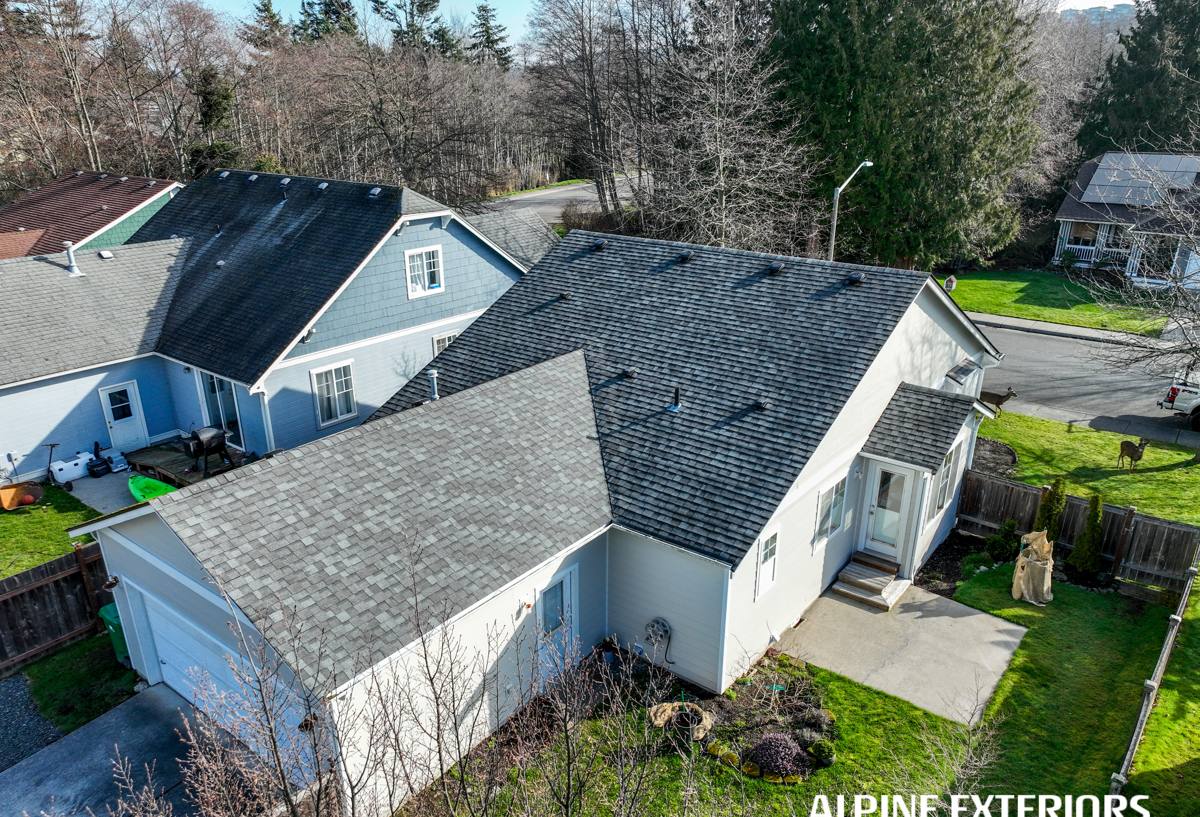
What Ferndale's Weather Actually Does to Siding
Salt Air and Moisture
Proximity to the water means airborne salt finds its way onto exterior surfaces even on homes that aren't waterfront. Salt accelerates corrosion on fasteners and trim hardware, and it interacts badly with lower-grade coatings and finishes, causing them to chalk, fade, or break down years ahead of schedule. Siding that isn't engineered for a marine environment tends to show its age fast here — peeling paint, warped panels, and corroded fasteners are common complaints we hear from homeowners with older siding.
Driving Rain
Whatcom County doesn't get the heaviest rainfall totals in the state, but it gets a lot of wind-driven rain, especially during fall and winter storm systems moving in off the Pacific. Driving rain doesn't just fall straight down — it gets pushed sideways into seams, laps, and trim joints. Any siding system with weak water management at the seams, or that relies on paint alone to keep moisture out, is going to let water in eventually. Once moisture gets behind the siding, it doesn't dry out quickly in our climate, and that's when rot and mold problems start.
Moss and Organic Growth
Shaded north-facing walls, tree-lined lots, and the sheer number of overcast, damp days in a typical Whatcom County year all add up to ideal conditions for moss, algae, and mildew growth on exterior surfaces. Wood-based siding products are especially vulnerable because moss and moisture together accelerate decay. Fiber cement doesn't feed organic growth the way wood does, which matters a lot on shaded or tree-covered lots.
Why We Only Install James Hardie Siding
James Hardie fiber cement is engineered specifically to handle the kind of climate stress Ferndale sees every year. It's non-combustible, it doesn't rot, and it holds paint and factory finishes far longer than wood or vinyl products because of how the material itself is built.
ColorPlus Technology
Most Hardie siding we install uses the ColorPlus factory finish system rather than field-applied paint. That finish is baked on in a controlled environment, which gives it better adhesion and UV resistance than paint applied on-site after installation — a real advantage in a region where the painting season is short and unpredictable.
Climate-Engineered HZ Product Lines
James Hardie makes region-specific formulations of its siding, engineered for different climate zones across the country. The HZ10 line is built for wetter, cooler climates like the Pacific Northwest, with a formulation designed to resist moisture damage and freeze-thaw stress better than a one-size-fits-all product. That's a meaningful distinction — a siding product engineered for a dry, hot climate is not the same product you want on a home dealing with Whatcom County's rain patterns.
Warranty Backing
James Hardie backs its fiber cement products with a strong, transferable limited warranty, which matters both for current owners and for resale value down the line. A siding warranty is only as good as the installation behind it, though, which is why correct installation to Hardie's specifications is non-negotiable on every job we do.
Why We Won't Install Vinyl or LP SmartSide Here
We get asked about both regularly, and we're upfront about why we don't install them.
Vinyl siding is inexpensive and low-maintenance in mild, dry climates, but it has real limitations in a wet marine environment. It expands and contracts significantly with temperature swings, which can open gaps at seams over time. It's also more prone to impact damage and can become brittle in cold weather. In a climate with this much sustained moisture exposure, we've seen vinyl underperform compared to fiber cement over a 20-30 year ownership horizon.
LP SmartSide is an engineered wood product, and it performs reasonably well when installation and maintenance are done exactly right. But it's still wood-based, which means it's more sensitive to moisture intrusion at cut edges and seams than fiber cement, and it requires more diligent caulking and paint maintenance to keep water out over the long run. In a climate with this much sustained rain and humidity, that maintenance margin for error is thinner than we're comfortable standing behind. Fiber cement gives our customers a wider safety margin with less upkeep.
Our Siding Process for Ferndale Homes
Inspection and Assessment
We start by evaluating the current siding condition, looking specifically for moisture intrusion, rot at trim and window flashing, and areas where past installation shortcuts have created long-term problems. Flashing and water management details matter as much as the siding material itself.
Correct Installation Practices
James Hardie siding performs the way it's rated to perform only when it's installed to spec — correct fastening patterns, proper clearances, and correctly lapped and sealed joints. Poor installation is the number one cause of premature siding failure, regardless of the product. We follow manufacturer installation guidelines closely because that's what protects both the building and the warranty.
Full Exterior Coordination
Because we also handle roofing, windows, and decks, we can look at a home's exterior as one connected system rather than isolated projects. Siding failures are frequently caused by problems that start at a roofline, window flashing, or deck ledger connection. Addressing those together avoids repeat problems and repeat costs.
Siding Material Comparison
| Factor | James Hardie Fiber Cement | Vinyl | LP SmartSide / Wood-Based |
|---|---|---|---|
| Moisture resistance | Strong — engineered HZ10 line for wet climates | Moderate — seams vulnerable to wind-driven rain | Moderate — depends heavily on maintenance |
| Fire resistance | Non-combustible | Combustible | Combustible |
| Finish longevity | Factory ColorPlus finish, long UV/color life | Molded-in color, can fade and chalk | Field-applied paint, needs regular upkeep |
| Maintenance | Low — periodic washing, minimal recaulking | Low, but prone to cracking/warping over time | Higher — paint and caulk upkeep required |
| Typical lifespan (installed to spec) | 30+ years | 20-30 years | 20-30 years |
| Warranty | Strong, transferable manufacturer warranty | Varies by manufacturer | Varies, moisture damage often excluded |
Signs Ferndale Homeowners Should Watch For
- Soft, spongy, or discolored siding near the ground line, window sills, or deck attachment points
- Persistent moss, algae, or mildew streaking on north-facing or shaded walls
- Paint that's peeling, bubbling, or chalking noticeably faster than the rest of the house
- Visible gaps, warping, or buckling at siding seams and corner boards
- Rust staining around fasteners or trim hardware
- Musty odors or interior wall staining that could indicate moisture behind the siding
- Cracked or missing caulking at window and door trim
Why a Local Crew Matters
Siding installation is not a generic job you can spec identically in every part of the country. A crew that works this region regularly knows how to detail flashing and water management for driving rain, understands how much drying time to expect between weather windows, and knows what shaded, moss-prone exposures need in terms of ventilation and clearance. That local knowledge is part of what protects the installation long after the crew has moved on to the next job.
We're not a national franchise cycling through unfamiliar territory — we work Whatcom County homes as our regular service area, which means we see how our own installations hold up over years, not just at the final walkthrough.
Get a Straight Answer About Your Siding
If you're dealing with aging, damaged, or moss-covered siding on a Ferndale home, or you're just trying to figure out what your options actually are, we're happy to take a look and give you a straightforward assessment — no pressure, no exaggerated urgency. Reach out for a free estimate and we'll walk you through what we see and what it would take to fix it right.