 Blaine Siding
 What Primed Spruce Siding Actually Is
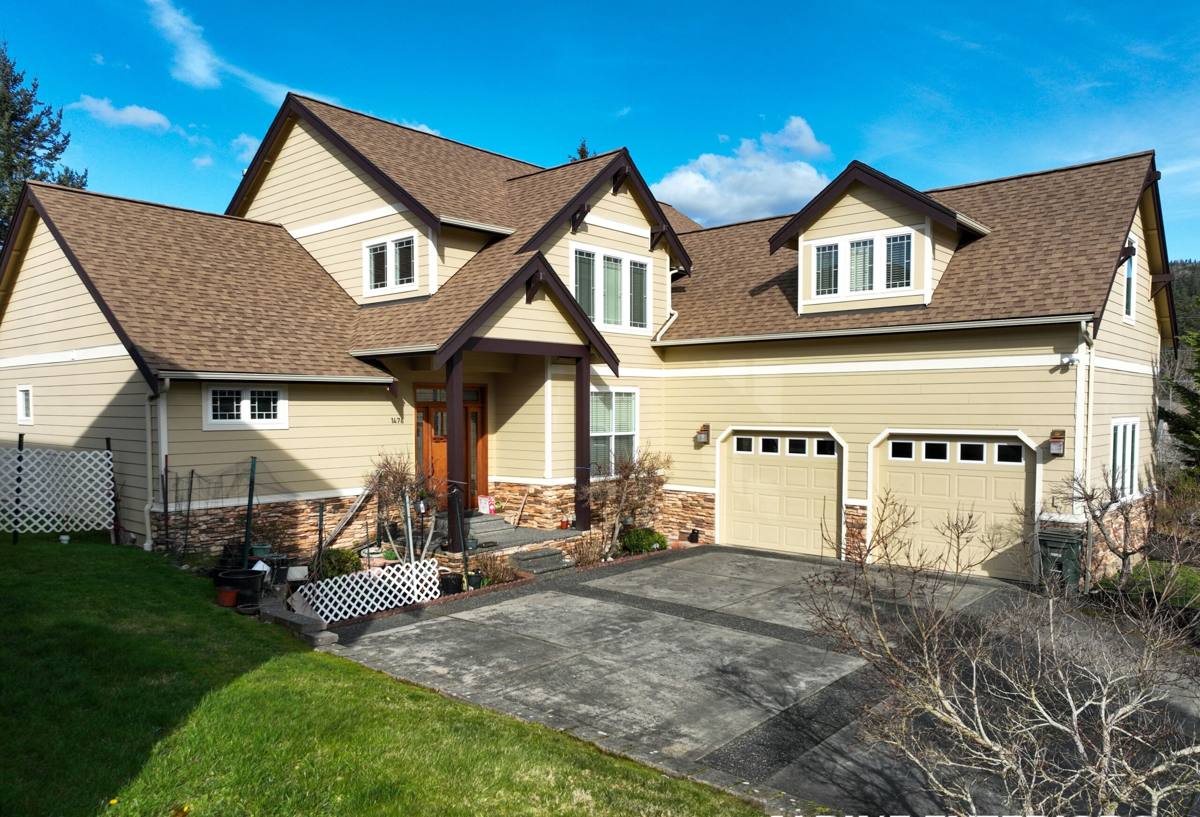
Primed spruce siding is solid wood — usually finger-jointed spruce or pine boards, milled into lap or panel profiles and coated with a factory primer before it ships. It's been a staple of Pacific Northwest home building for generations, and there's a reason it's still on the shelf at every lumberyard from Bellingham to Ferndale: it's inexpensive, it's easy for a crew to cut and nail, and it takes paint well when it's fresh. On a dry day, a newly primed spruce install looks every bit as good as anything else on the block.
The primer itself is just a sealer coat, not a finish. It's there to protect the wood from moisture and UV exposure for a limited window — typically 60 to 90 days — until a full topcoat of exterior paint goes on. That distinction matters more than most homeowners realize, and it's the root of almost every problem we see with this product ten or fifteen years down the road.
What This Product Gets Right
We're not going to pretend primed spruce is a bad material dressed up as a good one. It has real strengths, and being straight about them is part of being straight with you about why we still don't install it.
- Low material cost — spruce siding is one of the cheapest cladding options available, which keeps upfront project budgets down.
- Easy to work with — it cuts, copes, and fastens with standard carpentry tools, so labor rates are lower than for fiber cement.
- Traditional look — for homeowners who want a true wood grain and the option to hand-pick any paint color, it delivers a look that manufactured products only approximate.
- Repairable in sections — a damaged board can be cut out and spliced by a competent carpenter without specialty tools.
Those are genuine advantages. If Blaine sat in a dry inland climate with mild winters and no coastline, we might feel differently about it. It doesn't.
Why Whatcom County's Climate Is Hard on Primed Wood
Blaine sits on Semiahmoo Bay, at the edge of the Salish Sea, which means every exterior product on a home here is dealing with three things at once: salt-laden air moving in off the water, long stretches of driving rain carried by winter storms, and a moss and algae season that can run eight months out of the year in shaded, north-facing exposures. Whatcom County averages well over 30 inches of annual rainfall, and a lot of it doesn't fall straight down — wind-driven rain off the strait hits siding at an angle and finds every seam, nail hole, and end-grain cut that isn't perfectly sealed.
Wood siding doesn't fail because it gets wet once. It fails because it gets wet, dries slowly under a marine cloud layer, gets wet again before it's finished drying, and repeats that cycle for years. Spruce is a softer, more porous species than the cedar it's often substituted for, which means it draws in moisture faster and holds it longer. Add salt air, which is mildly corrosive to fasteners and keeps surfaces from ever fully drying out overnight, and you have a climate that's about as unkind to primed wood siding as anywhere on the West Coast.
The Priming Problem: Factory Coat vs. Field Reality
Here's the part that trips up most homeowners, and honestly, most contractors don't explain it well. Factory primer is a sacrificial layer, not a shield. It's manufactured to give installers a short window before the wood is exposed and unprotected — it is not designed to survive a wet Whatcom County winter on its own.
In practice, that window gets missed constantly:
- Projects get weathered-in or delayed and boards sit primed-only through a rainy stretch.
- Field cuts at corners, window trim, and butt joints expose raw, unprimed wood that never gets back-primed before install.
- Nail penetrations puncture the primer film at thousands of points across a typical home.
- Homeowners push the first paint job back a season to spread out costs, not realizing the clock is already running.
Every one of those gaps is a place water can get behind the primer and into the wood fiber. Once that happens, the failure mode is predictable: swelling at the joints, primer that blisters or peels because it's holding moisture in rather than out, and soft, punky wood at the bottom edges of boards where water sits longest.
How the Damage Actually Shows Up
We don't say any of this to scare people — we say it because it's the pattern we've watched play out on primed wood siding jobs across this region for years. The progression usually looks like this: hairline cracking at butt joints within 3-5 years, followed by localized paint failure and moss growth at the lowest courses and shaded elevations, followed by soft or delaminating wood at those same spots by year 8-12. By the time rot is visible from the ground, it's often already spread inside the wall cavity.
Moss, Algae, and the Maintenance Burden
Moss doesn't just grow on roofs here. On a shaded north wall, in a yard with mature evergreens, primed wood siding gives moss and algae a porous surface with plenty of texture to grip. Once organic growth establishes on painted wood, it holds moisture against the surface around the clock, which accelerates the exact cycle described above. Keeping it in check means regular washing — done carefully, since aggressive pressure washing strips paint and drives water into seams even faster than leaving it alone.
That maintenance load is the real cost of primed wood siding, and it's ongoing, not one-time:
| Maintenance Task | Typical Interval in Whatcom County | Skipped-Maintenance Consequence |
|---|---|---|
| Full repaint | Every 5-8 years | Primer/topcoat breakdown, accelerated moisture intrusion |
| Caulk joints and end cuts | Every 2-3 years | Water tracking behind boards at seams |
| Moss/algae wash-down | Annually on shaded elevations | Sustained surface moisture, faster rot onset |
| Board-by-board inspection | Annually, post-storm season | Hidden rot spreads before it's caught |
What This Costs Over Time
Primed spruce wins on day-one price. It rarely wins on lifetime cost, and lifetime cost is what actually determines whether a siding decision was a good one.
| Factor | Primed Spruce Siding | James Hardie Fiber Cement |
|---|---|---|
| Upfront material cost | Lower | Moderate to higher |
| Repainting cycle | Every 5-8 years | ColorPlus finish holds 15+ years before repaint is typical |
| Moisture/rot risk in a marine climate | Significant if maintenance lapses | Non-combustible, engineered to resist moisture damage |
| Typical service life installed to spec | 15-25 years with diligent upkeep | 30-50 years is common |
| Manufacturer warranty | Primer/paint warranties only, not the wood itself | Long-term, transferable product warranty |
Stretch primed spruce over a 30-year window and the repainting alone can exceed what a one-time fiber cement install would have cost, before you even factor in the risk of a rot repair that involves opening up the wall.
Installation Sensitivity — Why the Crew Matters as Much as the Product
Wood siding is unusually dependent on installer discipline. Every cut end needs to be back-primed on site, not just the factory face. Every joint needs proper flashing and the right gap for seasonal movement. Fasteners need to be the correct corrosion-resistant type for a coastal environment, not whatever's cheapest at the supply house. Skip any one of those steps and you've created a moisture entry point that won't show a problem for a few years — which is exactly what makes bad installs on this product so common. The failure is invisible at handoff and only becomes obvious well after the crew that installed it has moved on to the next job.
That sensitivity to workmanship is a big part of why we don't offer it. We'd rather install a product where correct installation is more forgiving and more consistently repeatable, in a climate that doesn't give you much margin for a missed step.
Signs Your Current Primed Wood Siding Is Failing
- Paint peeling or bubbling in sheets rather than a uniform dull fade
- Soft spots you can press a fingertip into, especially near the bottom of boards or below windows
- Visible gaps or separation at butt joints and corner trim
- Moss or dark staining that returns within months of cleaning
- Nail heads showing rust bleed through the paint
- A musty smell near exterior walls inside the home
If more than one or two of these show up on the same elevation, it's worth having someone take a real look rather than just repainting over the top of it.
Why We Install James Hardie Instead
James Hardie fiber cement is engineered specifically for the moisture challenges we just walked through. It's non-combustible, it's manufactured with HZ5 formulations designed for wetter climates like ours, and it carries a factory-applied ColorPlus finish baked on under controlled conditions — not a job-site primer coat racing against the next rainstorm. That finish is backed by a long, transferable warranty that covers the finish itself, not just a repaint allowance.
None of that makes fiber cement immune to bad installation — flashing details, fastening, and joint treatment still matter. But it gives a well-installed job a much wider margin against the salt air, driving rain, and moss season that define exterior conditions in Blaine and across Whatcom County, and it's why we standardized on it as the only siding product we put on homes.
If you're weighing a re-side or dealing with wood siding that's showing its age, we're happy to take a look and give you a straight, no-pressure assessment of what's going on and what your options actually are. Request a free estimate below and we'll walk the exterior with you in person.