 Blaine Siding
 Two Materials, One Very Different Set of Trade-Offs
Vinyl and James Hardie fiber cement are the two most common siding choices homeowners in Blaine ask us about, and they solve the same problem in almost opposite ways. Vinyl is a petroleum-based plastic panel that's engineered to be light, cheap to produce, and fast to install. Fiber cement is a composite of cement, sand, and cellulose fibers, engineered to behave more like a rigid, paintable board that resists fire, moisture, and impact. Both will keep the weather out on day one. The difference shows up five, ten, and twenty years down the road, especially in a climate like ours where salt air off the Strait of Georgia, driving rain, and a long, damp moss season all work on a house year-round.
This page isn't here to trash vinyl. It's a legitimate, widely used product with real strengths. But we made a decision as a company to install only James Hardie siding, and homeowners deserve to know why — not as a sales pitch, but as an honest rundown of what each material does well and where it tends to struggle here specifically.
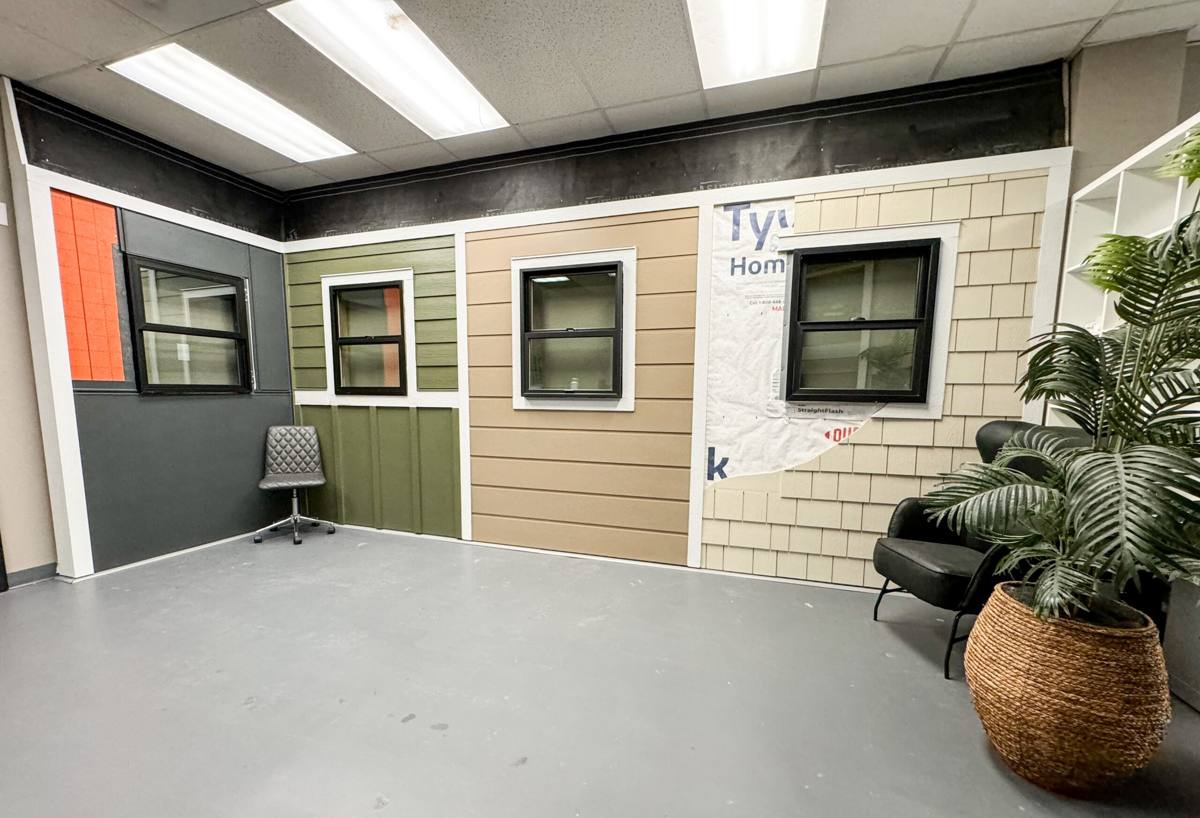
What Vinyl Siding Gets Right
Vinyl earned its market share honestly. It's inexpensive relative to most other cladding options, it never needs painting, and installation is fast because panels are lightweight and snap together with a hanging-rail system rather than being individually fastened and caulked. For a homeowner on a tight budget who needs a straightforward re-side with minimal disruption, vinyl checks real boxes.
It also doesn't rot, and it won't support insect damage the way wood can. In a dry, moderate climate with limited direct sun exposure, a quality vinyl installation can perform acceptably for a couple of decades with little maintenance beyond periodic washing.
Where Vinyl Struggles in Whatcom County's Climate
Salt Air and UV Together
Blaine sits close enough to saltwater that airborne salt is a real factor on exterior materials, and it compounds with UV exposure over time. Vinyl's color is mixed into the plastic itself, and that pigment breaks down under sustained sun exposure — panels fade unevenly depending on sun exposure per elevation, and once vinyl fades, there's no repainting it back to match; the whole run typically needs replacement to fix the color mismatch.
Wind-Driven Rain and Moisture Behind the Panel
Vinyl siding is installed loosely by design — it's meant to expand and contract with temperature and isn't caulked at every seam the way rigid siding is. That works fine in mild weather, but during the sideways, wind-driven rain events common along the Strait, water can work its way behind panels at seams, corners, and penetrations. Vinyl itself won't rot, but the wood sheathing, house wrap, and framing behind it can take on moisture that has nowhere obvious to show itself until there's a bigger problem.
Moss and Algae Growth
Our long wet season and heavy tree cover in parts of Whatcom County create ideal conditions for moss and algae to take hold on siding, especially on north-facing walls and anywhere shaded or slow to dry. Vinyl's slightly textured, porous-feeling surface gives organic growth something to grip, and because the color is baked into the plastic, aggressive pressure washing to remove buildup can dull the finish over time.
Impact and Temperature Sensitivity
Vinyl gets brittle in cold weather and can crack from impact — a thrown rock, a ladder bump, hail — more easily than fiber cement. It also visibly ripples or warps if exposed to reflected heat (from a nearby window or grill), which is a known issue in the product category generally, not a defect specific to any one brand.
What James Hardie Fiber Cement Actually Is
James Hardie siding is a cement-based composite, formed into planks, panels, or shingle-style pieces and kiln-cured for stability. It's noncombustible, doesn't support rot, and holds paint or factory-applied color far more like a rigid building material than a plastic one. James Hardie also engineers regional product lines — HZ5 for harsher, wetter climate zones like ours — specifically formulated for moisture resistance and freeze-thaw durability rather than a one-size-fits-all national product.
ColorPlus Factory Finish
Most of the Hardie siding we install uses the ColorPlus finish system: color is baked onto the board in a controlled factory environment, cured, and backed by its own finish warranty separate from the substrate warranty. That finish resists fading and chipping far better than field-applied paint, and because it's not tinted plastic, it doesn't have the same all-or-nothing fade failure mode vinyl does.
How It Handles Our Specific Conditions
- Salt air: the cement substrate and factory finish aren't degraded by airborne salt the way some paints and plastics are over time.
- Wind-driven rain: correctly installed with proper flashing, house wrap, and fastening, Hardie's rigid boards and sealed seams handle sideways rain without relying on loose-fit drainage the way vinyl does.
- Moss and algae: the smoother factory finish sheds organic growth more easily and holds up better to the pressure washing needed to keep north-facing and shaded walls clean.
- Fire exposure: as a noncombustible material, it doesn't contribute fuel to an exterior fire the way vinyl or wood products can — a meaningful factor as wildfire smoke and dry-season risk have become a bigger regional concern even in western Washington.
Side-by-Side Comparison
| Factor | Vinyl Siding | James Hardie Fiber Cement |
|---|---|---|
| Material | PVC plastic panels | Cement, sand, and cellulose composite |
| Color method | Pigment mixed into plastic | ColorPlus factory-baked finish or field paint |
| Fade resistance | Fades with UV over years; not repaintable to original color easily | Factory finish resists fading; can be repainted |
| Moisture/rain performance | Loose-fit panel system; depends on wrap behind it | Rigid, sealed installation when done to spec |
| Moss/algae resistance | Textured surface can hold growth | Smoother finish, easier to clean without damage |
| Impact resistance | Can crack, especially in cold weather | Resists impact and denting well |
| Fire rating | Combustible plastic | Noncombustible |
| Typical upfront cost | Lower | Higher |
| Warranty structure | Varies by manufacturer, often prorated | Long-term, often non-prorated, transferable to one new owner |
Installation Quality Matters as Much as the Material
Neither product performs to its potential if it's installed wrong, and this is worth saying plainly: a poorly installed Hardie job can fail faster than a well-installed vinyl job. The material isn't a substitute for correct technique. What we're standardizing on is the ceiling that correct installation can reach — and with fiber cement, that ceiling is considerably higher for our climate.
Correct fiber cement installation in a wet, coastal climate means proper house wrap and flashing behind the siding, correct fastener type and placement (Hardie is specific about nailing patterns and fastener corrosion resistance), proper clearance from grade, decks, and roof lines so water doesn't wick into the board edges, and factory-cut or properly sealed field cuts so raw edges aren't left exposed to moisture. Skipping any of these steps is where fiber cement installations run into trouble — not the material itself.
Cost Over the Life of the Siding
Vinyl almost always wins on install-day price. Where the math shifts is over a 20-30 year ownership horizon, which is the honest timeframe to compare against given how long both products are meant to last.
- Repainting: vinyl is never repainted in practice because paint doesn't bond well to it long-term; when it fades, replacement is usually the real fix. ColorPlus Hardie is designed to go 15+ years before it needs attention, and can be repainted afterward rather than replaced.
- Repair costs: cracked vinyl panels from impact or cold-weather brittleness often require replacing a full section since discontinued colors won't match; Hardie takes impact better and touch-up or board replacement is more straightforward.
- Resale perception: fiber cement siding is generally viewed by buyers and appraisers as a more durable, higher-end exterior material, which can matter at resale in a market like Blaine's.
- Moisture-related repairs: water intrusion behind failed siding — whichever material — is the most expensive outcome of all, since it can mean sheathing and framing repair, not just new siding.
Why We Standardized on James Hardie
We don't install vinyl, LP SmartSide, or any of the other lower-cost siding options because we'd rather stand behind one product system we know performs in this specific climate than offer a menu of options with very different long-term outcomes. James Hardie's HZ5 product line, factory ColorPlus finish, and strong transferable warranty give us a consistent standard to install to and stand behind — and after years of seeing how salt air, driving rain, and moss season treat different exterior materials around Whatcom County, that consistency matters more to us than offering the cheapest possible option.
Questions Worth Asking Before You Decide
- How exposed is this wall to wind-driven rain, and is it north-facing or shaded (higher moss risk)?
- How long do you plan to own the home — is this a 10-year fix or a 30-year investment?
- What does the manufacturer's warranty actually cover, and is it prorated?
- Who's doing the flashing and moisture-barrier work behind the siding, not just the siding itself?
- Can the contractor show you the specific product line and finish system they're proposing, not just "vinyl" or "Hardie" as a category?
If you're weighing siding options for a home in Blaine or anywhere else in Whatcom County, we're happy to walk your property, point out what your specific exposure looks like, and give you a straightforward, no-pressure estimate for a James Hardie installation done to spec.