 Blaine Siding
 Birch Point's Exterior Climate Challenge
Birch Point sits on the water in Whatcom County, and that location shapes everything about how a home's exterior ages. Homes here take a steady dose of salt-laden air off the Strait of Georgia, wind-driven rain that finds its way into every gap and seam, and a long, wet moss season that can stretch from fall through spring in a typical Pacific Northwest year. None of that is unusual for this part of Blaine — it's just the baseline. What matters is whether the materials on a house were chosen with that baseline in mind, or just happened to be whatever was available or cheapest at the time.
We've worked on enough homes along this stretch of coastline to know the pattern: siding that looks fine from the road can be quietly failing at the butt joints, under window trim, or along the bottom courses where splash-back and standing moisture do their slow damage. Salt air accelerates corrosion on fasteners and trim metal. Constant dampness feeds moss and algae growth on anything with texture or shade. And driving rain — the kind that comes in sideways off the water — tests every caulk line and flashing detail a lot harder than a calm inland lot ever would.
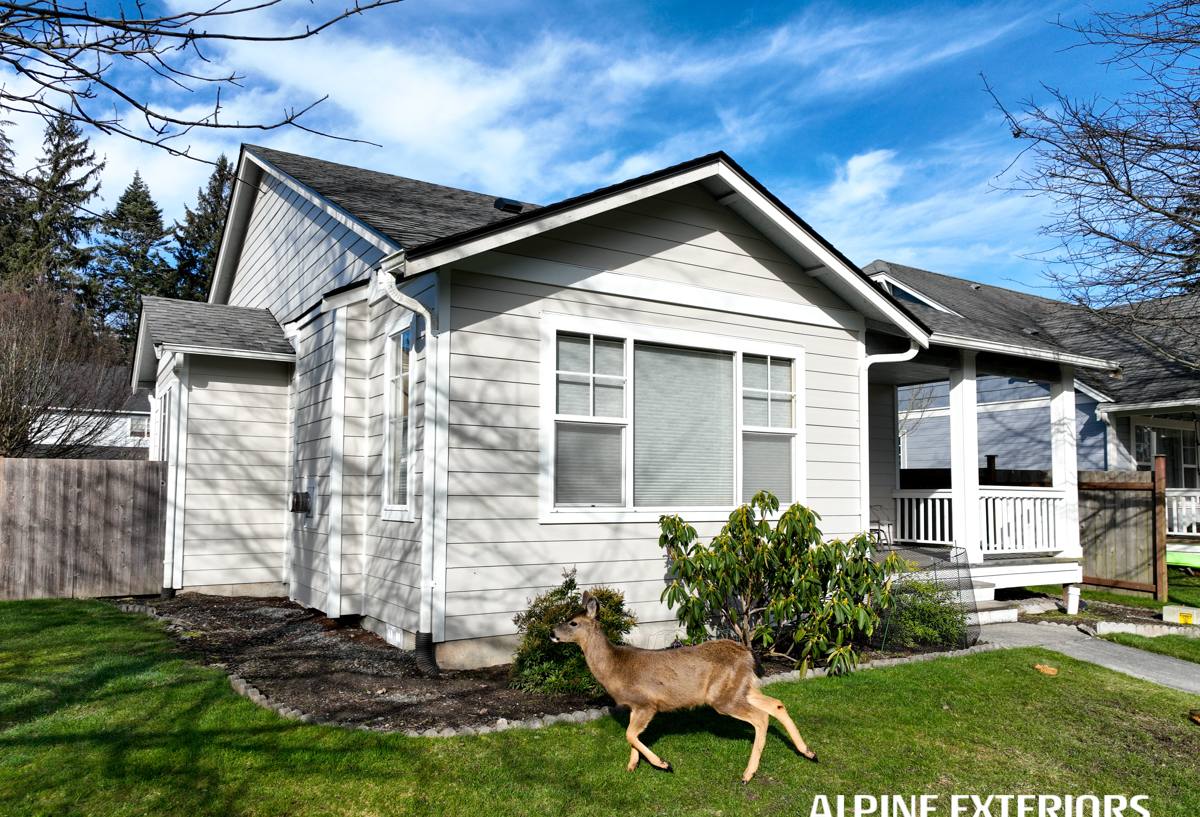
What We Do for Birch Point Homeowners
We're a full exterior contractor, not a single-trade outfit. For homes in Birch Point and the surrounding Blaine area, that means we handle:
- Siding — replacement and repair, James Hardie fiber cement only
- Roofing — the first line of defense against driving rain and wind
- Windows — replacement units and the flashing work that keeps water out around them
- Decks — built and finished to hold up to marine air and constant moisture cycling
Handling all four trades matters more here than it would somewhere drier and more sheltered. Siding, roofing, and window flashing all interact at the same transition points — the areas most likely to leak in a driving rain event. A crew that only does one of those trades has to guess at how the others were detailed, or hope the previous contractor got it right. We control that interface directly, which is a real advantage on a coastal lot.
Salt Air and Material Choice
Salt air is corrosive to unprotected metal fasteners and trim, and it degrades certain paint and coating systems faster than a standard exposure rating accounts for. It also tends to hold moisture against a home's exterior longer than dry inland air does, which matters for any material that swells, wicks, or rots when wet. This is the core reason we install James Hardie fiber cement siding exclusively and don't offer vinyl, LP SmartSide, Cemplank, Allura, primed spruce, or cedar as alternatives on the homes we work on.
Fiber cement is not organic material, so it doesn't feed moss, doesn't rot, and doesn't provide the fungal food source that wood-based products do in a damp, salt-air environment. It's also dimensionally stable — it doesn't expand and contract with moisture the way engineered wood products can, which matters for keeping paint film and caulk joints intact over the long haul. James Hardie backs its siding with a factory-applied ColorPlus finish and a transferable warranty, which is meaningful in a climate that's genuinely hard on exterior finishes.
Moss and Moisture on Siding
Moss doesn't just grow on roofs. On siding, it tends to establish on north-facing walls, under overhangs with limited sun exposure, and anywhere water sits or drains slowly. Wood-based siding products give moss and algae a texture and food source to grip; fiber cement doesn't offer the same foothold, and what does grow on the surface washes or brushes off without damaging the substrate underneath. That's a meaningful difference on a lot with mature trees or heavy shade, which describes a fair number of properties around Birch Point.
Roofing, Windows, and Decks in a Marine Climate
Siding gets most of the attention, but a coastal exterior is only as good as its weakest component. A few specifics for this area:
Roofing: driving rain finds weak flashing before it finds a bad shingle. Ridge, valley, and penetration flashing details matter more here than roof material alone. We pay close attention to how the roof edge and eaves interact with siding and gutters, since that's where moss buildup and water intrusion tend to start.
Windows: window failures on the coast are usually flashing and sealant failures, not glass failures. Proper window flashing integrated with the siding water-resistive barrier is what actually keeps a wall assembly dry over 20-plus years — the window unit itself is only part of the system.
Decks: constant damp-dry cycling and salt exposure are hard on fasteners, framing connectors, and any coating system. Decks near the water need corrosion-resistant hardware and a maintenance plan that accounts for moss and mildew on horizontal surfaces, which hold moisture longer than vertical siding does.
Siding Material Comparison for a Coastal Lot
| Material | Moisture Behavior | Moss/Algae Resistance | Typical Coastal Maintenance |
|---|---|---|---|
| James Hardie fiber cement | Dimensionally stable, does not rot or swell | No organic food source; surface growth washes off | Periodic rinse; factory finish holds up over time |
| Vinyl | Can warp or distort under heat/cold cycling | Growth can establish in seams and textured panels | Regular cleaning; seams and fasteners need monitoring |
| Cedar | Absorbs moisture; prone to swelling and checking | Organic material feeds moss and algae readily | Frequent refinishing and moisture inspection |
| Primed spruce / engineered wood | Vulnerable at cut edges and joints if seal fails | Wood-based substrate can support growth if compromised | Careful joint and edge maintenance required |
This isn't a knock on every one of these products in every climate — vinyl and engineered wood siding have their place, and plenty of manufacturers build a decent product. It's a statement about what holds up best on this specific stretch of Whatcom County coastline, where salt air, standing moisture, and moss pressure are constants rather than occasional stressors. That's the trade-off calculation behind why we standardized on Hardie and don't install the alternatives.
What a Local Blaine Crew Means for You
A crew that works this area regularly knows what a Birch Point lot is up against before the first inspection walk. We know what flashing details tend to fail near the water, which sides of a house take the worst of the driving rain, and how moss establishes differently here than it would twenty miles inland. That knowledge shows up in small decisions — where we add extra flashing, how we detail a butt joint, what fastener spec we use — that don't show up on a basic estimate but matter a lot ten years down the road.
It also means straightforward scheduling and follow-up. We're not traveling in from out of the area for a single job and then gone; we're working Blaine and the surrounding Whatcom County communities on an ongoing basis, which is part of why we stand behind the work we do here.
What to Expect From an Estimate
- A walk-around inspection of your current siding, trim, and any visible moisture or moss issues
- An honest read on what's driving the problem — sun exposure, drainage, flashing gaps, or material age
- A clear explanation of what James Hardie siding options fit your home, including HZ5 and HZ10 product lines engineered for different climate zones
- A written estimate with no pressure to sign on the spot
- Straight talk about what roofing, window, or deck work should be bundled with the siding, if any, based on what we actually see on your home
Ongoing Maintenance for a Coastal Exterior
Whatever siding is currently on a Birch Point home, a few habits go a long way toward slowing down salt-air and moss damage:
- Rinse siding and trim periodically to clear salt residue and organic buildup, especially on shaded, north-facing walls
- Keep gutters clear so water isn't overflowing down the siding face
- Trim back vegetation that's shading siding and keeping it damp longer than it should be
- Check caulk joints around windows and trim annually for cracking or separation
- Address small moss patches early — once established, it holds moisture against the surface and accelerates whatever damage is already underway
Get a Local, No-Pressure Estimate
If you're weighing a siding replacement, dealing with moss or moisture issues on your current exterior, or just want an honest read on how your Birch Point home is holding up, we're glad to take a look. Fill out the form below for a free estimate — no pressure, no obligation, just a straight assessment from a crew that knows this coastline.