 Blaine Siding
 Exterior Work Built for Sandy Point's Waterfront Conditions
Sandy Point sits out on the water in Whatcom County, close enough to the Strait of Georgia and Semiahmoo Bay that salt air is simply part of daily life for every home out there. That's a different exposure than a house a few miles inland in Blaine proper, and it changes what we recommend for siding, roofing, windows, and decks. We've worked exteriors up and down this stretch of Whatcom County long enough to know that what holds up in a sheltered subdivision doesn't always hold up on a spit or shoreline lot facing open water.
This page covers what we see most often on Sandy Point homes, how our services address those specific conditions, and why we standardized on one siding product instead of offering the full menu most contractors sell.
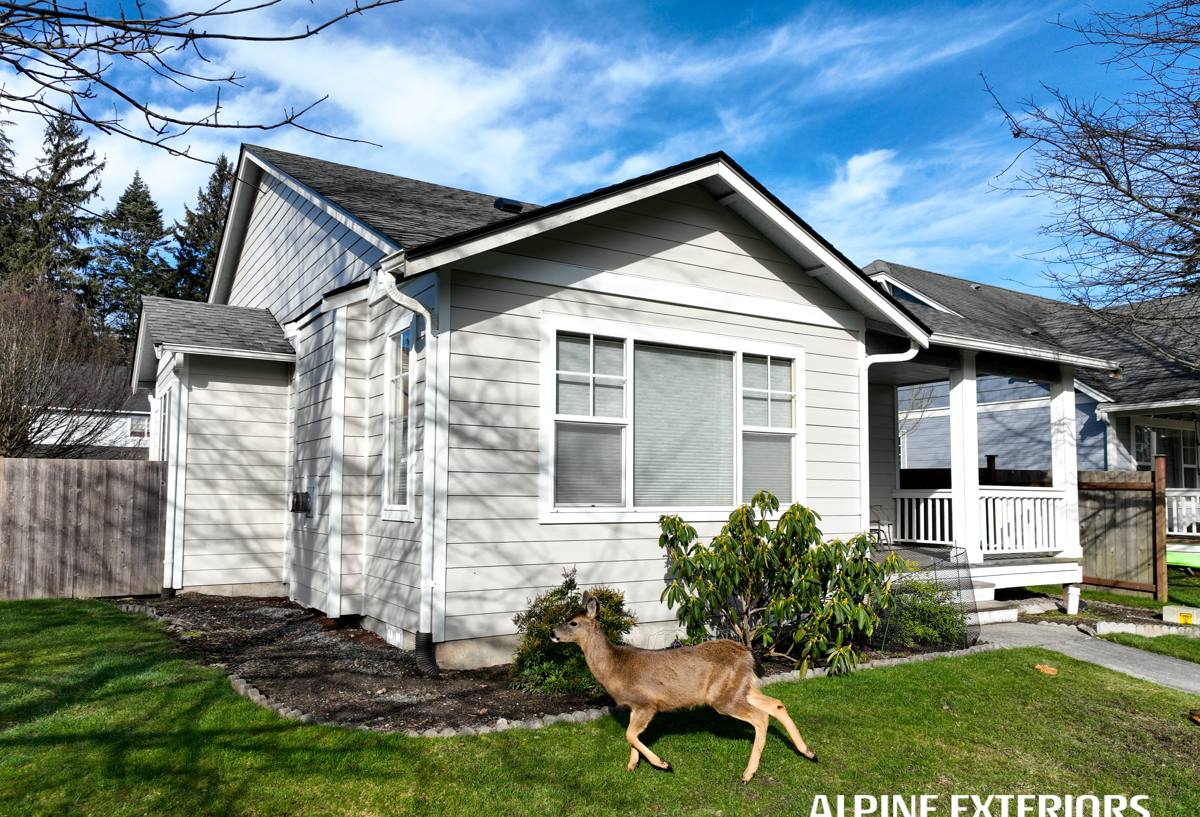
What Sandy Point's Climate Does to a Home's Exterior
Three things drive most of the exterior wear we see on waterfront and near-waterfront homes in this part of Whatcom County:
Salt Air and Wind-Driven Moisture
Homes close to the water take on airborne salt and moisture that inland homes simply don't deal with. Over years, that combination accelerates corrosion on fasteners and metal trim, and it's harder on paint films and caulk joints than a typical suburban exposure. Siding and trim on a Sandy Point home earn their keep every single season.
Driving Rain
Northwest Washington gets a lot of rain, but the wind that comes with it off the water is what really matters. Wind-driven rain doesn't just fall on a wall — it gets pushed sideways into joints, seams, and anywhere a house's water management isn't detailed correctly. Flashing, house wrap, and siding installation quality matter more here than they do in a calmer inland spot.
A Long Moss and Algae Season
Cool, damp, and often shaded conditions on tree-lined or north-facing lots give moss and algae a long window to take hold — on roofs especially, but also on siding and decking that doesn't get much direct sun or airflow. Left alone, that growth holds moisture against building materials and shortens their life.
Siding: Why We Only Install James Hardie
We install James Hardie fiber cement siding exclusively. We don't offer vinyl, LP SmartSide, Cemplank, Allura, primed spruce, or cedar — not because those products can't be installed well by someone, but because we've made a professional decision about what we're willing to put our name behind on homes in this climate, and Sandy Point's salt-air exposure makes that decision even more clear-cut.
Vinyl
Vinyl is inexpensive and low-maintenance in a mild climate, but it's a thin plastic product that expands, contracts, and can become brittle over time — and in a wind-exposed waterfront setting, that matters more than it would somewhere sheltered. It also isn't repainted the way fiber cement can be, so its look is locked in for the life of the product.
Wood — Cedar and Primed Spruce
Real wood siding looks great and plenty of homeowners love it, but it demands consistent recoating and caulking to keep moisture out, and salt air combined with our wet-winter, damp-shoulder-season climate shortens the window between maintenance cycles. Skip a cycle or two and you're looking at rot repair, not just a paint job.
LP SmartSide
LP SmartSide is an engineered wood product — wood strands bonded with resin. It performs reasonably well when detailing and maintenance stay on schedule, but as a wood-based product it's still more moisture-sensitive at cut edges and joints than fiber cement, which is a real consideration this close to the water.
Cemplank and Allura
These are other fiber cement manufacturers, and fiber cement as a category is the right call for this climate. Our decision to install James Hardie specifically comes down to their ColorPlus factory-applied finish, their HZ5 product line engineered for climates with more moisture exposure, and a warranty structure we're comfortable standing behind on the coast.
Why James Hardie
- Non-combustible — fiber cement doesn't feed a fire the way wood-based products can.
- ColorPlus factory finish — baked-on color that resists fading and chipping better than field-applied paint, which matters when salt air is already working against a paint film.
- HZ5 climate engineering — Hardie's HZ product lines are engineered for regional moisture exposure, and this stretch of Whatcom County is exactly the kind of climate that calls for it.
- Long, transferable warranty — real coverage that matters if you sell the home.
- Proven long-term performance when installed to manufacturer spec — which is the other half of the equation.
Installed to spec is the key phrase. Fiber cement's durability advantage only shows up if flashing, joint gaps, fastener patterns, and clearances are done correctly. We follow Hardie's installation requirements closely because we've seen what happens on waterfront homes when siding is installed to a lower standard.
Roofing for Salt Air and Moss Exposure
A roof on a Sandy Point home is dealing with the same salt air and moisture as the siding, plus direct exposure to wind-driven rain and, on shaded lots, a long moss season. We look at ventilation, flashing detail around penetrations and valleys, and material choice with that combination in mind — a roof that's correctly ventilated and flashed sheds moss and holds up to coastal wind far better than one that isn't, regardless of the shingle brand on it.
Windows: Sealing Out Wind-Driven Rain
Old or poorly flashed windows are one of the most common leak points we find on coastal Whatcom County homes, and wind-driven rain is exactly the kind of water intrusion that exposes a bad window install. When we replace windows, correct flashing integration with the wall assembly is as important as the window unit itself — a good window installed poorly will still leak on a site like this.
Decks: Built for Damp, Shaded Conditions
Waterfront decks take a beating from moisture, salt air, and — on shaded or tree-covered lots — the same moss and algae growth that affects roofs. Proper structural spacing for airflow, ledger flashing, and fastener selection all matter more here than on a dry inland deck. We build and repair decks with that exposure in mind rather than treating it like a generic build.
Comparing Siding Options for a Coastal Whatcom County Home
| Material | Salt Air / Moisture Resistance | Maintenance | Typical Lifespan |
|---|---|---|---|
| Vinyl | Fair — can become brittle over time in wind exposure | Low, but not repaintable | 20-30 years |
| Cedar / Primed Spruce | Fair — moisture-sensitive without upkeep | High — recoat/caulk on a strict cycle | 15-30 years with diligent upkeep |
| LP SmartSide | Good — engineered wood, edge-sensitive | Moderate — caulk and paint maintenance | 20-30 years |
| Fiber Cement (Cemplank/Allura) | Very good | Low | 30-50 years |
| James Hardie Fiber Cement | Very good — HZ5 engineered for moisture climates | Low | 30-50+ years installed to spec |
What Drives Cost on a Waterfront Job
Every home is different, but a few factors consistently move the price on Sandy Point exterior projects:
- Site access — narrow lots, staging space for materials, and proximity to the water can affect logistics
- Existing damage — rot, moisture intrusion, or corroded fasteners found once old siding or roofing comes off
- Home size and complexity — number of stories, roof pitch, trim detail, and window count
- Scope — siding alone versus a combined siding, roofing, window, or deck project
- Material selection within the Hardie lineup — plank profile, panel style, and color
We give straightforward, honest estimates based on what we actually find on your home, not a generic per-square-foot number pulled off a rate card.
Why a Local Crew Matters on a Coastal Job
Exterior work on a waterfront or near-waterfront home isn't the same job as one three miles inland, and a crew that hasn't worked this specific stretch of coastline doesn't always know that going in. We work Blaine and the surrounding Whatcom County coastline regularly, so we already know what salt exposure, wind-driven rain, and a long moss season do to a house here — and we build and detail accordingly rather than treating your home like a generic install.
A Straightforward Checklist Before You Hire
- Ask what siding, roofing, and window products the contractor actually installs — and why
- Confirm they carry current licensing and insurance for work in Washington
- Ask how they handle flashing and water management around windows, decks, and roof penetrations — this is where most coastal failures start
- Get a written estimate that reflects your home's actual condition, not a generic quote
- Ask about warranty coverage — both the manufacturer's and the installer's workmanship warranty
If you're planning siding, roofing, window, or deck work on a Sandy Point home, we're happy to take a look and put together a free, no-pressure estimate. There's no obligation — just an honest read on your home's condition and what we'd recommend.