 Blaine Siding
 Sandy Point's Coastline Is Hard on Siding
Sandy Point sits right where the weather comes off the water, and that changes what a house needs from its exterior compared to a home a few miles inland. Salt-laden air moves through the neighborhood constantly, driving rain arrives sideways during winter storms, and the long, damp stretch of fall through spring gives moss, algae, and mildew months to take hold on anything that stays wet. This isn't a climate that punishes siding once a year during a big storm — it works on a house steadily, week after week, all year.
That combination is why we treat Sandy Point differently than a typical Whatcom County job. Salt air is corrosive to exposed metal fasteners and hardware over time. Driving rain finds every gap in flashing and caulking that a less exposed home could get away with ignoring for a few years. And moss doesn't just look bad — where it holds moisture against a wall, it keeps that section of siding wet long after the rest of the house has dried out, which is exactly the condition that causes rot, paint failure, and swelling in materials that aren't built to handle it.
Fiber cement, installed correctly, is one of the few siding materials that holds up to this specific mix of conditions without turning into a maintenance project. But "installed correctly" is doing a lot of work in that sentence, and that's really what this page is about.
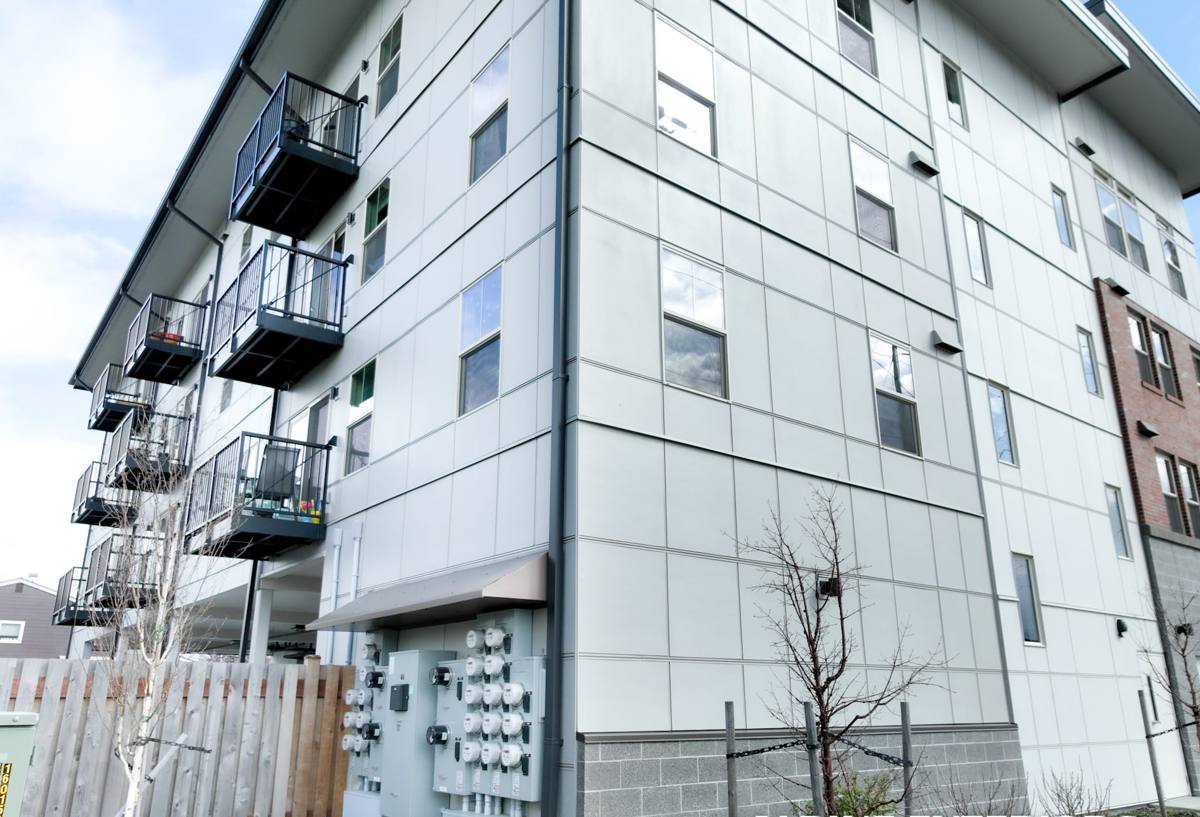
What "Correct" Fiber Cement Installation Actually Involves
Fiber cement siding is only as good as the details behind it. The board itself resists moisture, rot, and salt exposure far better than wood or engineered wood products, but a house near open water will still fail early if the installation cuts corners on water management. In a place like Sandy Point, we don't treat any of the following as optional.
Flashing and Water Management
Every window, door, and horizontal trim transition needs flashing that sheds water outward, not into the wall assembly. On a home exposed to driving rain, wind can push water uphill and sideways, so laps, overlaps, and drip edges have to be built with that in mind rather than relying on gravity alone. We also pay close attention to how the siding meets the foundation and any roof-to-wall intersections, since those are the spots where water damage tends to start and go unnoticed the longest.
Fastening and Gaps
Fiber cement needs room to expand and contract with temperature and moisture changes. Nailing it too tight, or clustering fasteners incorrectly, leads to cracking and buckling over time — problems that show up years later, long after the installer is gone. We follow manufacturer fastening specs closely, including corrosion-resistant fasteners, which matters more in a salt-air environment than it does a few miles inland.
Caulking and Sealant Choices
Not all sealants hold up to constant damp-dry cycling and salt exposure. We use products rated for the exposure level a coastal property actually sees, and we're deliberate about where caulk belongs and where it doesn't — over-caulking a fiber cement installation can trap moisture just as easily as under-caulking lets it in.
The James Hardie Product Lines We Use in Sandy Point
We install James Hardie fiber cement exclusively, and for a property in this location, that choice matters beyond brand preference. Hardie engineers its siding by climate zone, and the HZ5 line is built specifically for regions that see the kind of moisture cycling and temperature swings common to the Pacific Northwest coast. That's the product line we spec for Sandy Point homes as a default, not an upsell.
The factory-applied ColorPlus finish matters just as much here as the substrate does. A field-painted surface is more vulnerable to the freeze-thaw and salt-air cycling this location sees, and repainting a house on a bluff or waterfront lot is neither cheap nor pleasant. ColorPlus finishes are baked on in a controlled factory environment, cure harder than a field-applied coat, and carry a separate finish warranty on top of the product warranty — which is a meaningful difference on a house that's going to spend decades facing salt spray.
Depending on the home, we'll spec lap siding, panel siding, or a mix with Hardie trim boards around windows, corners, and fascia. The right combination depends on the home's existing architecture and exposure — a wall that takes the brunt of prevailing weather may get different detailing than a more sheltered elevation of the same house.
Fiber Cement vs. the Alternatives on a Waterfront Lot
Homeowners near the water often ask why we don't offer vinyl, wood, or LP SmartSide as options. The honest answer is that we've standardized on fiber cement — specifically James Hardie — because of how the other options tend to perform under this exact kind of exposure, not because they're bad products everywhere.
| Material | How it handles salt air and driving rain | Long-term consideration |
|---|---|---|
| James Hardie fiber cement | Non-combustible, dimensionally stable, resists moisture absorption when installed and sealed correctly | Factory finish holds color and resists coastal fading; strong transferable warranty |
| Vinyl siding | Doesn't rot, but can warp or become brittle with temperature swings and UV exposure over time | Seams and panels can loosen in sustained wind-driven rain; color is baked into the material with no refinishing option |
| Engineered wood (e.g. LP SmartSide) | Wood-based core is more moisture-sensitive than fiber cement even with treated strand technology | Edge and cut-end sealing becomes critical near salt air; more installation-sensitive than fiber cement |
| Cedar or primed spruce | Natural material that absorbs and releases moisture readily; attractive but higher-maintenance in damp climates | Requires ongoing refinishing, sealing, and moss/mildew treatment to avoid rot in a marine environment |
None of these are inherently poor products. But when we weigh moisture behavior, maintenance burden, fire resistance, and warranty strength against what a Sandy Point property actually experiences year-round, fiber cement is what we're willing to put our name behind — and James Hardie specifically, given how the HZ5 engineering and ColorPlus finish line up with this exposure.
Our Process, Start to Finish
- Site walk and exposure assessment. We look at which elevations take the worst of the wind and rain, where moss has already taken hold, and where past water damage may be hiding behind the current siding.
- Product and detail selection. We spec the Hardie line, profile, and trim package for the home, and flag any flashing, venting, or drainage issues the existing wall assembly has.
- Written estimate. No pressure, no gimmicks — a clear scope of what's being done and why, including any prep work the house actually needs.
- Removal and inspection. Once old siding comes off, we check the sheathing and framing underneath for hidden moisture damage before anything new goes up.
- Water-resistive barrier and flashing. This layer gets built correctly before a single piece of siding is installed — it's the part of the job nobody sees later but everyone relies on.
- Installation to manufacturer spec. Proper fastening, gapping, and sealant, with extra attention on the elevations facing prevailing weather.
- Final walkthrough. We go over the finished work with the homeowner before calling the job done.
Maintenance a Sandy Point Homeowner Actually Needs to Do
One of the real advantages of James Hardie fiber cement is how little upkeep it demands compared to wood or engineered wood siding. It's not zero-maintenance, though, especially in a climate that grows moss this readily. A short annual routine keeps a correctly installed Hardie exterior performing the way it's designed to.
- Rinse the exterior once or twice a year to clear salt residue and organic buildup before it has time to establish, especially on north-facing or shaded walls where moss grows fastest.
- Check and re-caulk any joints around windows, doors, and trim if you notice cracking or gaps — sealant has a service life shorter than the siding itself.
- Keep gutters clear so overflow doesn't run down the face of the siding repeatedly in the same spot.
- Trim back vegetation and tree cover that keeps siding shaded and damp longer than the rest of the house.
- Walk the exterior after major winter storms and look for any loose trim, damaged flashing, or impact damage rather than waiting for a scheduled inspection.
What Drives the Cost of a Sandy Point Siding Project
We don't publish flat pricing because every home's exposure, existing damage, and scope are different — but the factors that move the number are consistent, and it's worth understanding them before you get an estimate.
| Factor | Why it matters in Sandy Point specifically |
|---|---|
| Condition of existing sheathing and framing | Homes with hidden moisture damage from years of salt and rain exposure may need repair before new siding goes on |
| Number and complexity of wall penetrations | Windows, vents, and fixtures each need proper flashing detail, which adds labor on more architecturally detailed homes |
| Exposure level of each elevation | Walls facing prevailing wind and rain may warrant additional flashing or sealant detail beyond baseline spec |
| Trim and accessory scope | Hardie trim boards, fascia, and accent details add cost but also add protection at vulnerable transition points |
| Access and site conditions | Waterfront and bluff-adjacent lots can affect staging, scaffolding, and material delivery logistics |
The most expensive outcome is almost never the siding material itself — it's redoing work a few years later because water got behind a wall that wasn't detailed correctly the first time. A fair estimate accounts for doing it right once.
Why Local Experience Matters More Here Than Elsewhere
A crew that mostly works inland jobs can install fiber cement competently and still miss the details that matter specifically near open water — the extra attention flashing needs on a wind-exposed wall, the fastener choices that hold up to salt air, or which elevations in this neighborhood tend to grow moss first. We work Sandy Point and the surrounding Blaine and Whatcom County coastline regularly enough to know which parts of a house take the worst of the weather before we even start the walkthrough, and we spec accordingly rather than treating every wall the same.
That local pattern recognition is part of what a homeowner is paying for when they hire a crew with coastal experience over a general contractor who occasionally does siding. It shows up in fewer callbacks, fewer surprises, and a house that's still performing the way it should well past the first few winters.
If you're weighing a siding project on a Sandy Point home, we're glad to walk the exterior with you, point out what we see, and put together a straightforward, no-pressure estimate — just fill out the form below to get started.