 Blaine Siding
 Siding, Roofing, Windows, and Decks for the Dakota Creek Area
Dakota Creek sits in the working landscape of Blaine, in the far northwest corner of Whatcom County, close enough to Semiahmoo Bay and the Strait of Georgia that the marine climate shapes every exterior decision a homeowner makes here. We work on homes throughout this part of Blaine regularly, and the pattern is consistent: siding, trim, and roofing that weren't matched to this specific environment tend to show damage years before they should. Our crews are local, and we build every exterior project around what actually happens to materials when they sit a few miles from saltwater for a few decades.
We handle the full exterior envelope — siding, roofing, windows, and decks — because on a coastal property those systems all take the same kind of abuse and need to work together. A siding job that ignores flashing details at the roofline, or a deck built with the wrong fastener hardware, creates problems that show up as water damage or corrosion a few years down the road. We think about the whole exterior, not just one product.
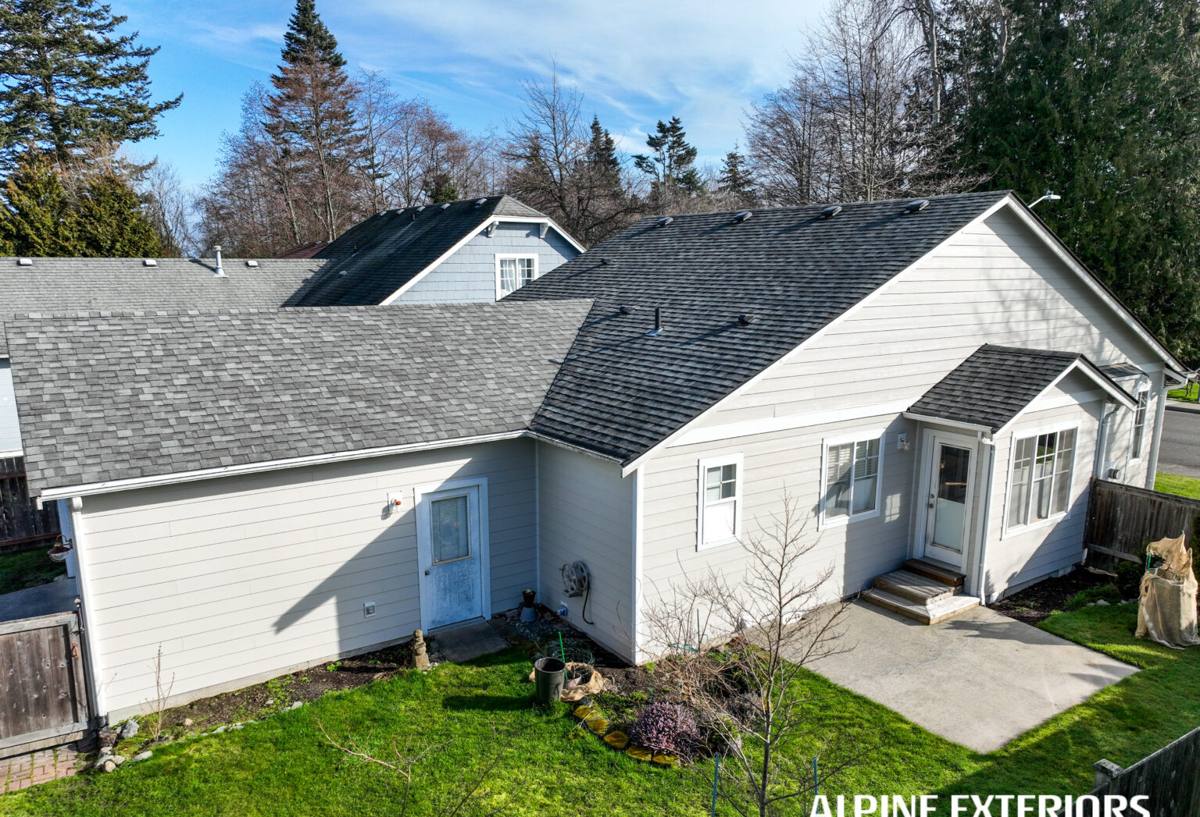
What the Dakota Creek Climate Does to a House
Blaine's exterior challenges come from three overlapping conditions, and Dakota Creek gets a full dose of all three.
Salt Air
Proximity to Semiahmoo Bay and the Strait of Georgia means airborne salt is a constant, low-level presence. Salt is corrosive to unprotected metal fasteners, trim flashing, and hardware, and it accelerates the breakdown of coatings and paint films that aren't rated for a marine environment. Over time, salt exposure is one of the more common reasons we see premature paint failure and rust staining on homes in this area, especially on the sides of a house that face open water or prevailing wind.
Driving Rain
Whatcom County's Pacific weather pattern brings rain that frequently arrives sideways, driven by wind off the water rather than falling straight down. Driving rain finds every gap in a siding system — lap joints, trim seams, window and door flashing — and pushes moisture into places a calmer rain never would. A siding assembly that performs fine in a sheltered inland location can fail here if the water-management details (housewrap, flashing, proper lap and caulk points) weren't done correctly.
A Long Moss Season
Between the rainfall and the moderate coastal temperatures, moss and algae have a long growing window in Blaine — often close to year-round on shaded, north-facing, or tree-covered elevations. Moss holds moisture against a surface far longer than open air would, which is bad news for any siding or roofing material that's sensitive to sustained dampness. On roofs, it works into shingle tabs and lifts them. On siding, it can trap moisture at the bottom edge of lap boards and behind trim.
Why We Only Install James Hardie Fiber Cement Siding
We made a decision as a company to install one siding system — James Hardie fiber cement — and to stop installing the alternatives that used to be common on this coast: vinyl, LP SmartSide, primed spruce, cedar, and other fiber cement brands like Cemplank or Allura. That's not a marketing position; it's a standard we set because of what we consistently see on inspections and tear-offs in exactly this kind of environment.
What Hardie Gets Right for This Location
- Non-combustible core. Fiber cement doesn't feed a fire the way wood-based products can, which matters for insurance considerations and general home safety.
- Moisture resistance. Fiber cement doesn't swell, rot, or delaminate the way wood-based or wood-fiber composite siding can when it stays damp under moss or in a shaded, poorly-ventilated wall section.
- Factory-applied ColorPlus finish. The color is baked on in a controlled factory process rather than field-painted, which gives a more consistent, longer-lasting finish against UV and salt exposure than site-applied paint typically achieves.
- Climate-engineered HZ product lines. Hardie manufactures HZ5 boards specifically for wetter, harsher climate zones like the Pacific Northwest — the formulation is built with places like Blaine in mind, not a generic national spec.
- A strong, transferable warranty. Hardie's warranty structure is one of the more substantial in the industry and can transfer to a new owner, which matters for resale in a market where buyers are increasingly asking about siding age and type.
Why We Stopped Installing the Alternatives
Vinyl siding is affordable and low-maintenance in mild climates, but it can become brittle in cold snaps, and its seams and J-channels give driving rain more entry points over the life of the product. Wood-based products — cedar, primed spruce, LP SmartSide — look good initially but require diligent maintenance (caulking, repainting, moisture monitoring) that most homeowners underestimate, and a long moss season is exactly the condition that punishes any lapse in that maintenance. Other fiber cement brands like Cemplank and Allura are legitimate products, but we standardized on one manufacturer so our crews master one installation system to spec, one warranty structure, and one set of flashing and fastening details — rather than splitting expertise across several product lines.
How We Approach a Dakota Creek Siding Project
Every project starts with an on-site look at the specific exposure a home faces — which walls take the wind and driving rain, where moss has already established itself, and whether the existing water-management layer (housewrap, flashing) is doing its job or needs to be rebuilt during the re-side.
The Installation Sequence We Follow
- Remove existing siding and inspect the sheathing underneath for rot, soft spots, or prior water intrusion.
- Repair or replace any damaged sheathing before anything else goes back on the wall.
- Install a code-compliant weather-resistant barrier (housewrap) with correctly lapped and taped seams.
- Install flashing at every window, door, roofline, and penetration — this is where most water intrusion problems actually start, not in the siding field itself.
- Install James Hardie boards to manufacturer spec: correct fastener type and spacing, proper lap dimensions, and the clearances Hardie requires at grade and roof lines.
- Caulk and seal per Hardie's published details, using products compatible with the ColorPlus finish.
- Final inspection walk-through with the homeowner.
Installation quality matters as much as the product choice. Fiber cement siding installed with the wrong fastener pattern, insufficient clearance at the ground, or poor flashing details can still develop moisture problems — the product is only as good as the install.
Roofing, Windows, and Decks: The Rest of the Envelope
A siding job that ignores the roof and windows leaves the same water-management gaps that caused problems in the first place.
Roofing
Roofs in Blaine deal with the same moss pressure as siding, plus direct wind-driven rain at every valley, vent, and flashing point. We check flashing condition and attic ventilation as part of any exterior evaluation, since poor ventilation accelerates both moss growth and shingle aging from underneath.
Windows
Window flashing is one of the most common failure points we find during a re-side. Old or missing flashing tape and pan flashing at the sill let water track down into the wall cavity, often invisibly, for years before it shows up as a stain or soft spot. Any siding project is a natural opportunity to correct window flashing while the wall is open.
Decks
Deck framing and fasteners near saltwater need corrosion-resistant hardware, and any deck ledger connection to the house needs the same flashing discipline as a window or door. A deck built without that attention becomes a moisture entry point into the house itself.
Cost Factors for a Dakota Creek Siding Project
Every home is different, but the factors below are the ones that most affect the price and scope of a siding project in this area.
| Factor | Why It Matters Here |
|---|---|
| Existing sheathing condition | Long-term moisture exposure near the water can mean hidden rot that needs repair before new siding goes on |
| Wall exposure and orientation | Walls facing open water or prevailing wind need more attention to flashing and lap detail than sheltered walls |
| Amount of trim and detail work | Complex trim, window count, and roofline intersections all add flashing points and labor |
| Board profile and color | Lap width, texture, and ColorPlus color selection affect material cost |
| Tear-off vs. overlay | A full tear-off allows sheathing inspection and repair; overlay is rarely appropriate on a coastal home with unknown moisture history |
| Access and site conditions | Tree cover, slope, and staging space affect labor time |
What to Ask Any Contractor Before You Hire
Whether you call us or someone else, these are the questions that separate a contractor who understands this climate from one who's just installing whatever's on the truck.
- Do you inspect and repair sheathing before installing new siding, or just cover what's there?
- What flashing details do you follow at windows, doors, and rooflines?
- Are your installers factory-trained on the specific product you're installing?
- What does the manufacturer's warranty actually cover, and is it transferable if I sell the house?
- Can you explain why you recommend this product for a home this close to the water?
- Are you licensed and insured in Washington State, and can you provide proof?
Signs a Dakota Creek Home May Need Exterior Attention
A few warning signs come up often enough on inspections in this area that they're worth watching for:
- Persistent moss or algae streaking on siding or roof surfaces, especially on shaded or north-facing walls
- Soft spots, bubbling paint, or visible warping in wood-based siding or trim
- Rust staining around fasteners or metal flashing
- Gaps or separation at caulked joints and trim seams
- Interior signs like musty smells or discoloration near exterior walls, which can indicate moisture getting past the siding
None of these mean a home needs immediate replacement, but they're worth a professional look before the underlying sheathing or framing is affected.
A Local Crew, Not a Regional Sales Team
We're based in Blaine and work throughout Whatcom County, which means the crew that shows up to look at your home has actually worked on houses in this exact climate — not a generic weather profile from a national training manual. That local experience is why we standardized on one siding system instead of offering a menu of products with different trade-offs to track. We'd rather install one thing well than several things adequately.
If you're weighing a siding, roofing, window, or deck project for a home in the Dakota Creek area, we're happy to come take a look and talk through what your specific exposure and existing materials call for. Reach out for a free, no-pressure estimate using the form below.