 Blaine Siding
 Exterior Work Built for Cherry Point's Climate
Cherry Point sits along the Whatcom County shoreline northwest of Blaine, close enough to the Strait of Georgia that salt-laden air is a fact of daily life, not an occasional nuisance. Homes out here take on a specific combination of stresses: onshore wind carrying fine salt spray, long stretches of driving rain off the water, and a moss and algae season that can run most of the year in the shaded, damp pockets around a property. None of that is unusual for this part of Washington, but it does mean exterior materials that work fine forty miles inland can struggle here. We build our siding, roofing, window, and deck work around what actually holds up in this specific environment.
We're a local crew — we're not flying in from out of the area to bid a job and disappear. That matters more than it sounds. A contractor who works Whatcom County regularly knows which wall orientations take the worst weather, where moss tends to establish first, and how a house near the water ages differently than one set back in town. That knowledge shapes decisions on the job, from flashing details to product selection, in ways a one-time crew from out of the region usually can't match.
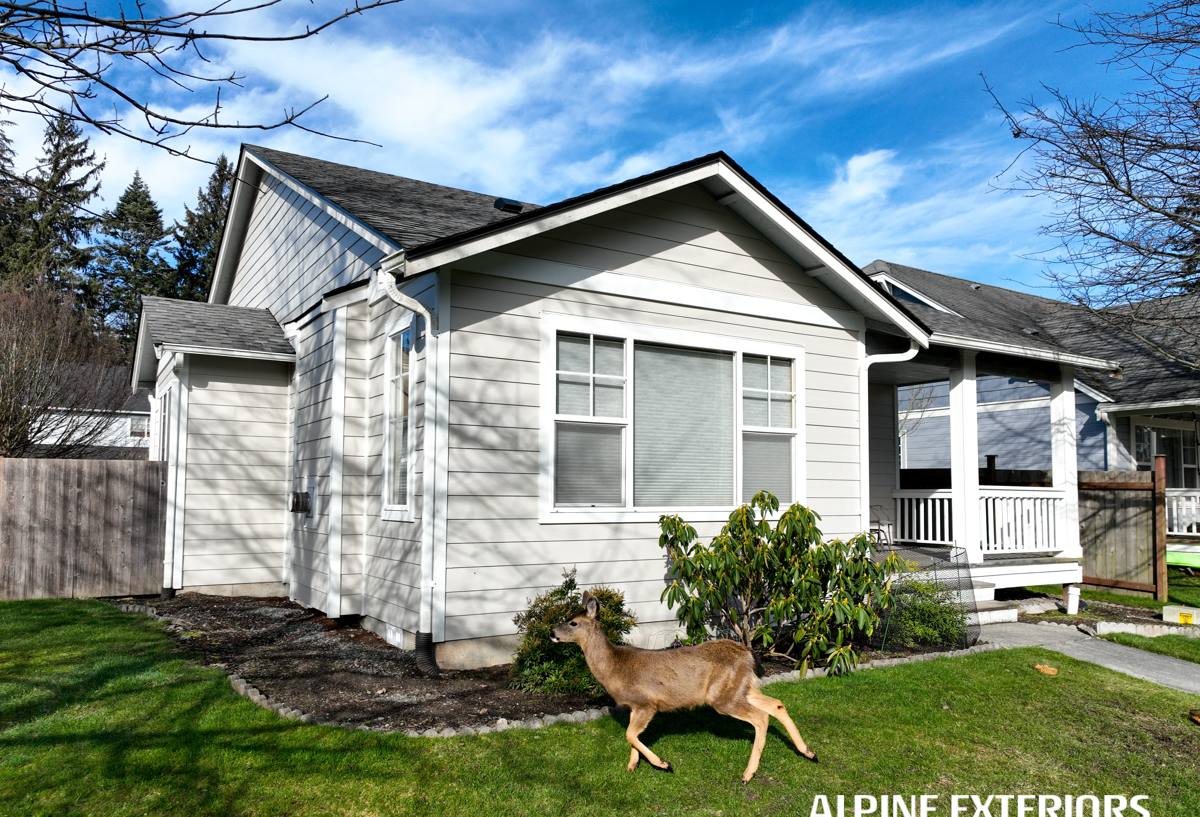
What Salt Air and Coastal Wind Actually Do to a House
Salt air is corrosive to unprotected metal fasteners, trim, and hardware, and it accelerates the breakdown of coatings and caulking faster than inland exposure does. On siding specifically, salt spray combines with moisture to attack weak points in a finish — chalking, fading, and edge deterioration show up sooner on materials that aren't engineered for coastal exposure. Wind-driven rain compounds the problem by forcing water into any gap in the building envelope: unsealed seams, poorly lapped siding, compromised caulk joints, or nail holes that were never properly treated.
The result over years is a slow, cumulative process. It's rarely one dramatic failure — it's soft trim, a moisture stain that keeps reappearing in the same spot, paint that needs touching up every couple of years instead of every seven or eight, or a north-facing wall that never quite dries out between storms. By the time it's visibly obvious, moisture has often been working on the wall assembly underneath for a while.
Moss and Algae: The Year-Round Companion
Whatcom County's moisture and mild temperatures make it excellent moss and algae habitat, and Cherry Point's tree cover and proximity to water only extend that season. Moss doesn't just look bad — it holds moisture directly against a surface, and on the wrong material that trapped moisture can lead to soft spots, coating failure, or in the worst cases, rot underneath. North- and west-facing walls, areas under eaves, and anything shaded by mature trees are the usual first spots to show growth.
Why We Only Install James Hardie Fiber Cement
We made a deliberate decision as a company to install James Hardie fiber cement siding exclusively — we don't install vinyl, LP SmartSide, Cemplank, Allura, primed spruce, or cedar. That's not a marketing position; it's based on what we've seen hold up in exactly the kind of coastal, wet, moss-prone conditions Cherry Point homes face.
Fiber cement is non-combustible and dimensionally stable — it doesn't expand and contract with moisture the way wood-based products do, which matters a lot when a wall is regularly wetted by driving rain and then has to dry out before the next system rolls through. James Hardie's ColorPlus factory-applied finish is baked on under controlled conditions rather than field-applied, which gives it better adhesion and more consistent UV and salt-air resistance than most site-painted finishes. And Hardie's HZ5 product line is specifically engineered for cold, wet, high-moisture climates like ours — it's not a generic national product retrofitted for the Pacific Northwest.
We're not going to claim other products are without merit — wood siding has real aesthetic appeal, and vinyl has a lower up-front cost. But when we weigh long-term maintenance burden, moisture behavior, and how a product performs specifically in salt air and sustained damp, fiber cement is what we're willing to put our name behind and warranty.
How James Hardie Compares to What We Won't Install
| Material | Moisture/Rot Risk | Coastal Salt Air Durability | Maintenance Burden |
|---|---|---|---|
| James Hardie fiber cement | Very low — cement-based, doesn't rot | Engineered HZ5 line for wet coastal climates | Low — factory finish, occasional wash |
| Cedar / primed spruce | High — natural wood, needs coating maintained | Coatings degrade faster in salt spray | High — repaint/reseal cycle every few years |
| Vinyl siding | Low rot risk, but seams allow water intrusion | Can warp/fade under UV and temperature swings | Low cost, but limited repair options |
| LP SmartSide / Cemplank / Allura | Varies by product; engineered wood has moisture sensitivity | Field finish quality is installation-dependent | Moderate — depends on install and finish |
Roofing, Windows, and Decks in the Same Climate
Siding doesn't work in isolation — the roof, windows, and any exterior decking on a Cherry Point home are dealing with the same salt air and rain exposure, so we look at the whole exterior envelope together rather than treating each component as a separate job.
Roofing
A roof near the water takes wind-driven rain from multiple directions over the course of a season, and moss on a roof surface behaves the same way it does on siding — it holds moisture against the material and shortens its service life. Proper underlayment, flashing at every penetration and valley, and ventilation that lets a roof deck dry out between storms all matter more here than they would somewhere with a drier, calmer climate.
Windows
Window flashing and sealant are often where coastal moisture problems actually start, even when the siding itself is sound. A window that isn't properly flashed and integrated with the surrounding wall assembly gives wind-driven rain a direct path behind the cladding. When we replace siding, we treat window flashing as part of the job, not an afterthought.
Decks
Exterior decks near the water face the same combination of salt exposure, UV, and sustained dampness as siding — fasteners, ledger connections, and any wood-to-ground contact points are where problems tend to start. Material choice and proper drainage detailing matter as much on a deck as they do on a wall.
What a Local Cherry Point Job Typically Involves
Every property is different, but exterior work in this area generally follows a similar sequence:
- An on-site assessment of the current siding, roofing, windows, and any deck structures, looking specifically for moisture entry points, moss buildup, and areas showing early wear from salt exposure.
- A discussion of scope — whether the job is a full siding replacement, a roof-and-siding combination, or a more targeted repair — and what James Hardie product line and profile fits the home.
- Proper removal of the old material and inspection of the sheathing and wall assembly underneath, since that's often where hidden moisture damage shows up.
- Installation to manufacturer spec, including correct fastening, flashing, and joint treatment — details that matter more in a high-moisture coastal environment than they would inland.
- A final walkthrough covering warranty coverage and basic maintenance expectations going forward.
Maintenance in a Salt Air, High-Moss Environment
Even durable, low-maintenance materials benefit from a little seasonal attention in this climate. A short checklist we give homeowners in the Cherry Point and greater Blaine area:
- Rinse siding periodically to remove salt residue and surface grime, especially on walls facing the water or prevailing wind.
- Keep gutters clear so water isn't overflowing and running down siding or pooling near the foundation.
- Trim back tree limbs and vegetation that shade walls or roof sections, since shaded, damp areas are where moss and algae establish first.
- Check caulking around windows, doors, and trim annually — coastal UV and salt exposure break down sealants faster than in drier inland areas.
- Address any moss growth early rather than letting it establish, since removal gets harder and more damaging to the surface the longer it sits.
- Watch for soft spots, discoloration, or recurring damp patches, which are usually early signs of a flashing or moisture entry problem worth having looked at.
Why a Local Crew Matters for This Kind of Work
Exterior work in a coastal microclimate like Cherry Point rewards familiarity. Knowing which wall orientations in this specific area take the worst of the wind-driven rain, how moss behaves under the tree cover common to Whatcom County properties, and how salt air specifically ages different materials isn't something you get from a generic install manual — it comes from doing this work repeatedly in this exact environment. A crew based in the area is also easier to reach if a warranty question or a maintenance question comes up years down the line, rather than trying to track down a contractor who did one job in the region and moved on.
Get a Free, No-Pressure Estimate
If you're noticing early wear, moss buildup, or moisture issues on your Cherry Point home's siding, roof, windows, or deck — or you're just planning ahead — we're happy to take a look and walk you through what we're seeing and what your options are. There's no pressure and no obligation; use the form below to request a free estimate.