 Blaine Siding
 Grandview's Exterior Environment
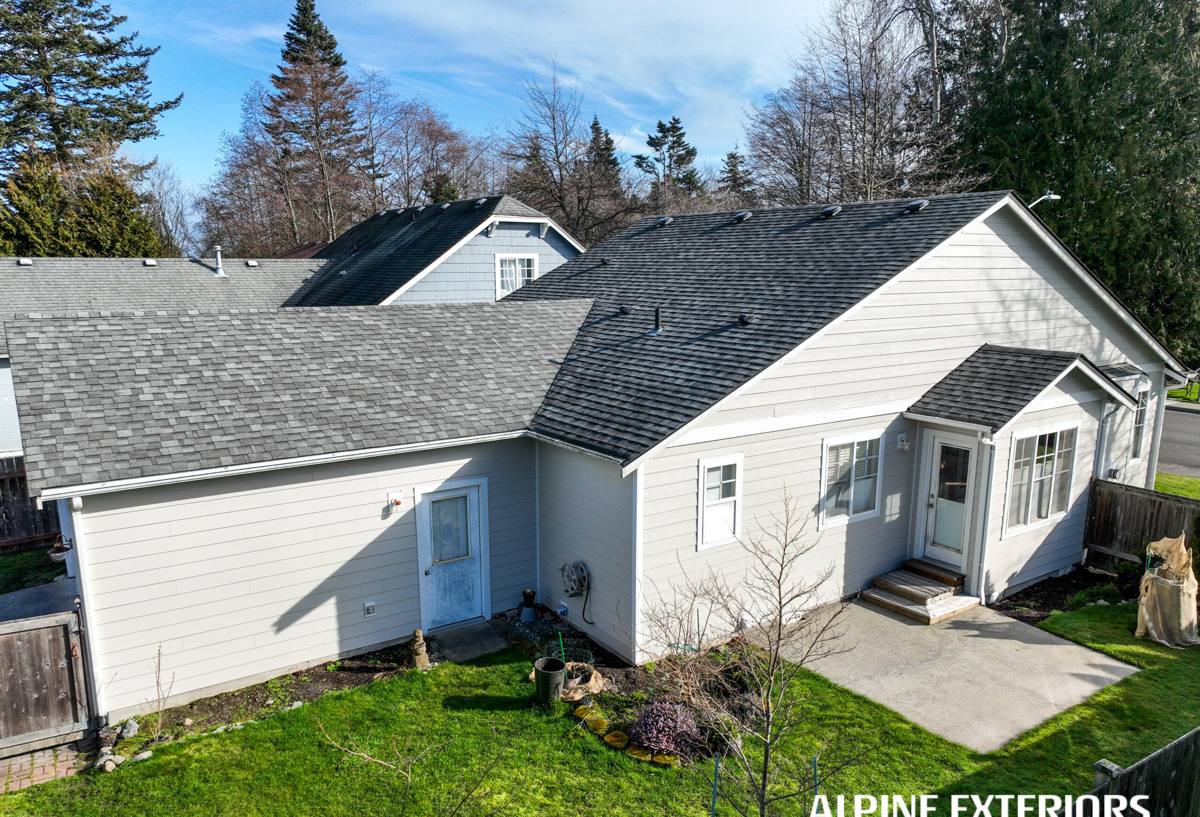
Grandview sits close enough to the water that homes here take on a different kind of weathering than houses further inland in Whatcom County. Salt-laden air moves in off the bay, driving rain comes through sideways during winter storms, and the tree cover and persistent damp keep moss and algae active on north-facing walls and rooflines for much of the year. None of this is unusual for this part of Washington, but it does mean exterior materials that work fine in a drier climate often struggle here.
Siding on a Grandview home isn't just decorative. It's the first line of defense against wind-driven moisture, salt exposure that accelerates corrosion and finish breakdown, and the kind of sustained dampness that lets mold, moss, and rot get a foothold if the wall assembly isn't managed correctly. When we look at a home in this area, we're thinking about all three at once, not just how the siding looks from the street.
What Salt Air and Moss Actually Do to a House
Salt air is corrosive to exposed fasteners, flashing, and any metal trim that isn't rated for coastal exposure. Over years, it also breaks down paint film faster than it would inland, which is why houses near the water tend to need repainting more often if they're finished with a field-applied coating. Moss and algae are a separate problem: they hold moisture against the surface they're growing on, and on wood-based sidings that moisture exposure is what eventually leads to soft spots, delamination, and rot, especially at butt joints, corners, and anywhere caulk has failed.
Driving rain adds a third factor. Wind-blown rain doesn't just wet the surface of a wall — it pushes water sideways and upward at eaves, window heads, and siding laps, testing every seam and piece of flashing on the building. A siding system that isn't dimensionally stable, or that relies heavily on perfect caulk joints to stay watertight, is going to show problems faster in a location like Grandview than it would somewhere drier.
Where We See Problems First
- North and west-facing walls with limited direct sun exposure, where moss and algae take hold fastest
- Butt joints and corner trim where old caulk has shrunk or cracked
- Areas beneath roof valleys or gutters that see concentrated water runoff
- Fascia and trim near ground level where splash-back keeps material wet longer
- Any spot where the original siding wasn't primed or sealed on cut edges during installation
Why We Install James Hardie Fiber Cement — And Nothing Else
We made a decision a long time ago to install only James Hardie fiber cement siding, and we don't install vinyl, LP SmartSide, cedar, primed spruce, or other fiber cement brands. That's not a marketing position — it's a practical one, based on what holds up in this climate over decades rather than years.
Fiber cement is dimensionally stable in a way wood-based products aren't. It doesn't expand and contract with moisture the way engineered wood siding can, which matters in a climate with sustained damp periods. It's also non-combustible, which is a real consideration given wildfire smoke and ember exposure that reaches even coastal Washington in dry summer stretches. James Hardie's ColorPlus factory-applied finish is baked on and cured under controlled conditions, so it holds color and resists the kind of premature fading and peeling that field-applied paint can suffer under sustained UV and salt exposure. The company also builds specific HZ5 product lines engineered for climate zones like ours, meaning the product itself accounts for the freeze-thaw and moisture cycling that's normal for Whatcom County.
We're not going to tell you every other product is junk — vinyl and engineered wood both have legitimate uses and plenty of homes are sided in them without issue. But for the maintenance burden, moisture sensitivity, and long-term appearance we want to stand behind on a Grandview home, Hardie is what we've settled on. If your existing siding is one of those other materials, we'll say so honestly and explain the actual trade-offs rather than just recommending a tear-off.
What a Siding Inspection Looks Like Here
Before we recommend anything, we walk the exterior and look at specifics, not generalities. That includes checking for soft or spongy spots (a sign of moisture intrusion behind the surface), examining caulk joints and trim for gaps, looking at flashing above windows and doors, and checking how the siding meets the roofline and foundation. We also look at ventilation — poor attic or wall cavity ventilation is a common contributor to moisture problems that get blamed on the siding when the real issue is trapped humidity.
For a home that's dealt with years of moss growth, we're also checking whether that moss has just been cosmetic or whether it's held enough moisture against the wall to cause deeper damage. Surface staining is one thing; soft sheathing underneath is another, and it changes the scope of the job.
Beyond Siding: Roofing, Windows, and Decks
Siding doesn't work in isolation — it's one part of a building envelope that includes the roof, windows, and any deck structures attached to the house. We handle all four because they interact. A roof that's shedding water improperly onto a wall below will undermine even a well-installed siding job. Windows with failed flashing or worn weatherstripping let moisture behind the siding at the exact seams that are hardest to inspect. Decks attached to the house create their own flashing and ledger connections that need to be watertight where they meet the siding.
When we're on-site for a siding estimate in Grandview, we'll flag anything we see on the roof, windows, or deck connections that could undermine the siding work, even if that's not what you called us about. It doesn't do you any good for us to install new siding around a roof leak or a rotted ledger board and pretend we didn't notice.
Cost Factors for a Grandview Siding Project
Every home is different, and we don't quote sight-unseen, but these are the main variables that move a siding project's scope and cost:
| Factor | Why It Matters |
|---|---|
| Extent of existing damage | Rot or moisture-compromised sheathing found during tear-off adds repair work beyond the siding itself |
| Home size and wall complexity | Multiple gables, dormers, and cut-ins take more labor and material per square foot than simple wall planes |
| Siding profile chosen | Lap width, shingle-style panels, and trim details all have different material and labor costs |
| Trim and accessory work | Fascia, corner boards, and window trim replacement is often bundled with siding for a consistent finished look |
| Access and site conditions | Slopes, landscaping, and limited access around the home affect scaffolding and staging time |
| Color and finish | Factory-finished ColorPlus options avoid the added cost and maintenance cycle of field painting |
Maintenance That Actually Fits This Climate
Fiber cement siding is low-maintenance compared to wood, but "low-maintenance" doesn't mean "no maintenance," especially with the moss and algae pressure common around Grandview. A periodic gentle wash (not high-pressure blasting, which can damage caulk joints and finish) keeps growth from establishing. Keeping gutters clear and functioning prevents the concentrated runoff that causes localized staining and moisture problems at specific wall sections. It's also worth having caulk joints and trim connections checked every few years, since those are the points most likely to need attention long before the siding panels themselves show any wear.
- Rinse siding periodically to discourage moss and algae buildup, especially on shaded walls
- Keep gutters and downspouts clear so water isn't concentrating against specific wall sections
- Trim back vegetation that keeps siding in constant shade and dampness
- Have caulk joints and trim inspected every few years, not just when a problem is visible
- Address any soft spots or staining early rather than waiting for it to spread
Why a Local Crew Matters
A crew that works throughout Whatcom County and understands what this specific stretch of coastline does to a house is going to catch things that a general contractor from further inland might miss — the early signs of salt-driven corrosion on trim fasteners, the wall orientations that need extra attention for moss, the flashing details that matter most when rain is coming in sideways off the water. We're not guessing at what this climate does to a home; we see it on a regular basis and build our installation practices around it.
That local knowledge also means we're not disappearing after the install. If a warranty question comes up or something needs a look years down the road, we're a call away, not a company that passed through once and moved on.
If you're noticing moss buildup, soft spots, fading, or just want an honest read on where your home's exterior stands, we're happy to come take a look. Estimates are free, there's no pressure to sign anything on the spot, and you'll get a straight answer about what actually needs attention versus what can wait.