 Blaine Siding
 Siding Built for Where the Border Meets the Bay
Peace Arch sits in one of the more distinctive microclimates in Whatcom County. Homes here are close enough to Semiahmoo Bay and Drayton Harbor to catch salt-laden air off the water, exposed enough to take driving rain straight off the Strait of Georgia, and shaded enough in places to grow moss on anything that holds moisture for more than a day or two. It's a beautiful place to live. It is also a genuinely hard place to keep exterior siding looking good and performing well for twenty or thirty years without the right material and the right installation.
We've worked on homes throughout this stretch of Blaine and the surrounding area long enough to see which siding choices hold up here and which ones start showing problems within five to ten years. This page walks through what the climate actually does to a house near the Peace Arch, and how we approach exterior work — siding, roofing, windows, and decks — to account for it.
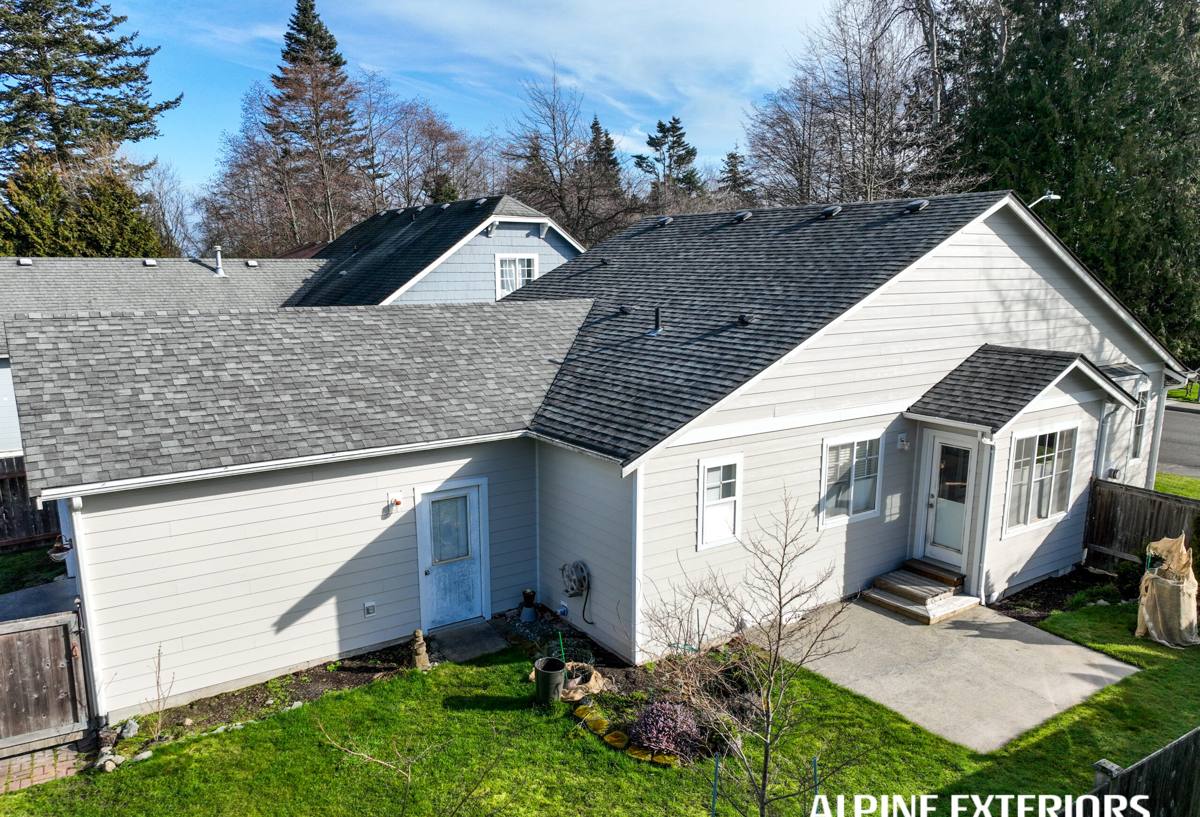
What This Climate Actually Does to a House
Salt Air and Coastal Exposure
Salt air doesn't just affect boats and dock hardware. Airborne salt settles on exterior surfaces, holds moisture against them longer than plain rainwater would, and accelerates corrosion on fasteners, flashing, and any metal trim that isn't rated for coastal exposure. On wood-based siding products, that extra moisture retention speeds up swelling, checking, and paint failure at the surface. Fiber cement doesn't absorb moisture the way wood or wood-composite products do, which is one of the reasons it holds up better in a setting like Peace Arch.
Driving Rain and Wind-Driven Moisture
Rain here rarely falls straight down. Wind off the water pushes it sideways, which means it hits vertical wall surfaces — and works its way behind trim, into butt joints, and around windows — far more aggressively than a typical rainfall would inland. This is a water-management problem as much as a material problem. Even a premium siding product will fail early if the flashing, house wrap, and joint details behind it aren't built to shed wind-driven water. We've seen good siding fail because of bad flashing, and we've seen it hold up for decades when the water management underneath was done right.
Moss, Algae, and a Long Wet Season
Whatcom County's wet season runs long, and shaded north- and west-facing walls in Peace Arch can stay damp for weeks at a stretch. That's exactly the environment moss and algae need. On porous or textured surfaces, growth gets a foothold in the surface itself, not just on top of it, which makes it harder to fully remove without damaging the material. A factory-cured, dense fiber cement surface with a baked-on finish gives moss and algae less to grab onto and holds up much better to periodic cleaning than raw wood or a softer composite substrate.
Why We Standardized on James Hardie
We install James Hardie fiber cement siding exclusively — we don't install vinyl, LP SmartSide, primed wood, cedar, or other fiber cement brands. That's not a marketing position, it's an operating decision based on what actually holds up in this climate over the long term.
- Fiber cement is non-combustible, which matters more every year as wildfire smoke seasons stretch further into the Pacific Northwest calendar.
- Hardie's ColorPlus factory finish is baked on under controlled conditions, which gives it more consistent adhesion and UV resistance than field-applied paint on wood or engineered wood products.
- Hardie's HZ5 product line is specifically engineered for climates with prolonged moisture exposure — the category the Pacific Northwest coast falls squarely into.
- The warranty is transferable and backed by a large, established manufacturer, which matters to future buyers as much as current owners.
We're upfront that fiber cement costs more upfront than vinyl and requires more careful installation than either vinyl or wood. We think that trade-off is worth it for a house that's going to sit a few blocks from saltwater for the next several decades.
How We Approach Siding Projects Near the Peace Arch
Every project starts with a walk-around assessment of the existing exterior, not just a measurement for materials. We're looking at where water currently gets in, where previous siding has failed, how the roof sheds water onto the walls below, and which elevations take the worst of the wind and rain. That assessment shapes the flashing and house-wrap details before a single piece of siding goes up.
Water Management Comes First
On a coastal-exposed property, the siding itself is really the second layer of defense. The house wrap, window and door flashing, kick-out flashing at roof-wall intersections, and properly lapped joints are what actually keep water out of the wall assembly. We build that layer correctly before Hardie ever goes on the wall, because no siding product — including the one we install exclusively — will make up for water management shortcuts underneath it.
Fastening and Joint Details for Coastal Exposure
We use corrosion-resistant fasteners and follow Hardie's installation specifications closely, including proper clearances at grade, decking, and roof lines, because gaps and clearance mistakes are where moisture problems start. Getting this right is what preserves both the product's performance and its warranty coverage.
Comparing Exterior Materials in a Salt-Air, High-Rain Climate
| Material | Moisture Behavior | Salt Air / Corrosion Resistance | Moss & Algae Resistance | Typical Maintenance |
|---|---|---|---|---|
| Vinyl siding | Doesn't absorb water, but seams and panels can flex, warp, or gap over time | Doesn't corrode, but can chalk and fade faster near saltwater | Smooth surface sheds growth better than wood; seams can still trap debris | Periodic washing; panels can crack in impact or extreme cold |
| Primed wood / cedar | Absorbs moisture readily; prone to swelling, checking, rot at joints | Salt accelerates finish breakdown and fastener corrosion | Porous surface is highly susceptible to moss and algae growth | Frequent repainting and sealing; highest long-term upkeep |
| LP SmartSide (engineered wood) | Better than raw wood but still wood-based; edge and cut-end sealing is critical | Moderate; finish and edge sealing matter more near salt exposure | Better than raw wood, still more porous than fiber cement | Regular inspection of seams, caulking, and finish condition |
| James Hardie fiber cement | Dimensionally stable; doesn't swell, warp, or rot from moisture | Cement-based composition resists salt-driven deterioration | Dense factory finish gives growth less to grab onto | Occasional washing; ColorPlus finish holds up without repainting for years |
More Than Siding: Roofing, Windows, and Decks
A siding-only fix rarely solves a coastal moisture problem on its own, which is why we also handle roofing, windows, and decks. A roof with poor drip edge or valley flashing will dump water directly onto a wall no matter how good the siding is. Older windows with failed seals or poor flashing are one of the most common entry points for wind-driven rain in homes throughout this area. And a deck built without the right ledger flashing and gap spacing traps moisture right against the house. Treating the exterior as one connected system — rather than four unrelated projects — is how we keep water out of a Peace Arch home for the long haul.
Signs Your Current Siding Is Losing the Fight
- Paint that's peeling, bubbling, or chalking heavily on north- or west-facing walls
- Soft or spongy spots when you press on siding near the base of the wall or around windows
- Persistent moss or dark streaking that comes back within weeks of cleaning
- Visible gaps or separation at butt joints and corner boards
- Rust staining running down from fasteners or metal trim
- Interior signs — musty smells, damp drywall, or peeling paint on inside walls near exterior corners
Any one of these on its own isn't necessarily an emergency, but a few of them together usually means moisture has been getting behind the siding for a while.
Why a Local Crew Matters Here
Installing siding correctly in a place like Peace Arch means understanding which walls take the worst wind-driven rain, how close a given property sits to salt exposure, and how long shaded sections stay damp through a Whatcom County winter. That's the kind of judgment that comes from working on homes in this specific stretch of coastline repeatedly, not from a general installation checklist. A crew that works this area regularly will flash a window differently on the water-facing side of a Peace Arch home than they would on a sheltered inland lot, because the exposure genuinely is different.
Get a Straightforward Look at Your Exterior
If you're noticing wear on your siding, planning ahead for a home near the border and the bay, or just want an honest read on how your current exterior is holding up, we're happy to take a look. There's no pressure and no obligation — just a straightforward assessment from a crew that knows this stretch of Blaine and works in it regularly. Use the form below to request a free estimate.