 Blaine Siding
 Exterior Work for Homes Near Blaine Harbor
Blaine Harbor sits right where Whatcom County meets the water, and that location shapes everything about how a house ages here. Homes near the harbor deal with a combination most inland Washington neighborhoods never see: salt-laden air blowing off the water, driving rain that hits siding sideways instead of straight down, and a moss season that can stretch from fall through spring. None of that means a home here is doomed to constant repairs — it means the exterior has to be built and maintained with that environment in mind from day one.
We work on siding, roofing, windows, and decks throughout the Blaine area, and the harbor neighborhoods are some of the more demanding conditions we see in the county. This page walks through what that environment does to a house and how we approach exterior work to hold up against it.
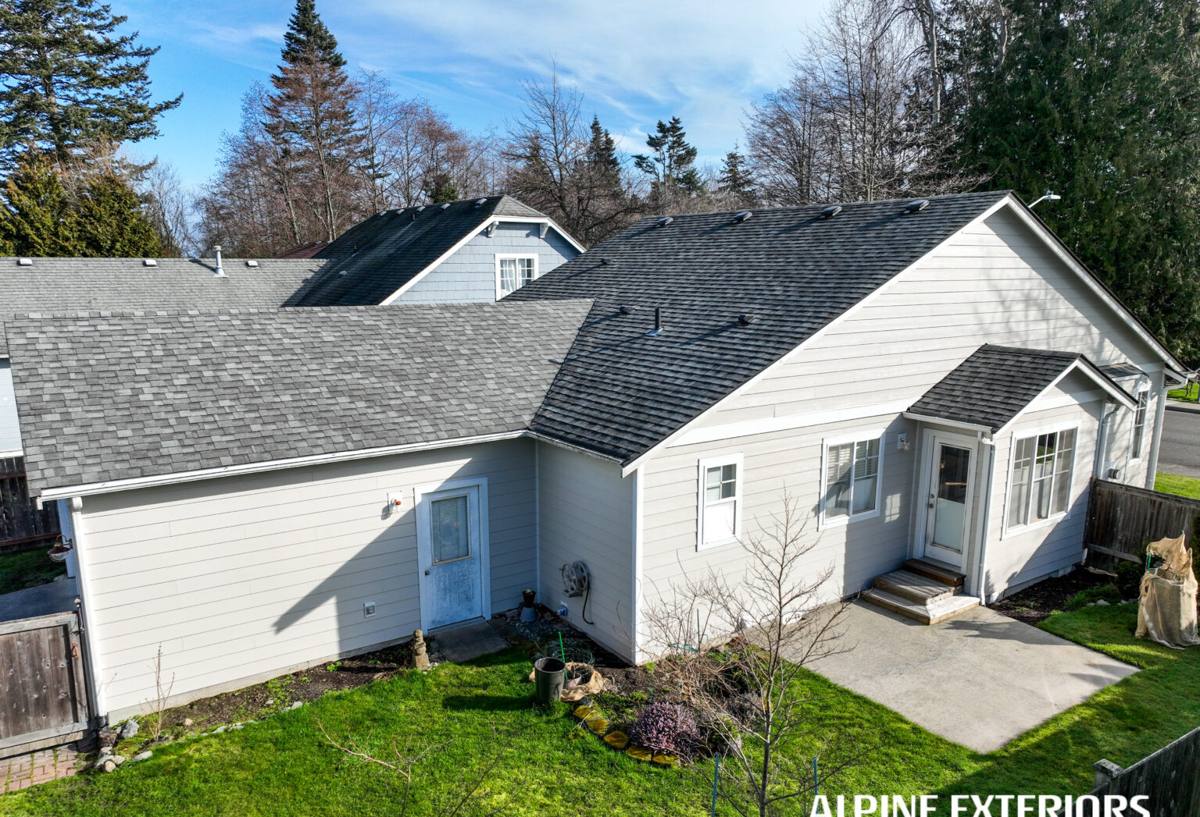
What Salt Air Actually Does to a House
Salt air isn't just a smell that rolls in off the water. Airborne salt is corrosive, and it settles on every exposed surface of a home — siding, trim, fasteners, flashing, and roofing hardware. Over years, that steady low-level exposure accelerates corrosion on anything metal that isn't rated for it, and it can degrade paint finishes and caulking faster than the same products would wear in a drier, inland location.
This is one of the reasons material choice matters more near the harbor than it does a few miles inland. Fasteners, flashing metal, and hardware all need to be selected with corrosion resistance in mind, not just cost. It's also why we pay close attention to how a siding product's factory finish is engineered to handle sustained moisture and salt exposure, rather than assuming any exterior paint job will perform the same way it would in a sheltered subdivision.
Driving Rain and Wind-Driven Moisture
Wind off the water doesn't just bring rain — it pushes it. Driving rain hits walls at an angle instead of running straight down, which means it finds its way into gaps, laps, and seams that would stay dry in a calmer storm. Window and door flashing, siding overlaps, and any penetration in the exterior wall (vents, hose bibs, light fixtures) are all more exposed to wind-driven water near the harbor than they would be on a home set back from the water or shielded by more tree cover.
Good exterior work in this kind of environment is less about any single product and more about the whole assembly — how the water-resistive barrier, flashing, siding, and trim are layered together so that water that does get past the outer surface has somewhere to go besides into the wall cavity.
Moss Season: Longer and More Persistent Near the Water
Every home in Whatcom County deals with moss to some degree, but harbor-area homes tend to see it worse and longer. Shaded north- and west-facing walls, gutters, and roof valleys stay damp for extended stretches, and moss and algae take hold wherever moisture lingers and sunlight doesn't reach. Left unaddressed, moss holds water against the surface underneath it, which is a problem whether that surface is roofing, siding, or trim.
On roofs, moss buildup in valleys and along shaded edges can work under shingles or panels over time and shorten the roof's effective life. On siding, moss and algae staining are mostly a cosmetic and maintenance issue on a well-built wall, but they're a sign that a surface is staying wet longer than it should — worth a look to confirm water isn't getting trapped somewhere it shouldn't be. Regular gutter clearing, keeping vegetation trimmed back from walls and rooflines, and choosing exterior materials that don't feed moss growth all help manage this over the life of the house.
Why We Only Install James Hardie Fiber Cement Siding
We install James Hardie fiber cement siding exclusively, and we don't offer LP SmartSide, vinyl, Cemplank, Allura, primed spruce, or cedar. That's a deliberate standard, not a limitation of what we're capable of installing, and it's especially relevant in an environment like Blaine Harbor.
Fiber cement is non-combustible and dimensionally stable, meaning it doesn't expand and contract with moisture and temperature the way wood-based products do. That matters in a climate with sustained damp periods, because wood-based siding products are more prone to swelling, edge softening, and moisture-related deterioration when they stay wet for long stretches — exactly the conditions the harbor delivers for months at a time. Vinyl siding can hold up reasonably well against moisture itself, but it's a thinner, more flexible material that can be more vulnerable to wind damage in exposed, gusty locations, and its color is baked into the material rather than a factory-applied finish, so it fades and chalks over time without much recourse.
James Hardie's ColorPlus factory finish is baked on under controlled conditions rather than field-applied, which gives it more consistent coverage and better resistance to fading, chipping, and cracking than most site-applied paint jobs — a real advantage against sustained UV and salt exposure. Hardie also makes climate-engineered HZ product lines specifically formulated for different regional exposure levels, and the warranty on the product is a strong, transferable one when the installation is done to spec. None of this means other products are unusable everywhere — it means that for the specific mix of salt air, wind-driven rain, and moss exposure our customers near the harbor deal with, Hardie is the product we're willing to stand behind.
How Siding Materials Compare in This Environment
| Factor | James Hardie Fiber Cement | Vinyl | Wood-Based (LP, Cedar, Primed Spruce) |
|---|---|---|---|
| Moisture/swelling resistance | High — cement-based, dimensionally stable | High, but seams and panels can flex or gap | Lower — prone to swelling and edge wear when wet |
| Finish durability in salt air | Factory-baked ColorPlus finish, fade-resistant | Color molded through material, fades/chalks over time | Field-applied paint/stain, needs regular recoating |
| Wind exposure (gusty, waterfront lots) | Rigid, holds up well to wind loading | More flexible, can crack or blow off in high wind | Varies by product; fasteners and joints are the weak point |
| Fire resistance | Non-combustible | Combustible | Combustible |
| Typical maintenance | Occasional wash, repaint only if desired | Wash to prevent chalk buildup, no repainting | Regular repainting/staining, moisture inspection |
Roofing, Windows, and Decks Near the Water
Siding is only part of the exterior envelope, and the same conditions that stress siding near Blaine Harbor stress the rest of the house too.
Roofing
Roofs here deal with the moss and algae issue directly, plus corrosion risk on any exposed metal flashing, vents, and fasteners. Choosing corrosion-resistant hardware and keeping valleys and edges clear of debris and moss buildup does more for roof longevity in this environment than almost anything else a homeowner can control.
Windows
Wind-driven rain puts real demand on window flashing and sealant. Properly flashed windows — with the water-resistive barrier and flashing tape integrated correctly rather than just caulked around the edges — are what actually keep water out of the wall during a sideways rainstorm. This is also a good opportunity to upgrade to better-performing glass, since coastal homes often deal with wind noise and heat loss along with the moisture concerns.
Decks
Outdoor living spaces near the harbor take a beating from both sun and salt spray. Fasteners, railing hardware, and structural connectors all need to be rated for exterior and, ideally, coastal exposure, and decking material choice matters for how much upkeep the space will need over time.
Signs Your Exterior Needs a Closer Look
- Moss or dark streaking on siding, trim, or roof edges that keeps coming back after cleaning
- Soft, swollen, or delaminating siding panels, especially near the bottom edge or around windows
- Rust staining below fasteners, flashing, or hardware
- Peeling or bubbling paint on trim or siding, particularly on walls facing the water or prevailing wind
- Water stains or soft spots on interior walls or ceilings near exterior corners and window headers
- Gutters that overflow regularly or hold standing debris and moss
- Visible gaps or cracking at siding seams, window trim, or roof flashing
Why a Local Crew Matters
A crew that works Whatcom County waterfront and near-waterfront properties regularly knows the difference between a standard installation detail and what's actually needed for a harbor-exposed wall — where extra flashing attention pays off, which orientations take the worst of the wind-driven rain, and how much moss pressure to expect on shaded elevations. That's knowledge that comes from doing the work in this specific environment repeatedly, not from a general specification sheet.
It also means someone is nearby if a question comes up after the job is done — whether that's about a warranty question, a maintenance question, or just wanting a second opinion on something that looks off after a hard winter storm.
What to Expect When You Work With Us
We start with a straightforward look at the exterior — siding, roofing, windows, and decks as relevant — and talk through what we're seeing and why. If James Hardie siding replacement makes sense, we'll walk through product lines, colors, and what correct installation involves for your specific home and exposure. If the issue is something smaller — a roofing repair, a window flashing problem, deck maintenance — we'll say so rather than push a bigger project than the house needs.
If you're in the Blaine Harbor area and dealing with siding, roofing, window, or deck concerns — or just want an honest read on how your home is holding up against the salt air and rain — we're happy to take a look. Reach out for a free, no-pressure estimate using the form below.