 Blaine Siding
 The Peace Arch Climate Challenge Your Siding Faces
Homes in the Peace Arch corner of Blaine sit about as close to the water and the international border as a house in Whatcom County can get. That location is beautiful, but it is also one of the harder places on the Washington coast to keep a house's exterior in good shape. Siding here works against three things at once, all year long: salt-laden marine air, wind-driven rain coming off the bay, and a moss season that runs longer than almost anywhere else in the region. Any siding product or installation detail that ignores one of those three is setting the homeowner up for problems within a handful of years, not decades.
Salt Air and Corrosion
Proximity to saltwater means airborne salt settles on every exterior surface, including siding, trim, and fasteners. Salt is hygroscopic — it pulls moisture out of the air and holds it against whatever it lands on. Over time that accelerates corrosion in exposed metal fasteners and flashing, and it keeps painted or coated surfaces damp longer than they would stay in a drier inland location. Siding materials and fastener choices that are fine forty miles inland can underperform noticeably closer to the water.
Driving Rain and Wind-Driven Moisture
Blaine's exposure to weather systems moving in off the Strait of Georgia means rain here isn't always falling straight down. Wind-driven rain gets pushed sideways and upward under laps, around corners, and into any gap in the water-resistive barrier that a less careful installer left behind. A siding system in this location has to be judged not just on the material, but on whether every seam, corner, and penetration was actually detailed to shed water rather than trap it.
A Long Moss Season
Whatcom County's damp, mild winters and shoulder seasons give moss and algae months of ideal growing conditions on north-facing and shaded wall sections. Moss holds moisture against the cladding, and on materials that aren't dimensionally stable or that absorb water at the surface, that sustained dampness is what eventually leads to swelling, cracking, or rot at the substrate. The siding you choose, and how it's installed, determines whether moss is a cosmetic nuisance you hose off once a year or a slow-moving structural problem.
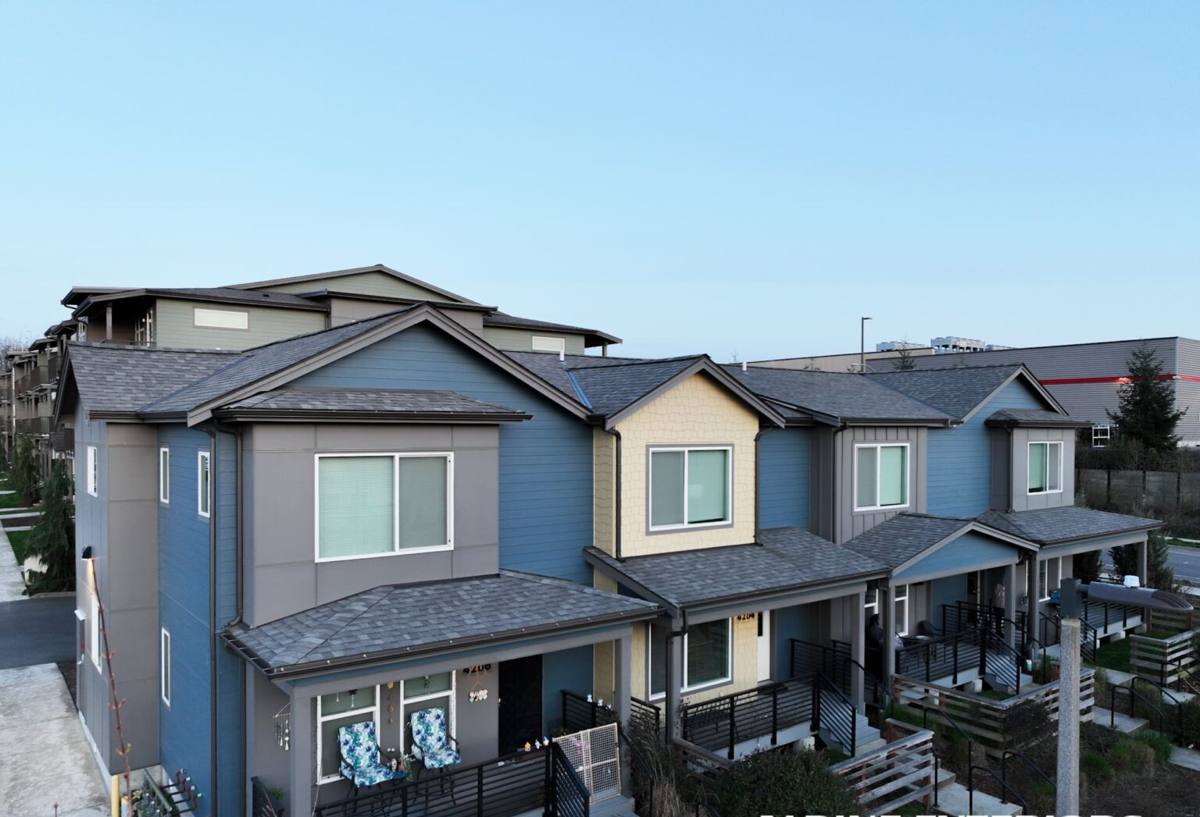
What Correct Siding Installation Requires Here
"Correct installation" isn't marketing language — it's a specific set of details that either get done right or don't. In a climate like Blaine's, skipping any one of them shows up as a callback within a few wet seasons.
Moisture Management Behind the Cladding
Every wall needs a continuous water-resistive barrier installed with properly lapped and taped seams, correctly integrated with window and door flashing so water is directed out and down, never behind the barrier. On exposures that take direct wind-driven rain, we install a rainscreen gap — a furring strip system that lets any moisture that does get past the cladding drain and dry instead of sitting against the sheathing. That air gap also helps siding dry out faster after storms, which matters directly for moss and mildew resistance.
Fastening and Flashing Details
Fastener spacing, penetration depth, and corrosion-resistant fastener selection all matter more here than in a drier inland climate, because of the salt air discussed above. Flashing at windows, doors, decks, and roof-to-wall intersections has to be layered correctly — house wrap, then flashing, then siding — so gravity always has a downhill path for water. We also pay close attention to the bottom starter course and any siding-to-grade clearance, since standing moisture at the base of a wall is one of the most common causes of premature failure we see on older homes in this area.
| Factor | Why It Matters in Peace Arch | What We Do |
|---|---|---|
| Water-resistive barrier | Wind-driven rain finds any gap in the barrier | Fully lapped, taped, and flashing-integrated installation |
| Rainscreen gap | Faster drying reduces moss and rot risk | Furring strip rainscreen on exposed elevations |
| Fastener selection | Salt air accelerates corrosion | Corrosion-resistant fasteners, correct embedment depth |
| Grade clearance | Splash-back and standing moisture rot siding bottoms | Proper starter strip height and clearance from grade |
| Caulking and sealant joints | UV, salt, and moisture break down poor sealant fast | Manufacturer-specified sealants at all trim and penetration joints |
Why We Install Only James Hardie Fiber Cement
We made a deliberate decision years ago to stop installing vinyl, LP SmartSide, and other engineered wood or composite products, and to standardize on James Hardie fiber cement for every home we side. That decision was based on how those products perform, specifically, in a climate like this one — not on brand preference.
Built for This Climate Zone
James Hardie engineers its HZ product lines for specific climate conditions across North America, and the Pacific Northwest falls under their HZ5 specification, built around the reality of prolonged moisture exposure. Fiber cement itself is non-combustible and dimensionally stable — it doesn't swell, warp, or absorb water the way engineered wood products can when a seam or cut edge is exposed to sustained dampness. That matters directly in a location where moss and wind-driven rain keep wall sections wet for extended stretches.
Factory-Applied Finish
Hardie's ColorPlus finish is baked on at the factory under controlled conditions, which gives it better adhesion and UV resistance than field-applied paint, and it comes with its own finish warranty separate from the substrate warranty. In a salt-air environment, a factory finish that resists fading and doesn't need repainting on the same schedule as site-painted siding is a real, practical advantage — not just a convenience.
Our Installation Process, Start to Finish
Every Peace Arch project follows the same disciplined sequence, because skipping steps is where problems start.
- On-site evaluation of the existing wall assembly, moisture readings where rot or past water intrusion is suspected, and a walk-through of exposure on each elevation.
- Removal of existing siding and inspection of the sheathing underneath, with any damaged sheathing or framing repaired before anything new goes up.
- Installation of a continuous, correctly lapped water-resistive barrier and integrated window/door flashing.
- Rainscreen furring installed on elevations exposed to driving rain, to promote drainage and drying.
- James Hardie panel or lap installation to manufacturer fastening specifications, including corrosion-resistant fasteners.
- Trim, corner, and joint sealing with manufacturer-specified sealants.
- Final walk-through with the homeowner covering care, warranty registration, and what to expect during the first wet season.
Installation Cost Factors for Peace Arch Homes
Every home is different, and we don't quote a job without seeing it, but a few factors consistently move the price on projects in this area: the amount of existing sheathing repair needed (older homes near the water often have more than expected), how many elevations require rainscreen furring, the complexity of trim and window detailing, and whether the home is being sided in Hardie panel, lap, or a mix of profiles. Homes with straightforward rectangular walls and good existing sheathing cost meaningfully less than homes with a lot of dormers, bump-outs, or water damage discovered once the old siding comes off.
Preventing Moss, Mold, and Premature Wear
Correct installation does most of the work, but a little homeowner maintenance extends the life of any siding system in this climate. Keeping gutters clear so roof runoff doesn't wash down the wall face, trimming back vegetation that shades and dampens north-facing walls, and rinsing visible moss or algae growth off once or twice a year will keep a properly installed Hardie exterior looking clean for a very long time. None of this is about compensating for a weak product — it's the same light maintenance any exterior surface benefits from near the water.
Why Local Experience in Peace Arch Matters
A crew that already works this specific stretch of Blaine knows which elevations on a typical Peace Arch lot take the worst of the wind-driven rain, what the moss growth pattern usually looks like by the second winter, and how the salt air here behaves differently than it does even a few miles inland. That's not something you can fully learn from a spec sheet — it comes from doing the work in this exact microclimate, house after house. It also means we're not guessing at fastener corrosion resistance or rainscreen necessity; we know from direct experience which details actually matter on this coastline and which are optional inland.
Signs Your Current Siding Needs Attention
If you're not sure whether your home is due for a closer look, watch for these signs, especially on walls facing the water or prevailing wind:
- Soft or spongy spots when you press on the siding, particularly near the bottom courses
- Persistent moss or algae that returns quickly after cleaning
- Visible gaps, cracking, or warping at seams and corners
- Paint that's peeling or bubbling rather than just fading
- Staining or discoloration that tracks with window and door trim, suggesting a flashing leak
- A musty smell or visible interior staining on walls that back up to exterior siding
If you're weighing a siding project for a home in Peace Arch or anywhere else in Blaine, we're happy to take a look and walk you through what we'd actually recommend for your specific exposure — no pressure, no obligation. Use the form below to request a free estimate.