 Blaine Siding
 Decks Built for the Peace Arch Area's Marine Climate
The Peace Arch area sits about as close to the water and the international border as a neighborhood in Whatcom County gets, and that location shapes every deck built here. Salt-laden air moves in off the Salish Sea, driving rain comes at the house sideways instead of straight down for a good chunk of the year, and a long, damp, low-light season keeps moss and algae active on almost any exterior surface that doesn't get direct sun or airflow. A deck built to a generic spec sheet, without those three things in mind, will show problems years before it should — soft spots at the ledger, corroded fasteners bleeding rust streaks, and a slick green film on the boards every winter.
None of that is a reason to avoid building or replacing a deck near Peace Arch. It's a reason to build it correctly for this specific climate. That means the right decking material for salt and moisture exposure, the right fastener grade, correct ledger flashing, and drainage that actually moves water away from the framing instead of letting it sit. This page covers what that looks like in practice for homes in this part of Blaine.
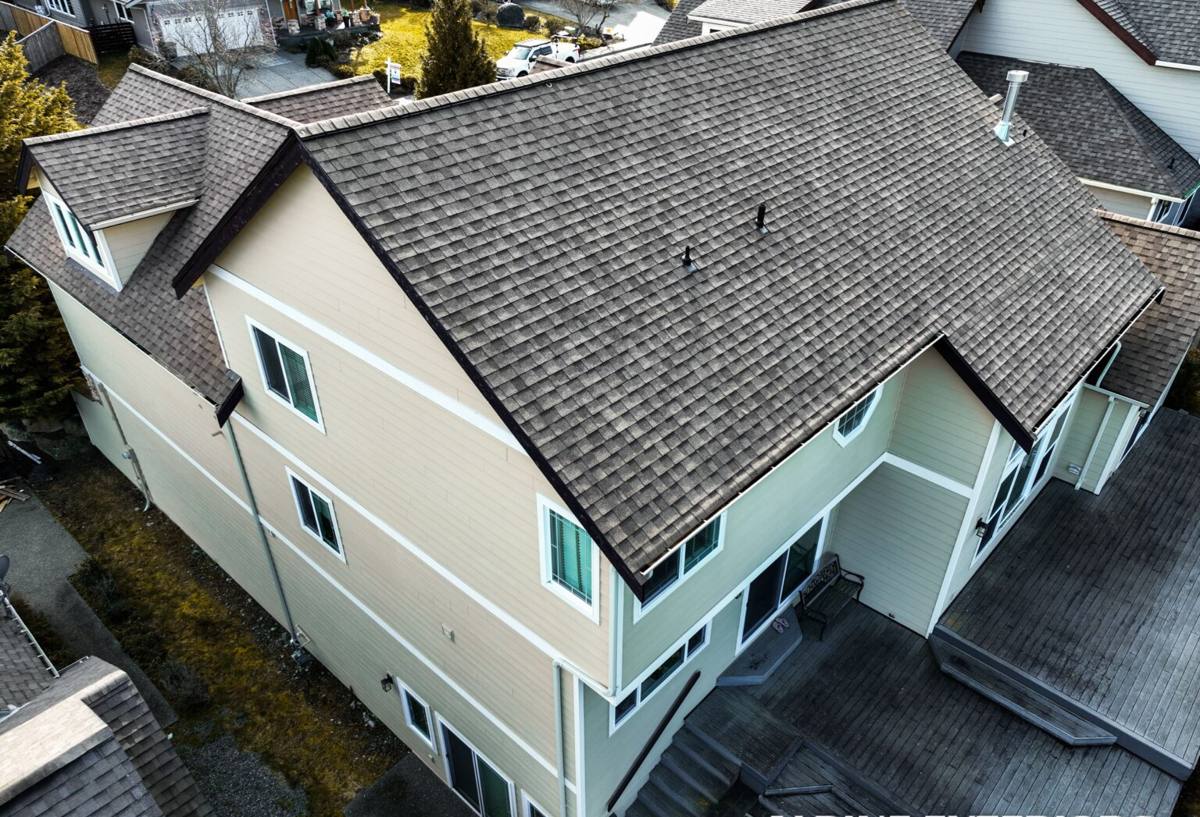
What This Climate Actually Does to a Deck
Salt Air and Metal Fasteners
Airborne salt from the Salish Sea accelerates corrosion on any metal that isn't rated for coastal exposure. Standard electro-galvanized screws and nails — the kind still sold at a lot of big-box stores as general-purpose deck fasteners — can start showing surface rust within a year or two this close to the water. Once fasteners corrode, they weaken, stain the surrounding wood or composite, and eventually need to be pulled and replaced, which usually means partially disassembling the deck.
Driving Rain and Trapped Moisture
Wind-driven rain finds its way into gaps that would stay dry in a calmer inland climate — around ledger boards, under railing posts, and at the end grain of joists and beams. Moisture that gets trapped against wood framing without a way to dry out is what leads to rot, and rot at a ledger board or a support post is a structural problem, not a cosmetic one.
Moss, Algae, and Shade
Blaine's long stretch of overcast, wet months keeps moss and algae active on decking, especially on the north or shaded side of a house, under overhangs, or anywhere tree cover blocks direct sun. Left alone, that growth holds moisture against the board surface and turns a deck into a slip hazard, particularly on stairs.
Choosing a Decking Material for a Coastal Whatcom County Lot
There's no single "best" decking material — the right choice depends on how much maintenance a homeowner actually wants to do, how much salt and shade exposure the specific lot gets, and budget. Here's how the common options compare for a Peace Arch-area deck:
| Material | Moisture & Salt Behavior | Maintenance | Typical Lifespan | Relative Cost |
|---|---|---|---|---|
| Pressure-treated fir/pine | Resists rot when sealed; end grain and cut edges are vulnerable if not treated | Needs re-staining or sealing every 1-3 years in this climate | 15-25 years with upkeep | Lowest |
| Cedar | Naturally rot- and insect-resistant; still needs sealing to hold color and shed water | Regular cleaning and periodic sealing | 20-30 years with upkeep | Mid-range |
| Composite decking | Doesn't absorb moisture or rot; won't feed mold the way bare wood can | Periodic washing to keep salt film and moss from building up on the surface | 25+ years | Higher upfront |
| PVC decking | Fully moisture-resistant, best option for constant salt spray or heavy shade | Low — occasional washing | 25-30+ years | Highest |
We don't push one material on every job. A shaded, exposed lot close to the water often does better long-term with composite or PVC decking even though the upfront cost is higher, because it removes the moss-and-moisture maintenance cycle almost entirely. A more sheltered lot with good sun exposure can do perfectly well with cedar or treated lumber if the owner is willing to keep up with sealing on a normal schedule. We'll walk through the trade-offs for the actual lot, not a generic recommendation.
Framing, Fasteners, and Flashing — The Part You Don't See
Ledger Board Attachment
The ledger board — where the deck attaches to the house — is the single most common failure point on decks in wet coastal climates, because it's where the structure meets the building envelope and where water intrusion does the most damage if it's missed. Correct ledger flashing (installed so water sheds down and away from the house, not behind the siding) is non-negotiable on every deck we attach to a structure.
Fastener and Hardware Grade
Given the salt exposure in this area, we use stainless steel or hot-dip galvanized fasteners and structural hardware rated for coastal/exterior use rather than standard-grade hardware. It costs more up front and it's the right trade-off against having to chase rust stains and loosening connections a few years in.
Joist and Beam Protection
Joist tape or an equivalent moisture barrier over the top of framing members keeps rainwater from soaking directly into cut lumber through screw holes and exposed grain — a small detail that meaningfully extends the life of the structure underneath the decking.
Drainage and Grading Around the Deck
A deck built at grade or close to it needs somewhere for rainwater to go once it's shed off the surface. On a lot with heavy clay soil or poor drainage — common in parts of Whatcom County — water that pools under a low deck stays wet for days after a storm, which is exactly the environment that encourages rot in support posts and moss growth on the underside of the structure. Where drainage is a concern, we'll talk through options like improved grading, a gravel base under the deck, or in some cases a raised design that keeps the framing further from standing water.
Railings, Stairs, and Local Permit Requirements
Any deck built above a certain height off grade needs a code-compliant guardrail, and stairs need proper rise-and-run and handrail requirements met — this isn't optional and it's not just a paperwork issue, it's what keeps people from getting hurt on wet, mossy steps in the winter months. Most deck projects in the city also require a building permit before work starts. We handle the permit application and inspection scheduling as part of the job so the homeowner isn't left figuring out city requirements on their own.
Our Process for a Peace Arch Deck Project
- Site visit: We look at the existing structure (if there is one), the exposure of the lot to wind and salt air, drainage, and how the deck will be used.
- Design and material selection: We go over decking material, railing style, and layout, with honest trade-offs for maintenance and budget.
- Written estimate: A clear scope and price before anything is signed — no surprise add-ons mid-project.
- Permit handling: We submit the permit application and coordinate inspections.
- Build: Demo of the old structure if applicable, framing with coastal-grade fasteners and flashing, decking, railing, and stairs.
- Final walkthrough: We check the finished deck with the homeowner before calling the job done.
Keeping a Coastal Deck Looking Good: Maintenance Checklist
Whatever material a deck near Peace Arch is built with, a few habits go a long way toward avoiding early problems:
- Sweep debris and standing leaves off the deck regularly — trapped organic matter holds moisture and feeds moss.
- Rinse the surface a few times a year to clear salt film, especially on lots with direct exposure to the water.
- Check stairs and shaded areas for moss buildup going into winter and clean them before they get slick.
- Inspect the ledger board area and any visible fasteners once a year for rust streaks or loose connections.
- Re-seal or re-stain wood decking on the schedule the product calls for — don't wait until it's visibly gray and dry.
- Keep gutters and downspouts near the deck clear so roof runoff isn't dumping extra water onto or under the structure.
Why a Crew That Already Works Peace Arch Matters
A deck built to a spec sheet written for a drier, calmer climate is a deck that ages faster than it should. Working regularly in the Peace Arch area of Blaine means we already know how exposed a given block tends to be to wind off the water, how the shade and drainage patterns run on these lots, and what the city expects for permits and inspections. That local familiarity shows up in fewer surprises during the build and a deck that's actually built for the conditions it has to sit in, not just for a warmer, drier climate on a manufacturer's spec sheet.
If you're planning a new deck or need to replace one that's showing its age near the border, we're glad to come take a look and put together a free, no-pressure estimate — just fill out the form below.