 Blaine Siding
 Exterior Work Built for Sumas Conditions
Sumas sits in a part of Whatcom County that gets treated a little differently by the weather than people expect. It's close enough to the coast to catch the marine air moving in off the Strait of Georgia and Puget Sound, but far enough inland that homes here also deal with the temperature swings and damp, still air pockets that collect along the valley floor near the Canadian border. That combination is hard on exteriors. Moisture doesn't just blow through and leave — it settles, and it lingers.
We're based out of Blaine and have spent years working exteriors across this stretch of Whatcom County, so we've seen firsthand what that does to siding, roofing, trim, and decking over time. Homes in and around Sumas face driving rain that gets pushed sideways during storm systems, salt-influenced air that travels further inland than most homeowners realize, and a moss season that, depending on the year, can run nine months or longer on shaded roof slopes and north-facing walls. None of that is unique to any one street or subdivision — it's the reality of building in this corner of the state, and it should shape how a home's exterior is built and maintained.
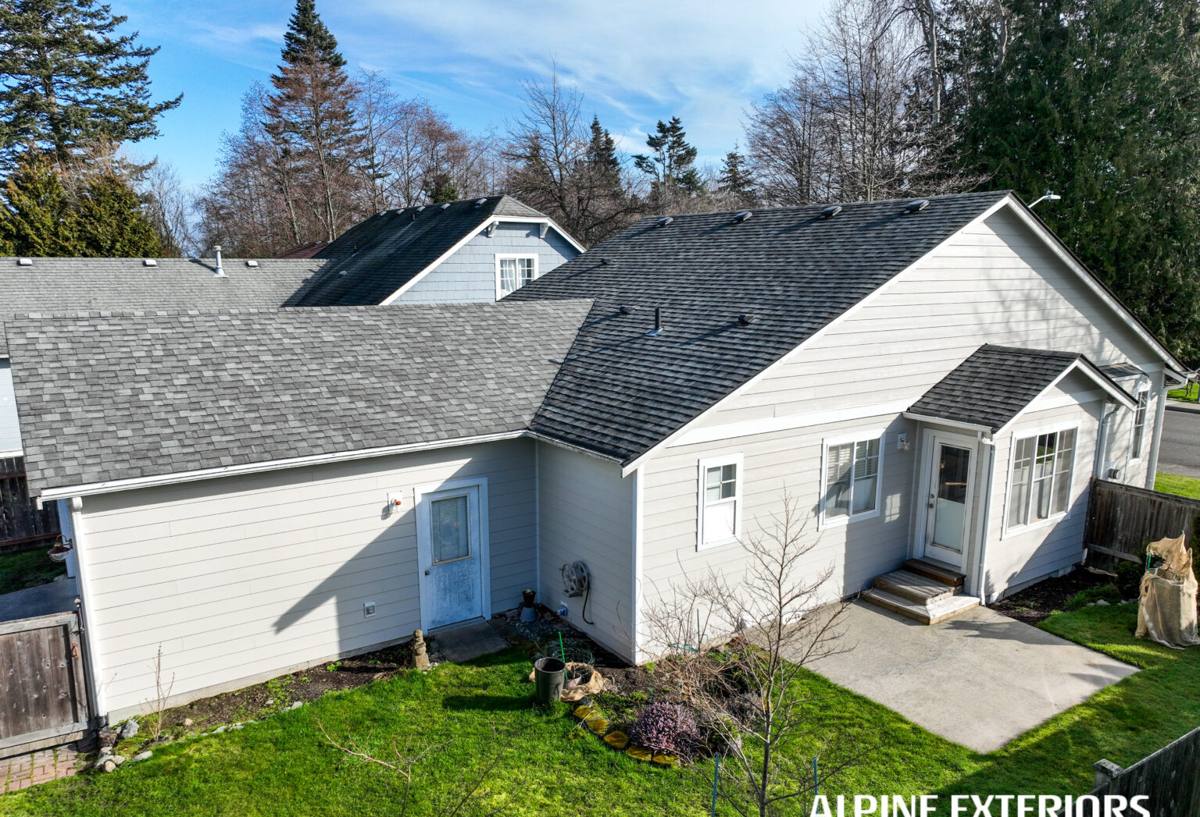
What Sumas Homes Are Up Against
Driving Rain and Wind-Driven Moisture
Rain that falls straight down is manageable. Rain that gets pushed horizontally by wind is a different problem — it finds lap joints, butt seams, window flashing, and any gap in a caulk line that's started to fail. Over years, that's how water gets behind siding and starts rot in the sheathing before anyone notices a problem from the outside. Products and installation details that work fine in a dry climate often fall short here.
Moss, Algae, and Shaded Exposures
Long, cool, wet stretches of the year are exactly what moss and algae need to take hold. Roofs with north-facing slopes or heavy tree cover are the most at risk, but siding low to the ground, under eaves, or shaded by fences and landscaping deals with the same buildup. Moss holds moisture against a surface far longer than open air would, which accelerates wear on roofing material and can trap dampness against siding joints.
Temperature Swings and Material Movement
Whatcom County doesn't get extreme heat, but the swing between a cold, damp winter and a warmer, drier summer still causes materials to expand and contract. Siding products that aren't dimensionally stable can develop gaps, warping, or cupping over a handful of seasons — problems that show up as cosmetic issues first and moisture entry points later.
Why We Only Install James Hardie Fiber Cement Siding
We made a deliberate call as a company: we install James Hardie fiber cement siding and nothing else. Not vinyl, not LP SmartSide, not Cemplank, not Allura, not primed spruce or cedar. That's not a marketing angle — it's a standard we hold because of what we've seen these products do (and not do) in exactly the kind of climate Sumas sits in.
Vinyl siding is inexpensive and easy to install, and for some budgets that's a real consideration. But it's also a material that expands and contracts more than fiber cement, can warp under direct heat exposure, and doesn't hold paint — so your color options are locked in for the life of the product. In a climate with real moisture exposure, vinyl's seams and J-channels are also common points where water finds its way behind the cladding if installation isn't precise.
Wood-based composite siding products, including engineered wood options, perform well when installed and maintained exactly to spec, but they're more sensitive to sustained moisture exposure than fiber cement. Any gap in caulking, any spot where water sits against a cut edge, and the clock starts on swelling and eventual rot — and in a climate with a long wet season, that margin for error is smaller than we're comfortable with. Primed cedar and spruce carry that same vulnerability, plus an ongoing maintenance burden (repainting, sealing cut edges, monitoring for pest activity) that most homeowners don't want to sign up for indefinitely.
James Hardie fiber cement is non-combustible, dimensionally stable across temperature swings, and engineered specifically for climates like ours through Hardie's HZ10 product line, which is formulated for moisture-prone, moderate-to-wet regions like the Pacific Northwest. The factory-applied ColorPlus finish is baked on under controlled conditions rather than field-painted, which means better adhesion and color retention over time, and it comes with a transferable warranty that reflects the manufacturer's confidence in the product. When it's installed to spec — correct clearances, proper flashing, factory-cut edges sealed — it holds up to exactly the conditions Sumas throws at an exterior year after year.
| Material | Moisture Tolerance | Maintenance | Fire Rating |
|---|---|---|---|
| James Hardie Fiber Cement | Engineered for wet climates (HZ10) | Low — factory finish, no repainting cycle | Non-combustible |
| Vinyl Siding | Seam-dependent, can warp with heat | Low, but color is permanent and can fade | Combustible |
| Engineered Wood (e.g. LP SmartSide) | Vulnerable if edges/seals fail | Moderate — edge sealing, inspection needed | Combustible |
| Primed Cedar/Spruce | Highest maintenance sensitivity | High — repainting, sealing, pest monitoring | Combustible |
Roofing, Windows, and Decks in the Same Climate
Siding is only part of the exterior envelope, and we treat roofing, windows, and decks with the same climate logic. A roof in this area needs proper ventilation and moss-resistant material choices, plus flashing details that account for wind-driven rain at valleys and penetrations. Windows need to be installed with flashing and sealant sequencing that keeps water managed even when wind pushes rain sideways against the glass and frame. Decks — especially those with any shade or northern exposure — need materials and fastening details that won't trap moisture against the structure or encourage the same moss growth we see on roofs and siding.
Handling all four trades under one roof matters here because these systems interact. Flashing at a window has to tie into the siding water management plan. Roof edge details affect how water sheets down onto siding below. A deck ledger board penetrates siding and needs to be flashed correctly or it becomes the exact kind of hidden moisture path that causes expensive damage years down the line. When one crew handles the whole envelope, those transitions get built correctly the first time instead of becoming someone else's problem later.
What a Local Crew Actually Changes
A lot of exterior problems in this region aren't caused by bad materials — they're caused by installation details that don't account for local conditions. A crew that mostly works drier climates might not think twice about a flashing detail that matters a great deal here. Working across Whatcom County day in and day out means we're not guessing at how wind-driven rain behaves against a wall, or which north-facing exposures are going to need extra attention against moss. That local knowledge shows up in the small decisions — flashing laps, caulk joint placement, ventilation gaps — that determine whether an exterior holds up for decades or starts showing problems in five years.
Being based nearby also means we're available for a straightforward inspection or warranty follow-up without a homeowner waiting on a crew that has to travel a long way to get there. That matters more once the project is finished and the exterior is just quietly doing its job through wet winters and moss seasons.
What to Look for in a Siding Contractor
- Manufacturer training or certification specific to the siding product being installed, not just general carpentry experience
- A written scope that specifies flashing details, house wrap or weather-resistive barrier, and fastener spacing — not just "install siding"
- Willingness to explain why they use the materials they use, including trade-offs of alternatives
- Local references and a track record working in this specific climate, not just a regional franchise
- Clear communication about timeline, given that weather windows for exterior work narrow considerably during the wettest months
- A warranty that's explained in plain terms, including what's covered by the manufacturer versus the installer
How the Process Works
Most projects start with a walk-around inspection of the existing exterior — siding, trim, roofline, window flashing, and any deck structures — to identify what's failing, what's still sound, and where moisture may already be finding its way in. From there we put together a scope that's specific to the home: which sections need full replacement, where repairs make more sense, and how the Hardie product line and profile (lap, shingle, or panel) fits the home's existing style. We handle permitting where required, sequence the work around weather windows, and walk through the finished project so the homeowner understands what was done and what the maintenance expectations are going forward.
Timelines vary with scope and season. Full siding replacement on an average home typically runs from a few days to a couple of weeks depending on square footage, trim detail, and whether roofing or window work is bundled into the same project. We're upfront about how weather can shift a schedule, since a wet stretch can push exterior work back a few days without it reflecting poorly on the crew or the plan.
Get a Straight Answer on Your Home
Every home in the Sumas area carries its own mix of sun exposure, tree cover, and wind pattern, and that mix affects what your exterior actually needs. We'd rather look at the specific conditions on your property than guess from a general description. If you're weighing a siding replacement, dealing with a roof or window issue, or thinking about a deck project, we're happy to come take a look and give you a straightforward, no-pressure estimate — using the fill-out form below to get started.