 Blaine Siding
 Siding in Everson: Built for a Wet, Green Valley
Everson sits along the Nooksack River in Whatcom County, a few miles inland from the Salish Sea and close enough to Blaine and the rest of our service area that our crews are in and out of the neighborhood on a regular basis. It's a river-valley community with a lot of tree cover, open farmland, and the kind of Pacific Northwest weather pattern that keeps everything green most of the year — including things you don't want green, like the north side of your siding.
We're a Blaine-based exterior contractor covering siding, roofing, windows, and decks. Everson is one of the communities we treat as a real service area, not an afterthought on a map. When we quote a job here, we're accounting for what actually happens to a house in this valley over ten, twenty, thirty years — not just what it looks like on install day.
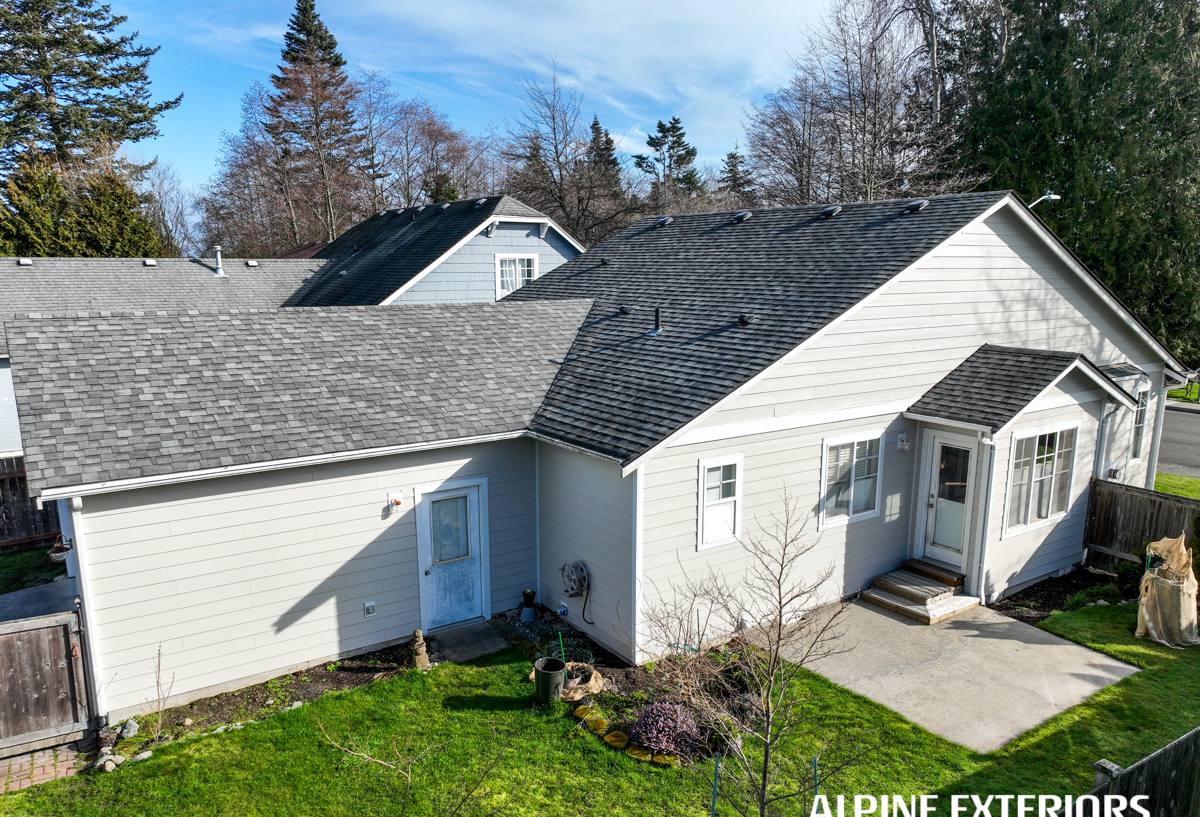
What Everson Homes Actually Deal With
Whatcom County's marine-influenced climate means long stretches of damp weather, low winter sun angles, and humidity that lingers under tree canopy and along the river bottom. A handful of things show up again and again on homes in and around Everson:
- Persistent moisture exposure — extended rainy seasons and river-valley humidity keep exterior surfaces wet for days at a stretch, especially on shaded or north-facing walls.
- Moss and algae growth — tree-lined lots and slow-drying siding surfaces are prime conditions for moss, mildew, and green staining, particularly where gutters overflow or where siding sits close to landscaping.
- Freeze-thaw swings — Whatcom County gets real cold snaps in the winter. Materials that absorb water and then freeze are prone to cracking, swelling, and paint failure over repeated cycles.
- UV and weathering on southern exposures — even in a cloudy climate, unshaded south- and west-facing walls take enough sun over the years to fade paint and stress lesser materials.
- Wind-driven rain during storm events — winter storms can push rain sideways into seams, laps, and trim details, which is where poor installation shows up first.
None of this is unusual for the area — it's just the normal cost of living somewhere green and rural. The difference is in what you put on the house and how it's installed.
Why This Matters for Siding Choice
A lot of siding failure isn't really "the siding failed" — it's water getting behind or into a material that wasn't built to handle constant moisture cycling. Wood-based products swell and rot at cut edges and seams. Vinyl can warp and doesn't stop moss from taking hold in its overlaps. The material itself has to be able to sit wet for days without breaking down, and it has to hold a factory finish long enough that you're not repainting every five to seven years just to keep ahead of the climate.
Why We Only Install James Hardie Fiber Cement
We made a deliberate decision as a company to install James Hardie fiber cement siding exclusively. We don't offer vinyl, LP SmartSide, Cemplank, Allura, primed spruce, or raw cedar siding, and we're upfront about why: those products can be installed correctly and can perform fine in the right hands, but each comes with trade-offs — moisture sensitivity, more frequent repainting, appearance changes over time, or installation tolerances that are easy to get wrong — that we didn't want to keep managing on behalf of homeowners in a climate this consistently wet.
Fiber cement is non-combustible, dimensionally stable, and engineered specifically for moisture cycling. James Hardie makes a version of their product line — the HZ5 line — specifically engineered for climates like ours, with freeze-thaw performance and moisture resistance built into the formulation rather than added on. Standardizing on one product also means our crews install the same system on every job, which is a big part of why we can install it correctly and consistently.
The James Hardie Product Lines We Install
| Product | What It Is | Where It's Used |
|---|---|---|
| HardiePlank lap siding | Horizontal fiber cement lap boards, the most common siding profile | Whole-house siding, the standard choice for most Everson homes |
| HardiePanel vertical siding | Large-format vertical fiber cement panels | Board-and-batten looks, gable accents, shops and outbuildings |
| HardieShingle siding | Fiber cement shingle panels styled after cedar shakes | Accent gables, farmhouse and craftsman-style homes |
| HardieTrim boards | Fiber cement trim for corners, windows, and fascia | Paired with any of the above for a consistent, rot-resistant trim package |
All of these come pre-finished with James Hardie's ColorPlus factory finish, a baked-on coating that resists fading and chipping far better than field-applied paint, and it's what allows the color match to stay consistent across boards installed years apart if you ever need a repair or addition.
Cost Factors for a Siding Project in Everson
Every property is different, but the price of a siding job here generally comes down to a handful of factors homeowners should understand before they start comparing quotes:
| Factor | Why It Matters |
|---|---|
| Home size and wall complexity | Gables, dormers, and multiple stories add labor and material waste |
| Existing siding removal | Tear-off and disposal of old wood or vinyl siding adds cost versus a bare or already-stripped wall |
| Moisture or rot found underneath | Rural and older homes sometimes have hidden sheathing damage that has to be repaired before new siding goes on |
| Trim and accent detail | Board-and-batten gables, shingle accents, and custom trim take more time than a straight lap-siding wall |
| Access and site conditions | Long driveways, tree cover, or tight lot lines around Everson properties can affect staging and scaffolding |
Our Installation Process
Correct installation is what actually determines how fiber cement siding performs in a climate like this — the product only holds up as well as the details behind it. Our process on Everson jobs generally includes:
- An on-site walk-through to check existing siding, trim, flashing, and any signs of moisture intrusion before we quote anything.
- Removal of old siding and inspection of the sheathing underneath, with repairs made before new material goes up.
- Installation of a weather-resistive barrier and proper flashing at windows, doors, and penetrations — this is where most water problems start if it's skipped or rushed.
- Fiber cement installation to James Hardie's fastening and clearance specifications, including correct gapping at butt joints and ground clearance to keep water from wicking up from grade.
- Trim, caulking, and final detailing, followed by a walk-through with the homeowner.
Beyond Siding: Roofing, Windows, and Decks
Siding rarely fails in isolation — it's usually connected to what's happening above and around it. We handle the rest of the exterior for the same reason we standardized on one siding product: consistency and accountability.
- Roofing — a roof in poor condition sends water down behind siding and trim before it ever shows up as a visible leak inside. Roof and siding work together as one weather barrier.
- Windows — old or poorly flashed windows are one of the most common entry points for water damage behind siding, especially during wind-driven winter storms.
- Decks — ledger boards and deck attachment points are another common spot where moisture gets trapped against the house if they weren't flashed correctly to begin with.
Being able to look at siding, roofing, windows, and decks as one connected exterior system — instead of four separate trades pointing fingers at each other — is one of the practical advantages of hiring one crew for the whole job.
Why a Local Crew Matters in Everson
Everson isn't a big market, and it doesn't get the attention that a lot of out-of-area contractors give to denser parts of Whatcom County. A crew that's actually based nearby, in Blaine, and works this region regularly knows what the Nooksack Valley's tree cover, humidity, and storm patterns do to a house over time — not just what a spec sheet says a product should handle. That local knowledge shows up in small decisions: where extra flashing is worth the time, which walls need more attention to moss and drainage, and how to sequence a job around this area's weather windows.
It also matters for warranty support. James Hardie's product warranty is strongest when installation follows their specifications, and having a local, accountable crew that installed the job — and is still around the following year — makes a real difference if anything ever needs a look.
What to Check Before Hiring Any Siding Contractor
- Are they licensed and insured in Washington, and will they provide proof without you having to ask twice?
- Do they specialize in one siding system, or are they installing whatever's cheapest for the job?
- Will they inspect and repair sheathing and flashing issues before covering them up with new siding?
- Can they explain the manufacturer's installation specs, not just the product's marketing points?
- Do they offer a written estimate with clear scope, not just a rough number?
If you're thinking about siding, roofing, windows, or a deck for your Everson property, we're happy to come take a look and give you a straightforward, no-pressure estimate — no obligation, just an honest read on what your home actually needs.