 Blaine Siding
 Custer's Roofs Work Harder Than Most
Custer sits close enough to the water that salt-laden air is a daily fact of life, and far enough into Whatcom County's marine climate that roofs here rarely get a real break. Between the onshore moisture, the driving rain that comes sideways off winter storms, and a moss season that can stretch from fall through spring, a roof in Custer is dealing with conditions that a lot of manufacturers' warranty language simply wasn't written around. We've repaired enough roofs in this part of the county to know that "a roof is a roof" isn't true here. What holds up on a dry-side property inland doesn't always hold up a few miles from the Strait.
This page is about one job: roof repair for homes in and around Custer. Not a full re-roof, not siding, not gutters — just what it takes to find a roof problem, fix it correctly, and leave the roof able to handle another few Whatcom County winters.
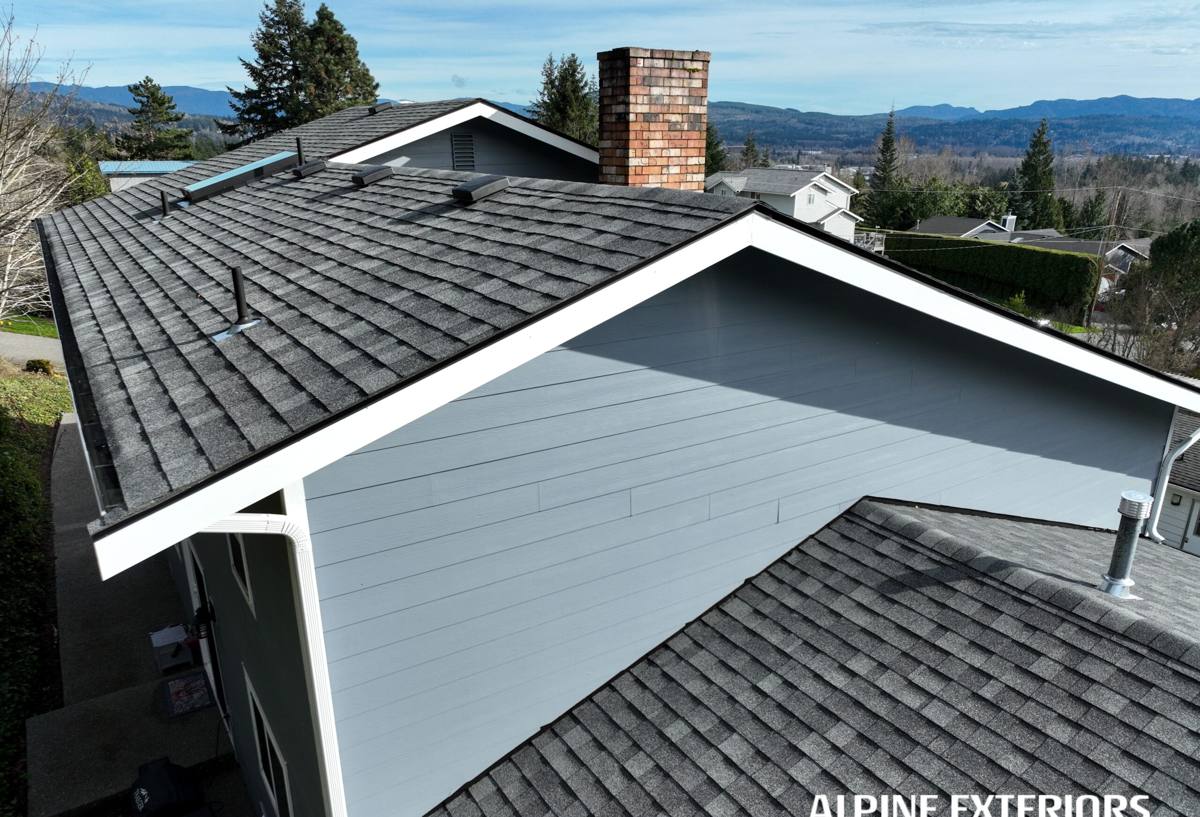
What Local Conditions Do to a Roof
Salt Air and Metal Fatigue
Salt in the air accelerates corrosion on anything metal on your roof — flashing, nail heads, vent boots, gutter hangers, even the fasteners holding shingles or panels down. A flashing detail that would last decades in a dry inland climate can start failing years earlier out here. Most leaks we trace back to their source aren't a shingle problem at all; they're a flashing or fastener problem that salt exposure sped along.
Driving Rain and Wind-Driven Water
Rain that falls straight down is easy on a roof. Rain that comes in sideways during a Whatcom County windstorm is a different story — it gets pushed up under shingle tabs, around vent penetrations, and into any gap in flashing that would otherwise stay dry. Roofs here need underlayment and flashing details that account for wind-driven water, not just gravity.
A Long Moss Season
Moss doesn't just look bad — it holds moisture against the roof surface, works its way under shingle edges, and lifts materials as it grows. In Custer's shaded, moisture-heavy stretches, moss can take hold on a north-facing slope within a couple of seasons of the roof being installed. Left alone, it shortens the life of an otherwise sound roof by years.
Common Roof Problems We Find on Custer Homes
The specific issues change from house to house, but a few patterns show up over and over in this area:
- Flashing that has rusted, lifted, or separated at chimneys, skylights, and roof-to-wall intersections
- Shingles lifted or cracked along moss-covered ridges and valleys
- Nail pops and fastener corrosion from years of salt exposure
- Valley leaks where debris and moss slow water drainage during heavy rain
- Soft or discolored roof decking under areas where moisture has been sitting unnoticed
- Gutter and roof-edge damage from clogged runoff backing water up under the roof edge
Most of these start small. A homeowner in Custer might notice a stain on a ceiling, a shingle in the yard after a windstorm, or moss creeping up from the eaves — none of which look urgent on their own, but all of which are worth a look before the next heavy rain season.
What a Correct Roof Repair Actually Involves
A roof repair done right isn't just patching the spot that's visibly leaking. Water travels — it can enter at one point and show up as a stain feet away, so a repair that only addresses the visible symptom often leaves the actual entry point untouched. A proper repair means:
- Finding the real source, not just the closest visible damage
- Checking how far moisture has traveled — decking, insulation, framing
- Replacing damaged materials with matching or compatible product, not whatever's on the truck
- Re-flashing correctly, with proper laps and sealant only where it belongs — sealant is a backup, not a substitute for correct flashing
- Confirming drainage so water sheds away from the repair instead of pooling against it
Skipping any of these steps is how a "fixed" roof leaks again in a year. It's also the most common reason we get called out to redo someone else's patch job.
Our Roof Repair Process for Custer Homes
1. Inspection and Honest Diagnosis
We start on the roof, not just the ceiling stain. We look at the whole roof system — shingles or panels, flashing, vents, valleys, and the areas moss tends to favor — because a leak's cause is often somewhere other than where it shows up indoors.
2. A Clear Explanation Before Any Work Starts
You'll get a plain explanation of what's actually wrong, what caused it, and what it takes to fix it — including whether it's a straightforward repair or a sign of something bigger developing. We don't upsell a repair into a replacement, and we don't downplay a problem that's genuinely heading toward one.
3. The Repair Itself
We remove and replace only the damaged materials, matching existing shingles or panels as closely as possible, and rebuild flashing details to shed water the way they're supposed to — accounting for the wind-driven rain and salt exposure this area sees.
4. Cleanup and Moss Consideration
We clear debris and moss from the repair area and nearby valleys as part of the job, since leaving moss in place next to fresh work undermines it almost immediately.
5. Follow-Through
We stand behind our repair work and tell you honestly if a spot is worth watching going forward, rather than treating the job as done and forgotten the moment we leave.
Repair or Replace? How We Help You Decide
Not every roof problem in Custer needs a full replacement, and not every leak is fixable with a simple patch. Here's the general framework we use when we're on your roof:
| Situation | Usually Points To |
|---|---|
| One or two isolated leak points, deck is sound underneath | Targeted repair |
| Roof is under roughly 10-12 years old with scattered flashing or fastener issues | Repair |
| Moss and granule loss are widespread across most slopes | Repair now, budget for replacement in coming years |
| Multiple leaks in different areas, or soft decking found during inspection | Full replacement likely more cost-effective long term |
| Roof is near or past its expected material lifespan | Replacement discussion, even if only one leak is visible today |
We'll always give you the repair option when it's genuinely the right call — a repair-first approach on a roof with years of life left in it is often the more honest and more economical path, and we'd rather earn a future job than push a replacement a roof doesn't need yet.
Materials and Details That Matter Here
What we use for a repair depends on what's already on the roof and what will actually perform in this climate:
| Component | Why It Matters in Custer's Climate |
|---|---|
| Flashing metal and fasteners | Corrosion-resistant choices last longer against salt air near the water |
| Underlayment | A quality synthetic or self-adhering underlayment resists wind-driven rain intrusion better at seams and penetrations |
| Shingle or panel matching | Mismatched materials weather differently and create visible, uneven patches over time |
| Sealant use | Used sparingly, as a backup to correct flashing work — never as the primary defense against leaks |
We're straightforward about trade-offs when they exist. Some lower-cost materials save money up front but need more frequent attention in a wet, moss-prone climate; others cost more initially but hold up with less maintenance. We'll lay out the honest trade-off for your specific roof rather than just recommending whatever's easiest to install.
Moss and Roof Maintenance Between Repairs
A repair only lasts as long as the rest of the roof is maintained around it. In Custer's shaded, damp pockets, moss can re-establish quickly. A few habits go a long way between service visits:
- Keep gutters and valleys clear of needles, leaves, and moss debris, especially heading into fall
- Have moss physically removed rather than just treated, since chemical treatment alone can leave dead moss holding moisture in place
- Trim back overhanging branches that keep roof sections shaded and slow to dry
- Walk the roofline visually after major windstorms and note anything that looks lifted or missing
- Address small leaks early — a stain that shows up once during a heavy rain is worth a call before it becomes a recurring problem
Why a Crew That Already Works in Custer Makes a Difference
Roof repair is one of those jobs where local, hands-on experience actually changes the outcome. A crew that regularly works roofs in Custer and the surrounding Blaine area already knows which flashing details tend to fail first in this climate, how aggressively moss behaves on shaded northern exposures here versus drier parts of the county, and what wind-driven rain does to a roof edge during a real Whatcom County storm. That's the difference between a repair that's technically completed and one that's actually built to hold up through the next wet season.
It also means a faster, more direct response. When a leak shows up during a storm, you want a crew that can get to your property without a long drive, and one that's seen enough local roofs to diagnose the likely cause before ever climbing a ladder.
Get an Honest Look at Your Roof
If you've noticed a stain, a missing shingle after a windstorm, or moss creeping across your roofline, it's worth getting a straight answer before the next round of Whatcom County rain finds its way in. We offer free, no-pressure estimates for roof repair in Custer and the surrounding Blaine area — use the form below to get one scheduled.