 Blaine Siding
 Siding Replacement in California Creek: Built for a Wet, Salt-Exposed Corner of Whatcom County
California Creek sits in the coastal corridor just outside Blaine, close enough to the water that homes here deal with a steadier dose of salt-laden air, wind-driven rain, and shade than properties further inland in Whatcom County. It's a mostly residential area with a mix of older homes and newer construction, many on wooded or partially wooded lots, which changes how siding ages compared to a house sitting in the open. We work in California Creek regularly as part of our Blaine service area, and this page covers what siding replacement actually involves here — not a generic overview of siding in general, but what a correct job looks like for this specific stretch of the county.
Siding replacement is a bigger decision than a repair or a repaint. It's the point where a homeowner gets to fix everything wrong with the current wall assembly at once — old material, poor flashing, missing rain screen gaps, rotted sheathing — rather than patching around problems that keep resurfacing. Done right, in a climate like this one, it should be a once-in-a-generation project. Done wrong, or with the wrong material, it can turn into a repeat expense within a decade.
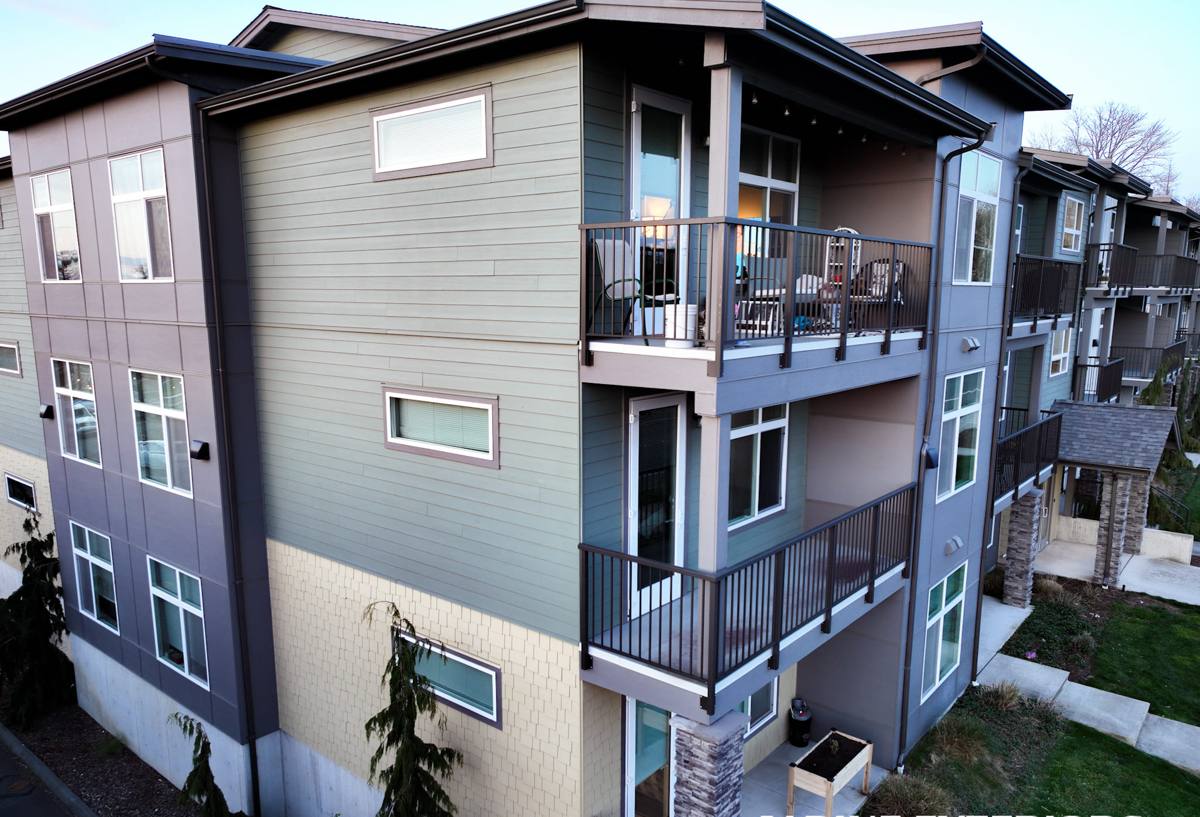
What California Creek's Climate Does to Siding
Salt Air
Proximity to the water means salt is a constant, low-level presence in the air, even on days that feel calm and dry. Salt accelerates corrosion on fasteners, flashing, and any exposed metal trim, and it breaks down lower-grade paint and coatings faster than they'd fail in a dry inland climate. Over years, that corrosion is often the real cause behind siding that looks fine on the surface but has started failing at the fastener line or behind trim joints.
Driving Rain
Storms coming off the water rarely fall straight down. Wind pushes rain sideways into wall assemblies, window flashing, and the seams where trim meets siding, and that sideways load is harder on a house than the same rainfall total would be somewhere sheltered. It's exactly the kind of moisture that finds any gap a rushed or incomplete installation leaves behind, which is why flashing detail and joint sealing matter more here than in a lot of other parts of the state.
A Long Moss Season
Many lots in California Creek carry heavier tree cover than in-town properties, and shaded, damp conditions extend the moss and mildew season on north-facing and tree-shaded walls to nearly year-round. Any siding material with even mild surface porosity becomes a growth surface over time in that kind of environment, and moss holds moisture against the wall long after a storm has passed, which slows drying and speeds up decay underneath.
Signs a California Creek Home Needs Siding Replacement
Not every siding problem calls for full replacement — some are fixable with a repair or a re-caulk. But certain signs point toward a wall assembly that's failing at a level repairs can't reach:
- Siding that's soft, spongy, or crumbles under light pressure, especially near the bottom courses or around window and door trim
- Visible warping, buckling, or cupping across multiple boards or panels
- Paint or finish that keeps failing within a year or two of repainting, even after prep work
- Persistent moss or dark staining that comes back quickly after cleaning
- Soft or discolored trim boards, especially around windows, corners, or where the roof meets the wall
- Visible gaps at seams, corners, or butt joints that weren't there when the siding was newer
- Interior signs like musty odors, peeling interior paint, or soft drywall near exterior walls
One or two of these can sometimes be addressed locally. Several at once, especially combined with a home that's due for siding based on age and material, usually means it's time to plan a full replacement rather than another round of patching.
What a Correct Siding Replacement Involves
Tear-Off and Substrate Inspection
A real replacement starts with removing the existing siding down to the sheathing, not installing over it. That step matters more here than in a drier climate, because it's the only way to find out whether moisture has already gotten behind the old siding and started affecting the wall sheathing or framing underneath. Any soft or damaged sheathing gets addressed before new siding goes on — covering it up just locks a moisture problem inside the wall.
Rain Screen and Drainage
A drainage gap behind the new siding lets any moisture that does get past the exterior surface drain downward and evaporate instead of sitting against the wall. In a location that takes this much wind-driven rain, that gap is a functional necessity, not an upgrade option.
Flashing and Fastening
Every seam, corner, and window or door opening needs flashing that laps correctly to shed water down and out, not up into the wall. Fastener type and spacing follow the manufacturer's spec exactly, because loose spacing or the wrong fastener is one of the more common causes of early failure we find when we tear off older siding.
Finish and Detailing
Butt joints, trim transitions, and any penetrations for vents, lights, or hose bibs get sealed correctly rather than left as an afterthought. These are the small details that decide whether the wall assembly performs the way it's supposed to for decades, or starts letting moisture in within a few wet seasons.
Why We Install Only James Hardie Fiber Cement
We install one siding system: James Hardie fiber cement. We don't offer vinyl siding, LP SmartSide, Cemplank, Allura, primed spruce, or cedar, and that's a deliberate professional standard, not a limitation of what we're capable of installing. It comes from what we've found, repeatedly, on tear-offs in wet, salt-exposed parts of Whatcom County like this one:
- Non-combustible core: Fiber cement doesn't feed a fire the way wood-based siding products can.
- Factory-applied ColorPlus finish: The color is baked on under controlled conditions rather than field-applied, so it holds up longer against fading, chalking, and constant moisture exposure.
- Climate-engineered HZ5 formulation: Hardie's HZ5 product line is built specifically for regions with sustained moisture and freeze-thaw cycling, which describes this stretch of the county well.
- Dimensional stability: Fiber cement doesn't swell, cup, or warp the way engineered wood products can after repeated wetting and drying cycles.
- A strong transferable warranty: Hardie backs the product with one of the stronger warranty structures in the industry, provided installation follows their spec.
Vinyl, engineered wood, and untreated wood products each have a place in the market, and plenty of homeowners are satisfied with them in milder, drier locations. But in a place where salt air and driving rain are close to constant, we made the call to install one system we can fully stand behind rather than offer a cheaper option that quietly shifts maintenance risk back onto the homeowner a few years down the road.
Our Siding Replacement Process
- On-site inspection: We walk the property, check the current siding and trim, and look for early signs of moisture behind the wall before writing any scope of work.
- Written proposal: A clear scope covering tear-off, substrate repair allowances, Hardie product line and color, and a realistic timeline.
- Site prep: Protecting landscaping, walkways, and windows before tear-off begins.
- Tear-off and sheathing check: Old siding comes off, and any damaged sheathing or framing gets flagged and repaired before moving forward.
- Weather barrier and flashing: House wrap, flashing, and rain screen components go in per manufacturer spec, with extra attention at every window, door, and penetration.
- Hardie installation: Panels or lap siding go up with correct fastener type, spacing, and joint treatment.
- Final walkthrough: We go over the finished work with the homeowner before calling the job complete.
Cost Factors for Siding Replacement in California Creek
| Factor | What Drives Cost | Local Consideration |
|---|---|---|
| Home size and shape | Total wall area, number of corners, dormers, and trim details | Larger or more complex homes on wooded lots take longer to fully inspect and prep |
| Substrate condition | Whether sheathing repair is needed once old siding comes off | More common on homes with a history of moss buildup or unaddressed moisture |
| Siding profile and product line | Lap vs. panel, standard HZ5 vs. premium ColorPlus options | HZ5 formulation recommended given sustained coastal moisture exposure |
| Trim and accessory work | Window and door trim, corner boards, fascia condition | Trim is often the first place salt air and driving rain cause visible damage |
| Site access and lot conditions | Tree cover, slope, distance from the street | Wooded lots common in the area can add setup and cleanup time |
These are general cost drivers, not a quote. Every home in California Creek sits a little differently relative to tree cover, wind exposure, and the age of its current siding, so we walk the property in person before putting a real number on the work. What looks like a straightforward re-side from the street can turn into a bigger substrate repair once old siding actually comes off, which is part of why we're cautious about estimates given sight unseen.
Why Hiring a Crew That Already Works in California Creek Matters
A siding replacement is only as good as the crew's understanding of what the local climate does to a wall assembly over time. A contractor who mostly works drier, inland areas may not think twice about skipping a rain screen gap or using standard fastener spacing, because in their usual territory it might not fail for a long time. In a location that takes this much salt air and driving rain, those same shortcuts show up as soft trim and moisture damage years sooner.
We already know what tear-offs in this part of Whatcom County tend to reveal, what the moss season does to shaded walls, and which details can't be skipped on a house sitting this close to the water. That local pattern recognition is part of what a homeowner is actually paying for when they hire a crew with a real track record in the area, not just a general contractor willing to take on a siding job.
Questions Worth Asking Before You Hire
- Does the crew remove old siding down to the sheathing, or install over existing material?
- Will they inspect and repair damaged sheathing before new siding goes on, and how is that priced?
- Do they follow the manufacturer's fastener and rain screen spec, or a simplified version of it?
- Can they explain why they recommend one siding product over another for this specific location?
- Do they carry proper licensing and insurance, and can they provide proof without hesitation?
If your California Creek home is showing signs of aging siding, or you're simply due for a replacement and want it done right the first time, we're happy to take a look. Reach out for a free, no-pressure estimate using the form below.