 Blaine Siding
 Sandy Point's Siding Problem Is Different From Blaine's
Homes out on Sandy Point sit closer to open water than almost anywhere else in the Blaine area, and that changes what "normal wear" looks like. A house a mile inland might go a decade with nothing more than a pressure wash and some caulk touch-up. A house on the point, facing wind off the water with no real windbreak, works its siding a lot harder — salt-laden air, near-constant moisture, and driving rain that hits the walls sideways instead of falling straight down.
We've repaired enough siding out here to know the failure patterns are predictable. It's rarely the whole wall that's bad. It's usually the exposed corner, the low course near grade, the wall that takes the brunt of the prevailing wind, or the shaded north side that never fully dries out between storms. Good repair work means understanding which parts of a Sandy Point home take the abuse and checking those spots first, not just patching whatever's visibly cracked.
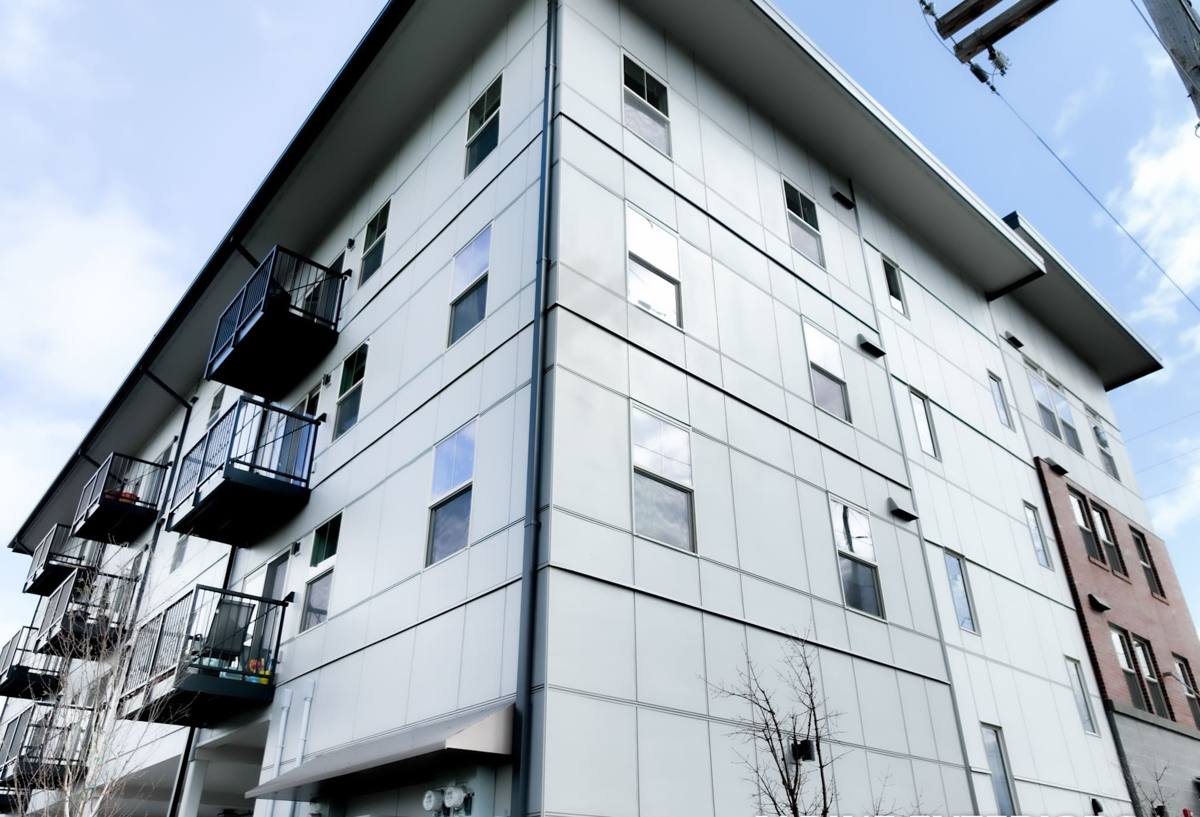
What Salt Air, Wind-Driven Rain, and Moss Actually Do to Siding
Salt Air and Fasteners
Salt in the air doesn't just sit on the surface — it works into fastener heads, joints, and any spot where the factory finish has been nicked or scratched. Over years, that accelerates corrosion in nails and trim screws faster than it would a few miles inland. Corroded fasteners lose their grip, and siding that's no longer held tight starts to move, which opens gaps at the very joints that are supposed to stay sealed.
Wind-Driven Rain
Regular rain falls and sheds off a wall. Wind-driven rain gets pushed sideways and upward, finding its way behind J-channel, into butt joints, and up under starter strips that would never see water in a calmer location. This is why homes on the point often show moisture damage in places a standard inland inspection wouldn't think to check — inside corners, under window trim, and at the bottom courses near grade.
The Long Moss Season
Whatcom County's wet stretch runs long, and shaded or north-facing walls on the point rarely get a full dry-out between rain events. That's exactly the environment moss and algae need. Once moss establishes on a wall, it holds moisture directly against the siding surface and, on the wrong material, that trapped moisture becomes the real damage driver — not the moss itself, but what it lets sit against the wall for weeks at a time.
Signs Sandy Point Siding Needs Repair, Not Just a Wash
- Soft or spongy spots when you press on a board, especially near the bottom courses or under windows
- Visible gaps or separation at butt joints and inside corners
- Streaking, discoloration, or dark staining that reappears within weeks of cleaning
- Nail heads that are rusted, popped, or backed out of the board
- Paint or finish that's flaking off in sheets rather than fading evenly
- Moss or algae growth that returns quickly even after a cleaning
- Caulk at trim and window joints that's cracked, shrunken, or missing altogether
- Any soft spot in the sheathing behind the siding when a damaged board is pulled
Any one of these on its own might be minor. Several showing up on the same wall usually means water has been getting behind the siding for a while, and the repair needs to address what's underneath, not just what's visible.
What a Correct Repair Actually Involves
A siding repair that's done right is not just "swap the bad board for a new one." On a house that's been taking on wind-driven rain, there's almost always a story behind why that board failed, and skipping past that story means the replacement board fails the same way in a few years.
Step One: Find the Water Path, Not Just the Damage
Before anything gets replaced, we trace how water got in. That might mean pulling adjacent boards to check the house wrap and flashing, checking whether a window or door flashing detail is doing its job, or finding a caulk failure that's been feeding water behind the wall for a season or two. Replacing siding without fixing the entry point is a repair that doesn't hold.
Step Two: Check What's Behind the Siding
Once boards are off, we look at the sheathing and weather-resistive barrier underneath. Soft, delaminating sheathing needs to be addressed before new siding goes back on — covering it up guarantees the same failure returns, usually worse.
Step Three: Replace With Matching Material and Correct Fastening
New boards get installed to manufacturer spec: correct nailing pattern, proper gaps at butt joints for expansion, rain screen or drainage gap maintained where the original system used one, and flashing details corrected rather than just re-caulked over.
Step Four: Finish and Blend
The visible difference between an amateur patch and a professional repair usually comes down to this last step — color match, caulk lines, and finish work that don't leave an obvious patch on the wall.
Repair vs. Replacement: Making the Right Call
Not every problem area needs a full re-side. But on a point exposed the way Sandy Point is, we also don't want to talk a homeowner into patch after patch on siding that's fundamentally reaching the end of its service life. Here's how we think through it:
| Factor | Leans Toward Repair | Leans Toward Replacement |
|---|---|---|
| Extent of damage | Isolated to one or two walls/areas | Recurring problems across multiple elevations |
| Sheathing condition | Dry, solid wood underneath | Soft, delaminated, or water-stained sheathing found in multiple spots |
| Age of existing siding | Newer install, isolated failure point | Siding is old, original material has reached end of service life |
| Color/finish match | Close match achievable, or repair is on a less visible wall | Faded original finish makes any patch visibly mismatched |
| Underlying material | Fiber cement in otherwise sound condition | Non-fiber-cement product with widespread moisture issues |
We'll always tell a homeowner honestly which side of this table their house falls on. Sometimes the honest answer is "patch the corner and you're done for years." Sometimes it's "this wall's had three repairs in five years — that's money better spent on a proper re-side."
Our Sandy Point Repair Process
- On-site inspection. We walk the exterior, focusing on the walls that take the worst of the wind and rain exposure, and check moisture readings where boards show signs of trouble.
- Honest diagnosis. We explain what we found, what's causing it, and whether it's a repair or a signal of a bigger issue — in plain terms, not a sales pitch.
- Written scope and estimate. You know exactly what's being replaced, what's being resealed, and what the visit costs before work starts.
- Repair work. Damaged material comes out, the water path gets corrected, and new fiber cement goes in to spec.
- Finish and walkthrough. Caulk lines, paint/color match, and a final check so the repair holds up to the same exposure that caused the original problem.
Why We Only Repair With James Hardie Fiber Cement
When we're patching in new material on a repair, we use James Hardie fiber cement — the same product we install on full re-sides — and that's a deliberate choice, not a default. Fiber cement doesn't absorb water the way wood-based products do, and it doesn't feed the kind of rot that shows up on other siding after a few wet seasons on an exposed wall. Hardie's HZ5 product line is engineered specifically for climates like ours, with freeze-thaw cycling and moisture exposure in mind.
The factory-applied ColorPlus finish also matters more on a repair than almost anywhere else, because color match is the difference between a repair that disappears into the wall and one that's an eyesore for the next ten years. We won't patch Hardie siding with a different brand or material just because it's on hand — a mismatched patch is a problem you'll be looking at every day.
We don't install LP SmartSide, vinyl, Cemplank, Allura, or bare wood siding, on repairs or full installs. Each of those has legitimate uses in the right situation, but for a wall that's already proven it can't handle Sandy Point's salt air and wind-driven rain, we're not going to solve that problem with a product that carries the same moisture vulnerabilities that got the homeowner into a repair in the first place.
Why a Crew That Already Works Sandy Point Matters
Repair work on the point comes with logistics that a crew unfamiliar with the area hasn't planned for — narrow access on some lots, wind conditions that affect scheduling and scaffolding safety, and a general understanding that "close to Blaine" doesn't mean "same exposure as Blaine." A crew that's worked this specific stretch of Whatcom County knows which walls to check first, what the local moisture patterns actually look like, and how to sequence a repair around weather windows that are shorter here than they are a few miles inland.
That familiarity also shows up in smaller ways — knowing which color batches tend to weather differently on south- versus north-facing walls out here, or recognizing a wind-driven rain pattern versus a flashing failure on sight instead of guessing. It's the difference between a repair that's a good guess and one that's informed by having actually seen how Sandy Point homes age.
Simple Maintenance That Extends the Life of a Repair
- Rinse salt residue off exterior walls periodically, especially after storms with strong onshore wind
- Keep gutters clear so runoff isn't sheeting down the siding face
- Trim back vegetation that shades walls and keeps them from drying out between rains
- Check caulk at windows, doors, and trim joints once a year and touch up before it fails completely
- Address moss growth early with a gentle wash rather than letting it establish
- Have any soft-feeling board checked promptly rather than waiting for visible damage to spread
None of this replaces a professional inspection, but it buys time between repairs and helps a properly repaired wall actually reach its expected service life.
Get an Honest Look at Your Siding
If you're seeing gaps, soft spots, staining, or recurring moss on a Sandy Point home, it's worth having someone look before the damage spreads further into the wall. We'll give you a straight answer on what needs fixing, what can wait, and what it will cost — no pressure, no upsell. Request a free estimate below and we'll get out to take a look.