 Blaine Siding
 Building New in Sandy Point Means Building for the Water
Sandy Point sits right up against the Strait of Georgia, and that changes what "correct" window installation looks like compared to a new build a few miles inland in Blaine. Homes here face onshore wind, salt-laden air, and long stretches of damp, shaded weather almost every month of the year. If you're framing a new house or a major addition on a Sandy Point lot, the windows you choose and how they're installed will decide whether you're dealing with stuck sashes, corroded hardware, and hidden rot in ten years, or a house that's still tight and dry in thirty.
This page covers what we actually do when we're brought onto a new-construction job in Sandy Point specifically — not a generic rundown of window types, but the decisions that matter for a canal-front or near-shore lot in this part of Whatcom County.
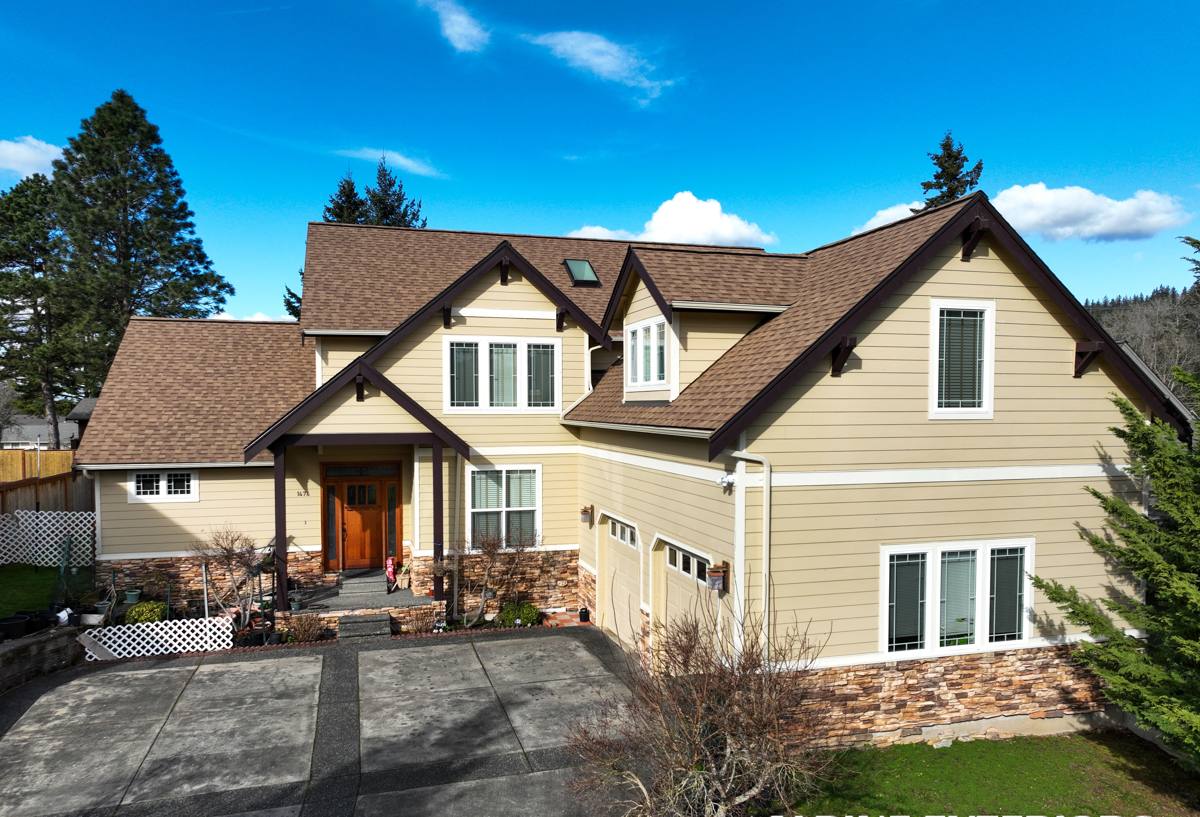
What This Climate Does to Windows Over Time
Salt Air and Hardware Corrosion
Airborne salt doesn't just affect houses that sit directly on the beach. It travels on the wind across Sandy Point's canals and lots set back from the water, settling on glass, frames, and especially exposed metal hardware — hinges, cranks, locks, and screws. Cheaper hardware and unprotected fasteners corrode faster here than almost anywhere else in the county. It's one of the reasons we pay close attention to hardware finish and fastener material on every new-construction order for this area, not just the frame material.
Wind-Driven Rain
Sandy Point gets rain that doesn't fall straight down — it comes in sideways off the water, driven by wind. That matters enormously for new construction, because wind-driven rain finds any gap in flashing, any short sill pan, or any sealant joint that wasn't done right the first time. On a remodel you can sometimes see evidence of a leak before it becomes structural. On new construction, a flashing mistake gets sealed behind siding and drywall, and you don't find out about it until there's a stain on an interior wall or soft framing years later.
Moss, Shade, and Moisture Retention
Whatcom County's long moss season is a real factor for window installation, not just roofing. Homes on shaded or tree-lined lots in and around Sandy Point stay damp longer after a storm, which means sealant joints, sill areas, and cladding around windows need to shed water fast rather than hold it against the frame. Detailing that works fine in a drier, sunnier location can leave moisture sitting exactly where you don't want it here.
What Correct New-Construction Window Installation Involves
The Rough Opening and Flashing Sequence
New-construction windows are installed with a nailing flange set into the wall assembly before siding goes on, which means the flashing sequence has to be right the first time — there's no going back to fix it later without removing finished exterior work. The order matters: sill pan flashing first, then the window itself, then jamb flashing, then head flashing lapped over the housewrap above the window, always shingle-style so water moving down the wall sheds outward at every layer.
Sill Pans and Back Dams
On an exposed, wind-driven-rain site like Sandy Point, we don't skip the sill pan even when a manufacturer's minimum instructions would technically allow it. A sloped sill pan with a back dam gives any water that gets past the exterior cladding somewhere to go besides into the framing. This is a small line item during construction and a major, hidden cost if it's missing and a leak develops years down the road.
Sealing and Insulating the Gap
The gap between the window frame and the rough opening needs to be sealed for air and water, then insulated — but not overfilled with rigid foam that can bow the frame and cause the sash to bind. We use low-expansion foam or backer rod and sealant at the perimeter, sized to the actual gap, so the window operates correctly and stays sealed through the seasonal wood movement that's common in coastal framing.
Choosing Window Materials and Glass for a Sandy Point Lot
There's no single "best" window material — the right choice depends on exposure, budget, and how much upkeep you want to take on. Here's how the common options actually perform in this specific environment:
| Material | Salt air performance | Maintenance | Typical cost position |
|---|---|---|---|
| Vinyl | Good — won't corrode, but hardware quality still matters | Low | Lower upfront cost |
| Fiberglass | Very good — dimensionally stable, resists salt and moisture well | Low | Mid to upper-mid |
| Aluminum-clad wood | Good exterior protection if cladding and flashing are done right | Moderate — interior wood still needs care | Upper-mid to high |
| Bare wood | Poor without diligent, ongoing upkeep in salt air | High | Varies |
For most new construction in Sandy Point, we steer clients toward vinyl or fiberglass, or a well-detailed aluminum-clad option when the design calls for a wood interior look. It's not that bare wood windows can't be made to work near the water — it's that the maintenance schedule to keep them sealed against salt air and driving rain is demanding, and most owners underestimate it until the finish starts failing. That's a maintenance-burden and long-term-cost conversation we have honestly with every client, not a claim that any one product is inferior across the board.
Glass Packages
Double-pane, low-E glass with argon fill is the baseline we recommend for this area — it handles the temperature swings between a cool marine morning and afternoon sun without excessive condensation on the interior. On more exposed elevations facing the water, we'll often discuss laminated glass for impact resistance and noise reduction from wind, especially on primary bedrooms and living spaces facing the strait.
Our Process on a Sandy Point New-Construction Job
- Review the plans and window schedule with the builder or homeowner before the order is placed — catching sizing or elevation issues on paper is far cheaper than catching them at rough-in.
- Confirm window selection against exposure by elevation — the water-facing side of the house often gets a different spec than the sheltered side.
- Coordinate timing with framing and housewrap so windows go in as soon as the opening and weather barrier are ready, minimizing the time the structure sits open to the weather.
- Install sill pan flashing, set the window, and complete jamb and head flashing in proper shingle-lap sequence.
- Seal and insulate the perimeter gap, check that every sash operates smoothly before moving on.
- Document flashing details with photos before siding covers them, so there's a record of what's behind the finished wall.
- Final walkthrough on every unit — operation, locks, and weatherstripping — before we consider the job done.
Common Mistakes We See in New Builds Near the Water
Most of the window problems we get called to fix in newer Sandy Point-area homes trace back to a handful of repeatable issues:
- Head flashing tucked behind the housewrap instead of lapped over it, letting water run behind the barrier instead of off it
- Skipped or flat (non-sloped) sill pans that hold water at the sill instead of draining it out
- Standard interior hardware finishes that pit and seize within a few years of salt exposure
- Sealant used as the only defense against water, with no mechanical flashing behind it
- Foam insulation overpacked into the perimeter gap, bowing frames and causing hardware to bind
Why Local Experience in Sandy Point Matters
A window crew that mostly works inland doesn't always adjust for what this specific stretch of coastline demands. We work in and around Blaine and Sandy Point regularly, which means we already know which elevations on a given lot typically take the worst of the wind and rain, which hardware finishes actually hold up, and how the moss season affects drainage details around openings. That's not something you can fully substitute with a spec sheet — it comes from seeing how houses in this exact area age over time.
Permits and Energy Code Considerations
New-construction windows in Whatcom County need to meet current state energy code requirements for U-factor and, depending on the project, may be part of a broader energy compliance path the builder is using for the whole house. We coordinate window specs with the builder or designer early so the glass package and frame performance line up with what's been submitted for permit, rather than discovering a mismatch after the windows are ordered.
If you're framing a new home or addition on a Sandy Point lot, it's worth getting a window plan reviewed before your order goes in — a short conversation up front can prevent a costly correction later. We offer free, no-pressure estimates and window plan reviews for new construction in this area; use the form below to get one scheduled.