 Blaine Siding
 Why Decks Fail Faster in Sandy Point
Sandy Point sits close enough to the water that salt-laden air is a daily fact of life, not an occasional nuisance. That air finds its way into every exposed fastener, every joist hanger, and every seam in a deck's structure. Combine that with Whatcom County's driving winter rain and a moss season that can stretch from late fall well into spring, and you have a climate that is genuinely tougher on outdoor structures than most homeowners realize until they're standing on a deck that flexes underfoot.
A deck built to a generic national spec — the kind sold at big-box stores with standard hardware and minimal flashing detail — will often show its age in Sandy Point years before it would in a drier inland town. Fasteners rust and streak the boards. Moss and algae take hold on shaded north-facing sections and hold moisture against the wood long after a storm has passed. Ledger boards and joists that aren't properly flashed start to rot from the inside, often invisibly, until a board finally gives.
None of that means a deck in Sandy Point is doomed to a short life. It means the build has to account for the environment from the start — material selection, fastener grade, flashing detail, and drainage all matter more here than they do in a lot of the country.
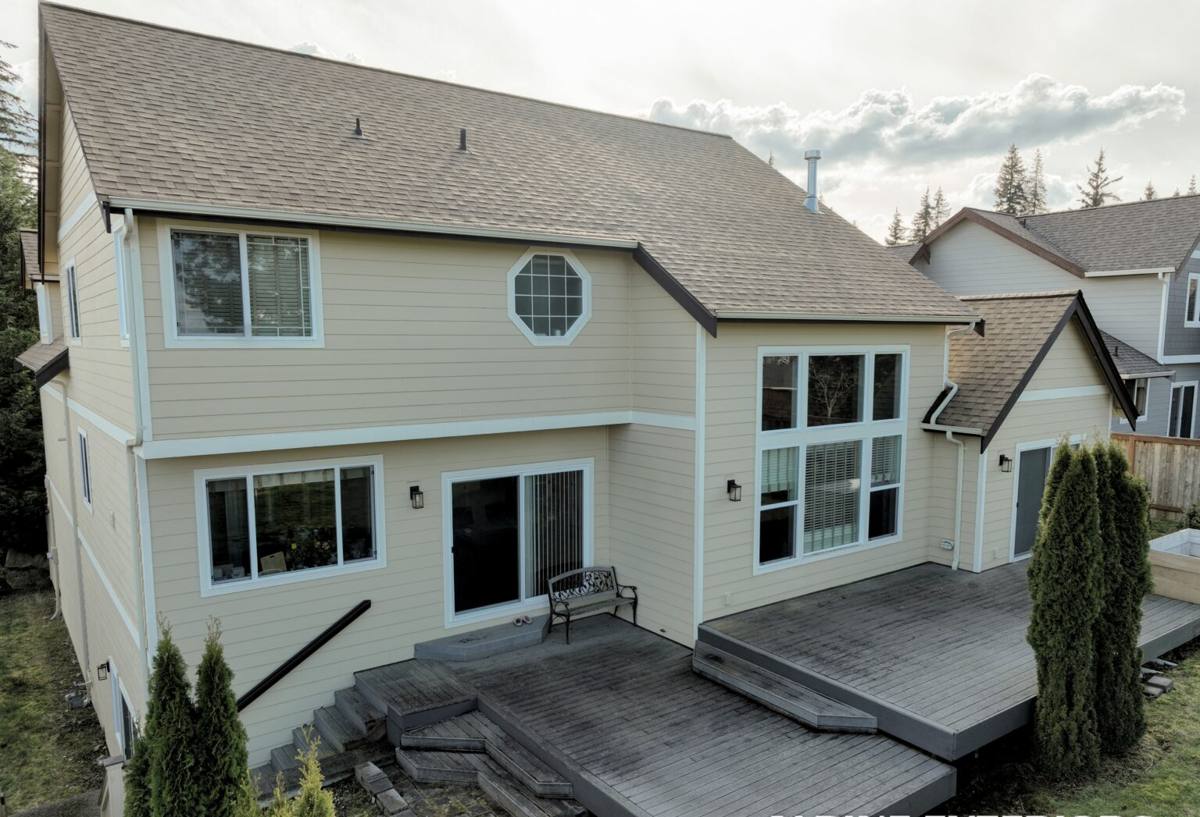
Repair or Replace? Reading the Signs
Not every tired-looking deck needs to come out. But there's a point where patching individual boards or sistering a joist stops being a repair and starts being a way to delay an inevitable full rebuild. Knowing which side of that line your deck is on saves money either way.
Signs a full replacement is the honest answer
- Soft, spongy, or spring-back decking in more than one or two isolated spots
- Rust streaking or crumbling at multiple joist hangers, not just one
- The ledger board (where the deck attaches to the house) shows soft wood or gaps when probed with a screwdriver
- Support posts have visible rot, insect damage, or have sunk unevenly at the base
- Railings that wobble under normal push, not just a hard shove
- The deck was built without visible flashing where it meets the house siding
If what you're seeing is limited to a few weathered boards, loose railing balusters, or surface graying, that's usually repairable. If the framing itself is compromised, replacement is the safer and often cheaper long-term move — repeated patch repairs on failing framing tend to cost more over five years than one correct rebuild.
What a Correct Deck Replacement Actually Involves
A deck is only as good as what's underneath it. Anyone can lay new boards over old framing and call it a remodel — that's not a replacement, and in Sandy Point's climate it just hides the next failure point instead of fixing it.
The parts that matter most and get skipped most often
Proper ledger board flashing is the single most important detail on any deck attached to a house. It's also the detail most likely to be done wrong or skipped entirely on older or budget builds. Flashing directs water away from the house-to-deck connection instead of letting it wick into the rim joist and sheathing — a slow leak here can cause damage well beyond the deck itself.
Joist hangers and structural fasteners need to be rated for the environment, not just the load. In a coastal-influenced climate like Sandy Point's, standard electro-galvanized hardware corrodes faster than it should. Stainless steel or heavy hot-dip galvanized hardware costs more upfront and is worth it here.
Post footings need to sit below frost depth and bear on solid, undisturbed soil — not on fill dirt or a footing that's been undermined by years of runoff. A deck that's structurally sound but poorly footed will eventually settle unevenly.
Drainage and airflow underneath the deck matter as much as what's on top. A low deck with poor ventilation traps moisture against the framing and becomes a moss and mildew incubator during the wet months.
Decking Material Options for This Climate
There's no single "right" material for every homeowner — budget, maintenance tolerance, and how the deck gets used all factor in. What matters is picking with the salt air and moss season in mind rather than picking on looks alone.
| Material | How It Handles This Climate | Maintenance Reality |
|---|---|---|
| Pressure-treated lumber | Solid structural performer; surface needs protection from moss and moisture cycling | Annual cleaning and periodic sealing/staining to prevent graying and moss growth |
| Cedar | Naturally rot- and insect-resistant; still needs sealing against driving rain and salt exposure | Regular sealing to hold color and resist checking; more upkeep than composite |
| Composite decking | Doesn't absorb moisture the way wood does; resists moss staining better on shaded sections | Periodic washing to clear pollen, algae film, and salt residue; no sealing needed |
| PVC decking | Fully synthetic, very low moisture absorption; performs well in wet, salty conditions | Lowest maintenance of the group; higher upfront material cost |
Whatever decking material you choose, the framing underneath should be treated as the part that has to last the longest — decking can be replaced again down the road, but the structure is what you're really building for the next 20-plus years.
Our Deck Replacement Process
Every deck rebuild in Sandy Point follows the same basic sequence, adjusted for the specific site, slope, and how the deck connects to the house.
- On-site assessment — we check the ledger, framing, footings, and railing condition before quoting anything, so the estimate reflects what's actually there, not a guess.
- Demo and disposal — full removal of the old deck, including any compromised framing, hauled off the site.
- Framing and structure — new footings where needed, corrosion-resistant hardware throughout, and correctly flashed ledger attachment.
- Decking installation — your chosen material installed with proper spacing for drainage and expansion, especially important given the seasonal moisture swings here.
- Railings and finish work — code-compliant railing height and baluster spacing, stairs where applicable, and final fastener checks.
- Final walkthrough — we go over the finished deck with you, including basic care guidance for the material you chose.
Permits and Local Requirements
Deck replacements in Whatcom County, including Sandy Point, typically require a building permit once the deck exceeds a certain height or size threshold, and railing height/spacing has to meet current code — this is worth confirming even on a like-for-like rebuild, since code requirements have changed over the years and an older deck may not have met current standards when it was first built. We handle the permit process as part of the job rather than leaving it for the homeowner to sort out, and we build to current code as a baseline, not an afterthought.
What Drives the Cost of a Deck Replacement
Costs vary enough project to project that a flat number isn't honest — but the factors that move the price are consistent, and knowing them helps you understand your own quote.
| Factor | Why It Matters |
|---|---|
| Deck size and shape | Square footage and the number of angles, steps, or level changes drive labor time directly |
| Decking material | Pressure-treated, cedar, composite, and PVC span a wide cost range per square foot |
| Framing condition | How much of the substructure, footings, and ledger need full replacement versus reuse |
| Height off grade | Taller decks need more substantial post and railing work, plus different footing depth |
| Railing and stair complexity | Custom railings, multiple stair runs, or built-in features add labor and material |
| Permit and code upgrades | Bringing an older deck's railing or attachment up to current code can add scope |
We give a written, itemized estimate before any work starts, so you know exactly what you're paying for and why — no vague lump-sum numbers.
After Installation: Keeping a Sandy Point Deck in Good Shape
A correctly built deck still needs some seasonal attention in this climate. This isn't a heavy workload, but skipping it is exactly how moss season and salt air shorten a deck's life.
- Sweep debris off the deck regularly, especially in fall when leaves trap moisture against the boards
- Rinse salt residue and pollen film periodically, particularly on sections exposed to onshore wind
- Check and treat any early moss growth on shaded or north-facing areas before it spreads
- Inspect railing connections and stair fasteners once a year for corrosion or looseness
- Reseal wood decking on the manufacturer's recommended schedule — don't wait until it's visibly graying
- Keep gutters and downspouts near the deck clear so runoff isn't dumping directly onto or under it
Why Local Experience in Sandy Point Matters
A crew that's worked houses throughout Blaine and the surrounding Whatcom County coastline already knows which fastener grades hold up here, which decking materials handle the moss season without constant upkeep, and how to detail flashing for driving rain coming off the water. That's not something you get from a generic national install guide — it's from having seen how decks in this specific environment actually age, and building accordingly the first time.
We'd rather walk you through what your current deck needs — repair, partial rebuild, or full replacement — than sell you more than the job requires. If you're in Sandy Point and thinking about a deck replacement, we're happy to take a look and give you a straight, no-pressure estimate using the form below.