 Blaine Siding
 Sandy Point's Siding Problem Isn't Like Everyone Else's
Sandy Point sits close enough to the water that homes here take a different kind of beating than a house ten miles inland in Blaine or out toward the county line. Salt air rides in off the water and settles on every exposed surface. Wind-driven rain doesn't just fall straight down here — it gets pushed sideways into siding, trim, and window returns. And then there's the long stretch of gray, damp months where moss and algae get a running start on anything that stays wet for more than a day or two. None of this is exotic. It's just Whatcom County weather doing what it does, concentrated by proximity to the water. But it means a siding product and installation that would be perfectly fine in a drier part of the state can fail early here, and a product that's marginal everywhere else can fail fast.
This page is specifically about installing James Hardie fiber cement siding on Sandy Point homes — what the climate demands, what a correct installation actually involves, and why local experience matters as much as the product itself.
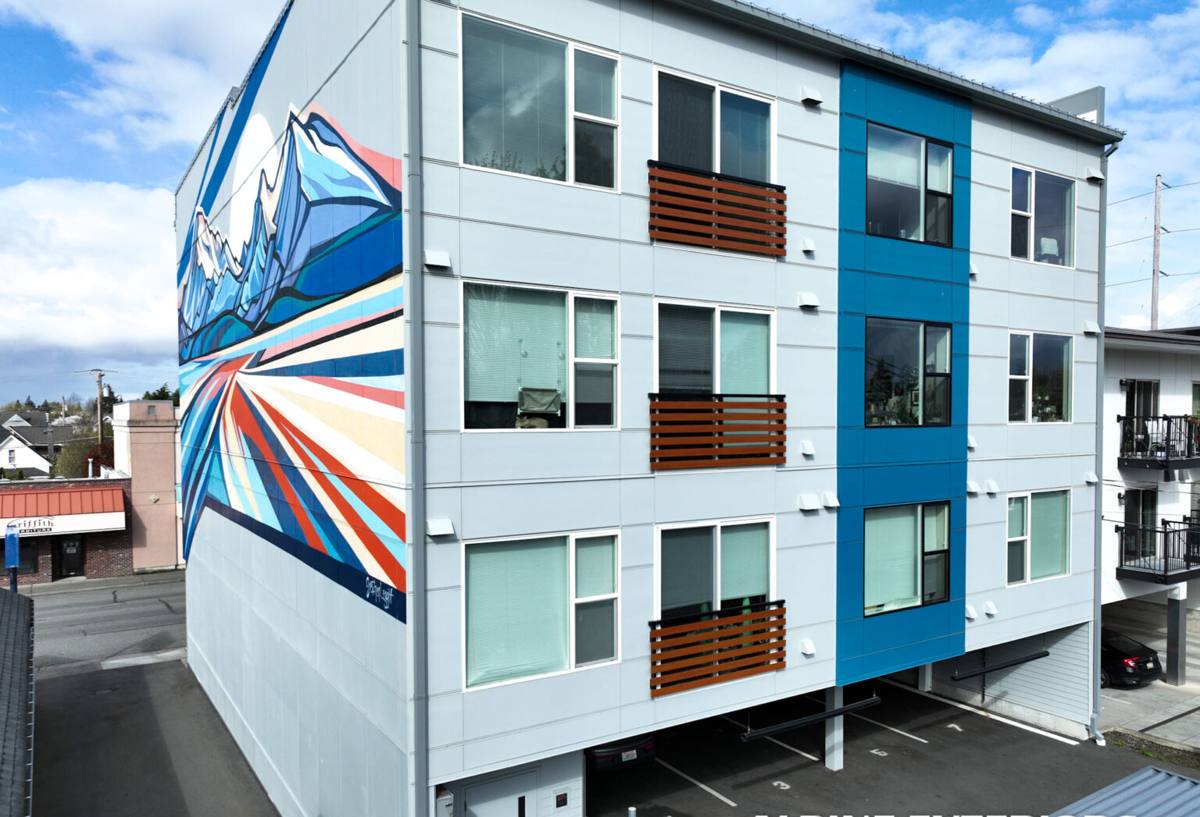
What Salt Air, Rain, and Moss Actually Do to Siding
Salt Air
Airborne salt is corrosive to metal and abrasive to finishes over time. Fasteners, flashing, and trim accessories that aren't rated for coastal exposure can start showing rust streaks and pitting years before they would inland. It also accelerates the breakdown of cheaper paint films and caulks, which is one reason a factory-applied finish that's engineered to hold up outdoors matters more here than in a sheltered neighborhood.
Driving Rain
Sandy Point gets weather off the water, and wind-driven rain finds every gap a siding job leaves behind — a missed piece of flashing, a joint that wasn't caulked, a butt seam without backing. Water that gets behind the siding and can't drain or dry out is what causes rot in the sheathing and framing underneath, which is a far more expensive problem than the siding itself.
Moss and Algae
Whatcom County's long wet season gives moss and algae plenty of time to establish on north-facing walls, shaded elevations, and anywhere siding stays damp. This is mostly a cosmetic and maintenance issue rather than a structural one, but it's constant, and it's one more reason the surface finish and the water-management details behind it both matter.
Why James Hardie Is the Product We Put on These Homes
We install James Hardie fiber cement siding exclusively — not vinyl, not LP SmartSide, not Cemplank or Allura, not primed wood. That's a deliberate standard, not a sales pitch, and it's especially relevant in a spot like Sandy Point.
- Non-combustible: fiber cement doesn't burn, melt, or contribute fuel the way vinyl can in a wildfire ember scenario.
- Factory-applied ColorPlus finish: baked-on color that resists fading and holds up to UV and salt air far better than field-applied paint, with a longer color warranty than repainting a wood or fiber cement product yourself.
- Climate-engineered HZ product lines: Hardie makes different formulations for different climate zones, including moisture-prone regions like the Pacific Northwest, so the product itself is built for what it's going to face here.
- Dimensional stability: fiber cement doesn't swell, warp, or rot the way engineered wood products can when they take on repeated moisture exposure.
- Strong transferable warranty: backed by a manufacturer with decades of track record, which matters when you're deciding what to put on a house you expect to own for a long time.
We've looked closely at the alternatives, and each one comes with a real trade-off — vinyl can warp and doesn't hold up to impact the same way, LP SmartSide is a wood-strand product that depends heavily on perfect installation and maintenance to keep moisture out, and unfinished or primed wood siding demands an ongoing repainting cycle that most homeowners underestimate. In a climate like Sandy Point's, those trade-offs show up faster. Hardie, installed correctly, is the product we're willing to stand behind here.
What Correct Installation Actually Involves
The siding material is only half the equation. A huge share of premature siding failures — on any brand, in any climate — trace back to installation shortcuts, not product defects. In a coastal-influenced area like Sandy Point, the margin for error is smaller.
Water Management Comes First
Before a single piece of Hardie plank goes up, the wall needs a correctly lapped weather-resistant barrier, properly flashed windows and doors, and flashing at every horizontal transition — roof lines, decks, trim boards. Hardie siding is durable, but it's not a substitute for good flashing; it's one layer in a system that has to work together to keep water out and let incidental moisture drain and dry.
Clearances and Gaps
James Hardie's own installation instructions call for specific clearances — siding kept off roofing, decks, and grade by a minimum distance, gaps at butt joints and around penetrations, and proper caulking or trim treatment at those gaps. Skipping these is one of the most common corner-cut installers take, and it's exactly the kind of detail that causes moisture problems years down the road rather than immediately.
Fasteners and Hardware
In a salt-air environment, fastener choice matters more than usual. Corrosion-resistant fasteners rated for the exposure, correct nailing patterns, and proper fastener depth (not overdriven, not underdriven) all affect both how long the installation lasts and whether it stays watertight.
Caulking and Sealants
Quality sealant at trim joints, butt seams, and penetrations, applied correctly, is part of what keeps driving rain out. Cheap or improperly applied caulk is one of the first things to fail under repeated wind-driven rain exposure.
Our Process on a Sandy Point Project
The steps aren't unique to this neighborhood, but how we apply them here reflects what we've learned working this stretch of Whatcom County.
1. On-Site Assessment
We look at the home's exposure — which elevations take the most wind-driven rain, where moss has already established, and what condition the existing sheathing and trim are in before we ever quote a job.
2. Tear-Off and Substrate Check
Removing the old siding is also our chance to check the sheathing for hidden moisture damage. If we find rot or compromised sheathing, we address it before new siding goes up — covering damaged substrate with new siding just hides the problem.
3. Water-Resistive Barrier and Flashing
We install or verify the weather barrier and flash every window, door, and horizontal transition according to manufacturer specifications, not shortcuts.
4. Hardie Installation to Spec
Correct clearances, correct fastener spacing and type, correct gaps and sealant at joints — installed to James Hardie's published requirements, which is also what keeps the manufacturer's warranty intact.
5. Final Walkthrough
We walk the finished job with the homeowner, checking trim lines, caulking, and overall finish before calling it done.
What a Sandy Point Job Costs — and Why
Every home is different, but the factors that move the price on a Sandy Point Hardie project are fairly consistent. We don't quote exact numbers without seeing the house, but here's what tends to drive the range up or down.
| Factor | Why It Matters Here |
|---|---|
| Extent of tear-off and substrate repair | Homes with existing moisture damage from years of wind-driven rain often need sheathing repair before new siding goes on |
| Home size and wall complexity | More corners, dormers, and trim details mean more flashing and cutting time |
| Hardie product line and profile | Lap siding, panel systems, and shingle-style profiles differ in material and labor cost |
| ColorPlus vs. field-painted finish | Factory finish costs more upfront but avoids a repaint cycle exposed to salt air and UV |
| Trim and accessory scope | Corner boards, window trim, and fascia detailing add material and labor |
| Access and site conditions | Waterfront lots, steep grades, or tight setbacks can add staging and logistics time |
Living With Hardie Siding in This Climate
Fiber cement is low-maintenance compared to wood, but "low-maintenance" doesn't mean "no maintenance," especially with Sandy Point's moss season and salt exposure. A simple annual routine keeps siding performing and looking right for the long haul.
- Rinse the exterior once or twice a year with a garden hose to clear salt residue, pollen, and dust before it builds up.
- Check north-facing and shaded walls for early moss or algae growth and treat it before it spreads.
- Inspect caulking at trim joints and penetrations annually; recaulk any cracked or separated seams promptly.
- Keep gutters clear so overflow doesn't run down the siding face and accelerate staining or moss growth.
- Trim back vegetation and irrigation spray that keeps any section of wall consistently damp.
- Walk the exterior after major windstorms to check for loose trim, damaged flashing, or impact damage.
Why Hiring a Crew That Already Works Sandy Point Matters
Siding installation instructions read the same everywhere in the country, but applying them well depends on understanding the conditions a house actually faces. A crew that's worked Sandy Point and the surrounding Blaine waterfront knows which elevations typically take the worst of the wind-driven rain, where moss tends to establish first, and what fastener and flashing choices hold up under sustained salt exposure — because they've seen it play out on homes nearby, not just read it in a spec sheet. That local pattern recognition is part of what keeps a job from becoming a callback five years later.
It also means a shorter learning curve on your project. We're not guessing at how this specific stretch of coastline behaves — we're applying what we already know works here.
Ready to Talk About Your Sandy Point Home
If your siding is showing moss staining, chalking, warping, or gaps that let daylight or drafts through, it's worth having a straight conversation about what's actually going on and what correct James Hardie installation would look like on your specific house. Reach out for a free, no-pressure estimate — we'll walk the exterior with you and tell you honestly what we find.