 Blaine Siding
 Board & Batten in a Waterfront Neighborhood Like Sandy Point
Sandy Point sits right up against the water on the northern edge of Whatcom County, and that location shapes what siding actually holds up here versus what just looks good on install day. Board and batten has become a popular choice in this neighborhood for a simple reason: the vertical lines read as clean, modern, and coastal all at once, and they suit the mix of beach cottages and newer builds you find along the point. But the style is only half the decision. What the material is made of, and how it's installed against wind-driven moisture off the water, matters a lot more here than it would a few miles inland in downtown Blaine.
We install board and batten siding throughout Blaine and Whatcom County, and Sandy Point projects get treated differently from day one. The wall assembly, the fastening pattern, and the trim details all get adjusted for a home that's going to take on more salt-laden air and more sustained dampness than most.
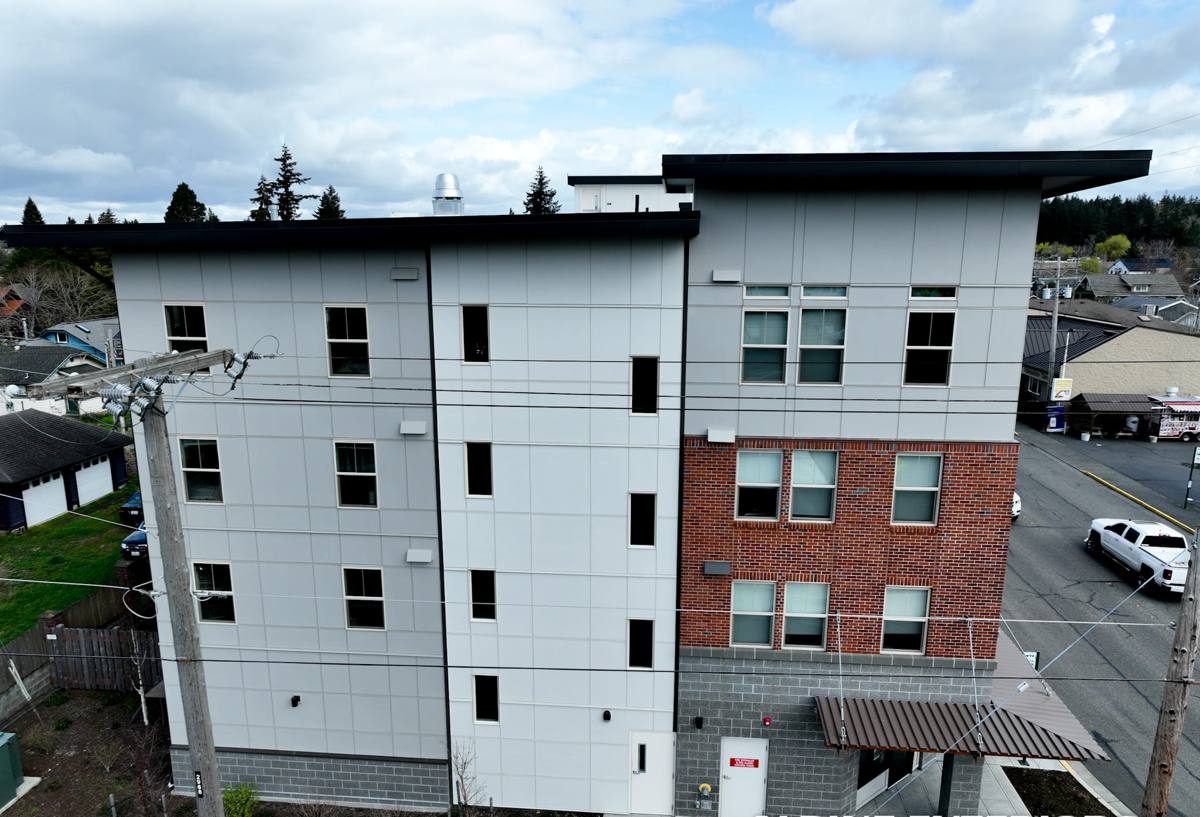
What Salt Air, Driving Rain, and Moss Actually Do to Siding Out Here
Three things wear on siding in Sandy Point more aggressively than in a typical inland neighborhood:
- Salt air. Airborne salt accelerates corrosion on fasteners, flashing, and any exposed metal trim, and it slowly breaks down finishes that aren't formulated to resist it.
- Driving rain. Wind off the water doesn't just fall on siding, it pushes water sideways and up under laps, seams, and butt joints. A board and batten wall has more vertical seams than lap siding, so every one of those seams needs to be sealed and detailed correctly or it becomes a water path.
- A long moss season. Whatcom County's wet, mild winters and the shade from mature evergreens common around Sandy Point properties keep siding damp for long stretches. Any material that absorbs moisture instead of shedding it becomes a place for moss and algae to take hold, and that growth holds even more moisture against the wall.
None of this is unique to board and batten as a style — it's true of any siding on this stretch of coastline. But board and batten's vertical seams and exposed batten edges give water and moss more opportunities to find a foothold if the product and the install aren't both right for the exposure.
Why We Only Install James Hardie Fiber Cement for This
We don't offer board and batten in vinyl, LP SmartSide, cedar, or primed spruce — not because those products can't be installed, but because we've made James Hardie fiber cement our standard for every siding job we do, including board and batten. A few reasons that matters specifically for a home near the water:
- It doesn't rot, and it doesn't feed moss the way wood-based products can. Fiber cement is cement, sand, and cellulose fiber — it doesn't provide the organic food source that algae and moss thrive on the way wood or wood-composite sidings can.
- It's engineered for this climate zone. James Hardie builds its HardieZone products differently for different parts of the country. Homes here fall in the HZ5 zone, engineered for cold, wet, and freeze-thaw conditions rather than the hot, humid formulation sold in the South. That's not a marketing detail — it changes the moisture and durability performance of the board itself.
- ColorPlus factory finish holds up to salt air better than field-applied paint. The finish is baked on in a controlled factory process, which gives it more consistent adhesion and UV/weather resistance than paint applied on site, and it comes with its own finish warranty.
- It's non-combustible. Not a coastal-specific benefit, but a real one — fiber cement doesn't contribute fuel to a fire the way wood-based sidings can.
We're not going to tell you vinyl or LP SmartSide board and batten will fail on your house — plenty of it is out there performing fine. But we've seen enough of the maintenance calls that come with wood-based trim rot, vinyl warping in temperature swings, and touch-up paint peeling in salt air that we decided to standardize on one material and get very good at installing it correctly, rather than offer four products and get mediocre at all of them.
What a Correct Board & Batten Job Involves
Board and batten looks simple from the street — vertical panels with battens covering the seams — but the assembly behind that clean line is where the job is actually won or lost, especially this close to the water.
The parts that matter most
- Weather-resistive barrier and flashing first. Every window, door, and penetration gets flashed and integrated with the water-resistive barrier before a single panel goes up. This is the layer that actually keeps water out if wind-driven rain gets past the siding.
- A drainage gap behind the panels where the wall assembly calls for it. Furring strips or a rainscreen gap let any moisture that does get behind the siding drain and dry out instead of sitting against the sheathing.
- Correct fastener type and spacing. Near saltwater, fastener choice isn't a place to cut corners — corrosion-resistant fasteners driven per manufacturer spec, not gun-nailed at whatever spacing is fastest.
- Battens installed to allow movement, not trap water. Battens need consistent reveal, correct fastening into the panel and framing below, and joints that are caulked with a product rated for the exposure — not just caulked because it's the last step before paint.
- Proper clearance at grade and hard surfaces. Board and batten run vertically all the way to the bottom of the wall in some designs, which means the bottom edge needs the right clearance from soil, decking, and hardscape so it isn't sitting in standing moisture.
Skip any one of these and the siding can look identical to a correctly installed wall for the first year or two. The difference shows up later, in the form of soft trim, staining at the seams, or moss establishing itself faster than it should.
Comparing Board & Batten Materials for a Sandy Point Exposure
| Material | Moisture/moss behavior | Salt air performance | Maintenance burden |
|---|---|---|---|
| James Hardie fiber cement | Doesn't absorb water or feed organic growth | ColorPlus finish and non-organic substrate hold up well | Low — periodic rinse, no repainting on the factory finish for years |
| Cedar / primed spruce | Absorbs moisture, prone to rot and moss growth if not maintained | Finish breaks down faster in salt air, needs more frequent recoating | High — regular sealing/painting and rot inspection |
| Vinyl board and batten | Doesn't rot, but seams and channels can trap moisture and grime | Can become brittle and discolor faster with UV and salt exposure over time | Moderate — cleaning to control mildew buildup in channels |
| LP SmartSide | Engineered wood strand core, better than raw wood but still wood-based | Edge sealing and caulking maintenance is more critical near the water | Moderate — dependent on caulking and finish upkeep |
This table is a general guide, not a claim that any of these products will fail — it reflects the trade-offs that led us to standardize on one material rather than offer several.
How We Handle a Sandy Point Project
- On-site assessment. We look at sun and shade exposure, how close the home sits to the water, existing moisture or moss patterns on the current siding, and any trim or window details that will affect the batten layout.
- Scope and product plan. We spec panel size, batten spacing, and trim details for the specific elevations of your home, including which walls take the most wind-driven rain.
- Tear-off and inspection of the sheathing. Removing the old siding lets us catch any hidden moisture damage before it's covered up again — this step matters more on a waterfront property than almost anywhere else.
- Water-resistive barrier, flashing, and drainage detailing. This happens before any finish siding, and it's the layer that determines long-term performance.
- Panel and batten installation to manufacturer spec. Correct fastening, spacing, and sealant — not shortcuts to save a day of labor.
- Final walkthrough. We go over the finished work with you before we consider the job done.
Maintenance Checklist for Board & Batten Near the Water
- Rinse siding a couple of times a year to clear salt residue, especially on walls facing the water
- Keep gutters and downspouts clear so water isn't sheeting down the wall face
- Trim back vegetation that shades siding and keeps it damp longer than it should stay
- Check caulked joints at battens and trim annually for cracking or separation
- Address any moss or algae early with a gentle wash rather than letting it establish
- Watch grade and hardscape lines near the bottom of the siding to make sure clearance hasn't closed up over time
What Affects the Cost of a Board & Batten Project Here
| Factor | Why it matters |
|---|---|
| Tear-off vs. new construction | Removing and disposing of existing siding adds labor and can reveal sheathing repairs |
| Wall height and complexity | Multi-story sections, dormers, and cut-ins around windows take more time per square foot |
| Trim and batten spacing chosen | Tighter batten spacing and wider trim details mean more material and labor |
| Exposure of the specific elevation | Walls facing the water may need extra flashing and sealant detail, which adds time |
| Access and site conditions | Waterfront lots, retaining walls, or limited equipment access can affect scaffolding and staging |
We give a real number after we've actually looked at your home — broad ranges without seeing the site aren't useful to you and we won't pretend otherwise.
Why Local Experience in Sandy Point Actually Matters
A siding crew that's worked this specific stretch of Whatcom County coastline already knows which elevations tend to take the worst of the wind-driven rain, how fast moss shows up on shaded walls here compared to elsewhere in Blaine, and what fastener and flashing details hold up over years of salt exposure rather than just looking fine at handoff. That's the kind of knowledge that doesn't show up in a manufacturer's install manual — it comes from doing the work in this exact environment and following up on how it performs.
If you're weighing board and batten for a home in Sandy Point, we're glad to come take a look, walk the exposure with you, and put together a straightforward plan and a real number — no pressure, no hard sell, just an honest assessment of what your home needs.