 Blaine Siding
 Why Sandy Point Siding Wears Differently Than Siding a Few Miles Inland
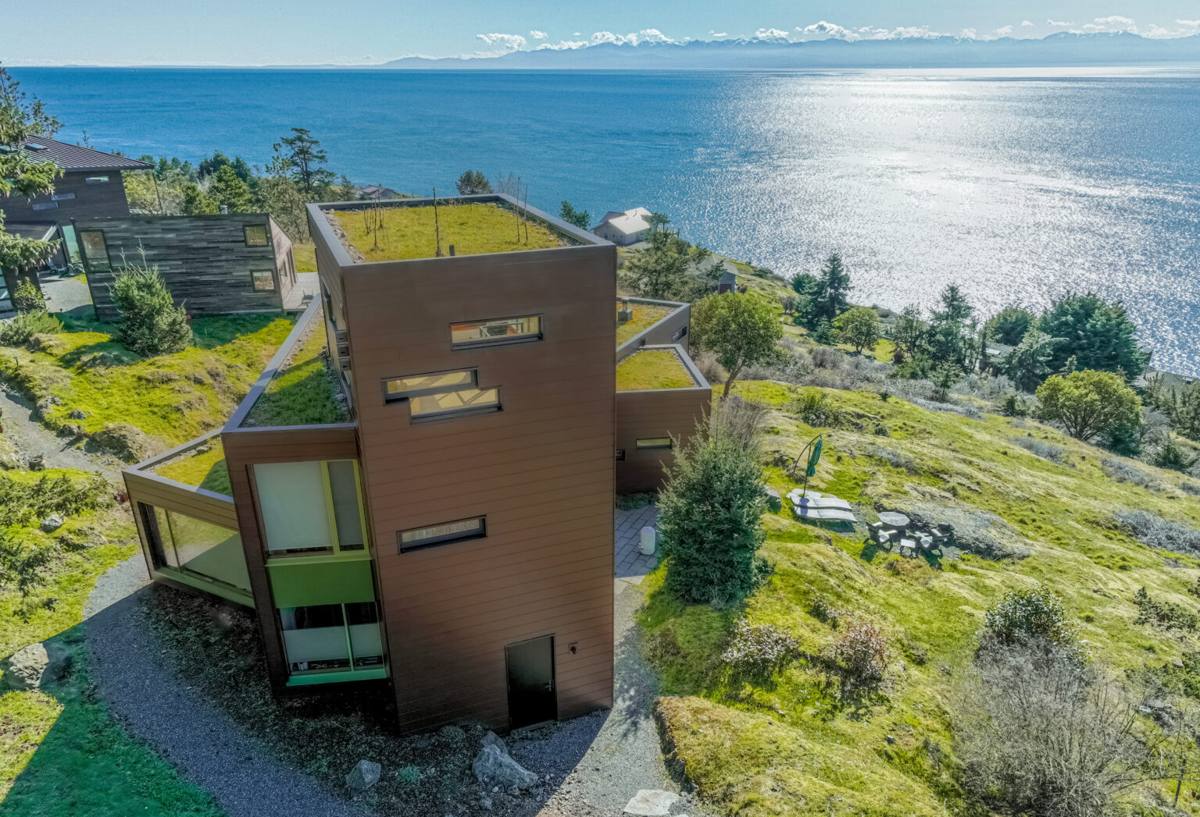
Sandy Point sits right on the water in Whatcom County, a short drive from Blaine, and that location changes the math on how long siding lasts. A house set back in a wooded subdivision deals with rain and cold. A house at Sandy Point deals with all of that plus salt-laden air coming straight off the water, wind-driven rain that hits the wall sideways instead of running down it, and a moss season that can realistically run from October through May in a wet year. None of those factors are dramatic on their own. Together, over a few winters, they add up fast.
Salt air is corrosive to exposed fasteners and hard on painted finishes, which is part of why field-painted siding along the water tends to chalk and fade faster than the same product a few miles inland. Wind-driven rain doesn't behave like a normal downpour — instead of sheeting off the face of the siding, it gets pushed sideways and upward into laps, butt joints, and trim gaps, which is exactly where water intrusion behind the siding starts. And moss doesn't just sit on the surface looking bad; it holds moisture against the wall, which is a problem for any siding material with an organic wood-fiber component.
Signs Your Sandy Point Home Is Due for Replacement
Most homeowners don't wake up one day and decide it's time to reside the house — it's usually a slow accumulation of small warning signs that finally add up. In a marine environment like Sandy Point, these show up earlier than they would inland:
- Sections of siding that feel soft or spongy when you press on them, especially near the bottom courses or under windows
- Paint that peels or bubbles again within a year or two of repainting
- Dark streaking or moss that comes back within days of being cleaned off, particularly on north-facing or shaded walls
- Boards that have visibly cupped, warped, or pulled away from each other at the seams
- Gaps opening up at corners, butt joints, or around trim and window casings
- A noticeable draft near exterior walls, or a jump in heating costs with no other explanation
- Rot or crumbling material at the bottom edge of the wall, where splashback and standing moisture do the most damage
Any one of these can sometimes be spot-repaired. Several of them together, especially on a home that's had the original siding for fifteen-plus years, usually means the material is failing faster than repairs can keep up with.
What a Correct Tear-Off and Replacement Actually Involves
Siding replacement done right is not just swapping old boards for new ones. The siding itself is the last layer installed and the first thing anyone sees, but the work that matters most happens underneath it.
Full Tear-Off, Not an Overlay
We remove the existing siding down to the sheathing rather than installing new siding over the old. An overlay hides problems instead of fixing them — it traps whatever moisture is already in the wall assembly and makes it impossible to check the sheathing, framing, and flashing underneath. In a climate with as much wind-driven rain as Sandy Point sees, an overlay is a bet against the odds.
Inspecting and Repairing What's Underneath
Once the old siding is off, we check the sheathing for soft spots or rot, paying close attention to corners, the base of the wall, and anywhere windows or doors interrupt the wall plane — these are the areas where wind-driven rain finds its way in over the years. Any damaged sheathing gets replaced before anything new goes up. Skipping this step is the single most common reason a "new" siding job fails within a few years.
Weather-Resistive Barrier and Flashing
A correctly lapped weather-resistive barrier (house wrap) goes on next, installed so every seam sheds water downward and outward rather than trapping it. Flashing gets integrated at windows, doors, and any other wall penetration, and in higher-exposure spots we look at whether a drainage gap behind the siding makes sense to give any water that does get past the face material somewhere to go besides straight into the wall.
Fastening and Gapping to Spec
Fiber cement siding has specific fastening patterns, gapping requirements, and clearance rules — how far the bottom edge sits above grade or a roofline, how boards are joined, how much room is left for the material to expand and contract. These aren't preferences; they're what keeps the manufacturer's warranty valid and what keeps water managed correctly over the life of the siding.
Why We Install Only James Hardie Fiber Cement
We don't install vinyl, LP SmartSide, Cemplank, Allura, primed spruce, or cedar. That's a deliberate standard, not a limitation on what we're capable of installing. Every one of those products has legitimate strengths, but for a marine environment like Sandy Point, the trade-offs stacked up against them.
Vinyl is affordable and low-maintenance in a lot of climates, but it's a thin material that can warp in temperature swings, its seams rely on overlap rather than a sealed joint, and its color is baked into the material with no practical way to touch it up if it fades or gets damaged. LP SmartSide and similar wood-strand products use an engineered wood core, which means their long-term performance depends heavily on the finish staying intact — in a climate with this much driving rain and this long a moss season, that's a lot of pressure on one layer of protection. Primed spruce and cedar are natural wood; they're beautiful, but they're also the most moisture-sensitive option on the list, and moss holding water against a wood surface for months at a time is not a favorable combination.
James Hardie fiber cement is non-combustible, engineered specifically for the moisture challenges of a wet climate, and finished at the factory with ColorPlus technology rather than painted on site — a finish that's baked on and backed by its own warranty, and that holds up better against UV and salt exposure than a field-applied paint job. It's also backed by a strong, transferable warranty when installed to Hardie's own specifications, which is part of why correct installation isn't optional for us.
| Factor | James Hardie Fiber Cement | Vinyl | Wood / Wood-Strand |
|---|---|---|---|
| Core material | Cement, sand, cellulose fiber | PVC plastic | Wood or wood strand |
| Moisture behavior | Engineered for wet climates | Won't rot, but seams can pass water | Absorbs moisture, most rot-prone |
| Salt-air / UV finish durability | Factory ColorPlus finish, own warranty | Color molded in, can fade/chalk | Relies on field-applied paint/stain |
| Fire rating | Non-combustible | Combustible | Combustible |
| Typical maintenance | Periodic rinse and inspection | Low, but not repairable if damaged | Repainting/resealing cycle |
Choosing the Right Hardie Line and Finish for a Waterfront Exposure
James Hardie's HZ5 product line is engineered for cold, wet climate zones, which is the right starting point for anything built this close to the water in Whatcom County. Beyond the base product, the finish color matters more here than it does on an inland home — darker ColorPlus finishes handle UV and salt exposure well, but on north-facing or heavily shaded walls where moss takes hold fastest, we'll talk through finish and profile choices that make ongoing maintenance easier rather than harder. Lap siding, panel, and shingle profiles all perform differently in wind-driven rain, and the right choice depends on how exposed a given wall actually is, not just on appearance.
How We Work a Sandy Point Job
Waterfront and near-waterfront lots tend to be tighter than a standard inland lot, with less room for staging material and less clearance around decks, walkways, and landscaping close to the house. We plan the job around that instead of treating it like a standard tear-off. That means keeping open wall sections to a minimum at any given time, having weather protection ready if a dry window closes faster than forecast, and cleaning up debris daily rather than letting it sit — moss and organic debris left against a foundation or deck for even a few days in this climate starts causing its own problems.
Timing also matters more here than it does in a drier part of the state. We watch for a real dry stretch before opening up sheathing, because a wall assembly left exposed to wind-driven rain overnight can undo the benefit of doing the tear-off correctly in the first place. This is the kind of scheduling judgment that comes from having worked this stretch of coastline before, not from a general contracting background.
Cost Factors for Sandy Point Siding Replacement
Every home is different, and we'll always give you real numbers after walking the property, but the factors that move the price on a Sandy Point job are fairly consistent:
| Factor | Why It Affects Cost |
|---|---|
| Home size and wall area | More square footage means more material and labor |
| Condition of existing siding and sheathing | Hidden rot found during tear-off adds repair work before new siding goes on |
| Home shape and trim detail | Corners, dormers, and window trim all add cutting and finishing time |
| Hardie product line and profile chosen | Panel, lap, and shingle profiles carry different material costs |
| Site access | Tighter waterfront lots can slow staging and material handling |
| Story height | Second-story and steep-site work requires more scaffolding/safety setup |
Caring for New Siding in a Salt-Air, Moss-Prone Climate
Correctly installed Hardie siding is low-maintenance, not no-maintenance. A little attention keeps it looking and performing the way it should for the long run:
- Rinse the exterior once or twice a year to clear salt film and airborne debris, especially on walls facing the water
- Keep an eye on shaded or north-facing walls where moss and algae tend to establish first, and clean it off before it spreads
- Trim back vegetation and landscaping near the house so walls get airflow and dry out between rains
- Check caulking at trim and penetrations annually, since caulk has a shorter service life than the siding itself
- Walk the exterior after any major windstorm to check for loose trim, flashing, or debris caught behind the siding
- Keep gutters and downspouts clear so roof runoff isn't dumping extra water down the wall face
Why Hiring a Crew That Already Works Sandy Point Matters
A contractor who mostly works inland can install siding correctly on paper and still get the details wrong for a site like this — the extra flashing attention a wind-driven-rain exposure calls for, the finish choice that holds up against salt and moss, the scheduling judgment to not leave a wall open overnight in a wet stretch. None of that shows up in a generic estimate. It shows up in how the job actually holds up five and ten years later. Working this part of Whatcom County regularly means knowing what fails here, what doesn't, and building the job around that from the first day of tear-off.
If your Sandy Point home is showing any of the wear signs above, or you're just trying to plan ahead before a small problem becomes a bigger one, we're happy to take a look and walk you through what we're seeing — no pressure, no obligation. Use the form below to request a free estimate.