 Blaine Siding
 Building a Deck in a Waterfront Community Like Sandy Point
Sandy Point sits right up against the Strait of Georgia, and that changes what a deck has to survive. A deck built the same way you'd build one ten miles inland in Whatcom County will show its age faster here — the salt air corrodes fasteners, the driving rain finds every gap in the flashing, and the shade and moisture that come off the water feed moss and algae for most of the year. None of that means you can't have a good deck in Sandy Point. It means the deck has to be built with those conditions in mind from the footings up, not just finished with a coat of stain and called done.
We build and repair decks throughout Blaine and the surrounding Whatcom County waterfront, and Sandy Point is one of the areas where the difference between a deck built for the coast and a deck built for anywhere shows up fastest — sometimes within a couple of seasons.
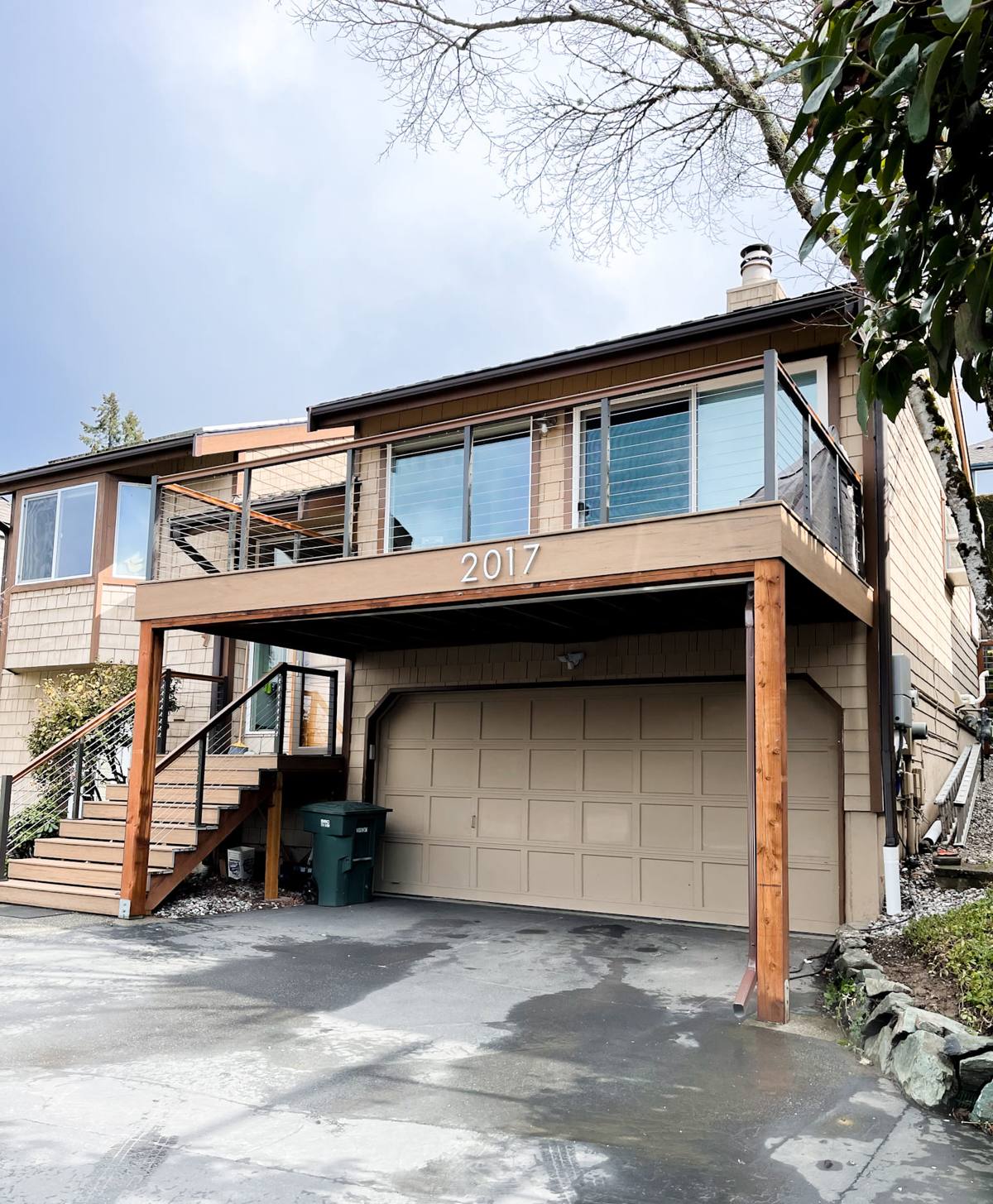
What the Marine Environment Actually Does to a Deck
It helps to understand the specific ways a beachfront setting works against a structure, because it explains every material and construction choice below.
Salt Air and Corrosion
Airborne salt doesn't need direct wave contact to do damage — it travels on the wind and settles on every exposed surface, including framing hardware tucked under the deck boards where you can't see it. Ordinary galvanized fasteners and connectors that would last decades inland can start rusting within a few years this close to the water. Once a fastener corrodes, it loses holding strength long before it looks obviously bad, which is what makes it a real structural concern rather than just a cosmetic one.
Driving Rain and Wind-Driven Moisture
Storms off the Strait don't just drop rain straight down — wind pushes it sideways, up under rail caps, and into any seam that isn't properly flashed or sealed. That means ledger board connections, stair stringers, and any point where the deck meets the house need better water management than a typical inland build, where rain mostly falls straight and drains straight.
Moss and Algae Season
Blaine's long, mild, wet stretch of the year — roughly fall through spring — is exactly the combination moss and algae need: cool temperatures, constant moisture, and, in a lot of Sandy Point yards, some shade from mature trees or neighboring structures. Moss on decking isn't just unattractive. It holds moisture against the wood or composite surface and turns the deck into a slip hazard, especially on stairs.
Decking Material Options for This Environment
There's no single "correct" decking material for a waterfront deck — the right choice depends on your budget, how much upkeep you want to do, and how the deck will be used. Here's an honest comparison of the materials we most often discuss with Sandy Point homeowners.
| Material | Salt-air performance | Moss/algae resistance | Maintenance | Typical lifespan |
|---|---|---|---|---|
| Pressure-treated lumber | Good if fasteners and hardware are upgraded; the wood itself resists rot well | Needs regular cleaning and periodic sealing to shed moisture | Annual cleaning, re-sealing every 2-3 years | 15-20 years with upkeep |
| Cedar | Naturally rot- and insect-resistant, but softer surface can hold grime | Moderate — benefits from a breathable finish | Regular cleaning, finish renewal every 2-3 years | 15-20 years with upkeep |
| Capped composite | Excellent — the cap resists moisture absorption and salt staining | Good — smooth cap sheds moss more easily than wood grain | Periodic washing, no sealing or staining | 25-30+ years |
| PVC decking | Excellent — fully synthetic, doesn't absorb moisture | Good, same as capped composite | Periodic washing only | 25-30+ years |
A lot of Sandy Point homeowners land on capped composite or PVC decking for the walking surface simply because it removes the sealing and staining cycle from the maintenance calendar — in an area where the deck already needs more attention paid to hardware and framing, cutting one recurring task out helps. That said, plenty of homes here still have and want real wood decks, and a well-built, well-maintained cedar or pressure-treated deck holds up fine in this climate. The material choice matters less than getting the structure underneath it right.
Framing, Fasteners, and Hardware — Where Waterfront Decks Actually Fail
Most deck problems we see in coastal Whatcom County aren't failures of the decking boards — they're failures of what's underneath and holding it together. This is the part of the job that doesn't show in a photo but determines whether the deck is safe in ten years.
- Fastener grade: Standard galvanized screws and nails corrode faster in salt air. We use stainless steel or high-corrosion-rated coated fasteners rated for coastal exposure, especially anywhere hardware is hidden or hard to inspect later.
- Structural connectors: Joist hangers, post bases, and ledger hardware get the same upgrade — a hanger that rusts through is a much bigger problem than a rusted screw head you can see and replace.
- Ledger flashing: Where the deck attaches to the house, proper flashing keeps wind-driven rain from working its way behind the siding and into the wall framing. This is one of the most common points of hidden water damage on any deck, and it matters more here than inland.
- Joist protection: Capping or taping the tops of joists sheds water instead of letting it pool and soak in, which extends the life of the framing regardless of decking material on top.
- Airflow underneath: Proper spacing and ventilation under the deck keeps moisture from sitting stagnant, which slows both rot and the growth of moss and algae in shaded, low-airflow spots.
None of this is exotic — it's standard good building practice applied consistently, instead of skipped to save a little time or cost. The difference between a deck that needs major hardware repair in eight years and one that doesn't is almost always in these details.
Footings and Foundation Considerations Near the Water
Sandy Point's beachfront setting brings soil and site conditions that are worth planning for before the first post goes in the ground.
Sandy, well-drained soils common near the shoreline behave differently under footings than the denser inland soils elsewhere in Whatcom County, and ground and water conditions can vary noticeably from lot to lot depending on elevation and proximity to the beach or the community's canals and lagoons. We size and set footings based on the actual soil we find on your site — not a generic assumption — and use post bases and connectors rated for wet, sandy conditions so the deck's support stays stable over time rather than shifting or settling unevenly.
Permits and Local Requirements
Deck permitting in Whatcom County depends on the size, height, and attachment of the structure, and waterfront lots — including those in Sandy Point — can have additional considerations tied to shoreline setbacks or community-specific rules on top of the standard county building code. We handle the permit process as part of the job: confirming what's required for your specific property, submitting the application, and building to the approved plan and inspection requirements. You shouldn't have to sort out permitting on your own, and skipping it on a waterfront lot is a bigger risk than it is inland, since shoreline-adjacent work tends to draw more scrutiny if it's ever questioned during a sale or insurance claim.
How We Approach a Sandy Point Deck Project
1. On-Site Assessment
We walk the property, look at soil and drainage conditions, note sun and wind exposure, and — for a replacement deck — inspect the existing structure to see what's failing and why, which usually tells us a lot about what needs to change in the rebuild.
2. Design and Material Selection
We talk through decking material, railing style, and layout based on how you actually use the space, your maintenance preferences, and budget — with honest trade-offs explained rather than a default upsell.
3. Permitting
We confirm what Whatcom County and any applicable shoreline requirements call for on your specific lot and handle the paperwork before work begins.
4. Build
Footings sized for your soil, corrosion-resistant fasteners and hardware throughout, properly flashed ledger connections, and decking installed with the spacing and fastening pattern that material requires.
5. Walkthrough and Care Guidance
Before we leave, we walk the finished deck with you and go over what regular care it actually needs for your material and site — not a generic maintenance sheet, but what applies to your deck specifically.
A Realistic Maintenance Schedule for Salt Air and Moss Season
Even a well-built deck needs some regular attention in this climate. Here's what we recommend keeping on your calendar:
- Rinse or sweep off salt residue, sand, and debris regularly, especially after storms with onshore wind
- Clean the deck surface at least once a year to remove moss, algae, and organic buildup before it gets a foothold, more often in consistently shaded areas
- Check and clear gaps between boards so water and debris don't accumulate and hold moisture against the framing
- Inspect visible fasteners and hardware annually for early signs of rust or loosening
- Re-seal or re-stain wood decking on the schedule appropriate to the finish used, typically every 2-3 years
- Confirm gutters and downspouts near the deck are directing water away rather than onto or under it
None of these tasks are difficult, but skipping them in a marine environment shortens a deck's life faster than it would inland — moss left to grow, or corroding hardware left unchecked, compounds quickly here.
Why It Matters to Hire a Crew That Already Works This Area
A contractor who mostly builds decks in drier, inland parts of Whatcom County can still build a structurally sound deck — but they may not default to coastal-grade fasteners, may not think about ledger flashing the same way, and may not have a good read on how a specific waterfront lot's soil and drainage behave. Those aren't dramatic mistakes, they're just the kind of details that only show up as a problem years later, after the crew that built it is long gone.
We work in Blaine and the surrounding waterfront communities regularly, so building for salt exposure, wind-driven rain, and moss season isn't a special adjustment we make — it's just how we build a deck out here. That familiarity with the site conditions is worth more than it looks like on paper, because it shows up as the problems you never have rather than a feature you can point to.
If you're planning a new deck or looking at replacing one that hasn't held up to Sandy Point's conditions, we're happy to take a look and talk through honest options for your property. Reach out for a free, no-pressure estimate using the form below.