 Blaine Siding
 Grandview's Climate Asks More of a Roof
Homes in the Grandview area near Blaine sit in one of the more demanding roofing climates in Washington State. It isn't dramatic weather — no hurricanes, no hail the size of golf balls — it's the steady, grinding combination of coastal moisture that wears roofs out faster than homeowners expect. Salt-laden air off the water accelerates corrosion on exposed metal fasteners and flashing. Driving rain, often pushed sideways by wind, finds every weak seam and undersized flashing detail. And the long, damp shoulder seasons that Whatcom County is known for give moss and algae months at a time to take hold on north-facing slopes and shaded valleys.
None of this means roofs in Grandview fail faster than they should. It means they need to be installed correctly the first time, with materials and details chosen for this specific climate rather than a generic install. A roof that would hold up fine in a dry inland climate can underperform here within a decade if ventilation, underlayment, and flashing weren't handled with local conditions in mind.
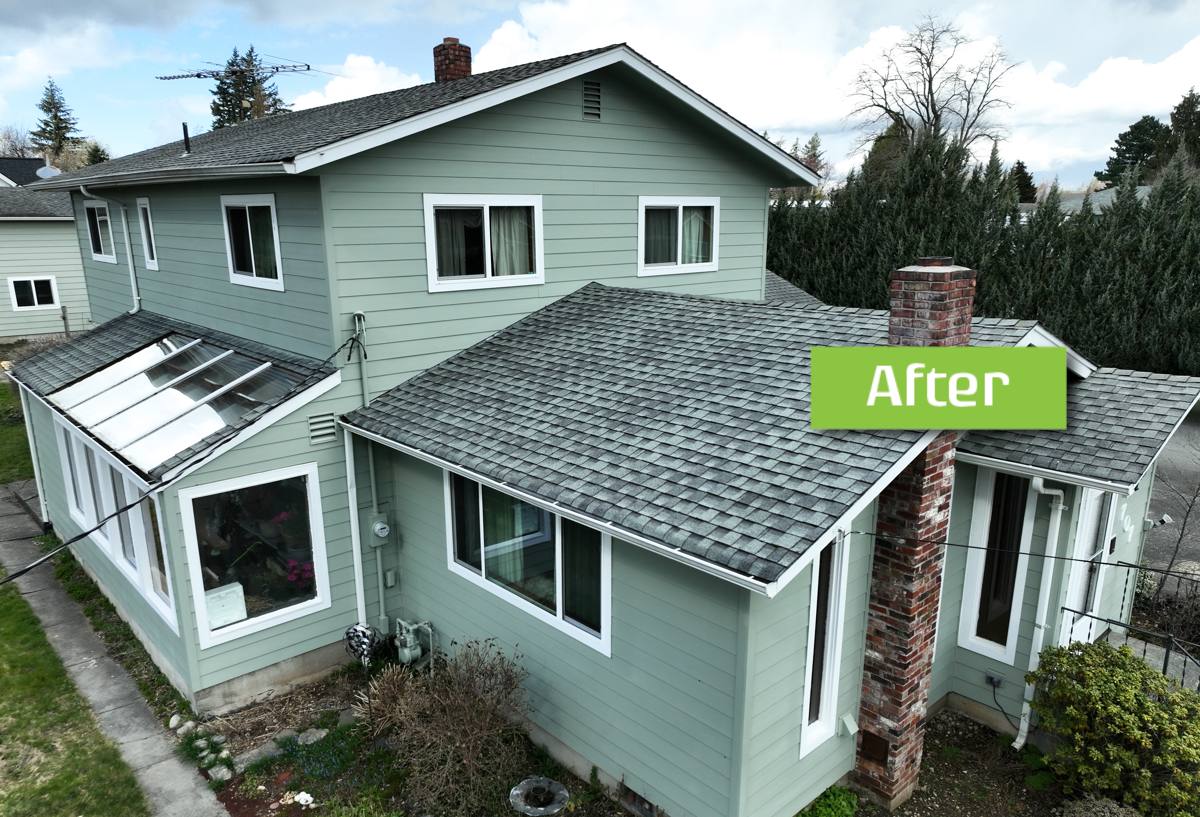
Signs a Grandview Roof Needs Replacement, Not Another Repair
Not every roofing problem calls for a full tear-off. But there's a point where patching stops making financial sense and a new roof becomes the more honest recommendation. Common signs we look for on Grandview homes include:
- Shingles that are cupping, curling, or losing granules in large patches rather than isolated spots
- Recurring leaks in the same general area even after past repairs
- Thick moss growth that's lifted shingle edges or worked its way under tabs
- Soft or spongy decking felt underfoot in the attic, especially near eaves and valleys
- Visible daylight through the roof deck or staining on attic sheathing
- A roof approaching or past the manufacturer's expected service life for its material and exposure
If a roof is showing two or three of these at once, repair costs tend to stack up quickly without solving the underlying problem. That's usually the point where a full replacement is the more cost-effective path.
What a Correct New Roof Installation Actually Involves
Tear-Off and Deck Inspection
We remove the existing roofing down to the deck rather than layering over old material. This lets us inspect the sheathing for rot, soft spots, or delamination caused by long-term moisture — issues that are common on older Whatcom County homes and invisible from the ground. Any damaged decking gets replaced before anything new goes down; installing new roofing over a compromised deck just hides a problem that will resurface.
Underlayment and Water Barrier
Given how much driving rain this area sees, underlayment isn't a place to cut corners. We use synthetic or self-adhering underlayment in vulnerable zones — eaves, valleys, and around penetrations — to give the roof a second line of defense if wind-driven rain gets past the field material.
Ventilation
Proper intake and exhaust ventilation keeps the attic space close to outdoor temperature and humidity, which does two things: it extends shingle life by reducing heat buildup, and it reduces the trapped moisture that feeds mold, moss, and premature deck rot. Ventilation is one of the most commonly overlooked parts of a roof install, and it's one of the biggest factors in how long a roof actually lasts in a damp climate.
Flashing and Transitions
Chimneys, skylights, wall-to-roof transitions, and valleys are where the overwhelming majority of leaks start — not the open field of the roof. Correct flashing detail, sized and lapped properly, matters more to long-term performance than the shingle brand on the box.
Field Installation
Fastening patterns, nail placement, and exposure need to match both the manufacturer's specification and local wind exposure. This is where corners get cut on rushed jobs, and it's the difference between a roof that holds through a coastal windstorm and one that doesn't.
Choosing a Roofing Material for This Climate
There's no single "best" roofing material — the right choice depends on budget, roof pitch, architectural style, and how much moss and moisture resistance a homeowner wants to prioritize. Here's how the common options compare for a home in Grandview's coastal, moss-prone environment:
| Material | Moss & Moisture Resistance | Salt Air / Wind Durability | Typical Lifespan | Maintenance |
|---|---|---|---|---|
| Architectural asphalt shingle | Good, especially with algae-resistant granules | Solid when properly fastened and flashed | 25–30 years | Periodic moss removal on shaded slopes |
| Standing seam metal | Excellent — sheds moss and moisture readily | Very good; needs corrosion-rated fasteners near the coast | 40–50+ years | Low; occasional fastener and seam check |
| Synthetic / composite shake | Good; won't absorb moisture like wood | Good | 30–50 years | Low to moderate |
We don't push one material on every homeowner. Instead, we walk through the trade-offs — upfront cost, long-term maintenance, appearance, and how the roof's exposure and pitch will interact with our climate — so the decision fits the house and the budget, not just a sales pitch.
How Our Installation Process Works
- On-site assessment — we inspect the existing roof, attic ventilation, and decking condition, and take accurate measurements.
- Written estimate — a clear scope of work and price, with material options explained so you understand what you're choosing between.
- Scheduling — we plan around weather windows, which matters more here than in drier climates; we won't tear off a roof into a forecast that leaves your home exposed overnight.
- Tear-off and deck repair — old material removed, deck inspected and repaired as needed.
- Underlayment, flashing, and ventilation installed — the parts of the job that determine how the roof performs, not just how it looks.
- Field material installed — to manufacturer spec and local wind/fastening requirements.
- Cleanup and final walkthrough — magnetic sweep for debris, and a walkthrough so you can see the finished work and ask questions.
What Affects the Cost of a New Roof
Every roof is different, so we won't quote a number without seeing the house — but the main cost drivers on Grandview homes are consistent:
- Roof size and the number of planes, valleys, and penetrations
- Pitch and accessibility, which affect labor and safety setup
- Current decking condition and how much needs to be replaced
- Material choice, from standard asphalt shingle up through metal or composite systems
- Ventilation upgrades needed to bring an older attic up to current standards
- Chimney, skylight, and vent-pipe flashing complexity
Homeowners sometimes assume the cheapest bid is the better deal, but on a coastal roof, the underlayment and flashing detail — the parts you can't see once the job is done — usually matter more to how long the roof lasts than the shingle brand. We'd rather explain that trade-off honestly than win a job on price alone and have a homeowner dealing with leaks in five years.
Why Hire a Crew That Already Works in Grandview
A roofing crew that regularly works Blaine and the surrounding Whatcom County area isn't guessing at how a roof needs to be built here — they've already seen how moss establishes on shaded north slopes, how far wind-driven rain can travel under an undersized flashing lap, and which ventilation setups actually keep attics dry through a wet Pacific Northwest winter. That's the kind of judgment that only comes from doing the work in this specific climate repeatedly, not from a general contractor passing through for one job.
Local familiarity also matters for practical reasons: knowing typical permitting steps for the area, understanding common construction styles and roof ages in the neighborhood, and being available for a warranty check or follow-up without a long drive. A roof is a long-term investment in the house — it's worth having a crew that will still be around and reachable years after installation.
Caring for Your New Roof
A correctly installed roof still benefits from basic upkeep, especially in a climate this wet. A short annual routine goes a long way:
- Clear gutters and downspouts each fall so water isn't backing up under the roof edge
- Remove moss buildup on shaded slopes before it lifts shingle edges, rather than after
- Trim back overhanging branches that keep sections of the roof shaded and damp
- Check attic ventilation isn't blocked by insulation, especially after any attic work
- Have flashing around chimneys and skylights checked every few years, since these are the most common leak points on any roof
If you're weighing a repair against a full replacement, or just want an honest look at where your roof stands, we're happy to come out and take a look. The estimate is free, there's no pressure attached to it, and you'll get a straight answer about what your roof actually needs — simply fill out the form below to get started.