 Blaine Siding
 Asphalt Shingle Roofing for Grandview Homes
Grandview sits close enough to the water that every roof up here deals with the same three problems year after year: salt-laden air off the Strait, wind-driven rain that doesn't behave like a normal rainstorm, and a moss season that seems to start earlier every fall. Asphalt shingle roofing remains the most practical, cost-effective choice for the majority of homes in this part of Whatcom County, but only when it's specified and installed with those local conditions in mind. A shingle roof built for a dry inland climate and dropped onto a Grandview home without changes will underperform, sometimes within just a few years.
This page focuses specifically on asphalt shingle roofing for homes in and around Grandview. It's not a general roofing overview — it's what we've learned installing and repairing shingle roofs on this stretch of Blaine, and what we think every homeowner here should know before they sign a contract.
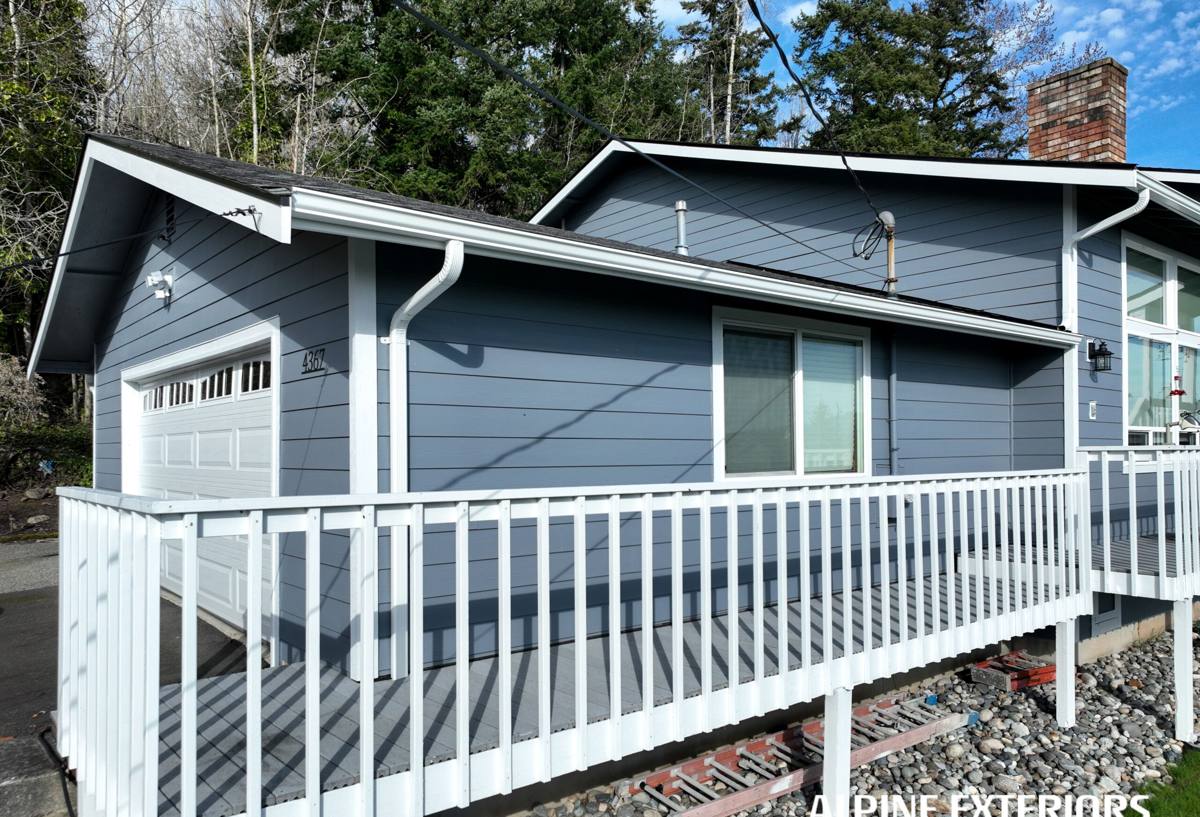
Why the Local Climate Changes the Job
Salt Air
Proximity to the water means airborne salt settles on every exterior surface, including the roof. Salt itself doesn't destroy asphalt shingles the way it corrodes bare metal, but it accelerates the breakdown of exposed metal components — flashing, drip edge, roofing nails, vent stacks, and gutter hardware. On a lot of older Grandview roofs, the shingles are still serviceable but the metal underneath them has corroded and started leaking around penetrations. We spec corrosion-resistant flashing and fasteners as a default here, not an upgrade.
Driving Rain
Storms off the Strait of Georgia don't just drop rain straight down — wind pushes it sideways and up under shingle tabs, especially on gable ends and any wall-to-roof transition. A roof system that relies purely on shingle overlap to shed water will eventually let moisture in during a hard blow. That's why underlayment choice and detailing at valleys, eaves, and sidewalls matter more here than in a sheltered inland neighborhood.
Moss Season
Shade, moisture, and mild temperatures give moss a long growing window in this area — often eight months or more of active growth depending on tree cover and roof orientation. Moss holds water against the shingle surface, works its way under tabs as it grows, and can lift granules and shingle edges over time. North-facing slopes and roofs under mature trees see this the worst. Left unmanaged, moss shortens the life of an otherwise sound roof.
What a Correctly Installed Shingle Roof Needs Here
A shingle roof that's going to hold up in Grandview isn't just "shingles nailed to plywood." The parts most homeowners never see are the parts that decide whether the roof lasts 15 years or 25+.
- Ice-and-water shield at eaves, valleys, and around penetrations — the areas most exposed to wind-driven rain and ice damming during cold snaps.
- Synthetic underlayment over the full deck, not just felt, for a more reliable secondary water barrier during the wetter months.
- Corrosion-resistant flashing and fasteners — stainless or coated hardware at valleys, step flashing, and vent boots to handle the salt air.
- Balanced ventilation — intake at the eaves and exhaust at the ridge, sized to the attic, so trapped moisture doesn't condense on the underside of the deck.
- Proper starter strip and nailing pattern — the difference between shingles that stay put in a coastal windstorm and ones that lift at the tabs.
- Algae-resistant (AR) shingle granules — a manufacturer treatment that slows moss and algae growth compared to standard shingles, worth the modest upcharge on shaded or north-facing roofs.
Our Process for a Grandview Re-Roof
1. Roof Assessment
We look at more than the shingles. We check the deck for soft spots, the flashing condition at every penetration, attic ventilation, and how much of the roof sits under tree canopy — that last part tells us how aggressive the moss-prevention detailing needs to be.
2. Tear-Off and Deck Inspection
We remove the old roofing down to the deck rather than layering over it. This is the only way to actually see and fix deck damage, which is common on older Grandview homes where a leak went unnoticed for a season or two.
3. Underlayment and Flashing
Ice-and-water shield goes down first at the vulnerable areas, then synthetic underlayment across the field. New flashing goes in at every valley, chimney, skylight, and wall intersection — we don't reuse old flashing on a full re-roof.
4. Shingle Installation
Shingles go on with manufacturer-specified nailing patterns, correct offset, and attention to starter courses and hip/ridge caps. This is where wind resistance is won or lost.
5. Ventilation Check
We confirm intake and exhaust venting is balanced before we call the job done. Poor ventilation shortens shingle life from underneath, which is easy to miss if nobody checks it.
6. Final Walkthrough
We walk the finished roof and the gutters with the homeowner, point out anything worth knowing for maintenance, and answer questions before we consider the job complete.
Repair, Recover, or Replace?
Not every Grandview roof needs a full tear-off. The right call depends on the age of the roof, how widespread the damage is, and what's happening underneath the shingles.
| Situation | Likely Fix | What to Watch For |
|---|---|---|
| Isolated leak, roof under 10 years old | Targeted repair (flashing, boot, or shingle replacement) | Make sure the cause is actually fixed, not just the symptom |
| Widespread granule loss, curling shingles | Full replacement | Shingles nearing end of life often fail together, not one at a time |
| Moss coverage on north slope, shingles otherwise sound | Moss removal + preventive treatment | Don't power-wash — it strips granules and shortens shingle life |
| Soft spots or sagging deck | Full replacement with deck repair | This usually means water has been getting in for a while |
| Roof over 20 years old, multiple minor issues | Full replacement | Repeated small repairs often cost more over time than one re-roof |
Maintenance That Actually Extends Roof Life Here
Asphalt shingle roofs in this climate benefit from a bit of regular attention. None of this is complicated, but it's the kind of thing that gets skipped until there's a problem.
- Keep gutters clear so water isn't backing up under the eave edge during heavy rain.
- Trim back tree limbs that keep a section of roof shaded and damp — this is the single biggest factor in how fast moss comes back.
- Have moss treated (not pressure-washed) before it spreads across a full slope.
- Check attic ventilation isn't blocked by insulation at the eaves — this is a common issue in older homes that get insulation upgrades without a ventilation review.
- Have flashing and vent boots inspected every few years, since these are the parts most affected by salt air corrosion.
- After a significant windstorm, do a visual check from the ground for lifted or missing shingles.
Signs a Roof Needs Attention Sooner Rather Than Later
- Granules collecting in gutters or at downspout outlets
- Shingle edges curling or cupping
- Dark streaking or thick moss growth, especially on shaded slopes
- Daylight visible through the attic roof deck
- Soft or spongy feel when walking the roof
- Water stains on interior ceilings near exterior walls
Why It Matters That We Already Work in Grandview
A roofing crew that's worked this specific area knows which slopes tend to hold moss, which older homes were built with ventilation that's since been compromised by remodels, and how the wind actually moves through this part of Blaine during a fall storm. That's not something you get from a general contractor pulling permits in five different counties. We spec flashing, underlayment, and ventilation for what actually happens on a Grandview roof, not for a generic climate zone.
We also know that a re-roof is a significant expense, and homeowners deserve a straight explanation of what's needed versus what's optional. We'll tell you when a repair is the right call instead of upselling a full replacement, and we'll explain the reasoning behind every material choice we recommend.
What We Don't Recommend, and Why
Some shingle products marketed as budget options use thinner mat construction or lighter granule coverage. In a sheltered, dry climate that might hold up fine for years. In Grandview's combination of driving rain and long moss season, thinner shingles tend to show granule loss and edge curling sooner, which shortens the effective life of the roof even if the upfront cost was lower. We'd rather walk a homeowner through the real cost-per-year of a mid-grade architectural shingle versus a economy three-tab than sell the cheaper option and have it underperform. That's a maintenance and longevity trade-off we're upfront about, not a knock on any particular manufacturer.
Get a Straight Answer for Your Roof
If you're dealing with moss buildup, a leak that's hard to pin down, or a roof that's simply getting old, we're happy to take a look and give you an honest read on repair versus replacement — no pressure, no inflated urgency. Fill out the form below for a free estimate, and we'll walk you through exactly what your Grandview roof needs.