 Blaine Siding
 Why Nooksack Roofs Wear Differently Than Roofs Inland
Nooksack sits close enough to the water and the Cascade foothills that its roofs deal with a combination most inland Washington towns never see: salt-laden air moving in off Semiahmoo Bay and the Strait of Georgia, long stretches of driving rain through fall and winter, and shaded, damp conditions that keep moss and moisture active for most of the year. Any one of those factors is manageable on its own. Together, they shorten the life of a roof that wasn't built or installed with this specific climate in mind.
Salt air is corrosive to unprotected or poorly coated metal fasteners and flashing. Driving rain finds every gap in underlayment, flashing laps, and penetration seals that a calmer climate would never expose. And moss doesn't just sit on a roof looking messy — its root structure holds moisture against the roofing material and lifts shingles or seams over time. A metal roof, installed correctly with the right coatings and details, handles all three better than almost any other roofing material available to Whatcom County homeowners. Installed wrong, it fails in the same predictable ways every time.
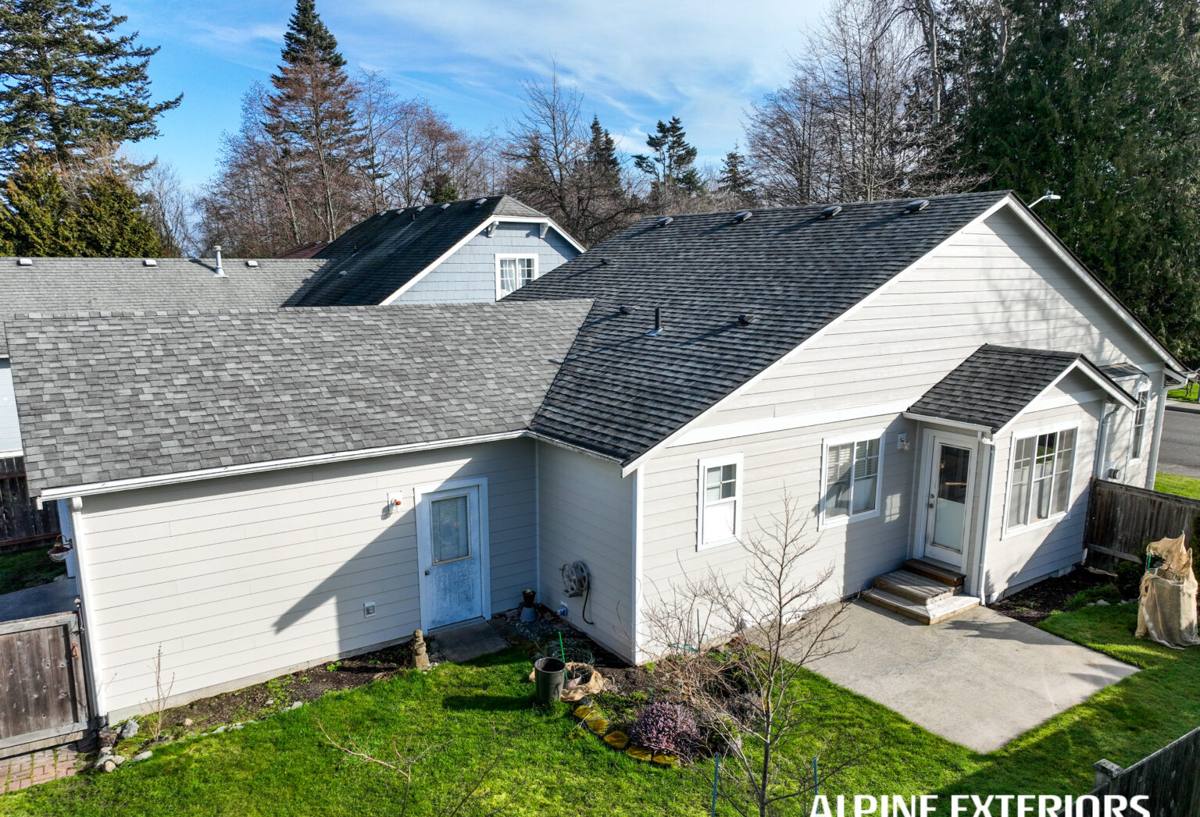
What Nooksack Homes Actually Need From a Metal Roof
Not every metal roofing system sold in Washington is built for a marine-influenced, high-moisture climate like ours. When we spec a system for a home in the Nooksack area, we're weighing four things:
- Corrosion resistance at the fastener and flashing level — the panel finish matters less than what happens at the seams, screws, and edges where salt air and standing moisture actually attack the system.
- Underlayment built for prolonged wet exposure, not just occasional rain — Whatcom County gets sustained wet weather, not isolated storms.
- Panel profile and slope compatibility — steeper or moss-prone roofs need a profile that sheds water fast and doesn't trap organic debris in exposed fastener heads or overlaps.
- Ventilation that keeps the underside of the deck dry — trapped moisture under a metal roof causes deck rot and condensation issues regardless of how good the panels themselves are.
A roof that checks all four of these boxes will outperform a roof that just "looks like metal" but was installed with generic, one-size-fits-all details.
Standing Seam vs. Exposed-Fastener Panels: What We Recommend and Why
Homeowners in Nooksack usually ask us to compare two main metal roofing approaches. Both are legitimate products — the right choice depends on budget, roof complexity, and how long you want to go between maintenance checks.
| Factor | Standing Seam | Exposed-Fastener Panel |
|---|---|---|
| Fastener exposure | Concealed clips, no exposed screws through the panel face | Screws penetrate the panel face directly |
| Salt air performance | Better long-term, since fasteners aren't exposed to weather | Requires periodic fastener inspection as washers age |
| Upfront cost | Higher material and labor cost | Lower upfront cost |
| Maintenance | Minimal — mainly sealant checks at penetrations | Fastener washers should be checked every few years |
| Best fit | Long-term ownership, higher-exposure sites near the water | Budget-conscious projects, secondary structures, shorter ownership horizon |
For most primary homes in the Nooksack area, we lean toward standing seam because it removes the one part of an exposed-fastener system that salt air degrades fastest — the exposed screw and washer. That said, exposed-fastener panels aren't a bad product; they're a different trade-off, and we'll walk you through both honestly rather than push whichever one carries a better margin.
A Note on Coatings
The panel finish — the paint or coating system applied to the metal — is what actually stands between your roof and decades of rain and salt exposure. We don't install bare or minimally coated metal on homes in this area. It's not that cheaper coatings are worthless everywhere; it's that our professional standard for a marine-influenced climate like Blaine and Nooksack rules them out. The maintenance burden and shortened service life aren't worth the upfront savings once you factor in how many wet months this area sees every year.
Where Metal Roofs Actually Fail in This Climate — and How We Prevent It
When we're called out to look at a failing metal roof in Whatcom County, the panels themselves are rarely the problem. The failures cluster in a handful of predictable spots:
Flashing and Penetration Details
Chimneys, vents, skylights, and valleys are where water finds a way in. On a moss-prone, high-rainfall roof, these details need to be built to shed water actively, not just sealed with caulk and hoped for. We detail these areas with proper step flashing, kick-out flashing, and layered underlayment so water is directed off the roof rather than relying on a sealant joint to hold indefinitely.
Fastener and Seam Integrity
Whether it's screws on an exposed-fastener panel or the seams on a standing seam roof, this is where salt air does its slow work. We use fasteners and sealants rated for coastal exposure, and we don't cut corners on seam engagement — a seam that isn't fully engaged will loosen under wind and temperature cycling long before the panel itself shows any wear.
Moss and Debris Buildup
Moss doesn't damage metal panels the way it damages composition shingles, but it does hold moisture against seams, valleys, and fastener locations if it's allowed to accumulate. Roof design that promotes fast water shedding, combined with periodic clearing of debris from valleys and low-slope sections, keeps moss from becoming a long-term moisture problem.
Deck and Ventilation Issues
A metal roof over a poorly ventilated deck can trap condensation underneath the panels, which rots the deck from below even while the roof looks fine from the yard. We check ventilation as part of every install and correct it where the existing setup isn't adequate for a metal roofing system.
How Our Nooksack Metal Roofing Process Works
We approach every metal roof install in this area the same structured way, because skipping steps is exactly how the failures above happen.
- On-site assessment — we inspect the existing roof, deck condition, ventilation, and any problem areas like valleys, chimneys, or shaded sections prone to moss.
- System selection — we walk you through standing seam vs. exposed-fastener options, coating choices, and color, based on your budget and how long you plan to own the home.
- Deck prep and repair — any rotted or compromised decking gets replaced before a single panel goes on. Installing new roofing over a bad deck just hides the problem.
- Underlayment and flashing installation — this is the layer that actually keeps water out if anything ever gets past the panels themselves, so it's built to the same standard regardless of what's visible from the ground.
- Panel installation — installed to the manufacturer's specifications for our climate, with attention to proper seam engagement or fastener torque and spacing.
- Final inspection and walkthrough — we go over the finished roof with you, including what maintenance (if any) it needs going forward.
What a Realistic Metal Roofing Project Costs in This Area
Costs vary based on roof size, pitch, complexity (valleys, dormers, chimneys), and which panel system you choose. In general terms, exposed-fastener panel systems run less per square foot than standing seam, and both cost more upfront than asphalt shingles — but the trade-off is a roofing system rated for multiple decades of service instead of one to two. Roof complexity matters as much as material choice: a simple gable roof costs meaningfully less to cover than a roof with multiple valleys, skylights, and dormers, regardless of which metal system you pick. We give firm, itemized numbers after an on-site look at your specific roof — broad ranges without seeing the roof aren't useful to you and we won't pretend otherwise.
Maintenance: What Nooksack Homeowners Should Actually Do
One of the real advantages of a properly installed metal roof is how little ongoing maintenance it needs compared to other roofing materials — but "little" doesn't mean "none," especially in this climate.
- Clear leaves, needles, and debris from valleys and low-slope areas once or twice a year, especially heading into the wet season.
- Keep an eye on moss growth in shaded areas and have it addressed before it builds up significantly — don't pressure wash a metal roof yourself, as it can damage seams and coatings.
- Have flashing around chimneys, vents, and skylights checked periodically, since these are the highest-risk spots for leaks over time.
- After major windstorms, a quick visual check (from the ground, or have us take a look) for lifted panels or displaced flashing is worth the few minutes it takes.
- Watch gutters and downspouts for proper flow — a metal roof sheds water fast, and an undersized or clogged gutter system can send more water than it's built to handle toward your foundation.
Why Hiring a Crew That Already Works in Nooksack Matters
Metal roofing done right isn't complicated in theory, but it's unforgiving of shortcuts in practice — a seam that isn't fully engaged or a flashing detail that's slightly off won't show a problem the day it's installed. It shows up two or three wet seasons later, as a leak that's often hard to trace back to the original mistake. A crew that regularly works roofs in Blaine, Nooksack, and the rest of Whatcom County already knows which details need extra attention here: how much moss pressure a north-facing slope will see, how salt air changes fastener selection near the water, and how much rain a valley needs to be built to handle in a normal winter. That local pattern recognition is the difference between a roof that's technically installed to code and one that's actually built for where it sits.
Get a Straight Answer About Your Roof
If you're weighing metal roofing for a home in the Nooksack area, we're happy to take a look and give you an honest read on what your roof actually needs — no pressure, no inflated quote to "leave room to negotiate." Reach out for a free estimate and we'll walk the roof with you and answer whatever questions you've got using the form below.