 Blaine Siding
 Point Roberts Puts Decks Through a Different Kind of Wear
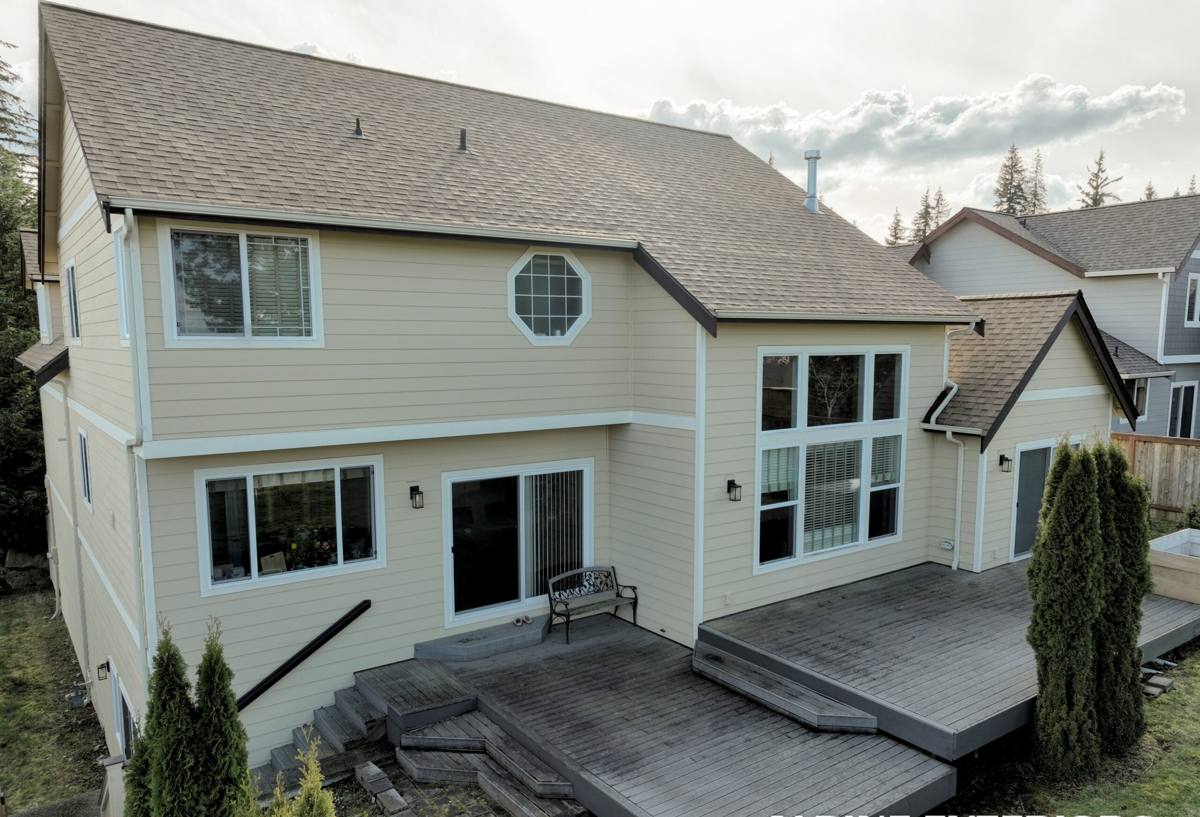
Point Roberts sits on a peninsula surrounded on three sides by water, which means homes here deal with a combination most inland Whatcom County properties never see: near-constant salt-laden air, long stretches of driving rain off the Strait of Georgia, and a moss season that can run most of the year in shaded or north-facing spots. A deck built to a generic spec, or built by a crew that mostly works drier inland neighborhoods, tends to show its age here faster than it should. This page is about what composite decking specifically needs to hold up in Point Roberts conditions, not decking in general.
Because Point Roberts is geographically separated from the rest of Whatcom County and reached by driving through Canada, homeowners here also deal with a smaller pool of contractors who treat the area as a routine stop rather than a special trip. That logistical reality matters more than people expect when it comes to scheduling, material delivery, and a crew actually showing up for warranty work later.
What Salt Air, Rain, and Moss Actually Do to a Deck
Salt air
Airborne salt doesn't just affect boats and railings near the water's edge — it settles on every exposed surface, including deck boards, fasteners, and any metal hardware. Over time it accelerates corrosion in fasteners and connectors that aren't rated for coastal exposure, and it can dull or discolor lower-quality composite capstock faster than it would inland.
Driving rain
Rain that comes in sideways off the water doesn't just fall on the deck surface — it drives under rail caps, into end grain, behind fascia boards, and into any gap where water can collect instead of shed. A deck that looks fine from a distance can still be trapping moisture in the substructure if the drainage details weren't handled correctly at installation.
Moss and organic buildup
Shaded decks, north-facing decks, and anything under tree cover in this climate will grow moss and algae given enough damp, low-light days in a row. On composite boards this is mostly a surface and traction issue rather than a rot issue, but moss holds moisture against the board longer, and a slick, moss-covered deck is a real slip hazard on stairs and ramps.
Why Composite Is a Strong Fit for This Exposure — With Caveats
Quality composite decking doesn't absorb water and swell the way untreated wood does, and it doesn't need annual staining to keep weather out. That's a real advantage in a climate where rain is frequent and drying windows are short. But composite is not maintenance-free, and it's not immune to the conditions here — it's simply more forgiving of them when the product and the installation are both right for the site.
Where composite decking earns its keep in Point Roberts is in reduced ongoing upkeep and better long-term dimensional stability compared to wood, especially on decks that get shaded, damp exposure for long stretches. Where it still requires attention is surface care — periodic cleaning to keep moss and algae from taking hold, and correct fastening and ventilation underneath so trapped moisture isn't a problem down the road.
Composite Board Options — What the Differences Actually Mean
Not all composite decking is built the same way, and the differences matter more in a wet, salty climate than they would somewhere dry. Here's how the main categories compare for a Point Roberts installation.
| Board Type | Moisture Behavior | Maintenance | Best Fit Here |
|---|---|---|---|
| Uncapped composite | Absorbs some moisture at the surface over time; more prone to fading and mold in shaded, damp spots | Periodic cleaning, more attention in moss-prone areas | Budget-conscious, sunnier or better-ventilated locations |
| Capped composite (cap on top only) | Better surface moisture resistance; exposed core edges still vulnerable at cuts | Cut ends should be sealed or capped at install | Good mid-range option with correct end-cap detailing |
| Fully capped composite (cap on all sides) | Best overall moisture and stain resistance, including cut ends when properly finished | Lowest ongoing maintenance; still needs periodic cleaning for moss/algae | Recommended for shaded, low-airflow, or heavily exposed decks |
We'll walk through which tier makes sense for your specific deck's sun exposure, shading, and airflow rather than defaulting to one product for every job — a fully shaded north-side deck and a sun-exposed south-side deck can reasonably call for different boards even on the same house.
Hardware and hidden components matter as much as the boards
In a salt-air environment, the fasteners, joist tape, and any metal brackets or hangers underneath the deck matter just as much as the decking itself. Standard fasteners can corrode well before the composite boards show any wear, leading to squeaks, loosening, or staining around fastener heads. We spec corrosion-resistant fasteners and hardware rated for coastal exposure on every Point Roberts project, not just as an upsell — it's the difference between hardware that outlasts the boards and hardware that becomes the first thing to fail.
What a Correct Installation Involves in This Climate
The composite boards get the attention, but most long-term problems on coastal decks trace back to what's underneath them. A correct installation here includes:
- A substructure with adequate airflow underneath — low-clearance or fully enclosed skirting without ventilation traps moisture against joists and the underside of the decking
- Joist tape or an equivalent moisture barrier on top of framing to protect wood joists from the wetter-than-average conditions
- Correct board spacing for expansion and drainage, adjusted for the actual humidity and temperature swings of a waterfront site rather than a generic spec sheet number
- Sealed or capped cut ends on any board where the factory-capped edge is removed during fitting
- Flashing details where the deck meets the house, so driving rain off the water can't work its way behind ledger boards or siding
- Corrosion-resistant fasteners and hardware throughout, not just at points that are easy to see
- Rail and stair details built to shed water rather than pool it, since horizontal surfaces like rail caps and stair treads take the brunt of driving rain
Skipping any one of these doesn't usually show up as a problem in year one. It shows up in year three or four, as soft framing, loosening hardware, or moisture stains that a warranty claim then has to sort out.
How Our Process Works
1. On-site assessment
We look at the deck's orientation, sun and shade exposure, proximity to the water, existing framing condition if this is a resurfacing job, and any current moss or drainage issues. This is what actually drives our board and hardware recommendations, not a one-size answer.
2. Straightforward proposal
You get a clear scope — board tier, substructure work included, hardware spec, and timeline — with no pressure to upgrade beyond what the site actually calls for.
3. Installation
Framing and moisture-barrier work first, then decking, rail, and stair installation with the drainage and fastening details above built in as standard, not as an add-on.
4. Walkthrough
We go over basic care for your specific board choice and exposure — what to expect in moss season, and simple upkeep to keep the deck looking and performing well.
Caring for a Composite Deck Through a Point Roberts Winter
Composite decking cuts down on maintenance compared to wood, but "low maintenance" isn't "no maintenance," especially with a real moss season. A simple seasonal routine goes a long way:
- Sweep off fallen leaves and debris regularly in fall — trapped organic matter is what feeds moss and algae growth
- Rinse the deck periodically through the wet months, especially in shaded areas, to keep spores from establishing
- Use a soft-bristle brush and a cleaner made for composite decking if moss or algae does take hold — avoid pressure washing at close range or high pressure, which can damage the cap surface
- Check stair treads and ramps for slickness during the wettest, darkest months and clean promptly if traction drops
- Keep gutters and downspouts near the deck clear so runoff isn't dumping extra water directly onto or under the deck
- Have fasteners and rail connections checked periodically, since salt-air corrosion is gradual and easy to miss until something loosens
Why Hiring a Crew That Already Works Point Roberts Matters
Point Roberts' geography means it isn't a quick add-on stop for every Whatcom County contractor — reaching it involves crossing through Canada, and that changes how scheduling, material runs, and follow-up visits actually work in practice. A crew unfamiliar with that logistics reality can end up rushing a job to minimize trips back, which is exactly the wrong incentive on a deck where the underlying details — flashing, fastener choice, ventilation — are what determine whether it holds up.
Working this area regularly also means we've seen how decks here actually age — which orientations grow moss fastest, which hardware corrodes first, which drainage shortcuts cause problems. That's the kind of judgment that doesn't show up in a product brochure but shows up in how the deck performs five winters from now.
Get a Straightforward Estimate
If you're planning a new composite deck or replacing an aging one in Point Roberts, we're happy to take a look and give you an honest read on what your specific site needs — no pressure, no upsell beyond what the exposure actually calls for. Use the form below to request a free estimate.