 Blaine Siding
 Ferndale's Climate Is Harder on a Roof Than Most Homeowners Realize
Ferndale sits in a stretch of Whatcom County where marine air, near-constant winter moisture, and a shaded, tree-heavy landscape combine to shorten the working life of a roof faster than in drier parts of the state. It isn't one dramatic weather event that causes the damage — it's the accumulation. Salt-tinged coastal air corrodes exposed metal fasteners and flashing over time. Driving rain, pushed sideways by wind off the water, finds its way under shingles that aren't properly lapped or sealed. And a long, wet moss season lets organic growth take hold on north-facing slopes and shaded valleys, trapping moisture against the shingle mat long after the rest of the roof has dried out.
None of that means asphalt shingle roofing is a poor fit for Ferndale — it's still the most practical, cost-effective option for the vast majority of homes here. It means the roof has to be built correctly for this specific climate, not installed the same way it would be in a dry inland region.
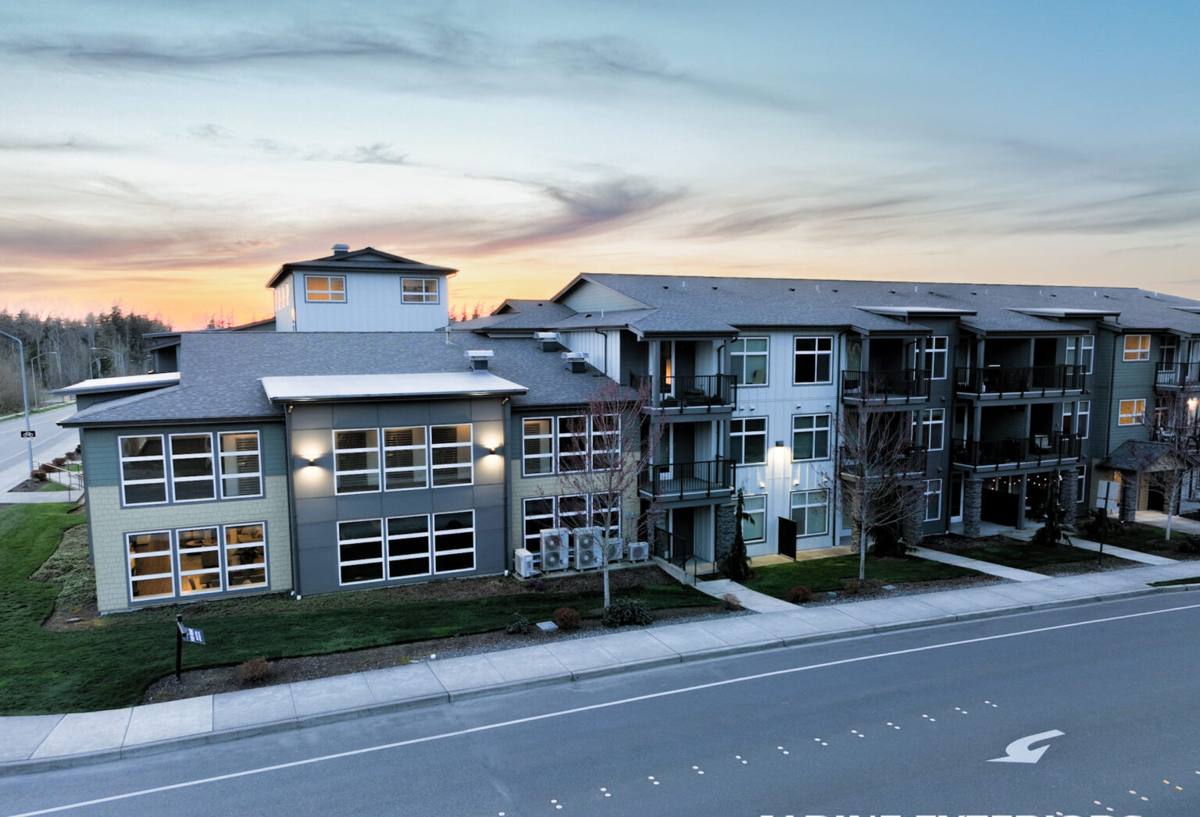
What a Correctly Installed Shingle Roof Looks Like in This Climate
A shingle roof is a system, not just a layer of shingles nailed to plywood. In a wet, wind-driven climate like Whatcom County's, the details underneath and around the shingles matter as much as the shingles themselves.
Underlayment and Water-Barrier Details
We use synthetic underlayment as the primary water-resistant layer, with self-adhering ice-and-water membrane at the eaves, valleys, and any roof-to-wall transitions — the places where wind-driven rain is most likely to get pushed backward under the shingle courses. Valleys in particular take a beating here; they concentrate runoff and collect debris and moss spores faster than open field areas.
Starter Strips, Nail Patterns, and Ridge Caps
A proper starter course along the eaves and rakes seals the vulnerable roof edges against wind uplift — this is one of the first things that gets skipped on a rushed or underbid job, and it's one of the first things that fails when the wind picks up off the water. Shingles need to be nailed in the manufacturer's specified pattern, not just "close enough," because incorrect nailing is the single most common cause of shingles blowing off in a storm long before their rated wind speed is reached.
Ventilation: The Part Homeowners Never See
An asphalt shingle roof lives or dies by the attic underneath it. Without balanced intake and exhaust ventilation, moist air gets trapped, condenses on the underside of the roof deck, and creates the damp, dark conditions where mold and rot take hold — and where moss finds it easiest to establish itself from below as well as above. We check ventilation on every reroof, because replacing shingles on top of a poorly ventilated attic just resets the clock on the same problem.
Choosing the Right Shingle for Whatcom County Weather
Not every asphalt shingle product is worth the same premium in this climate. Here's how the common options compare for a Ferndale home:
| Shingle Type | Typical Lifespan Here | Best For | Trade-Offs |
|---|---|---|---|
| 3-Tab (standard) | Shorter end of rated life due to moisture exposure | Budget-conscious rebuilds, rental properties | Lower wind rating, less algae resistance, flatter profile shows moss growth sooner |
| Architectural / Laminate | Longer service life, better field performance | Most Ferndale homes | Higher upfront cost, but better wind rating and thicker mat resists moisture intrusion longer |
| Algae-Resistant (copper/zinc-granule) | Comparable to standard architectural, but stays cleaner longer | Shaded lots, north-facing slopes, homes near trees | Small cost premium; doesn't eliminate moss, but slows regrowth after cleaning |
| Impact-Rated (Class 4) | Long-term, with insurance discount potential in some cases | Homeowners prioritizing longevity and storm resistance | Highest upfront cost of the group |
For most Ferndale properties — especially anything with mature trees nearby or a shaded north slope — we steer homeowners toward a mid-weight architectural shingle with algae-resistant granules. It's not the cheapest option, but it's the one that best matches what this climate actually does to a roof over ten, fifteen, twenty years.
Moss, Algae, and Salt Air: What Actually Works
We treat moss and streaking as a maintenance issue to manage, not a one-time problem to solve. A few honest points on this:
- Copper or zinc strips near the ridge release trace metal ions with each rain, which helps suppress regrowth on the slopes below them — most effective as a preventive measure, not a cure for an already heavy moss mat.
- Algae-resistant granules slow discoloration and organic growth but don't make a roof maintenance-free, especially on shaded sections.
- Physical moss removal should always be done gently — with soft brushing and rinsing rather than pressure washing, which strips protective granules and shortens shingle life.
- Overhanging branches that keep a section of roof shaded and damp are often a bigger factor than the shingle product itself; trimming back tree cover helps more than any coating.
- Metal flashing and fasteners near the coast should be corrosion-resistant grade — standard galvanized hardware degrades faster in salt-influenced air than it would further inland.
Our Process for a Ferndale Roof Replacement
We keep the process straightforward and communicate at each stage, because a roof job is disruptive and homeowners deserve to know what's happening and why.
- Inspection and assessment — we look at the whole system: shingles, decking, flashing, ventilation, and any moss or moisture damage, not just the surface.
- Written estimate — a clear scope of work and material selection, with options explained in plain terms rather than upsold.
- Tear-off and deck check — old material comes off completely so we can inspect the decking underneath for soft spots or rot before anything new goes down.
- Underlayment and flashing — ice-and-water membrane at vulnerable areas, new flashing where needed, valleys and penetrations sealed properly.
- Shingle installation — correct starter course, nail pattern, and ridge cap installation to manufacturer spec.
- Cleanup and walk-through — site cleared of debris and nails, and we walk the finished roof with the homeowner.
Repair or Replace? Signs Worth Checking
Not every roofing issue in Ferndale means a full replacement. Use this as a general guide before you call anyone:
- Granules collecting in gutters or at downspout outlets — a sign the shingle surface is wearing thin
- Curling, cupping, or cracked shingles, especially on south- or west-facing slopes
- Visible moss mats holding moisture against the roof surface for extended periods
- Dark streaking that doesn't correspond to shade patterns (algae growth)
- Soft or spongy spots when walked, or visible sagging along the roofline
- Daylight visible through the attic roof deck, or damp insulation after a storm
- Shingles missing or lifted after high wind — even a few can let water in behind the rest
- A roof approaching or past the upper end of its expected service life for its material type
A short list of visible issues usually points to a repair. Multiple items on this list, or issues concentrated in one area with signs of deck damage underneath, usually point to replacement being the more cost-effective long-term choice.
Why It Matters to Hire a Crew That Already Works in Ferndale
Roofing crews that work Whatcom County regularly build differently than crews used to drier climates — not because of different training, but because they've seen firsthand what happens when a roof isn't sealed for wind-driven rain, or when ventilation is treated as optional. A local crew also knows the practical side: which permitting steps apply for reroofs in the area, realistic scheduling around the wetter months, and how to sequence a tear-off so a home isn't left exposed if weather turns mid-project. That local familiarity shows up in fewer callbacks and a roof that's actually built for the conditions it has to survive, not just built to spec on paper.
Cost Factors for a Ferndale Asphalt Shingle Roof
We don't post fixed prices because every roof is different, but these are the factors that most affect the estimate:
| Factor | Why It Matters |
|---|---|
| Roof size and pitch | Steeper roofs take longer and require more safety setup, affecting labor cost |
| Number of layers to remove | Tear-off of multiple existing layers adds disposal and labor time |
| Decking condition | Rot or soft spots found during tear-off require plywood replacement before shingles go down |
| Shingle tier chosen | 3-tab, standard architectural, algae-resistant, and impact-rated products carry different material costs |
| Roof complexity | Valleys, dormers, skylights, and chimneys add flashing work and labor time |
| Ventilation upgrades | Adding or correcting intake/exhaust venting is worth doing during a reroof rather than after |
The only way to get an accurate number is a walk of the actual roof — anything quoted without that is a guess.
If your roof is showing wear, growing moss, or you're just planning ahead before the wet season sets in, we're happy to take a look. Fill out the form below for a free, no-pressure estimate on your Ferndale home.