 Blaine Siding
 Decks in This Corner of Whatcom County Wear Differently
A deck in Bellingham or Blaine doesn't fail the same way one does further inland. The combination of salt-laden air off the water, long stretches of driving rain, and a moss season that can run from October through April puts a specific kind of pressure on outdoor structures. Wood absorbs and releases moisture constantly through the wet months, fasteners corrode faster near the coast, and any spot where water can't drain or dry quickly becomes a rot problem within a few seasons instead of a few decades.
We repair a lot of decks in this area that were built well but maintained on an inland schedule — sealed every few years instead of watched closely, cleaned occasionally instead of kept clear of moss and debris. That's not a knock on the homeowner; it's just what this climate demands. A repair here needs to account for where water actually goes on your specific deck, not just patch the board that looks bad.
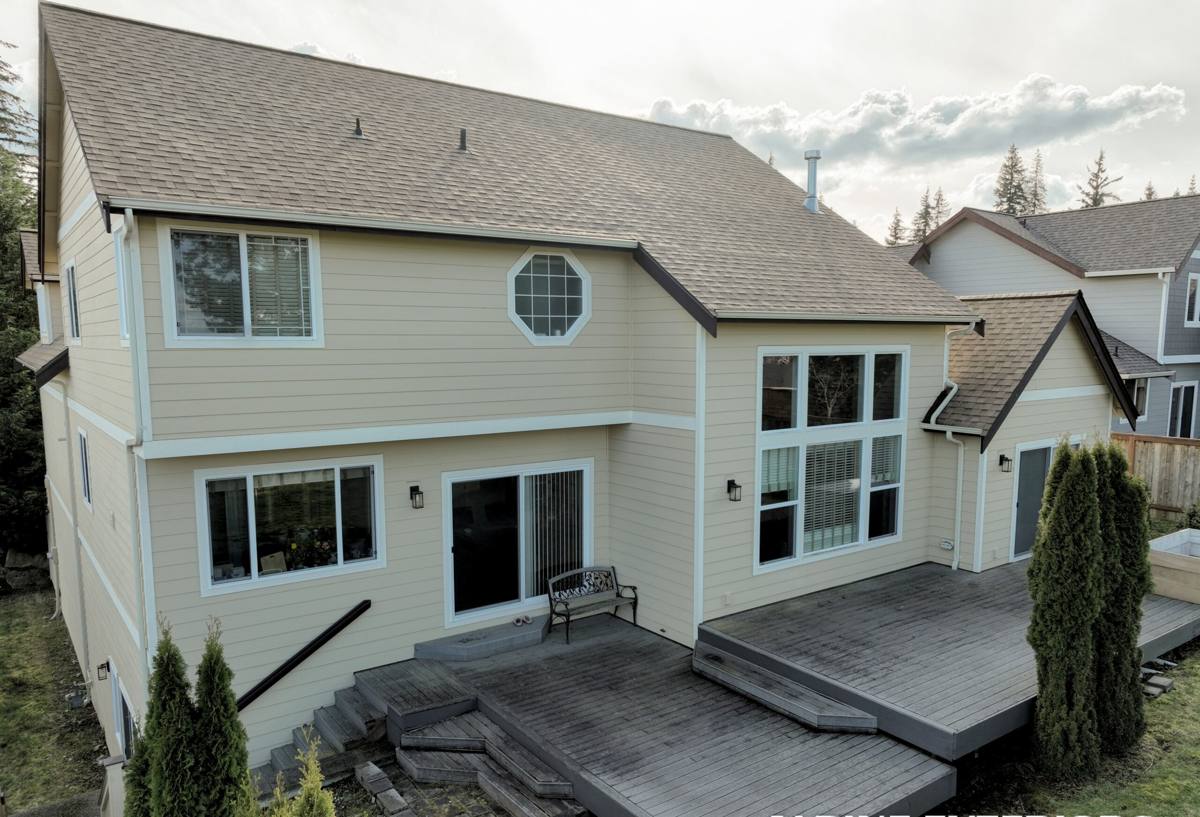
Signs Your Deck Needs Repair — Not Just Cleaning
Some deck problems are cosmetic and some are structural, and it's not always obvious which is which from the surface. A few things we tell homeowners to check before deciding a pressure wash will fix it:
- Boards that feel spongy or flex noticeably underfoot, especially near the house or stair landings
- Soft or discolored wood where the deck attaches to the house (the ledger board)
- Rust streaks running down from screw heads or joist hangers
- Gaps opening up between boards, or boards cupping (edges higher than the middle)
- Persistent green or black growth in the same spots even after cleaning
- Wobble in the railing posts or a stair stringer that feels less solid than it used to
Any one of these can be minor on its own. Two or three together, especially near the ledger or support posts, usually mean water has been getting into the structure for a while and a surface clean won't address it.
The Repair Problems We See Most Often Here
Ledger Board and Flashing Failures
The ledger board — where the deck bolts to the house — is the single most common failure point on decks in this region, and it's also the most serious, since it's structural. If flashing behind the ledger was installed wrong, sized wrong, or left out entirely, rain gets driven behind it during storms and sits against the house framing. By the time you see staining or soft wood on the ledger from outside, there's often more damage behind the siding than is visible.
Rot in Posts, Joists, and Stair Stringers
Support posts that sit in or near standing water, joists with poor airflow underneath, and stair stringers that don't shed water well are all common rot locations in wet Pacific Northwest climates. Once rot sets in, it spreads along the grain of the wood, which is why a repair sometimes needs to go further than the one visibly bad board.
Moss, Algae, and Trapped Moisture
A long moss season means organic growth isn't just cosmetic — moss holds moisture against the deck surface far longer than bare wood would dry on its own, which accelerates rot underneath even when the top of the board looks fine. Decks in shaded yards or under tree cover are especially prone to this.
Corroded or Failing Fasteners
Salt air speeds up corrosion on fasteners and hardware that weren't rated for coastal exposure. We regularly find galvanized screws and joist hangers that have rusted enough to weaken their hold, even when the surrounding wood is still in decent shape. Replacing boards without upgrading the fasteners underneath just resets the clock on the same problem.
What a Correct Repair Actually Involves
A Real Structural Inspection First
Before we touch a board, we get underneath the deck and check the framing — joists, beams, posts, and footings — not just the surface you walk on. A deck can look fine from above and still have compromised framing below, particularly around the ledger and any post that sits close to grade.
Matching Materials, Not Just Colors
Repairs should match the structural rating of the original material, not just its appearance. Mixing incompatible woods or fastener metals at a repair joint can create new corrosion or rot points right at the seam, so we match treatment class and hardware type to what's already there — or upgrade it deliberately, and tell you why.
Flashing and Drainage Done Right
Any repair near the house gets proper flashing between the ledger and the siding, sloped correctly so water sheds away from the structure instead of pooling against it. This is the step that gets skipped most often on lower-quality repairs, and it's the one most likely to cause a repeat failure within a couple of wet seasons.
Repair vs. Rebuild: How We Help You Decide
Not every deck problem needs a full rebuild, and not every deck is worth patching indefinitely. The honest answer depends on how much of the structure is affected and how old the deck already is.
| Factor | Leans Toward Repair | Leans Toward Rebuild |
|---|---|---|
| Damage location | Isolated boards, stairs, or railing | Ledger, multiple posts, or main beams |
| Deck age | Under 15 years, built to code | 20+ years or unknown original construction |
| Framing condition | Solid when probed, dry underneath | Soft, spongy, or visibly rotted framing |
| Fastener condition | Hardware sound, minor surface rust | Widespread corrosion on structural hardware |
| Footings | Stable, no settling or cracking | Cracked, heaved, or undersized for current code |
We'll always tell you plainly if we think a repair is just delaying an inevitable rebuild — that's a cost decision that's yours to make, but you should make it with an accurate picture of what's underneath the deck, not a guess.
How Our Process Works
- On-site inspection of the deck surface, framing, ledger connection, posts, and footings
- A written assessment showing exactly what's failing and why, in plain language
- A repair scope and estimate — what gets replaced, what gets reinforced, and what hardware and flashing changes are included
- The repair itself, matched to the existing structure or upgraded where it makes sense for this climate
- A final walkthrough so you can see what was done and ask questions before we consider the job finished
We don't push a full rebuild when a targeted repair will genuinely hold up. We also don't patch over a structural problem just to make a quote smaller — both approaches cost homeowners more down the road.
Materials That Actually Hold Up Here
For structural repairs — framing, posts, ledger connections — we favor pressure-treated lumber rated for ground contact where it's exposed to moisture, paired with stainless or coated fasteners and hardware rated for coastal or high-moisture use. For visible decking boards, the right choice depends on your budget and how much maintenance you want to keep up with: wood needs periodic sealing to perform well in this climate, while composite and PVC decking cost more upfront but need less upkeep against moss and moisture over time. We'll walk through the real trade-offs for your specific deck rather than push one option — maintenance burden, moisture behavior, and how the material ages are all part of that conversation.
Keeping a Repaired Deck in Good Shape
A repair holds up longer with a little seasonal attention, especially given how long moss season runs here:
- Sweep leaves and debris off the deck regularly through fall, before they trap moisture against the boards
- Clean moss and algae as soon as it appears rather than waiting for spring
- Check that gaps between boards stay clear so water can drain through, not pool on top
- Look underneath once or twice a year for new soft spots, rust streaks, or standing water near posts
- Reseal or refinish wood decking on the schedule your material actually needs in this climate, not a generic one
- Keep gutters and downspouts near the deck clear so runoff isn't draining straight onto it
Why Hire a Crew That Already Works in Bellingham
Deck repair done for a dry-climate house doesn't hold up here, and a lot of the callbacks we get involve repairs that were technically fine on paper but weren't built for this much rain, this much salt air, or this long a moss season. Working regularly in Blaine and Bellingham means we're not guessing at how a repair will perform through a Whatcom County winter — we've seen how the last one did on decks just like yours, and we build accordingly.
If you're dealing with a soft spot, a wobbly rail, or just want an honest read on whether your deck needs a repair or a full rebuild, we're glad to take a look. Fill out the form below for a free, no-pressure estimate.