 Blaine Siding
 Bellingham Roofs Deal With a Different Set of Problems
Bellingham sits close enough to the water that salt-laden air is a constant, low-grade stressor on every exposed roofing material in the neighborhood. Add Whatcom County's driving rain — the kind that comes in sideways off a southwest wind rather than falling straight down — and a moss season that can run eight or nine months out of the year, and you get a roof that ages differently than one fifty miles inland. Repairs that would be simple in a drier climate get complicated here because the underlying causes are usually a combination of factors, not just one.
A roof repair crew that only shows up occasionally in this area tends to treat symptoms: they patch the spot that's leaking and move on. A crew that works Bellingham regularly knows to look at what's causing the leak in the first place, because in this climate the same conditions that created the first failure are still sitting there, ready to create the next one.
Salt Air and Metal Components
Flashing, fasteners, vents, and any exposed metal on a roof corrode faster near the water than they do even a short distance inland. Galvanized nails and low-grade flashing show rust and pitting years before they would in a dry, inland climate. When we repair a roof here, we pay close attention to metal condition, not just shingle condition, because a corroded flashing joint is one of the most common hidden causes of a "mystery leak."
Driving Rain and Wind-Driven Water
Wind-driven rain doesn't behave like rain falling straight down. It gets pushed up under shingle tabs, into ridge caps, and around penetrations that would stay dry in calmer weather. A repair that only addresses the visible gap and ignores wind direction and water path often leaks again in the next storm.
A Long Moss Season
Moss and algae growth is close to a year-round condition on shaded, north-facing, or tree-covered roofs in this part of Whatcom County. Moss holds moisture against the roofing surface, works its way under shingle edges, and lifts material as it grows — turning a cosmetic issue into a structural one if it's left unaddressed for a few seasons.
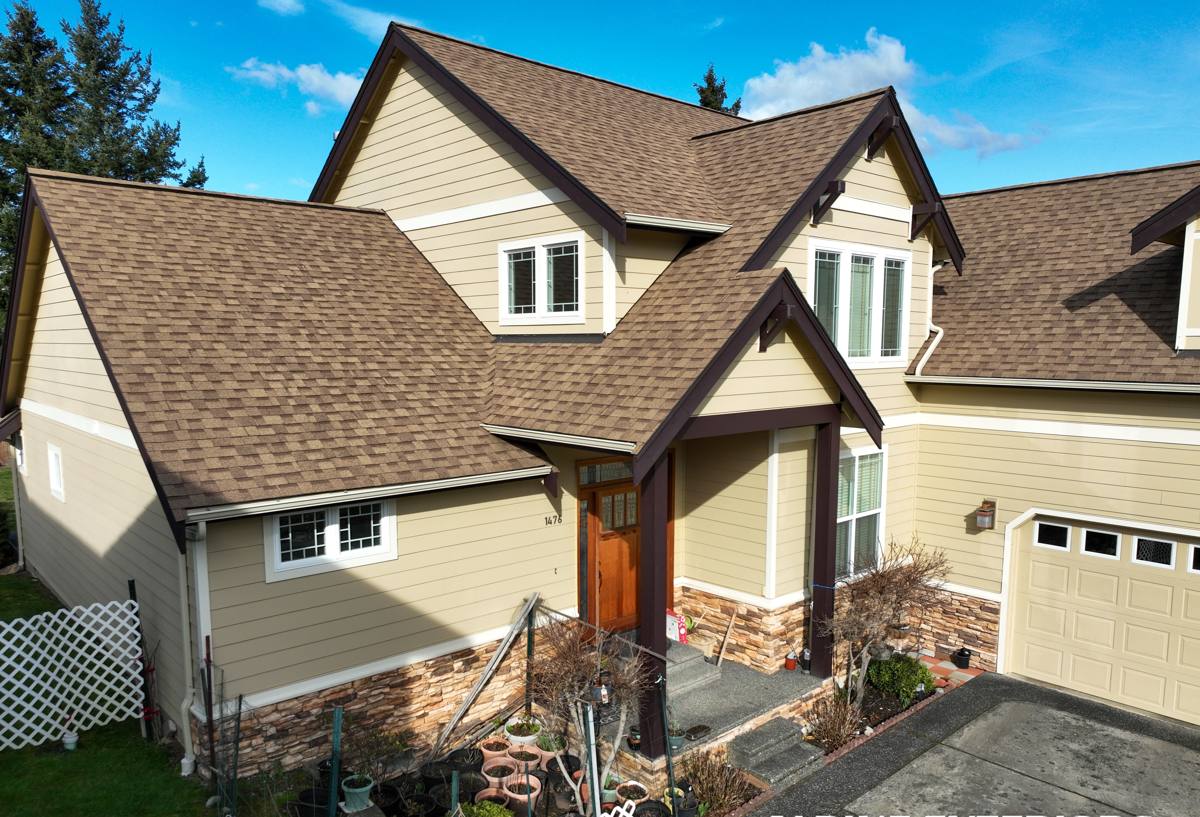
Signs a Bellingham Roof Needs Repair
Most roof problems in this climate show themselves gradually. Catching them early is the difference between a repair and a much larger project.
- Moss or dark algae streaking on shaded slopes or north-facing sections
- Granules collecting in gutters or at downspout outlets
- Shingles that look cupped, curled, or lifted at the edges
- Rust staining or visible corrosion around flashing, vents, or valleys
- Water stains on interior ceilings, especially near chimneys or skylights
- Soft or spongy spots when walking the roof (a sign of trapped moisture beneath the surface)
- Daylight visible through the attic roof deck
- Gutters pulling away from the fascia or overflowing during heavy rain
Any one of these on its own might not be urgent. Two or three together, especially on a roof that hasn't been inspected in several years, usually means it's time to have someone look before the next wet season.
What a Correct Repair Actually Involves
A roof repair that's done right in this climate is rarely just "replace the bad shingles." It's a short diagnostic process followed by targeted work that accounts for how water and moisture move through the whole system, not just the damaged spot.
Diagnosing the Real Problem
Water almost never shows up on the ceiling directly below where it entered the roof. It travels along the underlayment, framing, or insulation before it becomes visible. A proper repair starts by tracing the leak back to its actual entry point — often a flashing seam, a nail pop, or a valley — rather than just patching the spot where the stain appeared.
Matching Materials and Techniques
Repairs should use materials that are compatible with what's already on the roof — matching shingle profile and weight, using corrosion-resistant fasteners appropriate for a marine climate, and tying new underlayment into existing courses correctly so water sheds over every seam instead of into it. Mismatched materials or a rushed tie-in are a common reason the same spot leaks again a year or two later.
Flashing Comes First, Not Last
Most recurring leaks in this area trace back to flashing — around chimneys, skylights, dormers, and valleys — rather than the field shingles themselves. Any repair that replaces shingles without also evaluating the flashing underneath is addressing half the problem.
Common Roof Repair Types We Handle in Bellingham
| Repair Type | Typical Local Cause | Broad Cost Range |
|---|---|---|
| Moss and algae removal with treatment | Shaded, north-facing, or tree-covered slopes; long moss season | $250–$700 |
| Flashing repair or replacement | Corrosion from salt air, failed sealant, wind-driven rain intrusion | $300–$900 |
| Localized shingle replacement | Wind damage, cupped/curled shingles, granule loss | $350–$1,200 |
| Valley or penetration repair | Concentrated water flow, aging pipe boots and vent seals | $300–$1,000 |
| Gutter and fascia repair tied to roof edge | Overflow during heavy rain, moss debris buildup | $200–$800 |
These are broad ranges, not quotes — actual cost depends on roof pitch, access, the extent of hidden damage once we're up there, and the materials already on the roof. A firm number only comes after a real inspection.
Our Roof Repair Process
1. Inspection
We walk the roof (weather permitting) and check the attic from below when access allows, looking at flashing, valleys, penetrations, and the general condition of the roofing material — not just the spot you called about.
2. Straightforward Estimate
You get a written explanation of what we found, what we recommend, and why — including whether a repair is genuinely the right call or whether the roof is close enough to the end of its service life that a repair would just be a short-term patch.
3. The Repair Itself
We do the work using materials matched to what's already on your roof, with fasteners and flashing suited to a coastal Whatcom County climate, and we clean up debris and old material before we leave.
4. Follow-Through
If a repair doesn't hold through the next significant rain event, that's on us to make right. We'd rather stand behind the work than move on to the next job and hope it holds.
Repair vs. Replacement: How We Help You Decide
Not every roof problem calls for a full replacement, and not every leak can be permanently solved with a patch. Some honest questions that guide the decision:
- How old is the roofing material? A localized repair on a roof with years of life left makes sense. The same repair on a roof near the end of its expected lifespan may just delay a bigger decision.
- Is the damage isolated or widespread? One damaged valley is a repair. Granule loss and curling across most of the roof is usually a sign the material itself is failing.
- Is moisture trapped under the roof deck? If we find soft decking or long-term water damage during inspection, patching the surface won't fix what's happening underneath.
- What's the moss and algae history? A roof with a long-neglected moss problem often has more hidden damage than the surface suggests.
We'll tell you plainly which category your roof falls into. A repair that's likely to fail again within a season isn't a good use of your money, and we won't recommend one just to get a smaller job.
Why a Crew That Already Works Bellingham Matters
Roofing crews that mostly work drier or more inland regions don't always think about salt air corrosion, prevailing wind direction, or how aggressive moss growth gets on a shaded roof near Bellingham Bay. That's not a knock on their skill in general — it's just a different set of conditions than what they see day to day.
A crew that regularly works Blaine, Bellingham, and the rest of Whatcom County has already seen how flashing corrodes near the water, which slopes hold moss the longest, and how wind-driven rain finds its way into roofs that would stay dry in a calmer climate. That local pattern recognition is often what separates a repair that lasts from one that needs to be redone.
Keeping Your Roof in Good Shape Between Repairs
A few habits go a long way toward stretching the life of a roof repair in this climate:
- Keep gutters and downspouts clear, especially heading into fall storms
- Trim back tree branches that keep a section of roof shaded and damp
- Have moss treated before it establishes a thick mat, not after
- Get a quick visual inspection after any significant windstorm
- Address small flashing or sealant issues early, before water works its way underneath
None of this replaces a professional inspection, but it reduces how often you need one to be urgent.
If you're dealing with a leak, moss buildup, or damaged flashing on a Bellingham-area roof, we're glad to take a look and give you a straight answer about what it needs. Fill out the form below for a free, no-pressure estimate.