 Blaine Siding
 Why Birch Bay Homes Wear Out Siding Faster Than Inland Homes
Birch Bay sits right on the water, and that proximity changes what siding has to survive. Homes here deal with three things inland Whatcom County properties mostly don't: constant salt-laden air, wind-driven rain that hits walls sideways instead of falling straight down, and a long, damp moss season that keeps north- and west-facing walls shaded and wet for months at a time. Any one of these will shorten the life of the wrong siding material. Together, they're why siding replacement in Birch Bay needs to be planned differently than a typical remodel job forty minutes inland.
Salt air is corrosive to fasteners, trim metal, and paint film. It also holds moisture close to the wall surface even on days that aren't raining, which keeps siding damp longer than a humidity reading alone would suggest. Add wind off the water and you get rain forced up under laps and around trim in ways that gravity-only drainage details weren't built to handle. Then add tree cover and the shaded, cool microclimate common in Birch Bay's residential streets, and you have ideal conditions for moss and algae to colonize siding, trim, and the joints between them.
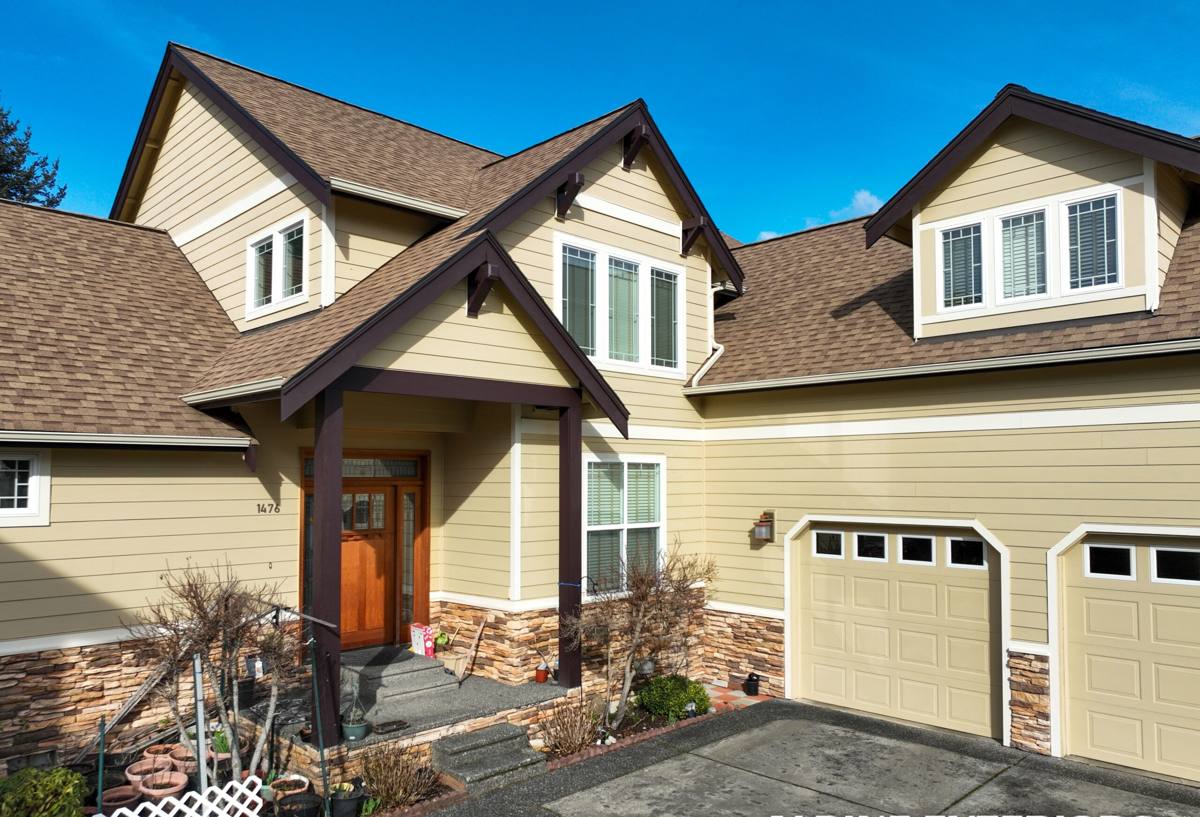
What Coastal Exposure Actually Does to Siding Over Time
Salt Air and Fastener Corrosion
Uncoated or lightly coated fasteners near the coast corrode faster than the same fasteners would inland. Once a fastener starts to rust, it can telegraph a stain through the siding face and eventually lose holding strength. This is a detail that matters far more in Birch Bay than in, say, Bellingham's inland neighborhoods, and it should influence what fasteners and flashing metals go into your wall assembly.
Wind-Driven Rain and Water Intrusion
Siding is a drainage plane, not a waterproof membrane — it's designed to shed the majority of water while a weather-resistive barrier behind it handles what gets past the laps and seams. Wind-driven rain pushes more water past those laps than calm rain does, which puts extra importance on lap spacing, caulking at the right joints (and not at others), and correctly lapped house wrap behind the cladding. A siding job done to a "calm weather" standard will underperform on an exposed Birch Bay lot.
Moss, Algae, and Shaded Walls
Moss doesn't just look bad — it holds moisture against the siding surface and, on inferior products, can work into seams and fastener heads. Walls facing away from the sun, or shaded by mature trees common in this area, are the ones that need the most moisture-tolerant material and the cleanest detailing at trim and butt joints.
Signs a Birch Bay Home Needs Siding Replacement, Not Just Repair
- Soft or spongy spots when you press on the siding, especially near the bottom courses or under windows
- Paint that won't hold — repeated peeling or bubbling within a year or two of repainting
- Persistent moss or algae staining that returns within weeks of cleaning
- Visible gaps, warping, or cupping in boards, particularly on the water-facing or north side of the house
- Rust streaking below fasteners or trim
- Soft trim boards or discoloration around windows and doors suggesting water is getting behind the cladding
- Siding that's original to a home more than 20-25 years old, especially wood-based products that were never designed for this level of coastal exposure
A few of these signs can sometimes be addressed with spot repair. Multiple signs together, especially combined with age, usually mean the underlying wall assembly has been absorbing moisture for a while and a full replacement is the more honest recommendation.
What a Correct Siding Replacement Involves
Replacing siding on a coastal Birch Bay home is not just stripping old material and nailing up new boards. Done right, it's an opportunity to fix the water-management details that likely contributed to the original siding's failure.
Tear-Off and Inspection
Full removal of the old siding lets us actually see the sheathing underneath — something you can't evaluate from a ladder. Any soft, delaminated, or water-damaged sheathing gets identified and addressed before anything new goes up. Skipping this step and re-siding over hidden damage just seals the problem in.
Weather-Resistive Barrier and Flashing
This is the layer that does the real waterproofing work, and on a wind-exposed Birch Bay wall it needs to be installed with extra attention to lap direction, seam taping, and integration with window and door flashing. Flashing at windows, doors, and any wall penetrations gets lapped so water is directed out and down, never trapped behind the cladding.
Correct Fastening and Clearances
Fastener type, length, and spacing all need to match the manufacturer's engineering specs for the specific siding profile and exposure level. Ground clearance and clearance from decks, patios, and roof lines also matter more here — sustained dampness at the bottom of a wall is where premature failure usually starts.
Trim, Caulking, and Paint
Trim and siding should be caulked at the joints designed to be sealed, and left open where the product is engineered to drain and dry. Over-caulking is a common mistake that traps moisture instead of releasing it. Factory-applied finishes reduce how much of this burden falls on field-applied paint and caulk in the first place.
Why We Install Only James Hardie Fiber Cement
We don't offer vinyl, LP SmartSide, or wood-based siding options, and that's a deliberate standard, not a limitation of what we're able to install. On a coastal property like a Birch Bay home, the material matters as much as the workmanship. James Hardie fiber cement is engineered specifically for moisture and pest resistance, it's non-combustible, and it holds a factory-applied ColorPlus finish that's designed to resist fading and hold up without repainting on the schedule wood siding requires. Hardie's HZ5 product line is engineered for cold, wet, coastal-type climates like ours, which is a meaningful distinction from siding built for a national average climate. It also carries a strong transferable warranty, which matters if you ever sell the home.
We're not going to tell you every other siding product is worthless — that's not honest and it's not our call to make about a competitor's product. What we will say is that after years of doing exterior work along this coastline, fiber cement installed to spec is what we're comfortable standing behind on a home that has to survive salt air, wind-driven rain, and moss season year after year.
Cost Factors for Birch Bay Siding Replacement
| Factor | Why It Affects Cost |
|---|---|
| Home size and wall complexity | More square footage, corners, and cutouts around windows/doors increase labor and material |
| Sheathing condition | Hidden water damage found during tear-off may require sheathing repair before siding goes on |
| Siding profile chosen | Lap width, shingle-style panels, and trim details vary in material and install time |
| Trim and accessory work | Window/door trim, corner boards, and fascia replacement add scope beyond field siding |
| Site access | Waterfront lots, steep grades, and limited staging area common in Birch Bay can affect labor time |
| Existing siding removal | Multiple layers of old siding or extensive rot add demo time |
We won't quote a number without seeing the home, but this table reflects the honest variables that separate a straightforward project from a more involved one.
Why Local Experience in Birch Bay Matters
A contractor who mostly works inland can still do competent work, but a crew that regularly works Birch Bay and the surrounding Blaine and Whatcom County coastline already knows which walls take the worst of the weather, how far wind-driven rain can push under improperly lapped trim, and where moss tends to establish first. That experience shows up in small decisions — flashing details, fastener choice, where to hold clearance — that don't show up on a proposal but do show up in how the siding performs five and ten years out.
What to Ask Before Hiring
- Have they installed siding on other coastal or waterfront-adjacent homes in this area, and can they speak to how those details differ from an inland job?
- Do they follow the manufacturer's written installation instructions for fastening, clearance, and flashing, or just "how we've always done it"?
- Are they licensed and insured to work in Washington, and will they put that in writing?
- Do they inspect and address sheathing condition during tear-off, or just re-side over what's there?
- What does their warranty actually cover — labor, material, or both — and for how long?
Maintenance After Your New Siding Goes On
Even the right material benefits from basic upkeep in this climate. A rinse-down once or twice a year removes salt residue and slows moss regrowth, especially on shaded walls. Keep gutters clear so overflow doesn't run down the wall face, and keep an eye on caulking at trim joints over the years — caulk is a maintenance item on any home, coastal or not. James Hardie's factory finish reduces how often you'll need to repaint compared to field-finished wood siding, but it isn't a zero-maintenance product, and we'll walk you through what to expect at the end of the job.
If your Birch Bay home is showing signs of wear from salt air, wind-driven rain, or persistent moss, we're happy to take a look and give you a straightforward, no-pressure estimate on what a proper siding replacement would involve. Fill out the form below and we'll get in touch.