 Blaine Siding
 Birch Bay Roofs Take a Different Kind of Beating
Birch Bay sits right on the water, and that changes what "storm damage" means compared to a roof a few miles inland in Blaine or elsewhere in Whatcom County. Homes along the bay and up on the bluffs get direct exposure to wind coming off the Strait of Georgia, with gusts that hit roofs at angles interior neighborhoods never see. Add in the salt-laden air drifting off the water and the long stretch of wet, low-sun months typical of this part of the Pacific Northwest, and you've got a roof that's aging faster than the calendar suggests.
Most storm damage here isn't the dramatic kind you see on the news. It's a handful of lifted shingles, a bent piece of flashing, a soft spot where water has been sneaking in quietly for weeks. By the time it's obvious from the ground, there's usually already been some water intrusion into the decking below. That's the pattern we see over and over on Birch Bay roofs, and it's why a proper storm damage repair has to look past the visible damage and check what the wind and rain did underneath it.
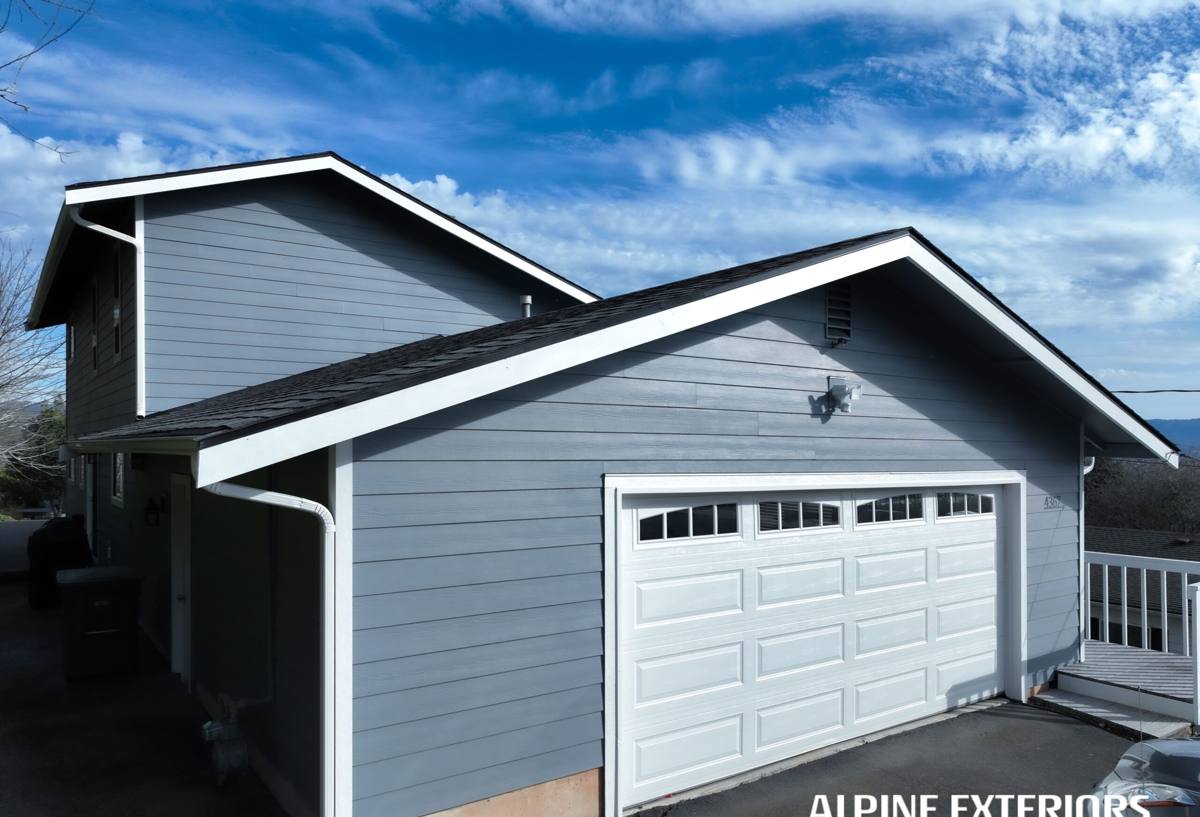
What Storm Damage Actually Looks Like Up Close
When we get called out after a windstorm or a heavy rain event in Birch Bay, we're checking for a specific set of problems, not just doing a quick walk-around. The damage tends to fall into a few categories:
Wind Damage
Lifted, cracked, or missing shingles are the most common issue. Wind doesn't need to rip a shingle off to cause a problem — it just needs to break the seal underneath it. Once that seal is broken, wind-driven rain can get up under the shingle on the next storm, even if the shingle looks fine from the driveway.
Flashing Failure
Flashing around chimneys, vents, skylights, and roof valleys takes the brunt of repeated flexing in high wind. Near the water, the fasteners holding that flashing down corrode faster than they would inland, so a flashing failure here often shows up sooner than a homeowner expects based on the roof's age.
Debris Impact
Birch Bay has plenty of mature trees, and windstorms bring down branches — sometimes whole limbs — onto roofs. Even a glancing hit can crack shingles, dent metal roofing, or punch a small hole that's easy to miss unless you're looking for it.
Water Intrusion Behind the Damage
This is the part that gets skipped in a rushed repair. Wind and rain damage almost always comes as a pair — the wind creates the opening, the rain gets in through it. Any honest storm repair has to check the decking and insulation under the damaged area, not just patch the surface.
How We Assess a Birch Bay Storm Damage Call
We walk the roof, not just the yard. Ground-level inspections miss the small stuff — a corner shingle lifted an inch, a flashing seam that's separated but hasn't leaked yet. On a bay-front or bluff property, we also pay close attention to the windward side of the roof, since that's almost always where the real damage is concentrated, even if debris landed somewhere else.
Inside the attic or crawlspace, we're looking for water staining, damp insulation, or daylight coming through where it shouldn't. If a storm happened weeks ago and nobody caught it, this is often where we find the actual extent of the problem — a small entry point on the roof with a much bigger stain spreading across the decking underneath.
We document everything with photos and a written scope before any work starts. If you're filing an insurance claim, that documentation is what your adjuster needs to see, and having it organized up front tends to speed the claim along rather than slow it down.
Repair or Replace: What Actually Drives the Decision
Not every storm-damaged section needs a full roof replacement, and we're not going to tell you it does just because a repair is a smaller job. The honest answer depends on a few things:
| Factor | Leans Toward Repair | Leans Toward Replacement |
|---|---|---|
| Roof age | Under 12–15 years, in otherwise good shape | Already near end of expected lifespan |
| Extent of damage | Isolated to one slope or section | Multiple areas, or damage found on inspection but not from this storm alone |
| Decking condition | Dry, structurally sound | Soft, rotted, or repeatedly wet in the same spot |
| Matching materials | Current shingle/color still available | Discontinued product, patch would be visibly mismatched |
| Storm history | First real damage in years | Recurring damage in the same area storm after storm |
That last row matters more in Birch Bay than in a lot of places. If the same section of roof keeps taking damage every time there's a strong blow off the water, patching it again is a short-term answer. Sometimes the better fix is upgrading the underlayment or fastening pattern in that one area, not replacing the whole roof — we'll tell you which situation you're in.
Materials That Actually Hold Up Near the Water
Salt air isn't dramatic — it doesn't destroy a roof in one season — but it steadily accelerates corrosion on anything metal: nails, flashing, drip edge, roof vents. On a standard inland roof you might get away with standard-grade fasteners and flashing for the life of the roof. On a Birch Bay property, especially one with a direct line to the water, that same hardware can start showing rust and pitting years earlier.
Our standard for storm repairs in this area is to use corrosion-resistant fasteners and flashing rather than whatever's cheapest at the point of repair. It costs a little more upfront on the materials side, but it means the repair isn't quietly failing again in three or four years because the nails gave out before the shingles did. We also pay attention to how underlayment handles moisture — in a climate with this much sustained wet weather, a repair that traps moisture under it causes more harm than the storm did.
The Long Moss Season Is Part of This Conversation Too
Whatcom County's wet season runs long, and Birch Bay's tree cover and shade patterns give moss plenty of time to establish itself on north-facing and shaded roof slopes. Moss on its own isn't storm damage, but it changes how storm damage plays out. Moss holds moisture against the shingle surface, which softens the granule bed and makes shingles more brittle and more likely to crack or lift when wind hits them. A roof with heavy moss buildup going into storm season is simply more vulnerable than a clean one.
When we're out doing a storm repair, we'll flag moss buildup if we see it and explain what it means for the rest of the roof — not to upsell a moss treatment, but because it directly affects how much wind and rain the roof can take before the next call comes in.
Our Process for Storm Repair Calls in Birch Bay
- Fast response and temporary protection. If there's an active leak or an open spot letting water in, our first priority is a tarp or temporary seal to stop further damage — before we talk about the full repair plan.
- Full roof inspection, not just the damaged spot. We check the whole roof, not only the area that's obviously damaged, since wind rarely hits just one square foot.
- Written scope and photo documentation. You get a clear explanation of what's damaged, what needs to happen, and why — useful whether you're paying out of pocket or working with an insurance adjuster.
- Repair using matched, weather-appropriate materials. We match shingle type and color where possible and use hardware rated for this climate, not just whatever's on the truck.
- Final walk-through. We show you what was done and where, and flag anything else worth watching, like moss buildup or aging flashing nearby that wasn't part of this storm but is worth knowing about.
What to Do in the First 48 Hours After a Storm
- Check the attic or top-floor ceilings for new water stains, even faint ones
- Look at the yard and gutters for shingle granules, pieces of flashing, or shingle fragments
- Note any branches or debris that fell on or near the roof, even if they rolled off
- Take photos from the ground of anything that looks off — lifted edges, gaps, dents
- Avoid climbing onto the roof yourself, especially on wet or mossy sections
- Call for an inspection before the next rain if you suspect any damage — a small opening gets worse fast in this climate
- Hold onto any photos or notes if you plan to file an insurance claim
Why Hiring a Crew That Already Works Birch Bay Matters
A roofer who only sees Birch Bay a few times a year is guessing at things a local crew already knows — which slopes take the worst of the wind off the bay, how fast moss builds back in the shaded lots, which older homes in the area were built with roofing details that need extra attention during a repair. That familiarity shows up in fewer callbacks and repairs that are sized to the actual conditions instead of a generic checklist.
It also matters for response time. Storm damage doesn't wait for a convenient week, and a crew based in and around Blaine can get out to a Birch Bay property faster than a company driving in from somewhere else in the region. When there's an active leak, that speed is the difference between a contained repair and a bigger interior problem.
Get an Honest Look Before It Gets Worse
If a recent storm left you wondering whether your roof took damage, or you've noticed a stain, a soft spot, or missing shingles, it's worth getting a straight answer before the next round of weather comes through. We offer free, no-pressure estimates for Birch Bay homeowners — no obligation, just a clear look at what's going on and what it would take to fix it right. Fill out the form below to get started.