 Blaine Siding
 Birch Bay Windows Work Harder Than Most
Birch Bay sits right up against the water, and that changes what a window has to survive. Homes a few miles inland in Blaine deal with plenty of rain, but Birch Bay properties add salt-laden air and steady onshore wind to the mix. That combination attacks window components in ways that don't show up on a spec sheet: it speeds up corrosion on hardware and screens, breaks down cheap sealants faster, and drives moisture into any gap that isn't properly flashed.
Add in Whatcom County's long wet season — months where surfaces rarely get a chance to fully dry out — and you get ideal conditions for the moss and algae growth that creeps onto sills, tracks, and exterior trim. None of this means Birch Bay homes need exotic materials. It means the installation details that get skipped elsewhere can't be skipped here.
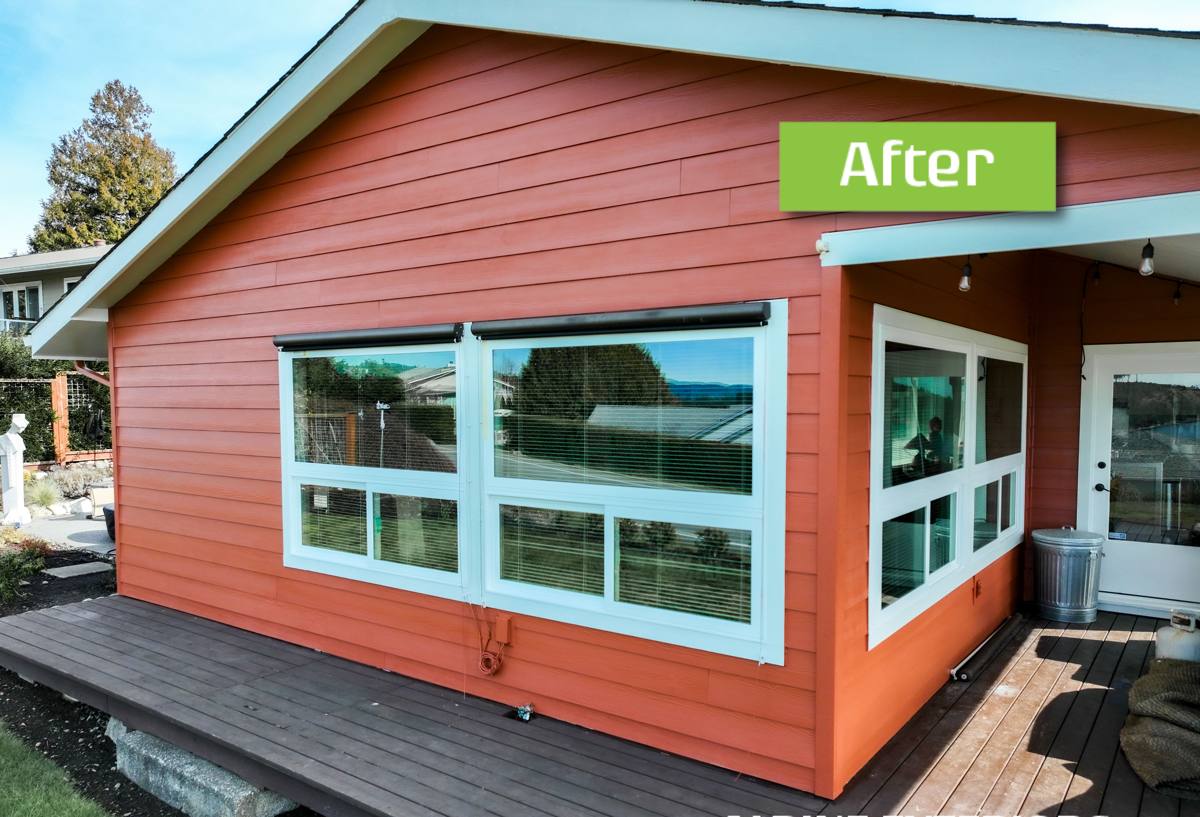
What "Correct" Window Installation Actually Means
A window is only as good as the opening it sits in. The window unit itself matters, but the flashing, sealant, and integration with the surrounding wall assembly are what actually keep water out over the long run. In a coastal, high-rainfall area like Birch Bay, we treat these steps as non-negotiable rather than optional add-ons:
Flashing and Weather Barrier Integration
Every opening gets flashed so that water is directed out of the wall, never trapped behind the window frame. That means proper sill pan flashing, side flashing that laps correctly with the house wrap, and head flashing that sheds water down and away. Skipping or shortcutting this step is the single biggest cause of hidden rot we find when we're called out to fix a failed installation.
Sealant Selection and Placement
Not every exterior sealant holds up to years of salt air and UV exposure. We use sealants rated for exterior, high-moisture use, and we're deliberate about where sealant is used versus where a gap needs to stay open for drainage. A fully caulked perimeter with no weep path is a common mistake that actually traps water instead of keeping it out.
Fastening and Structural Fit
Wind exposure near the water means fasteners and shims need to hold the unit square and tight against wind load, not just "close enough." A window that's slightly racked in the opening will develop stress points in the frame and corner seals within a few years.
Signs Your Current Windows Are Losing the Battle
Because failures often start inside the wall, homeowners usually notice symptoms well after the problem has begun. Watch for:
- Fogging or moisture between panes on a dual-pane unit — the seal has failed
- Soft or discolored drywall, trim, or sill area below or beside the window
- Persistent green or black growth on the sill, frame, or nearby siding that returns quickly after cleaning
- Drafts you can feel even with the window fully latched
- Difficulty opening, closing, or locking — often a sign the frame has shifted
- Visible gaps or cracked caulk around the exterior trim
- A musty smell near the window that wasn't there before
Any one of these is worth a look. Several together usually mean the installation, not just the window unit, needs attention.
Choosing the Right Window for a Birch Bay Home
Frame material matters more here than in drier, inland climates because it determines how the window handles constant moisture and salt exposure over time.
| Frame Material | How It Handles Salt Air & Moisture | Maintenance | Typical Fit for Birch Bay |
|---|---|---|---|
| Vinyl | Won't corrode or rot; performs consistently in coastal conditions | Low — occasional cleaning | Strong all-around choice, especially on wind-exposed sides |
| Fiberglass | Excellent moisture and corrosion resistance; very stable in temperature swings | Low | Good upgrade option where budget allows, especially for larger openings |
| Wood-clad | Interior wood needs to stay fully sealed; exterior cladding protects but any breach invites rot | Higher — finish and seals need monitoring | Workable if homeowner wants a wood interior look and commits to upkeep |
| Aluminum | Conducts cold and can corrode faster without a quality coating near salt air | Moderate | We generally steer clients away from bare aluminum this close to the water |
Glass and Coatings
Double-pane, low-E glass is the standard baseline for this climate — it cuts down on heat loss during the cold, wet months and reduces interior condensation. Triple-pane is worth discussing for north- or west-facing rooms that take the brunt of the wind and driving rain, though it adds cost and weight that not every frame or opening needs.
Frame Reinforcement for Wind Exposure
On homes closer to the shoreline with fewer windbreaks, we pay extra attention to reinforced frame corners and heavier-duty hardware. It's a small spec difference that pays off during winter storms when wind-driven rain is pushing directly against the glass and frame.
Our Installation Process
- On-site assessment — We inspect the existing opening, check for any hidden moisture damage, and measure for accurate fit rather than assuming a stock size.
- Removal done clean — Old windows and any compromised flashing or sheathing are removed carefully so we can see exactly what condition the opening is in before anything new goes in.
- Repair before install — If we find soft sheathing, failed old flashing, or rot, we address it first. Installing a new window into a bad opening just hides the problem for a few more years.
- Flashing and weather barrier tie-in — Sill pan, side, and head flashing are installed and integrated with the house wrap so the whole assembly sheds water correctly.
- Window set and shimmed square — The unit is leveled, plumbed, and shimmed to spec, then fastened per manufacturer requirements for wind load.
- Sealant and trim — Exterior-grade sealant goes where it belongs, weep paths stay clear, and trim is finished to match the home.
- Final check — We test operation, locks, and look over the finished exterior detail before we consider the job done.
Cost Factors to Understand Before You Get Quotes
Every home and opening is different, so exact numbers depend on your specific project, but these are the factors that typically move the price:
| Factor | Why It Affects Cost |
|---|---|
| Frame material (vinyl vs. fiberglass vs. wood-clad) | Material cost and expected lifespan vary |
| Window size and configuration | Larger units, bays, and custom shapes require more labor and material |
| Condition of the existing opening | Hidden rot or old flashing that needs repair adds time before install even starts |
| Number of windows done at once | Doing several openings in one visit is typically more efficient than one at a time |
| Glass package (double vs. triple-pane, coatings) | Better-performing glass costs more up front but reduces energy loss |
| Access and height | Second-story or hard-to-reach windows take more setup time |
As a broad range, homeowners in this area typically see per-window pricing that spans a few hundred dollars into the low thousands depending on the factors above — we'll always walk you through your specific quote rather than quoting off a generic number.
Why Hiring a Crew That Already Works Birch Bay Matters
A contractor who mainly works dry, inland jobs can still install a window competently on a calm day. The difference shows up years later. A crew that regularly works this stretch of Whatcom County already knows which flashing details actually hold up against driving rain off the water, which sealants degrade too fast in salt air, and where moss and standing moisture tend to collect on a home's exterior. That local pattern recognition is hard to substitute with a general checklist.
It also matters for scheduling and honesty about weather. Window installation requires a dry window of time to do the job right — a crew familiar with local weather patterns plans around that instead of rushing an install during a wet stretch and hoping the sealant sets up fine.
Protecting Your Investment After Installation
A correctly installed window is low-maintenance, not zero-maintenance. A few habits go a long way in this climate:
- Rinse salt residue and grime off frames and glass periodically, especially after storms
- Keep an eye on caulking and sealant lines once a year and note any cracking or gaps
- Clear moss or algae from sills and tracks promptly rather than letting it establish
- Make sure gutters and downspouts near windows are directing water away, not onto the wall
- Operate locks and hardware a few times a season so they don't seize from disuse
If you notice anything from the earlier warning-sign list, it's worth having it looked at before a small issue becomes a wall repair.
Get a Straightforward Estimate
If you're dealing with foggy panes, drafts, or windows that just aren't holding up to what Birch Bay throws at them, we're happy to take a look and give you an honest assessment — no pressure, no upsell script. Use the form below to request a free estimate for your home.