 Blaine Siding
 Why Roofs Take a Beating in Birch Point
Homes near the water in Birch Point deal with a combination of stresses that inland Whatcom County roofs simply don't see as often. Salt-laden air corrodes exposed metal faster than plain moisture does — nail heads, flashing edges, and vent stacks all age quicker when they're a short distance from saltwater. Add in driving rain that comes in sideways during winter storms, and you get wind-driven water finding its way under shingle laps and around penetrations that would stay dry in a calmer setting. On top of that, tree cover and persistent damp shade around many Birch Point lots mean moss and algae get a much longer growing season here than they would on a sun-exposed roof further inland.
None of these factors alone destroys a roof overnight. Together, over ten or fifteen years, they shorten the useful life of a roofing system and make small problems — a lifted shingle tab, a pinhole in flashing — turn into deck rot and interior leaks faster than homeowners expect. That's the backdrop for every replacement we plan in this area.
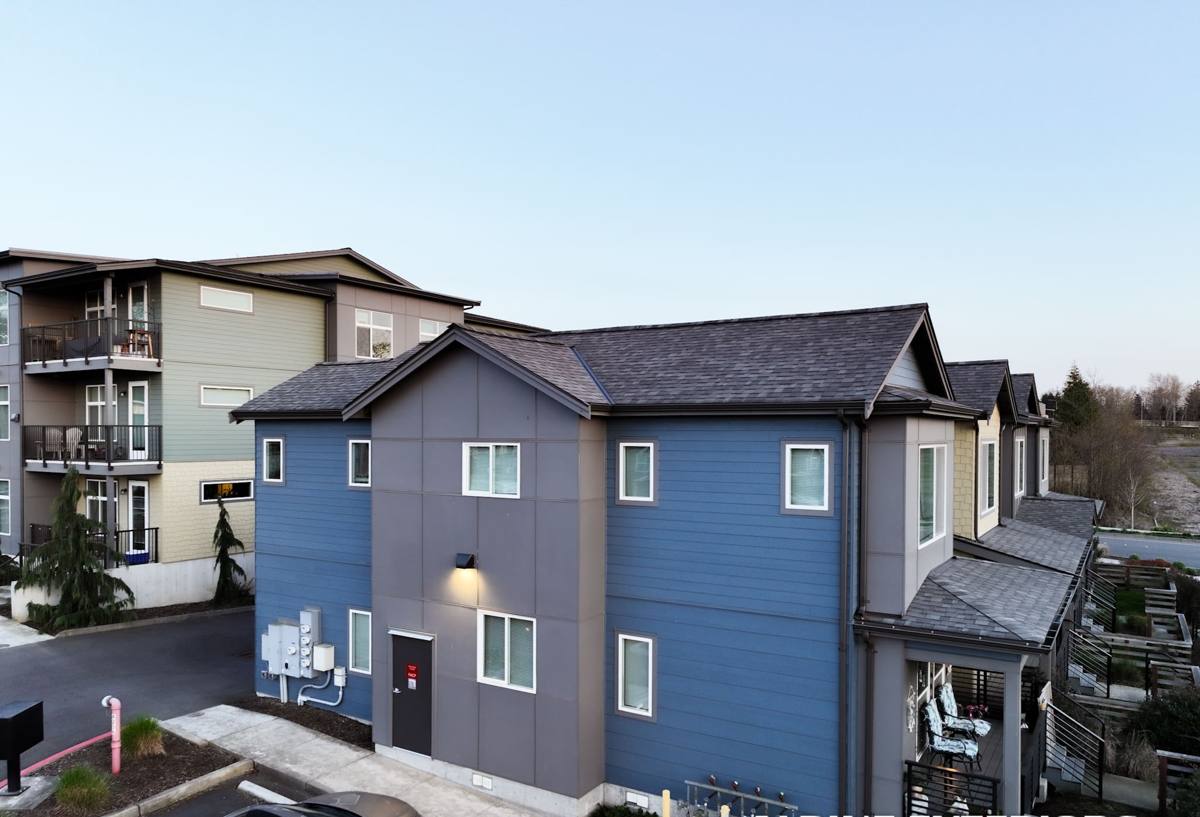
Signs Your Roof Has Reached Replacement, Not Repair
Not every roof problem near Blaine calls for a full tear-off. But there's a point where patching stops making financial sense and starts throwing money at a roof that's already past its service life. Here's what usually tips that decision:
- Granule loss heavy enough that you can see bare asphalt mat on multiple slopes, not just one worn spot
- Moss or algae that comes back within a season or two of cleaning, even after treatment
- Shingles that are curling, cupping, or cracking across large sections rather than isolated tabs
- Soft or spongy decking underfoot, or visible sagging between rafters
- Daylight visible through the roof deck from inside the attic, or staining on attic sheathing
- Repeated leaks in different spots each winter, rather than one recurring failure point
If you're only seeing one of these, a repair may still buy you time. If you're seeing two or three together, especially decking softness combined with recurring moss, that's usually a sign the roofing system as a whole has aged out.
Picking a Roofing System That Fits This Climate
There's no single "correct" material for every Birch Point home — it depends on your roof pitch, budget, and how much upkeep you're willing to do. But some options handle salt air, wind-driven rain, and moss pressure better than others. Here's an honest comparison of the systems we get asked about most:
| Material | Typical Lifespan | Moss & Salt-Air Resistance | Maintenance Needs | Relative Cost |
|---|---|---|---|---|
| Standard asphalt composition shingle | 15–20 years in this climate | Moderate; benefits from algae-resistant granules | Periodic moss removal, gutter clearing | Lowest upfront cost |
| Algae-resistant (impregnated copper granule) asphalt shingle | 20–25 years | Better resistance to algae staining and moss regrowth | Still needs gutter and valley maintenance | Modest upgrade over standard shingle |
| Standing-seam metal | 40–50+ years | Strong once properly coated fasteners and flashing are used; sheds moss more easily | Low; occasional fastener and sealant checks | Highest upfront cost |
| Cedar shake | 20–30 years with upkeep | Requires diligent moisture management; more sensitive to a wet, shaded roof | Highest — regular treatment and inspection | Mid-to-high, plus ongoing care |
For most Birch Point homes we recommend either an algae-resistant architectural shingle or standing-seam metal, depending on budget and how the roof is shaded. We generally steer clients away from untreated cedar on heavily shaded, moisture-prone lots — not because the material is bad, but because the maintenance burden to keep it performing well in this exact climate is significant, and a missed year of upkeep shows up fast as moss and moisture retention.
What a Correct Tear-Off and Replacement Involves
Full Tear-Off and Decking Inspection
We remove existing roofing down to the deck rather than layering over it. That's the only way to actually see what's happening underneath — soft spots, old water staining, or rot that's been hidden under the previous roofing for years. Any damaged decking gets replaced before anything new goes down; installing new roofing over compromised sheathing just guarantees a repeat failure.
Underlayment and Ice-and-Water Barrier
Given how much wind-driven rain this area sees, underlayment choice matters more here than in drier parts of the state. We use self-adhering ice-and-water membrane at eaves, valleys, and around every penetration — the places wind-driven rain is most likely to force water backward under the shingle line — with synthetic underlayment across the rest of the field.
Ventilation That Actually Works
A roof that can't breathe traps moisture in the attic, which speeds up deck rot and can even encourage moss growth from the underside out. We check and correct intake and exhaust balance as part of every replacement — this is one of the most commonly skipped steps in a rushed re-roof, and it's one of the reasons a roof that looks fine from the ground fails early.
Flashing, Edges, and Penetrations
Chimneys, vent stacks, skylights, and roof-wall intersections are where salt-air corrosion and wind-driven rain do the most damage over time. We use corrosion-resistant flashing materials and proper step-and-counter flashing details rather than relying on caulk or sealant as a primary water barrier — sealant fails; correctly lapped metal doesn't.
How We Approach a Birch Point Roof Replacement
Inspection and Written Estimate
We walk the roof (not just the ground) to check decking condition, ventilation, flashing, and the extent of moss or algae growth, then put together a written scope and price — no vague allowances, no surprise change orders for things we could have seen at inspection.
Scheduling Around Weather
Roofing this close to the water means watching the forecast closely. We schedule tear-offs so that decking isn't left exposed overnight when rain is likely, and we're upfront if a stretch of wet weather pushes your start date — better to wait a few days than to install over a wet deck.
Tear-Off, Install, and Daily Cleanup
Most residential roof replacements in this area take one to three days depending on size and complexity. We clear debris and run a magnetic sweep for stray nails at the end of each work day, not just at project completion.
Final Walkthrough
Before we consider the job done, we walk the finished roof and the property with you, confirm gutters and downspouts are clear and reconnected properly, and go over any manufacturer warranty paperwork and our own workmanship coverage.
Cost Factors for a Birch Point Roof Replacement
Every roof is different, so exact pricing depends on a site visit. But the factors that most often move the number, in order of typical impact, are:
- Roof size and number of facets — a simple gable roof costs less per square than a roof with multiple valleys, dormers, and hips
- Decking condition — rot found during tear-off adds material and labor that can't be priced until the old roofing is off
- Material choice — asphalt, algae-resistant asphalt, and metal carry different upfront costs, as shown above
- Pitch and access — steep roofs or homes with limited equipment access take longer and require more safety setup
- Existing ventilation and flashing corrections — fixing inadequate ventilation or outdated flashing adds scope but prevents repeat problems
- Layers of existing roofing — additional tear-off layers mean more disposal and labor time
Why Local Experience in Birch Point Matters
A roofing crew that regularly works this stretch of Whatcom County already knows which fastener and flashing materials hold up to salt air instead of corroding within a few years, how far to extend ice-and-water protection given the wind-driven rain patterns here, and how long moss really keeps growing on shaded, near-water lots before it needs mechanical removal rather than just a wash. That knowledge shows up in small decisions — which underlayment to use at a valley, how much overhang protection a specific roof orientation needs — that a crew unfamiliar with this coastline might not think to make.
Local experience also means understanding the practical side of working here: permitting through the county or city depending on your exact location, coordinating around narrow or shared driveways common on smaller waterfront lots, and being realistic about weather windows instead of promising a schedule that gets blown out by the next storm off the water.
Maintaining Your New Roof After Installation
A correctly installed roof still needs basic upkeep to hit its full lifespan in this climate. After your replacement, plan on:
- Clearing gutters and downspouts at least twice a year, more often if you have overhanging trees
- Having moss buildup professionally removed at the first sign of regrowth rather than letting it establish
- Trimming back branches that keep sections of the roof shaded and damp
- Scheduling a visual flashing and penetration check every year or two, especially after major storms
- Avoiding pressure washing directly on shingles, which can strip protective granules
- Watching for granule accumulation in gutters as an early indicator of shingle wear
None of this is complicated, but skipping it is exactly how a well-installed roof loses years of life to the same salt air and moss pressure that shortened the last one.
If you're seeing moss, granule loss, or leaks on a Birch Point roof, or you just want an honest read on whether repair or replacement makes more sense, we're happy to take a look. The estimate is free, there's no pressure to move forward, and you'll get a straight answer either way — just fill out the form below.