 Blaine Siding
 Board & Batten Siding in Peace Arch: What Blaine's Climate Actually Demands
Peace Arch sits about as far northwest as you can get in Washington State, right at the edge of Whatcom County and the border. That location comes with a specific mix of weather that not every siding style, and not every siding material, handles well over the long haul. Homes here deal with salt-laden air off the nearby water, wind-driven rain that hits walls sideways instead of falling straight down, and a moss season that can stretch from fall through spring in shaded, north-facing exposures. Board and batten siding — the vertical-board-and-narrow-strip look that's become popular again on new builds and remodels alike — can look sharp on a Peace Arch home for decades. It can also fail early and unevenly if the material, the seams, and the fastening aren't matched to this specific climate. This page is about doing that one job right, in this one area.
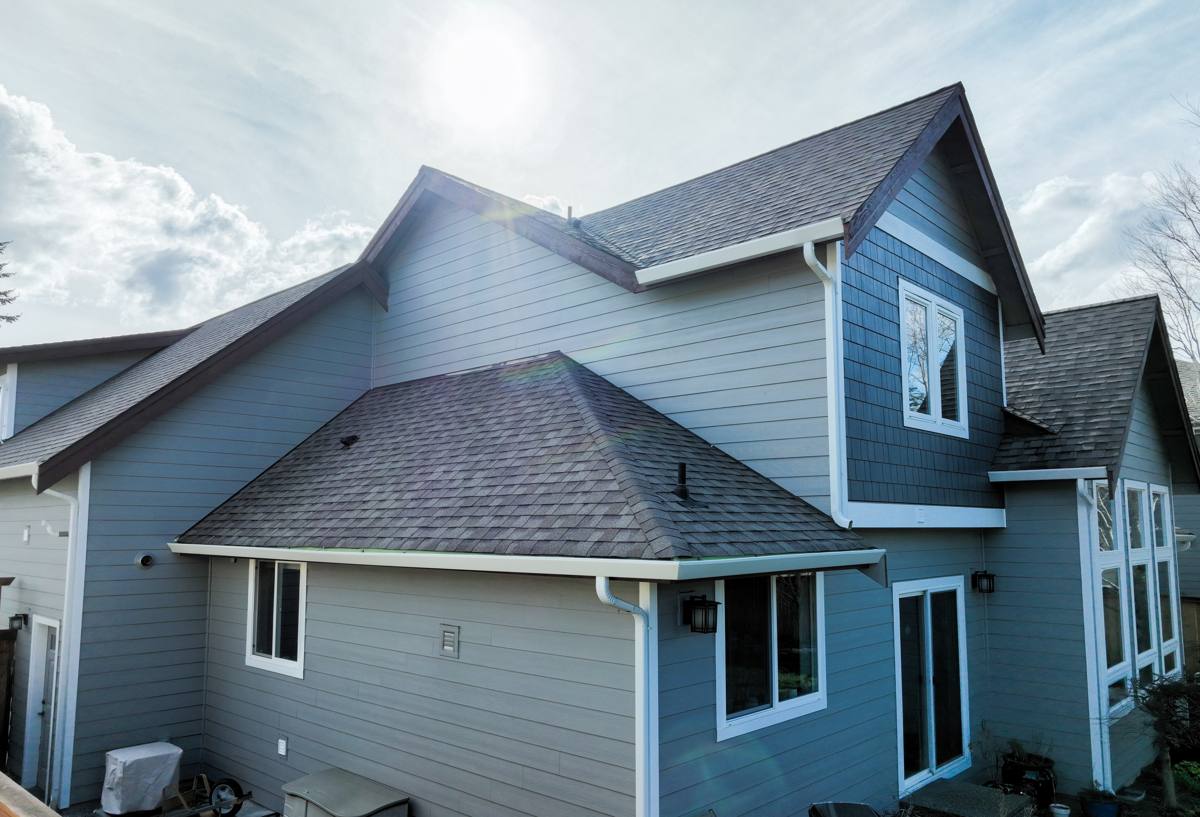
Why Homeowners Choose Board & Batten — and Where the Style Falls Apart Without Care
The Look
Board and batten reads as clean, vertical, and a little more architectural than standard horizontal lap siding. It pairs well with the mix of craftsman, farmhouse, and modern builds you see around Blaine, and it's often used as an accent on gables, dormers, and entry walls even on homes that are otherwise sided in a horizontal profile.
The Vulnerable Point: the Seams
The trade-off is seams. A board and batten wall has a vertical joint under every batten, running the full height of the wall. Each of those joints is a place water can find its way behind the cladding if it isn't detailed correctly. On a home exposed to steady coastal rain, a poorly sealed or poorly flashed batten seam doesn't just risk a cosmetic streak — it can move moisture behind the siding where it's slow to dry out, especially on walls that don't get much sun. That's the core engineering problem board and batten has to solve, and it's the part of the job that separates a good installation from one that looks fine for the first year or two.
Why We Install Board & Batten in Fiber Cement, Not Wood or Vinyl
Board and batten is traditionally a wood siding profile, and it's also sold in vinyl and engineered wood versions. We don't install any of those. We install James Hardie fiber cement exclusively, on every job, including board and batten. In this specific style, the reasoning is even more direct than usual: those vertical seams are constantly wet in a coastal, high-rainfall climate, and wood-based products swell, cup, and rot at seams and cut edges faster than almost anywhere else on a house. Vinyl battens can work loose, warp in temperature swings, and don't hold paint or color the way homeowners expect from a premium vertical profile. Fiber cement doesn't absorb moisture the way wood or wood-composite products do, doesn't support rot, and holds a factory-applied finish instead of a field-applied one that has to be maintained. For a siding style whose main weak point is moisture at the seams, starting with a material that isn't moisture-sensitive is the whole ballgame.
What a Correct Board & Batten Installation Involves
Drainage Plane and Clearance
Every board and batten wall needs a water-resistive barrier behind it, and in a driving-rain climate like this one, a proper drainage gap behind the panel matters more than it does in drier regions — it gives any moisture that does get past the surface a path to drain and dry instead of sitting against the sheathing. Clearance at grade, roof lines, and horizontal surfaces also has to match the manufacturer's minimum specifications; skipping that clearance is one of the most common corners cut on vertical siding jobs, and it's one of the first things that causes early rot at the base of a wall.
Fastening and Batten Spacing
Fastener type, length, and spacing aren't a matter of preference — they're specified by the manufacturer based on the panel and the local wind exposure. Blaine's proximity to open water means some walls see more wind load than an inland home a few miles away, and the fastening schedule should reflect that, not just follow a generic default.
Flashing and Sealed Edges
Every horizontal joint needs flashing behind it, not just caulk over it. Every field-cut edge on a fiber cement board has to be sealed with an approved product before it goes up, because an unsealed cut edge is the one part of the panel that isn't factory-protected. On a batten seam, that sealing has to happen before the batten covers the joint — it's invisible once the wall is finished, which is exactly why it's the step that gets skipped on rushed jobs.
Board & Batten and Peace Arch's Climate, Factor by Factor
| Climate Factor | Why It Matters for Board & Batten | How It Should Be Handled |
|---|---|---|
| Salt-laden coastal air | Accelerates corrosion of the wrong fastener type over years of exposure | Corrosion-resistant fastener specification appropriate to a coastal wind zone |
| Wind-driven, sideways rain | Pushes water into vertical seams that horizontal siding rarely sees | Proper flashing behind every joint, not surface caulk alone |
| Long moss and algae season | Shaded, north-facing battens stay damp longer, feeding growth | Factory ColorPlus finish that resists staining better than field-painted wood |
| Cool, wet winters | Slows drying time behind the cladding if a drainage gap is missing | Proper drainage plane and manufacturer-specified clearance at grade |
Our Process for Peace Arch Board & Batten Projects
Walkthrough and Assessment
We start by looking at the whole wall system, not just the siding that's visible. That means checking what's happening at grade, around windows and doors, and at any place two roof planes or wall planes meet — those are the spots where a board and batten installation is most likely to have failed if it was done wrong the first time.
Tear-Off and Sheathing Check
Once the old siding comes off, we check the sheathing and water-resistive barrier underneath. On a home in this area, this is often the step that tells the real story — sheathing that's been slowly absorbing moisture behind a poorly sealed seam for years doesn't always show it from the outside.
Installation and Finish Details
Panels and battens go up to the manufacturer's fastening schedule and clearance requirements, with every cut edge sealed and every horizontal joint flashed before it's covered. This is the least visible part of the job and the part that determines whether the wall performs for decades or needs attention again in a few years.
Cleanup and Warranty Paperwork
We finish with a full site cleanup and make sure you have the manufacturer warranty documentation for the materials and our own workmanship coverage for the installation, so there's a clear record of what went on your home and who stands behind it.
Living With Board & Batten in a Salt Air, Moss-Prone Area
Fiber cement with a factory finish is low-maintenance compared to wood or vinyl, but "low-maintenance" doesn't mean "no maintenance," especially this close to the water and under this much tree cover. A few habits keep a board and batten wall looking and performing the way it should:
- Rinse walls (especially shaded, north-facing battens) once or twice a year to keep moss and algae from taking hold
- Keep gutters clear so overflow doesn't run down and pool behind battens near roof lines
- Trim back vegetation that keeps a wall section shaded and damp longer than the rest of the house
- Re-caulk visible sealant joints (not the flashed seams themselves) if you notice cracking, typically every several years
- Have any impact damage or visible gaps at battens looked at promptly rather than waiting for a full repaint or re-side
Why Hiring a Crew That Already Works Peace Arch Matters
Board and batten done wrong doesn't usually fail in year one — it fails quietly, behind the wall, over several winters. A crew that's used to installing this style on homes in this specific area already knows what the wind exposure looks like close to the water, how long a shaded wall stays wet after a storm rolls through, and which details on a board and batten wall actually get tested by a Whatcom County winter versus which ones are just cosmetic. That local pattern recognition is the difference between a bid that looks the same on paper and a wall that actually performs here.
Here's a short, practical list worth running past any contractor bidding board and batten siding on a Peace Arch home:
- Do they specify a drainage gap behind the panel, or just a house wrap and nothing else?
- Can they explain their flashing detail at horizontal joints, not just their caulk schedule?
- What fastener type and spacing are they using, and is it matched to a coastal wind exposure?
- Do they seal every field-cut edge before it's covered by a batten?
- Are they installing manufacturer-approved materials to the manufacturer's written instructions, or their own shortcut version?
If a contractor can't answer those questions specifically for your wall, it's worth asking again before signing anything.
If you're weighing board and batten for a home in Peace Arch, we're happy to take a look and walk the property with you. The estimate is free, there's no pressure attached to it, and you'll get a straight answer about what your walls actually need — just fill out the form below to get started.