 Blaine Siding
 Ferndale Roofs Take a Different Kind of Beating
Ferndale sits close enough to the water that Whatcom County's coastal weather shapes every roof in town. Winter windstorms roll in off the Strait of Georgia and Puget Sound with gusts strong enough to lift shingles that would never budge inland. Add in months of steady, driving rain and a moss season that barely takes a break, and you've got a climate that's genuinely hard on roofing — even roofing that was installed correctly to begin with.
Storm damage here doesn't always look dramatic. A lot of it starts as a lifted shingle tab, a cracked seal, or a gap around flashing that lets water in slowly over weeks instead of all at once. By the time a homeowner sees a stain on the ceiling, the water has usually been finding its way into the attic or wall cavity for a while. Repairing storm damage correctly in Ferndale means understanding that pattern, not just patching the spot that's visibly broken.
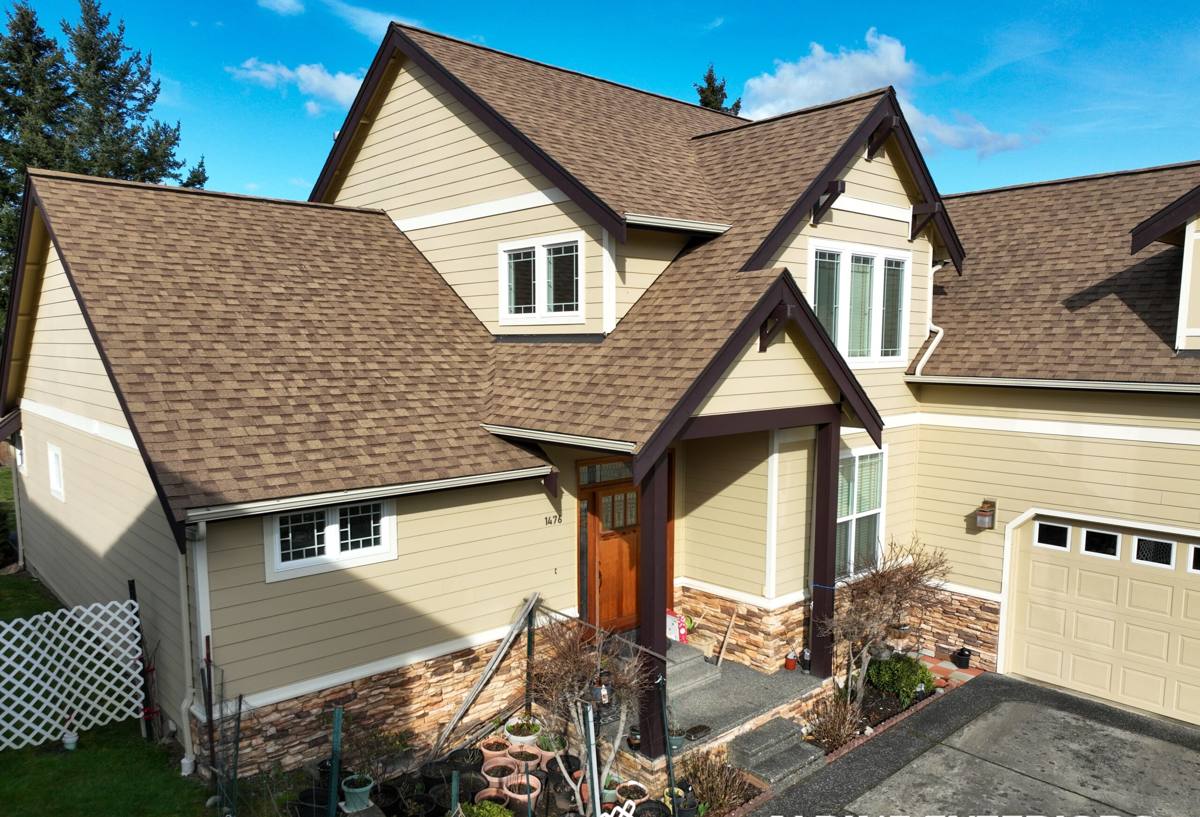
What Storm Damage Actually Looks Like on a Ferndale Roof
Wind
Wind is the most common cause of storm damage we see in this area. It doesn't need to be a named storm — a strong overnight gust event is enough to lift shingle tabs, crease ridge caps, or pull fasteners partway out. Once a shingle's seal is broken, it usually won't reseal on its own, even after the wind dies down. That shingle is now a weak point every time it rains.
Driving rain
Whatcom County rain doesn't fall straight down for much of the year — it comes in sideways, which pushes water into gaps that would stay dry in a calmer climate. Flashing around chimneys, skylights, vent pipes, and roof-to-wall transitions takes the brunt of this. Even a small amount of rust or a hairline gap in flashing sealant becomes a real leak path once wind-driven rain gets involved.
Moss, debris, and organic buildup
Ferndale's damp, shaded conditions and the tree cover common in this part of the county mean moss and moisture-holding debris build up fast, especially on north-facing slopes. Moss holds water against the shingle surface, works its way under tabs, and accelerates granule loss. After a storm, a roof that already had moss buildup is far more likely to show damage than one that was kept clean, because the moss weakened the shingles' ability to shed water in the first place.
Why "Just Patch It" Often Isn't Enough
A quick patch over visible damage can hide a bigger problem instead of solving it. Storm repair done right starts with figuring out how far the water actually traveled, not just where it's dripping. That usually means checking:
- The decking underneath the damaged shingles for soft spots or delamination
- The underlayment, to see if it's still intact or was compromised along with the shingles
- Insulation and framing in the attic below the damaged area, if it's accessible
- Nearby flashing and fastener lines, since wind damage rarely stays perfectly contained to one spot
If wet decking gets covered back up with new shingles instead of being dried out or replaced, it will keep rotting under the repair — and the homeowner won't know until the next leak shows up somewhere else. A correct repair addresses what's underneath, not just what's on top.
Our Storm Damage Repair Process
1. Inspection and documentation
We start with a full roof inspection, not just a look at the spot the homeowner is worried about. We photograph and document what we find — this matters if a homeowner is filing an insurance claim, since clear documentation of the damage and its likely cause makes the claims conversation go faster.
2. Temporary protection, if needed
If there's an active leak or exposed decking, we get it covered — usually with a properly secured tarp or temporary membrane — before we ever talk about the permanent fix. Given how much rain Ferndale gets, leaving an opening exposed even overnight can turn a shingle repair into a decking or insulation replacement.
3. Scope the real repair
We tell the homeowner plainly what needs to happen: whether it's a targeted shingle and flashing repair, a larger section replacement, or something closer to a full re-roof if the damage is widespread or the roof was already near the end of its life. We don't pad the scope, and we don't shrink it to win the job cheap — either one just costs the homeowner more later.
4. Permanent repair
Matching shingles as closely as possible, replacing any compromised decking, re-flashing properly rather than just re-sealing over old flashing, and confirming fastener patterns meet wind-resistance standards appropriate for this area. We check the surrounding roof field too, since a storm that damaged one section often stressed the rest of the roof as well.
5. Follow-up
After the repair, we walk the homeowner through what was done and what to watch for. If moss or debris contributed to the original damage, we'll say so directly and explain what keeping it under control looks like going forward.
What Drives the Cost of a Storm Roof Repair
Every storm repair is different, but the cost is almost always driven by the same handful of factors. Here's how we think about it:
| Factor | Why It Matters |
|---|---|
| Extent of hidden damage | Wet or rotted decking found once shingles are pulled back adds material and labor beyond the visible repair |
| Roof pitch and access | Steeper roofs and roofs with limited access take longer and require more safety setup |
| Shingle availability and match | Older roofs may need a close color/style match rather than an exact one if the original product is discontinued |
| Flashing complexity | Repairs near chimneys, skylights, or multiple roof planes involve more custom flashing work than a flat field repair |
| Insurance scope agreement | How closely the insurer's initial scope matches what's actually needed affects how much is out-of-pocket versus covered |
We'll walk through these factors specifically for your roof during the estimate, so there aren't surprises once work starts.
Insurance Claims: What Ferndale Homeowners Should Know
Most storm damage repairs in this area involve an insurance claim, and the process goes smoother when the documentation is solid from the start. We provide clear photos, a written description of the damage, and our assessment of the likely cause, which homeowners can share directly with their adjuster. We're happy to be on-site or available by phone during an adjuster's visit to point out damage that's easy to miss from the ground.
We won't tell you what your policy covers — that's between you and your insurer — but we will make sure the physical facts about your roof are documented accurately, so the claims conversation is based on what's actually there.
Signs You Need a Roof Inspection After a Storm
You don't need to wait for an active leak to have your roof checked. After any significant wind or rain event in Whatcom County, it's worth looking for:
- Shingle tabs that look lifted, curled, or missing from the ground
- Granules collecting in gutters or at downspout outlets
- Dented or dislodged flashing around chimneys, vents, or skylights
- Sagging or discoloration on interior ceilings, especially near exterior walls
- Debris — branches, moss clumps, or torn material — caught on the roof surface
- Gutters overflowing or pulling away from the fascia during heavy rain
If you see any of these, it's worth having someone look before the next storm rolls through, since damage that sits through a second or third weather event is almost always worse than damage caught early.
Why a Crew That Already Works in Ferndale Matters
Storm damage repair isn't just a roofing skill — it's a familiarity with how a specific area's homes were built and how the local climate has treated them over time. A crew that regularly works in Ferndale and the surrounding parts of Whatcom County already knows the common roof ages and shingle types in the area, the moss and debris patterns tied to the tree cover and shaded lots that are typical here, and the permitting expectations for repair work in the county and within city limits.
That familiarity matters most in the moments right after a storm, when response time counts. A crew that's already local can get a tarp on an exposed roof faster and schedule the permanent repair without the delay of an out-of-town company mobilizing a crew and materials. It also means the repair is built for the next storm, not just patched to pass today's inspection.
Get a Straightforward Estimate
If a recent storm has left your roof looking questionable — or you just want a professional set of eyes on it before the next one hits — we're glad to take a look. The estimate is free, there's no pressure, and you'll get a clear, honest read on what your roof actually needs. Fill out the form below to get started.