 Blaine Siding
 Board & Batten in a Salt Air, High-Moisture Corner of Whatcom County
California Creek homes sit close enough to the water that salt air reaches the siding on every wall, not just the side facing the wind. Add Whatcom County's long stretch of driving rain and a moss season that can run most of the year in shaded spots, and you have a climate that is genuinely hard on exterior materials. Board and batten siding is a great look for this area — clean vertical lines read well against the trees and water views common around Blaine — but it is also a profile that punishes sloppy installation faster than standard lap siding does. This page covers what board and batten actually needs to hold up here, what a correct installation looks like, and why we only install it in James Hardie fiber cement.
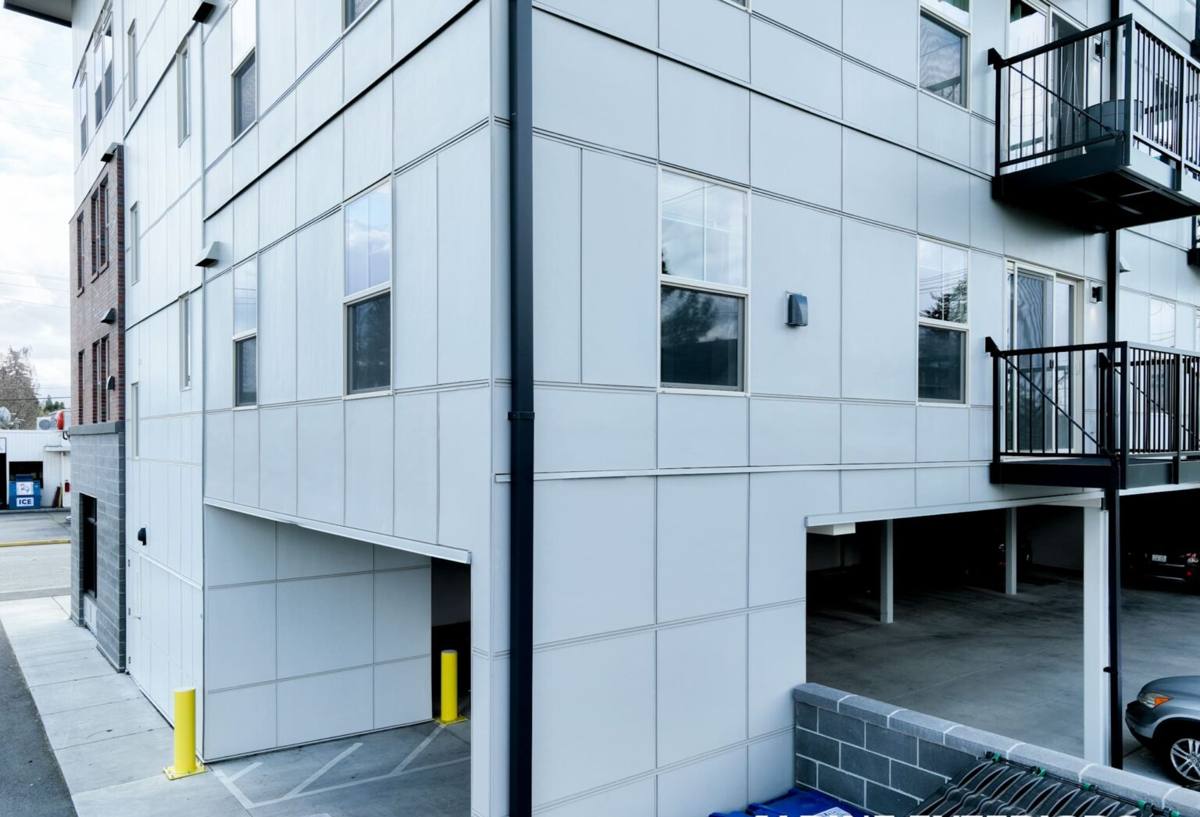
What Board & Batten Siding Actually Is
Board and batten is a vertical siding profile: wide flat panels (or boards) are installed vertically, and narrower strips called battens cover the seams between them. It's an old style — barns and early farmhouses used it long before anyone was thinking about drainage planes — but the way it's built today has changed a lot, especially for a wet coastal climate like this one. Modern board and batten isn't just boards nailed to the wall. Done correctly, it's a full wall assembly: water-resistive barrier, drainage gap, properly fastened panels, and battens installed to shed water rather than trap it.
The vertical orientation is part of the appeal but also part of the risk. Water runs down a vertical seam with real force during a hard Pacific Northwest storm, and every batten joint, corner, and fastener point is a place where that water is looking for a way in. Get the details right and it's one of the more durable, attractive profiles available. Get them wrong and it's one of the faster ways to end up with hidden rot behind the walls.
Where Board & Batten Fails Near the Water
Most board and batten problems we get called out to inspect trace back to the same handful of causes, and they show up faster in a marine climate than they would inland.
Trapped Moisture Behind the Panels
If the siding is fastened tight to the sheathing with no drainage gap, any water that gets past a seam has nowhere to go. It sits against the wall and works its way into the sheathing and framing. In a climate with as much annual rainfall as Blaine sees, that's not a rare event — it's a recurring one, month after month, for years.
Moss and Algae on Shaded Elevations
North-facing and tree-shaded walls near California Creek stay damp longer between rains, and that's exactly where moss and algae take hold on a siding surface that can't resist organic growth. Once moss establishes on battens and seams, it holds moisture against the wood or panel surface even longer, accelerating whatever damage was already starting.
Fastener Corrosion
Salt-laden air corrodes standard fasteners faster than most homeowners expect. A nail that rusts and loosens doesn't just leave a cosmetic streak — it opens a path for water and eventually lets a panel or batten work loose in wind.
Caulk as a Primary Defense
Some installations lean on caulk at every seam and joint to keep water out. Caulk is a maintenance item, not a permanent seal — it shrinks, cracks, and fails, usually years before anyone notices from the ground. A wall assembly that depends on perfect caulk forever is a wall assembly that's going to fail.
What a Correct Board & Batten Installation Requires
A Real Drainage Plane
Behind the siding, there should be a water-resistive barrier and, ideally, a rainscreen gap — a small air space created with vertical furring strips that lets any water that does get past the surface drain down and out instead of sitting against the sheathing. This one detail does more for long-term durability in a wet climate than almost anything else in the assembly.
Correct Fastening
Panels and battens need to be fastened into solid framing, with the right fastener type, spacing, and penetration depth for the product being used. Corrosion-resistant fasteners matter everywhere in Whatcom County, and they matter more the closer a home sits to open water and salt air.
Flashing at Every Transition
Windows, doors, roof lines, and any horizontal trim need proper flashing so water is directed out and away rather than behind the siding. This is invisible when it's done right, which is exactly why it's the detail that gets skipped by crews trying to save time.
Battens Set for Drainage, Not Just Looks
Batten spacing and fastening should account for water shedding down the face of the wall, not just visual rhythm. A batten installed purely for appearance, without attention to how water moves across it, becomes a dam instead of a design feature.
Why We Install James Hardie, Not Wood or Engineered Wood, for Board & Batten
Traditional wood board and batten looks great on day one. In a climate with this much rain and moss pressure, it also needs the most upkeep of any option — regular repainting, inspection for rot at the battens and base, and real vigilance about moisture. Engineered wood products have closed some of that gap but are still wood-based at the core, which means they remain sensitive to sustained moisture exposure at cut edges, seams, and fastener points — exactly the spots a marine climate stresses hardest.
We install James Hardie fiber cement for board and batten because it's a non-combustible material that doesn't swell, rot, or feed moss and algae growth the way wood-based products can. Hardie's ColorPlus factory finish is baked on and warrantied against fading and peeling, so the coating isn't something we're relying on caulk or field-applied paint to protect long-term. Hardie's HZ5 product line is engineered specifically for climates like this one — freeze-thaw cycles, sustained damp, and wind-driven rain — which matters more in a location exposed to open water than it does further inland.
| Factor | James Hardie Fiber Cement | Traditional Wood | Engineered Wood / Vinyl |
|---|---|---|---|
| Moisture tolerance | Does not rot or swell; engineered for wet climates | Vulnerable to rot, especially at seams and base | Moderate; core material still moisture-sensitive |
| Moss/algae resistance | Factory finish resists organic growth | Prone to moss on shaded, damp walls | Varies; coatings can wear over time |
| Fastener/hardware exposure | Pairs with corrosion-resistant fasteners for long life | Same corrosion risk near salt air | Same corrosion risk near salt air |
| Finish maintenance | ColorPlus finish warrantied; no regular repainting | Repainting every few years | Coating touch-up as it ages |
| Fire resistance | Non-combustible | Combustible | Combustible (varies by product) |
Our Process for a California Creek Board & Batten Project
Every project starts with an on-site look at the specific exposure of the home — how close it sits to open water, how much of the wall stays shaded, and what condition the existing siding and sheathing are in. That assessment shapes the details of the install, not just the material choice.
- Inspect and, if needed, repair the sheathing before anything new goes up — covering damaged sheathing with new siding just hides a problem that keeps growing.
- Install or verify the water-resistive barrier and set up the rainscreen gap so the wall can actually drain.
- Install James Hardie vertical panels with corrosion-resistant fasteners, spaced and penetrated to manufacturer specification.
- Set battens with attention to water shedding at every joint, not just visual spacing.
- Flash all windows, doors, and horizontal trim intersections before final battens go on.
- Finish with ColorPlus-matched trim and caulk only where it's a supplement to the flashing, never the primary defense.
- Walk the finished job with the homeowner and point out anything that needs periodic attention.
Maintaining Board & Batten Through a Marine Climate
Fiber cement cuts the maintenance burden significantly compared to wood-based siding, but no exterior in this climate is fully maintenance-free. A short annual routine keeps a correctly installed system performing the way it was built to.
- Rinse siding annually, with extra attention to shaded, moss-prone elevations
- Check caulk lines at trim and penetrations for cracking or shrinkage
- Look for any staining or discoloration at the base of battens, which can signal a drainage issue
- Keep gutters clear so overflow isn't running directly down wall sections
- Trim back vegetation that keeps a wall section shaded and damp
- Have any fastener corrosion or loose panels addressed promptly rather than left through another wet season
Why Local Installation Experience Matters Here
California Creek's exposure isn't the same as a home a few miles inland, and it isn't the same from one elevation of a house to the next. A crew that works this specific stretch of Blaine and greater Whatcom County knows which walls typically take the worst of the driving rain, which sides stay shaded long enough to grow moss fast, and how much that salt air factors into fastener and flashing choices. That local pattern recognition shows up in small decisions during installation — where to add extra flashing attention, which elevation needs the most conservative detailing — that a crew without local experience might not think to make.
If you're planning a board and batten project in California Creek, or want a straight answer on whether your current siding is holding up the way it should, we're happy to take a look. Reach out for a free, no-pressure estimate — someone can walk your property, talk through what your home's specific exposure calls for, and give you a clear picture of the work and the cost before anything is decided.