 Blaine Siding
 Cherry Point Is a Different Kind of Exposure
Cherry Point sits right up against the water on Whatcom County's northern shoreline, and that location changes what a home's siding has to deal with every single day. Homes just a few miles inland in Blaine get a milder version of the same weather. Out here, the wind carries salt spray straight off the water, the rain comes in sideways more often than it falls straight down, and the tree cover plus near-constant damp keeps moss and algae growing on north- and west-facing walls for most of the year. Siding on this stretch of coast isn't decorative — it's the only thing standing between that weather and the framing underneath.
We install James Hardie fiber cement siding exclusively, and Cherry Point is exactly the kind of environment that decision was made for. This page walks through what the local climate actually does to a wall assembly over time, what a correctly installed Hardie system looks like, and why the installation details matter more here than they do in a drier, more sheltered neighborhood.
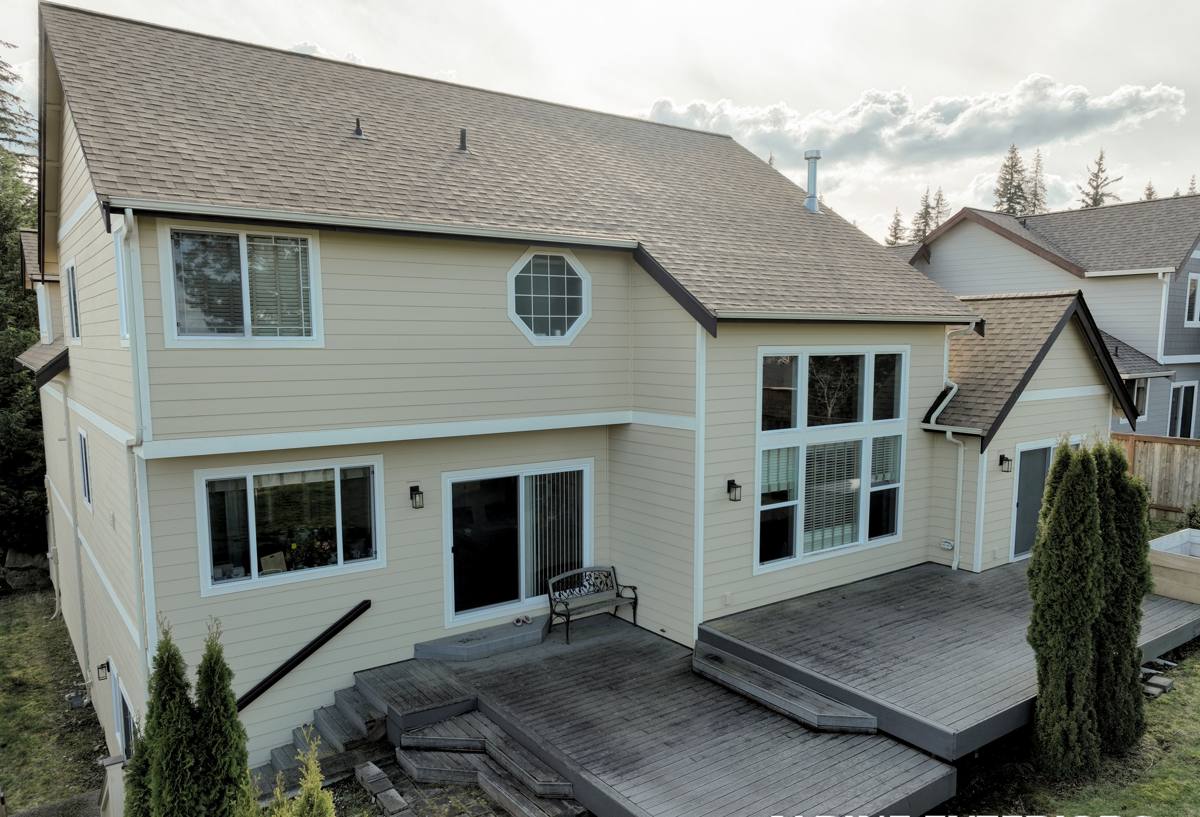
What Salt Air, Driving Rain, and Moss Season Actually Do
Salt Air
Airborne salt is corrosive to metal fasteners, flashing, and trim, and it accelerates the breakdown of paint films that aren't formulated to resist it. On a waterfront-adjacent property, salt deposits build up on exterior surfaces between rains and get worked into any hairline crack or seam in the cladding. Over years, this is a big part of why field-painted wood and some engineered wood sidings fade, chalk, and need repainting far sooner near the water than they would a few miles inland.
Driving Rain
Wind-driven rain doesn't just wet the surface of a wall — it pushes water sideways and upward into laps, seams, and penetrations that a straight-down rain would never reach. This is why the water-management details behind the siding (not just the siding material itself) determine whether a wall stays dry. A product that's water-resistant on its face but poorly installed underneath will still let moisture in on a Cherry Point-facing elevation.
Moss and Algae
Whatcom County's damp, mild winters and heavy tree cover in and around Blaine give moss and algae a long growing season — often close to year-round on shaded or north-facing walls. Moss holds moisture against a surface far longer than open air would, which is exactly the condition that causes rot in wood-based products and coating failure in poorly finished siding. A siding material's resistance to moisture absorption, and the durability of its factory finish, both matter directly here.
Why James Hardie Is the Product We Put on Cherry Point Homes
James Hardie fiber cement is cement, sand, and cellulose fiber — it doesn't absorb and swell with moisture the way wood or wood-based composite sidings can, and it isn't a food source for the moss, algae, and mildew that thrive in this climate. That doesn't mean it's maintenance-free or immune to a bad install, but it starts from a fundamentally more stable base than the alternatives.
Two specifics matter for this location:
- HZ5 engineered product: James Hardie engineers its siding to different climate zones. The HZ5 line is built for regions with the freeze-thaw cycling, moisture exposure, and coastal conditions found in the Pacific Northwest, which is the correct specification for a Whatcom County shoreline property.
- ColorPlus factory finish: a baked-on finish applied under controlled conditions, engineered to resist fading and hold up against UV and moisture exposure better than a field-applied coat. In a location where salt air already accelerates coating breakdown, starting with a factory finish rather than job-site paint is a real advantage, not a marketing point.
Fiber cement is also non-combustible, which matters everywhere but is worth mentioning as one more reason it's the standard we install rather than a matter of taste.
What a Correct Installation Involves
The siding material is only half the job. In a driving-rain environment like Cherry Point, the water-management assembly behind the siding is what actually keeps a wall dry over 20-plus years. A correct James Hardie installation here includes:
- A properly lapped weather-resistive barrier (housewrap) installed shingle-fashion so water sheds outward at every seam
- A drainage gap or rainscreen behind the siding so any water that does get past the cladding can drain and the wall can dry rather than trap moisture
- Correctly flashed and sealed penetrations at windows, doors, hose bibs, and vents — the most common failure points on any home
- Manufacturer-specified fastening (type, spacing, and depth) rather than whatever fastener happens to be on the truck
- Proper clearance between the bottom edge of the siding and grade, decks, and roof lines, so splash-back and standing water don't sit against the material
- Caulking and joint treatment matched to Hardie's own installation guidelines, not generic sealant applied wherever a gap shows up
Every one of these details is inspectable, and every one of them is where a rushed or unqualified install goes wrong. James Hardie's product warranty is also tied to installation according to their specifications — an installer who skips steps to save time can quietly void the coverage the homeowner is paying for.
Correct vs. Common Shortcuts
| Detail | Done correctly | Common shortcut we see |
|---|---|---|
| Weather-resistive barrier | Continuous, properly lapped, taped at seams | Torn, under-lapped, or stapled through without sealing |
| Rainscreen/drainage gap | Furring or drainage mat behind siding | Siding fastened flush to the barrier with no drainage path |
| Fastener placement | Per Hardie's fastening schedule for the product and exposure | Over-driven, under-driven, or spaced by guesswork |
| Flashing at openings | Integrated with the barrier, sloped to shed water outward | Caulk used in place of flashing |
| Bottom clearance | Minimum gap held above grade, decks, and roofing | Siding installed tight to grade or roof flashing |
James Hardie Options That Make Sense for This Property Type
Cherry Point has a mix of waterfront and near-waterfront homes, ranging from older houses that have already been through several rounds of siding to newer construction. James Hardie's lineup covers most of what comes up here:
- HardiePlank lap siding — the most common choice, available in several exposure widths and textures (smooth or cedar-grain)
- HardiePanel vertical siding — often used for accent sections, gables, or a more modern look
- HardieShingle — a shingle profile for homes going for a traditional Pacific Northwest coastal look without the maintenance of real cedar shingles
- HardieTrim — matching trim boards so the whole exterior envelope, not just the field siding, gets the same moisture and finish performance
ColorPlus finishes come in a range of factory colors, which matters in a salt-air environment where a homeowner doesn't want to be repainting the whole house every several years just to keep it looking presentable.
How We Approach a Cherry Point Job
1. On-Site Assessment
We look at the existing wall assembly, not just the visible siding — what's underneath, how the previous install handled water management, and what the specific exposure is for each elevation of the house (a wall facing open water or prevailing wind gets treated differently than a sheltered side).
2. Tear-Off and Substrate Check
Old siding comes off and the sheathing underneath gets inspected for hidden moisture damage before anything new goes on. Covering up a wet or compromised substrate with new siding just hides a problem instead of fixing it.
3. Water Management Rebuild
This is where most of the long-term performance is decided — housewrap, drainage plane, and flashing get installed or corrected before a single piece of Hardie siding goes up.
4. Installation to Manufacturer Spec
Fastening, clearances, and joint treatment follow James Hardie's published installation guidelines for the specific product and this climate zone, which is also what keeps the manufacturer's warranty intact.
5. Final Walkthrough
We go over the finished work with the homeowner, including what maintenance to expect given the site's specific exposure.
What It Costs and What Drives the Price
Every Cherry Point property is different — house size, number of stories, existing siding to remove, trim complexity, and site access all move the number. We don't quote a fixed price without seeing the home, but these are the factors that matter most:
| Cost factor | Why it matters here |
|---|---|
| Tear-off scope | Removing failed wood or composite siding, and repairing any rot found underneath, adds labor before new siding can go up |
| Water-management upgrades | Adding or correcting a drainage gap and flashing is worth the added cost on wind- and rain-exposed elevations |
| Product line and profile | Lap, panel, and shingle profiles carry different material costs; wider exposures typically install faster |
| Trim and detail work | Corner boards, window trim, and fascia in HardieTrim add cost but keep the whole envelope performing consistently |
| Site access | Waterfront lots with limited staging area or steep grades can add time for material handling and scaffolding |
Maintenance in a Salt-Air, High-Moss Climate
James Hardie siding is low-maintenance compared to wood or composite alternatives, but "low-maintenance" isn't "no-maintenance," especially this close to the water. A simple annual routine goes a long way:
- Rinse salt residue and general grime off the siding once or twice a year with a garden hose or low-pressure wash (avoid high-pressure washing directly at seams and joints)
- Trim back vegetation and tree cover that's keeping any wall shaded and damp longer than necessary
- Check caulking at windows, doors, and trim joints annually and re-caulk if it's cracked or pulling away
- Look at ground-level clearance after landscaping changes — mulch, soil, or new plantings can creep up and reduce the gap siding needs above grade
- Address any moss or algae growth promptly rather than letting it sit against the surface for a full season
Why Hiring a Crew That Already Works Cherry Point Matters
Siding installation isn't one-size-fits-all across Whatcom County. A crew that mainly works inland, more sheltered neighborhoods may not default to the drainage details, fastening adjustments, or flashing choices that a shoreline-adjacent property in Blaine actually needs. A crew that already works Cherry Point has seen how the salt air, wind exposure, and moss cycle here play out on real houses over time, and builds the wall assembly accordingly instead of installing the same way regardless of location. That local pattern-recognition — knowing which elevations take the worst of the weather, which older installs in this area tend to fail first, and how to size the drainage and flashing details for it — is the difference between siding that looks right on day one and siding that's still performing correctly after fifteen or twenty years of Cherry Point weather.
Get a Straight Answer for Your Home
If you're dealing with failing siding, planning ahead for a replacement, or just want an honest read on how your current siding is holding up against this stretch of coastline, we're happy to take a look. The estimate is free, there's no pressure to move forward, and you'll get a clear explanation of what we see and what we'd recommend — use the form below to get started.