 Blaine Siding
 Roofing in Cherry Point: A Different Set of Demands
Cherry Point sits right up against the Strait of Georgia in Whatcom County, and that location shapes what a roof out here actually has to survive. Homes get a steady dose of salt-laden air off the water, wind-driven rain that finds its way under poorly lapped shingles, and a wet season that stretches on long enough for moss and algae to take hold on anything that stays shaded and damp. A roof built to a generic spec sheet — the kind that works fine sixty miles inland — often struggles here within a decade. A roof built for this specific stretch of coastline holds up for decades.
When we talk about "new roof installation" for a Cherry Point property, we're not just talking about stripping old material and nailing down new. We're talking about a system: underlayment, flashing, ventilation, fastener choice, and material selection all working together to handle salt air, driving rain, and moss pressure at the same time. Get one piece wrong and the rest compensates for a while — until it doesn't.
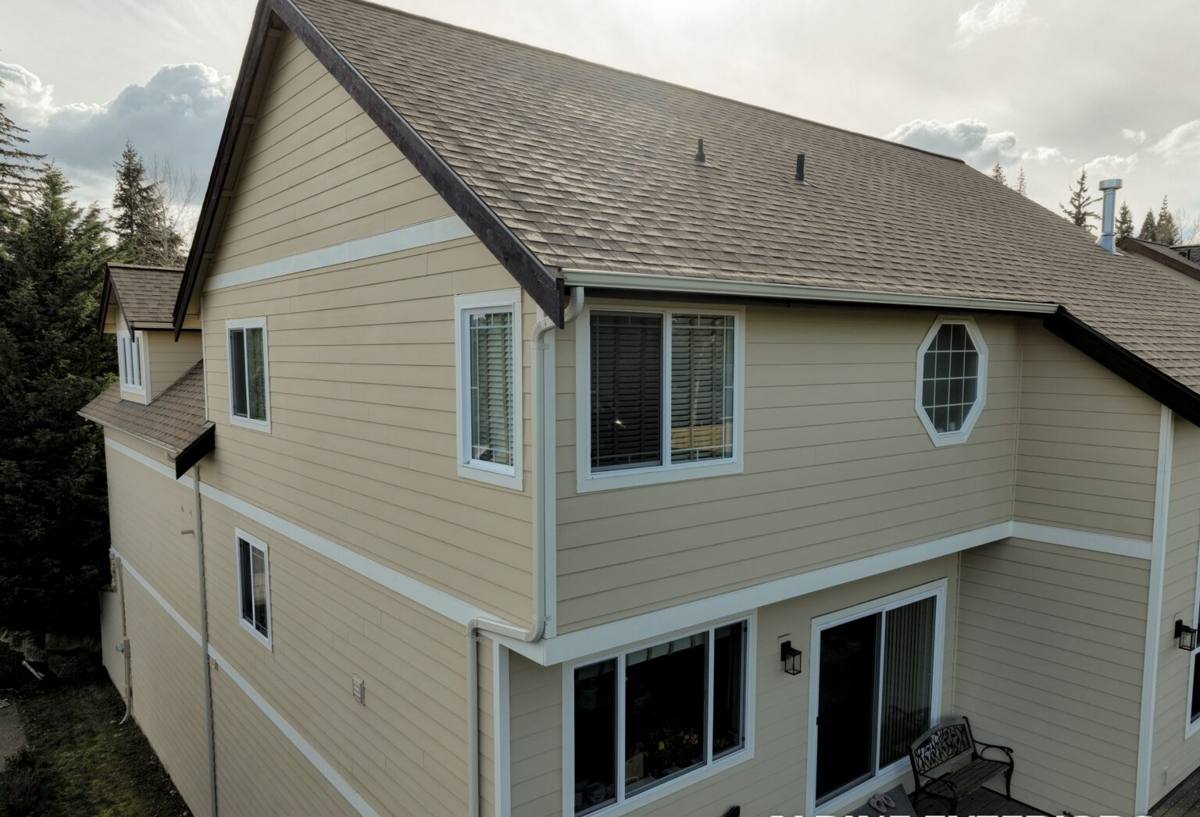
What Salt Air, Rain, and Moss Actually Do to a Roof
Salt Air
Airborne salt is corrosive to exposed metal. Nails, flashing, vent boots, and fastener heads that aren't rated for coastal exposure can start rusting years before the shingles themselves show wear. Once a fastener corrodes, it loses holding power — which is how you end up with lifted shingles in a wind event that a fresh roof would have shrugged off.
Driving Rain
Blaine's storms don't always come straight down. Wind off the water pushes rain sideways, which means water gets tested against every seam, lap, and penetration on the roof — not just the flat field of shingles. Standard nailing patterns and minimal underlayment coverage are made for vertical rain. Cherry Point roofs need wider underlayment laps, properly sealed penetrations, and flashing details that assume water will hit them from the side, not just from above.
Moss and Algae
Shaded roof sections, north-facing slopes, and areas near overhanging trees stay damp for extended stretches during our wet season. That moisture retention is what lets moss colonize shingles. Moss isn't just cosmetic — its root structures lift shingle edges and hold water directly against the roofing material, which accelerates granule loss and shortens the roof's service life significantly if left unaddressed.
What a Correct Installation Involves
A proper new roof installation in this area isn't a single product decision — it's a stack of correct decisions layered on top of each other:
- Full tear-off to bare decking so we can inspect and repair any rot or soft spots before anything new goes down
- Ice-and-water shield or high-quality synthetic underlayment at eaves, valleys, and penetrations, with wider coverage than a standard inland install
- Corrosion-resistant fasteners and flashing rated for coastal/salt-air exposure
- Properly sized and placed intake and exhaust ventilation to keep the attic dry and temperature-balanced
- Step flashing and counter-flashing at every wall intersection, chimney, and skylight — not just caulk or roof cement patched over gaps
- Drip edge at eaves and rakes to direct water away from fascia and siding
- Material selection that accounts for moss resistance, not just appearance
Skip any one of these and the roof will likely still look fine on installation day. The failures show up two, five, or ten years later — usually as leaks at a valley, rot at an eave, or a shingle field stripped of granules well ahead of schedule.
Choosing the Right Roofing Material for Cherry Point
There's no single "best" roofing material for every home — it depends on budget, roof pitch, and how much maintenance a homeowner wants to take on. Here's how the common options stack up against this area's specific conditions:
| Material | Salt Air Resistance | Moss Resistance | Typical Lifespan Here | Maintenance |
|---|---|---|---|---|
| Architectural asphalt shingle | Good, with coastal-rated fasteners | Moderate — better with zinc/copper strips | 20–30 years | Periodic moss treatment recommended |
| Algae-resistant (AR) shingle | Good | Improved over standard shingle | 25–30 years | Lower, but not maintenance-free |
| Standing seam metal | Excellent with proper coating/fasteners | Very good — moss struggles to root | 40–50+ years | Low |
| Composite/synthetic shake | Good | Moderate to good | 30–40 years | Moderate |
We don't push one material as universally "the answer." A steep, shaded, north-facing roof close to the water is a very different job than a sun-exposed south slope a half-mile inland — and we'll walk you through the honest trade-offs for your specific roof rather than defaulting to whatever's easiest to install.
Our Installation Process
1. On-Site Assessment
We inspect the existing roof, decking, ventilation, and any problem areas — valleys, chimneys, skylights, wall intersections — before quoting anything. This is where we catch soft decking or existing moisture damage that needs to be addressed as part of the job, not discovered mid-install.
2. Material and Ventilation Plan
We walk through material options against your budget, the roof's exposure, and how much upkeep you want going forward, then confirm intake/exhaust ventilation is adequate — undersized or blocked ventilation is one of the most common causes of premature roof failure in this climate, since trapped moisture attacks the decking from underneath.
3. Tear-Off and Deck Repair
Old material comes off down to the deck. Any rotted, delaminated, or soft sheathing gets replaced — not covered over. This step matters more here than in drier regions, since a deck compromised by years of moisture won't hold fasteners properly no matter how good the shingles on top are.
4. Underlayment and Flashing
This is where wind-driven rain resistance actually gets built in — proper laps, sealed penetrations, and flashing at every transition point.
5. Roofing Material Installation
Installed to manufacturer specification with coastal-rated fasteners, correct exposure, and nailing patterns suited to our wind conditions.
6. Final Inspection and Cleanup
We walk the finished roof, check all flashing and penetrations, and clear the site of debris and stray fasteners before calling the job done.
Ventilation: The Part Homeowners Rarely See
A roof that looks great from the ground can still be failing from the inside if the attic isn't ventilated correctly. In a climate with as much sustained moisture as Whatcom County's coastline, trapped humid air in an attic condenses on the underside of the decking, which leads to rot, mold, and reduced insulation performance — all invisible until the damage has spread. Balanced intake (usually at the eaves) and exhaust (ridge or roof vents) keeps air moving and moisture out. It's not an optional upgrade; it's part of a correct installation.
Living With Moss: What Homeowners Can Do Between Services
Even a well-installed, moss-resistant roof benefits from basic upkeep in a region where moss season runs long:
- Keep overhanging branches trimmed back to reduce shade and debris buildup on the roof
- Clear gutters and valleys of leaves and needles so water doesn't pool against the roofing material
- Have visible moss growth treated before it spreads, rather than waiting for a full re-treatment
- Watch for granule buildup in gutters, which signals accelerated shingle wear
- Schedule a periodic roof check, especially after major windstorms off the water
Signs a Cherry Point Home May Need a New Roof
- Shingles that are curling, cracking, or missing granules across large sections
- Moss or algae staining that returns quickly after cleaning
- Daylight visible through the roof deck from inside the attic
- Soft or spongy spots when walking the roof
- Rusted or lifted flashing around chimneys, vents, or skylights
- Interior water stains on ceilings, especially near valleys or wall intersections
- A roof approaching or past 20–25 years old, particularly one without coastal-rated materials
Why Local Experience on Cherry Point Roofs Matters
A roofing crew that only occasionally works this stretch of coastline learns its lessons on your house. A crew that regularly works Cherry Point and the surrounding Blaine area already knows which valleys collect the most wind-driven rain, which orientations hold moss longest, and which flashing details actually hold up against salt air over time — because they've seen the roofs that failed without them and the ones that didn't. That's the difference between a roof installed to a general specification and one installed for this specific piece of Whatcom County shoreline.
We service this area regularly, which means our material recommendations, fastener choices, and ventilation plans are based on what actually performs here — not on assumptions carried over from a drier, calmer climate.
Get an Honest Look at Your Roof
If your roof is showing its age, holding onto moss it shouldn't, or you're just planning ahead, we're happy to take a look and give you a straight assessment — no pressure, no upsell. Fill out the form below to schedule a free estimate for your Cherry Point home.