 Blaine Siding
 Cherry Point's Exposure Is Different From a Typical Whatcom County Lot
Homes out toward Cherry Point sit closer to open water and unbroken wind than most of Blaine's residential streets. That means more direct salt air moving inland, more wind-driven rain hitting walls at an angle instead of falling straight down, and a longer stretch of the year where siding simply doesn't get a chance to fully dry out. None of that is unique to any one house out here — it's the baseline every property in this corner of Whatcom County is working against, whether it's a newer build or something that's been standing for decades.
Siding replacement in this area isn't just a cosmetic project. Done right, it's a chance to correct whatever the original installation got wrong and put a system on the walls that's actually built for salt exposure, sustained moisture, and moss growth. Done wrong — or done with the wrong material — it's a problem you'll be dealing with again well before you should have to.
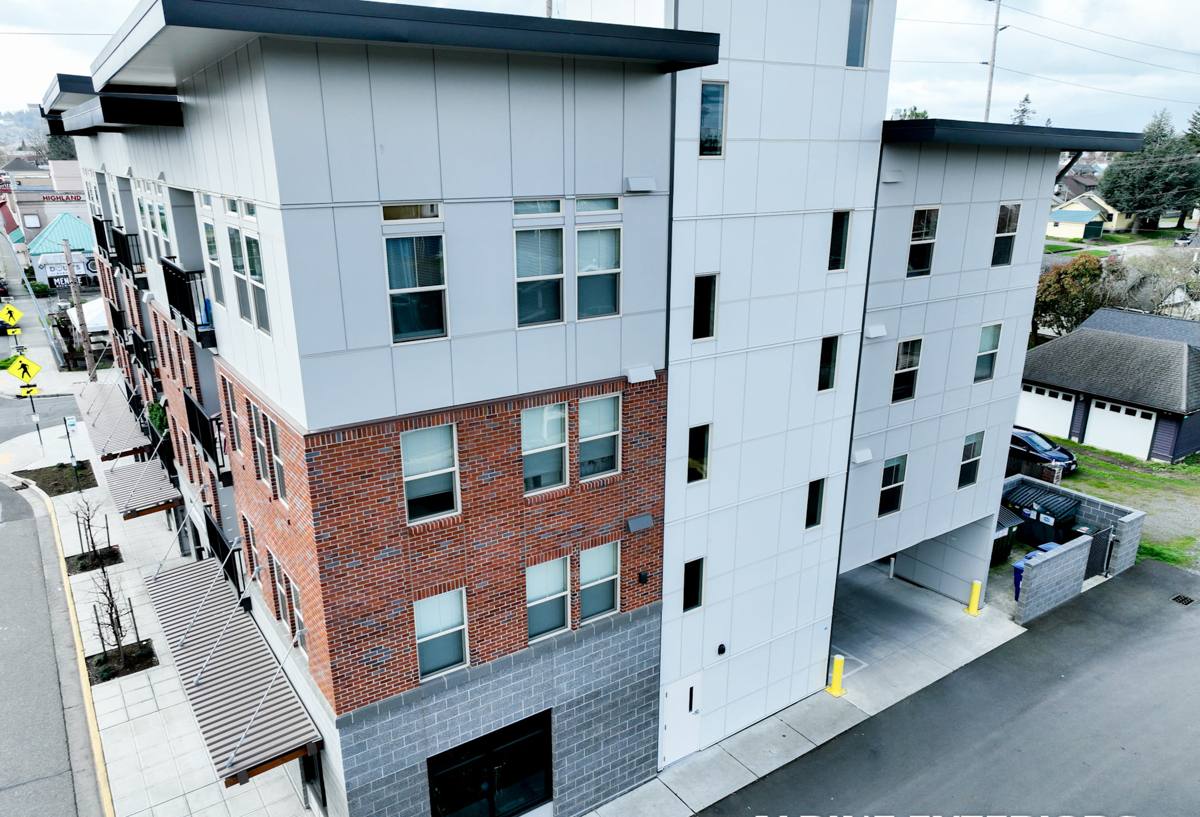
What Salt Air, Driving Rain, and Moss Season Actually Do to Siding
Salt Air
Airborne salt is corrosive to exposed metal fasteners, flashing, and trim, and it accelerates the breakdown of finishes that aren't rated to handle it. Over years, siding facing the water side of a property will show fading, chalking, or coating failure faster than siding on the sheltered side of the same house — a clear sign of how much the exposure itself matters.
Wind-Driven Rain
When rain hits siding at an angle instead of falling straight down, it gets forced into laps, seams, and any gap around windows, doors, or penetrations. A siding system that relies on caulk and paint alone to keep water out — rather than proper flashing, lap geometry, and a drainage plane behind it — will eventually let moisture behind the cladding. Once that happens, the sheathing and framing underneath are at risk, and that's a far more expensive repair than the siding itself.
Moss Season
Whatcom County's wet season runs long, and shaded, north-facing, or tree-covered walls stay damp for extended stretches. Moss and algae take hold on any surface that holds moisture at the surface, and on some siding materials that constant dampness also feeds rot at the substrate level, not just surface staining.
Signs a Cherry Point Home Actually Needs Replacement — Not Just Repair
Not every issue means a full tear-off. But these are the signs that point to replacement rather than a patch:
- Soft or spongy spots when you press on the siding, especially near the bottom courses or below windows
- Visible bowing, buckling, or panels that have pulled away from the wall
- Paint that's failing in patches rather than fading uniformly — often a sign of moisture pushing through from behind
- Persistent moss or algae growth that comes back within a season of cleaning
- Gaps opening up at seams, corners, or trim that weren't there when the siding was newer
- Visible rot, delamination, or crumbling at cut edges or panel joints
- A musty smell or damp drywall on interior walls that back up to exterior siding
If you're seeing more than one of these, it's worth having someone look at the wall assembly, not just the surface.
Why We Only Install James Hardie Fiber Cement Out Here
We standardized on James Hardie fiber cement siding for every job we take on, including every siding replacement in the Cherry Point area, and the reasoning is straightforward. Fiber cement doesn't absorb moisture the way wood-based products can, so it doesn't swell, rot, or feed the kind of sustained dampness that drives moss and algae growth. It's also non-combustible, which matters on a property that may be more exposed to brush or grass fires depending on its surroundings.
James Hardie's ColorPlus factory-applied finish is baked on under controlled conditions rather than field-painted, and it's formulated to hold color and resist fading better than site-applied paint — a meaningful difference on a wall that's taking direct salt air and sun for years at a stretch. Hardie also builds region-specific HZ5 product lines engineered for exactly the freeze-thaw and moisture cycling the Pacific Northwest sees, and backs installations with a strong transferable warranty when the job is done to their specification.
We don't install LP SmartSide, vinyl, Cemplank, Allura, primed spruce, or cedar. Each of those has legitimate uses elsewhere, but for the moisture load and salt exposure this stretch of coastline deals with, we won't put our name on an installation we don't believe will hold up. Hardie fiber cement is the one system we've found earns its keep here over the long run.
How Hardie Compares to What We Won't Install
| Material | Moisture Behavior | Salt Air Durability | Long-Term Maintenance |
|---|---|---|---|
| James Hardie fiber cement | Does not absorb/swell; engineered HZ5 line for wet climates | Factory ColorPlus finish resists fading and chalking | Occasional wash; repaint interval much longer than wood-based products |
| Cedar / primed spruce | Absorbs moisture; prone to swelling, cupping, rot at end grain | Finish breaks down faster under salt and UV exposure | Regular re-staining/painting; ongoing rot inspection |
| Vinyl | Doesn't rot but can trap moisture behind it if installed poorly | Can become brittle and fade faster under coastal UV | Low upkeep but limited repair options once damaged |
| LP SmartSide / other wood-strand products | Engineered to resist moisture better than raw wood, but edges remain a vulnerable point | Moderate; finish maintenance still required over time | Periodic caulking/painting maintenance to protect edges |
What a Correct Siding Replacement Involves
The siding itself is only part of the job. What's underneath it determines whether the new siding actually performs for the next few decades.
Tear-Off and Inspection
We remove the existing siding and inspect the sheathing and framing underneath for rot, soft spots, or prior water damage — especially common on walls that have been dealing with wind-driven rain for years. Any damaged sheathing gets replaced before anything new goes up; covering up a compromised wall with new siding just hides the problem.
Weather-Resistive Barrier
A proper drainage plane and weather-resistive barrier go on before the siding, giving any moisture that does get past the cladding a path to drain out rather than sit against the wall.
Flashing at Every Penetration
Windows, doors, vents, and any other penetration get flashed correctly — this is where wind-driven rain finds its way in on a poorly built wall, and it's the detail that separates a durable installation from one that fails early.
Fastening and Lap Schedule
James Hardie panels and lap siding have specific fastening patterns and minimum lap requirements to meet their engineering and warranty terms. Corrosion-resistant fasteners matter here in particular, given the salt exposure.
Finish and Trim
ColorPlus pre-finished siding needs touch-up product matched to the factory finish at cut edges, and trim details need to shed water rather than collect it at joints and corners.
How We Approach a Cherry Point Job
Every property's exposure is a little different depending on how close it sits to open water, how much tree cover it has, and which direction its walls face. Our process starts with actually looking at those conditions rather than treating every house the same:
- On-site assessment of the current siding, sheathing condition, and moisture history
- Identifying which walls take the most wind-driven rain and salt exposure, and planning flashing and drainage details accordingly
- Full tear-off with sheathing repair where needed, not just covering over existing damage
- Installation of weather-resistive barrier, flashing, and James Hardie siding to manufacturer spec
- Final walkthrough covering trim, touch-up, and maintenance expectations specific to this climate
Cost Factors for a Siding Replacement in This Area
Every job is priced on its specifics, but the same handful of factors tend to drive cost up or down on Cherry Point properties:
| Factor | Why It Matters Here |
|---|---|
| Sheathing condition | Wind-driven rain and long-term moisture exposure make hidden rot more common; repair adds cost but is not optional |
| Wall exposure/orientation | Walls facing open water or prevailing wind need more attention to flashing and drainage detail |
| Siding profile and finish | Lap width, texture, and ColorPlus color selection affect material cost |
| Trim and detail work | Homes with more window/door penetrations and architectural trim take more labor to flash correctly |
| Access and site conditions | Tree cover, slope, and distance from the road can affect setup and labor time |
Why Hiring a Crew That Already Works This Area Matters
A contractor who only occasionally works past Blaine's core neighborhoods may not have a feel for how differently the weather behaves once you're closer to open water. Wind loads, salt exposure, and moss patterns out toward Cherry Point aren't the same as a sheltered inland lot a few miles away, and a crew that's used to that difference builds for it by default — heavier attention to flashing on the exposed walls, corrosion-resistant fasteners as a given, and no surprises when it comes to permitting or local code expectations for Whatcom County.
That local familiarity isn't a marketing line — it shows up in the details that don't get noticed until they fail: the flashing behind a window, the fastener that shouldn't have corroded in five years, the wall that was supposed to dry out and didn't.
Get a Straight Answer on Your Siding
If your Cherry Point home is showing moss that keeps coming back, paint that's failing in patches, or siding that's simply reaching the end of its useful life, it's worth having someone take an honest look before winter's wet season sets in again. We'll walk the property, tell you what we actually see, and put together a free, no-pressure estimate for a James Hardie siding replacement built for this stretch of coastline — no obligation either way.