 Blaine Siding
 Roofing a Custer Home Is Not the Same as Roofing Inland
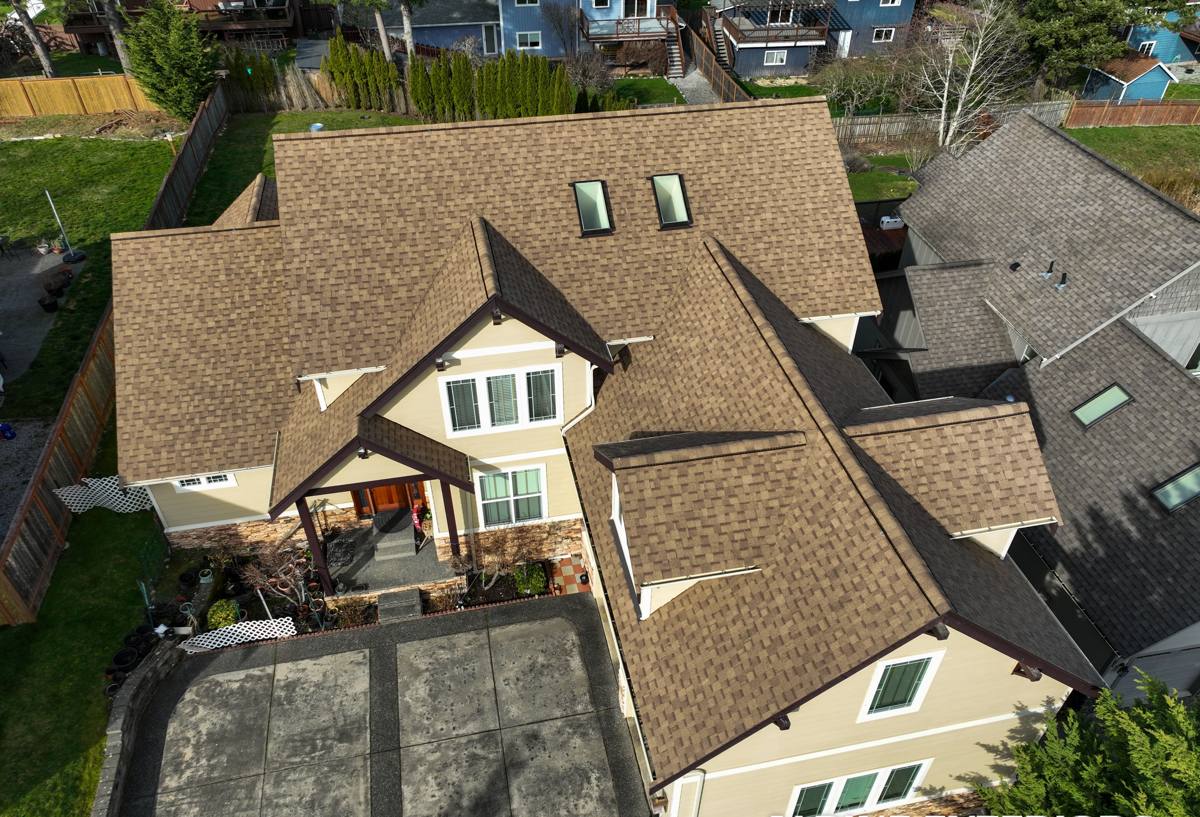
Custer sits close enough to the water and the open exposure north of Bellingham that its roofs take a different beating than a roof twenty miles inland. Between the salt-laden air coming off the Strait, the driving rain that arrives sideways during winter storms, and a moss season that can run eight months out of the year in shaded, tree-covered lots, an asphalt shingle roof here has to do more work than the same roof would in a drier, more sheltered part of Whatcom County. We've roofed enough homes in and around Custer and greater Blaine to know which details matter and which corners get cut on jobs done by crews who don't work this specific stretch of coastline regularly.
This page is about one job done right in one area: asphalt shingle roofing on Custer homes. Not a general overview of every roofing material on the market — just what actually holds up here, what a correct installation looks like, and how we run the job from first call to final walk-through.
What Custer's Climate Actually Does to a Shingle Roof
Salt Air and Fastener Corrosion
Homes closer to Drayton Harbor and the Strait of Georgia sit in a light but constant salt-air environment. It's not the same intensity as a beachfront property, but it's enough over 15-20 years to accelerate corrosion on exposed metal — nails, flashing, vent stacks, and gutter hardware. A roof that would hold up fine with standard fasteners inland can develop rust streaks and early fastener failure here if the wrong hardware gets used.
Driving Rain and Wind-Driven Water
Winter storms coming off the water don't just drop rain straight down — they push it sideways under shingle tabs, around chimney flashing, and into any gap in the underlayment. A roof built to a bare-minimum code standard for a calmer climate often leaks first at these wind-driven pressure points, not in the open field of the roof.
Moss and Sustained Moisture
Custer's tree cover and the region's long wet season create ideal conditions for moss and algae growth on north-facing slopes and anywhere shade keeps a roof from drying out between rains. Left unchecked, moss lifts shingle edges, holds moisture against the roof deck, and shortens the life of even a good shingle by years. This is one of the most common reasons we get called out to homes that are otherwise only 10-12 years into a 25-30 year shingle's expected life.
What a Correct Asphalt Shingle Job Looks Like Here
A shingle roof is a system, not a single product. In Custer's conditions, every layer of that system needs to be chosen and installed with the salt air, wind-driven rain, and moss exposure in mind.
- Deck inspection and repair — any soft, delaminated, or water-stained sheathing gets replaced before a single shingle goes down. Roofing over a compromised deck just hides the problem.
- Ice-and-water shield at vulnerable zones — valleys, eaves, and around penetrations get a self-adhering waterproof membrane, not just felt, because these are exactly the spots wind-driven rain finds first.
- Synthetic underlayment across the field — more resistant to prolonged moisture exposure than old-style felt, which matters when a roof stays damp for days at a time during a wet stretch.
- Corrosion-resistant fasteners and flashing — given the salt air, we don't treat standard galvanized hardware as automatically good enough on every application; where it matters, we step up the fastener and flashing spec.
- Proper ventilation — balanced intake and exhaust venting keeps the underside of the deck dry and helps shingles cure and perform as designed, which also reduces the moss-friendly conditions that come from a roof that never fully dries.
- Manufacturer-spec nailing and exposure — high nailing or the wrong exposure is one of the most common causes of premature shingle failure in high-wind, high-rain areas, and it's invisible until the roof starts leaking.
Choosing the Right Shingle for a Custer Roof
Not every asphalt shingle line is built the same way, and the differences matter more here than in a mild inland climate. We look at algae resistance, wind rating, and the manufacturer's actual warranty structure — not just the marketing name — when we spec a shingle for a home this close to the water.
| Factor | Why It Matters in Custer | What We Look For |
|---|---|---|
| Algae/moss resistance | Long wet season, tree cover, shaded north slopes | Shingles with copper- or zinc-based granule treatment built in |
| Wind rating | Open exposure and storm-driven gusts off the water | Ratings that meet or exceed local wind exposure, properly installed to qualify |
| Fastener compatibility | Salt air accelerates standard hardware corrosion | Corrosion-resistant nails and flashing matched to the shingle warranty terms |
| Warranty structure | Manufacturer warranties often require specific underlayment/ventilation | Full system installs that keep the warranty valid, not just the shingle itself |
| Color/granule durability | UV and salt exposure can fade cheaper granules faster | Mid-to-upper tier lines with better granule adhesion |
We don't push the most expensive shingle on every job — plenty of Custer homes do fine with a solid mid-tier architectural shingle when the rest of the system (underlayment, ventilation, flashing) is done right. Where we do recommend spending more is on algae resistance and wind rating, because those two factors are the ones this specific location punishes hardest.
Our Process, Start to Finish
1. On-Site Inspection
We walk the roof, check the attic or crawlspace for ventilation and moisture signs, and look specifically at north-facing slopes and valleys for moss buildup and early wear. We'll tell you honestly if a repair makes more sense than a full replacement.
2. Written Estimate
You get a clear scope of work — deck repair allowance, underlayment type, shingle line, flashing spec, ventilation plan — so there's no guessing what's included. No pressure to sign on the spot.
3. Material Delivery and Site Protection
We protect landscaping, gutters, and siding before tear-off starts. Given how much wind and rain this area sees, we also plan the job around weather windows rather than pushing through a job in the middle of a storm system.
4. Tear-Off and Deck Assessment
Old roofing comes off down to the deck so we can actually see what we're working with. Any rot or soft sheathing gets flagged and repaired before moving forward.
5. Installation
Ice-and-water shield at vulnerable zones, synthetic underlayment across the field, proper flashing at all penetrations and transitions, shingles installed to manufacturer nailing and exposure specs, and ventilation balanced across intake and exhaust.
6. Final Walk-Through
We walk the finished roof with you, confirm gutters and downspouts are clear and functioning, and go over basic maintenance — including how to spot early moss growth before it becomes a bigger problem.
Why a Crew That Already Works Custer Matters
Roofing crews who mostly work drier, more sheltered parts of the region sometimes spec their jobs to a general Pacific Northwest standard rather than the sharper edge cases Custer and the rest of Blaine's coastal exposure create. That shows up later as fastener rust, moss coming back within a couple of years, or leaks at valleys and flashing points that a more climate-specific install would have prevented.
Working this area regularly also means we already know which north-facing, tree-shaded lots need extra attention to ventilation and moss prevention, and which properties are exposed enough to the open water side that wind rating and flashing detail deserve more weight in the spec. That's not something you learn from a spec sheet — it's from doing the work here repeatedly and following up on what held up and what didn't.
Signs a Custer Roof Needs Attention Soon
- Visible moss or dark streaking on north-facing slopes
- Granules collecting in gutters or at downspout outlets
- Curling, cupping, or lifted shingle edges, especially near eaves and valleys
- Rust staining around nail heads, vent stacks, or flashing
- Daylight visible through the roof deck from inside the attic
- Soft spots underfoot during an inspection walk
- Interior ceiling stains after a heavy wind-driven rain event
Repair vs. Full Replacement
Not every roofing call in Custer ends in a full tear-off. A roof with isolated storm damage, a failed section of flashing, or moss damage limited to one slope can often be repaired if the rest of the roof still has useful life left and the deck underneath is sound. We'll always give you that option when it's honestly the better value, rather than defaulting to a full replacement quote. The deciding factors are usually the age of the existing roof, how widespread the moss or wear damage is, and whether the underlying deck has already taken on moisture damage.
Maintenance That Actually Extends Roof Life Here
Because of the moss season specific to this part of Whatcom County, a Custer roof benefits from a different maintenance rhythm than a roof in a drier climate. Keeping gutters clear so water doesn't back up under the shingle edge, periodically clearing overhanging branches to reduce shade and debris buildup, and addressing moss growth early — before it lifts shingles — all add real years to a roof's service life. A roof that's otherwise well-installed can still underperform its warranty if moss and moisture are left to work on it unchecked for years at a time.
Get a Straightforward, No-Pressure Estimate
If you're dealing with moss buildup, a storm-damaged section, or a roof that's simply reaching the end of its service life, we're happy to come take a look and give you an honest read on whether repair or replacement makes sense for your Custer home. Fill out the form below for a free estimate — no pressure, no obligation.