 Blaine Siding
 Dakota Creek's Climate Is Hard on Siding
Dakota Creek sits close enough to the water and to the open weather rolling in off Semiahmoo Bay and the Strait of Georgia that siding here works harder than siding almost anywhere else in Whatcom County. Homes in this pocket deal with a combination most siding products were never engineered for: salt-laden air, wind-driven rain that hits walls sideways instead of falling straight down, and a moss season that can stretch for months on shaded and north-facing walls. Any one of those on its own is manageable. Together, over years, they expose weak points in cheap materials and sloppy installation fast.
This page is about one thing: installing James Hardie fiber cement siding correctly on Dakota Creek homes, and what "correctly" actually means once you factor in the local climate.
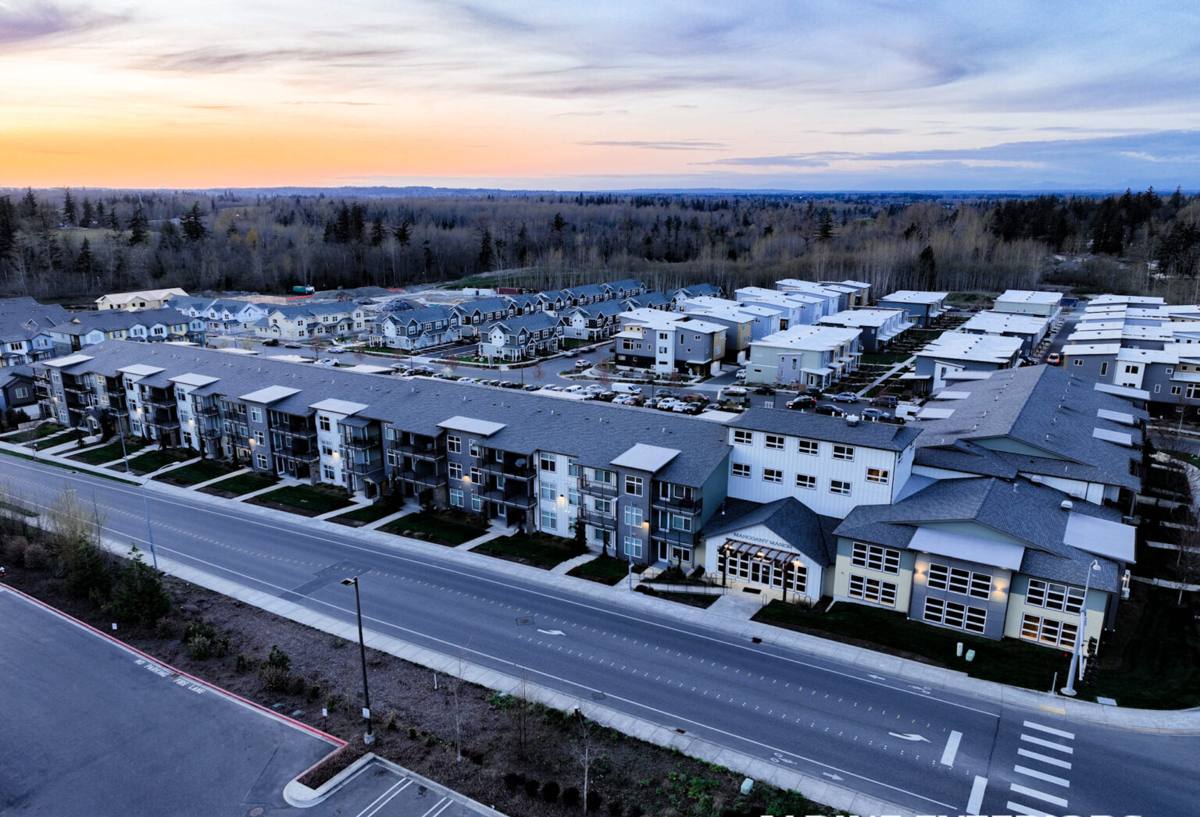
What Salt Air, Driving Rain, and Moss Actually Do
Salt Air
Airborne salt doesn't just affect homes right on the waterfront — it travels on wind and settles on siding, trim, and especially fasteners well inland from the shoreline. Over time it accelerates corrosion in anything that isn't rated for it: cheap nails, unprotected metal flashing, and staples used where proper fasteners should have gone. It also breaks down surface coatings that weren't formulated to resist it, leading to chalking, fading, and premature paint failure on painted wood and lower-grade composite products.
Driving Rain
Blaine's storms rarely arrive as a gentle straight-down rain. Wind pushes water sideways and upward into laps, seams, and trim joints — the exact places where a siding installation either sheds water or lets it in. A system that's watertight in a calm-weather climate can still leak here if the lap exposure, flashing, and caulking details weren't built for wind-driven rain specifically.
Moss and Organic Growth
Shaded walls, tree cover, and near-constant fall-through-spring moisture give moss, algae, and mildew a long runway to establish themselves on siding surfaces. Wood-based and some composite sidings absorb enough moisture to feed that growth from the inside, not just the surface, which is where rot problems usually start. A siding material's real test in Dakota Creek isn't how it looks on a dry August afternoon — it's how it holds up through eight or nine months of damp shade.
Why We Install James Hardie and Nothing Else
We standardized this company on James Hardie fiber cement siding and don't install vinyl, LP SmartSide, or wood products, even when a homeowner asks for them. That's not a marketing position — it's a decision based on what actually performs in this exact climate over decades, not just years.
Hardie's fiber cement composition doesn't feed mold or moss the way wood-based sidings can, it doesn't warp or buckle under sun and moisture cycling the way vinyl can, and it's non-combustible, which matters more each year as wildfire smoke and ember exposure become a bigger part of Pacific Northwest summers. The ColorPlus factory finish is baked on under controlled conditions rather than field-applied, which means better adhesion and more consistent coverage than a coat of paint rolled onto a jobsite — a real advantage in a climate that's tough on any finish. Hardie also builds a version of its siding specifically for climates like ours: an HZ5 formulation engineered for regions that see repeated moisture exposure and freeze-thaw cycling, rather than a one-size-fits-all product sold everywhere in the country.
We'd rather install one product extremely well than offer five products and get good at none of them. On a Dakota Creek home, that focus is what keeps a siding job from becoming a callback five years later.
What Correct Installation Looks Like Here
Water Management Behind the Siding
Correct Hardie installation starts before a single board goes up. A weather-resistant barrier and properly integrated flashing at every window, door, and penetration matter more in Dakota Creek than in a drier inland climate, because any gap in that barrier is an invitation for wind-driven rain to find its way behind the cladding. Siding is the outer layer of a water management system, not the whole system.
Fastening for Salt Air
We use fasteners rated for the exposure this area sees, placed and spaced according to James Hardie's published installation requirements — not shortcuts that save time on the fastener count but leave boards loose or prone to fastener corrosion down the line.
Clearances and Gaps
Hardie's manufacturer specifications call for specific clearances from grade, roof lines, decks, and other siding terminations, along with gaps at butt joints that get properly caulked or covered. Skipping these details is one of the most common ways fiber cement siding fails early — not because of the material, but because of the installation.
Trim and Flashing Details
Every outside corner, window head, and horizontal trim piece is a place where wind-driven rain tries to get behind the siding. Correct flashing and trim integration at these points is what separates a system that sheds Dakota Creek's storms for decades from one that starts showing water damage in five years.
Hardie HZ5 vs. Other Siding Options in This Climate
| Factor | James Hardie HZ5 Fiber Cement | Vinyl | Untreated or Primed Wood |
|---|---|---|---|
| Salt air / coastal exposure | Engineered for moisture and freeze-thaw regions; factory finish holds up well | Can become brittle and discolor faster near salt air over time | Finish breaks down faster; needs more frequent recoating |
| Wind-driven rain | Rigid, dimensionally stable when installed to spec with proper flashing | Can warp or gap at seams, creating water entry points | Absorbs moisture at joints and end grain if not sealed and maintained |
| Moss / organic growth | Doesn't feed mold or moss; surface can be cleaned without damaging the material | Doesn't feed growth but can trap moisture behind panels if installed poorly | Absorbs moisture, which can accelerate rot under moss and algae growth |
| Fire resistance | Non-combustible | Melts and can contribute fuel in fire exposure | Combustible |
| Finish longevity | Factory-applied ColorPlus finish, backed by its own warranty | Color is baked into the material but can fade and chalk over time | Field-applied paint or stain, shortest recoat cycle of the three |
Our Process From First Look to Final Walkthrough
Every Dakota Creek project follows the same sequence, because skipping steps is where problems start:
- On-site assessment — we look at existing siding, moisture damage, trim condition, and how the specific exposure of your home (shade, wind direction, proximity to the water) should shape the installation plan.
- Scope and product selection — we walk through the Hardie profile, plank width, and ColorPlus color that fit the home, and explain exactly what the installation will involve.
- Prep and water management — removal of old material, repair of any water damage found underneath, and installation of the weather-resistant barrier and flashing system before any siding goes up.
- Installation to manufacturer spec — fastening, clearances, gaps, and trim details installed according to James Hardie's published requirements for this climate zone, not generic shortcuts.
- Final walkthrough — we go over the finished job with you, point out the water management details you can't see once everything's buttoned up, and answer questions before we consider the job done.
Hiring a Crew for Dakota Creek: What to Check
Fiber cement siding is only as good as the crew installing it. Before hiring anyone for a Dakota Creek project, it's worth checking:
- Do they install Hardie to the manufacturer's published specifications, or their own shortcuts?
- Can they explain how they handle flashing and water management at windows, doors, and trim — not just how the siding looks once it's up?
- Do they use fasteners and hardware rated for salt air exposure, not generic materials?
- Have they worked in this specific area before and dealt with the wind-driven rain and moss conditions firsthand?
- Are they James Hardie certified or trained, and can they speak to the warranty terms in detail?
- Will they put the scope of work, product line, and color in writing before starting?
Living With Hardie Siding in Dakota Creek
Correctly installed Hardie siding is low-maintenance, not no-maintenance. In a moss-prone, salt-air climate, an occasional gentle rinse of shaded and north-facing walls keeps organic growth from building up, and a yearly walk-around to check caulking at trim joints and penetrations catches small issues before they become water intrusion problems. Because the ColorPlus finish is factory-applied, you're not signing up for a repaint cycle every few years the way you would with field-painted wood — but keeping gutters clear and vegetation trimmed back from walls still matters here more than in a drier climate, simply because Dakota Creek gives moisture and moss so many more months a year to work with.
If you're weighing a siding replacement or repair on a Dakota Creek home, we're glad to take a look and walk you through what your specific home needs — no pressure, no obligation. Reach out using the form below for a free estimate.