 Blaine Siding
 Building Decks That Actually Hold Up in Everson
Everson sits inland along the Nooksack River, tucked into the wooded, low-lying terrain that makes up so much of Whatcom County. That location has upsides — mature trees, quieter lots, good soil — but it also means decks here deal with a specific combination of stresses: long stretches of driving rain, heavy shade from tree cover that keeps wood damp for days at a time, and a moss season that can run from October through May in a wet year. A deck built the way it would be built in a drier climate simply doesn't last as long here. We've built and repaired enough decks in this part of the county to know exactly which details matter and which corners get cut on jobs that fail early.
This page is about deck building specifically for Everson properties — what the climate demands, what a correctly built deck actually involves, and how we handle the job from first visit to final walkthrough.
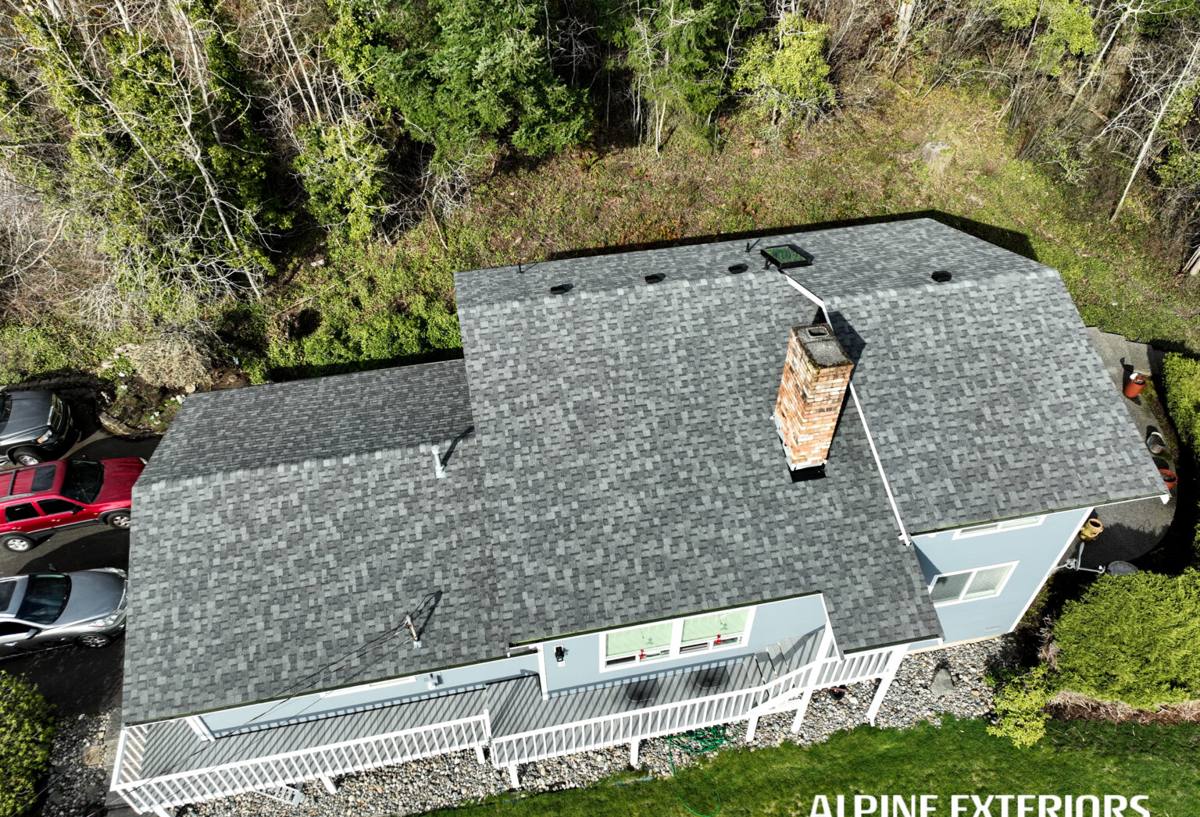
What the Local Climate Does to a Deck Over Time
Moisture That Doesn't Dry Out Fast
Whatcom County's marine-influenced climate keeps humidity high most of the year, and low-lying, tree-shaded lots around Everson trap that moisture even longer than open lots do. Wood surfaces that stay damp for extended periods are exactly what moss, algae, and soft rot need to take hold. On a deck, that shows up first as green film on north-facing boards and shaded stair treads, then as soft or spongy spots where water has been sitting against end grain or under debris.
Driving Rain and Water Intrusion
Rain here doesn't just fall straight down — wind-driven rain gets pushed sideways into ledger boards, stair stringers, and any gap where flashing was skipped. Over a few wet seasons, water that gets behind a ledger board or into an unsealed post base does damage that's invisible until the structure underneath is already compromised.
Freeze-Thaw at the Footings
Everson gets cold snaps that freeze the ground, followed by thaws that saturate it again. Footings that aren't set below frost depth, or posts that sit in poorly drained soil, can shift slightly year over year — enough to throw a deck out of level or crack a concrete pier over time.
What a Correctly Built Deck Involves
None of this is exotic — it's just doing the unglamorous parts right instead of skipping them to save time.
- Ledger flashing installed as a proper layered system (flashing, not just caulk) where the deck attaches to the house
- Joist tape over every joist top to keep water from soaking into end grain and fastener holes
- Corrosion-resistant fasteners rated for ground contact and coastal-influenced humidity, not standard interior-grade hardware
- Footings set to local frost depth, on undisturbed or properly compacted soil
- Board spacing calculated for the specific decking material's expansion, not a generic gap
- Airflow underneath the deck so moisture has somewhere to go instead of sitting under the structure
Skip any one of these and the deck can still look fine for a year or two. The failures show up later, usually as soft framing or a ledger board that's rotted from the inside out — the kind of problem that costs far more to fix than it would have to build correctly the first time.
Choosing a Decking Material for an Everson Property
There's no single right answer here — it depends on how much upkeep you want to do and what budget you're working with. What matters is understanding the honest trade-offs before you commit, especially given how much moss pressure this area puts on any horizontal wood surface.
| Material | Moss/Mildew Resistance | Maintenance | Typical Lifespan |
|---|---|---|---|
| Pressure-treated wood | Needs regular cleaning and sealing to resist growth | Annual cleaning, re-sealing every 2-3 years | 10-15 years with upkeep |
| Cedar | Naturally more rot-resistant, still needs cleaning in shaded areas | Cleaning plus periodic oil/sealant | 15-20 years with upkeep |
| Capped composite | Strong resistance; surface sheds moisture | Occasional wash, no sealing | 25-30+ years |
| Uncapped composite (older style) | More prone to surface mildew than capped versions | More frequent cleaning | 20-25 years |
Our standard is to steer homeowners away from uncapped composite boards on shaded, tree-covered lots like a lot of what you find around Everson — not because the product is bad, but because the maintenance burden in low-airflow, high-moisture spots outweighs the upfront savings. If budget is the main driver, cedar or pressure-treated wood with a disciplined cleaning schedule is often the more honest choice than a composite product that isn't suited to the site's shade and drainage.
Substructure, Footings, and Drainage
The framing and footings are the part of a deck nobody sees once it's finished, which is exactly why they're the part most likely to get shortcut on a lower-quality build. On sites with heavier tree cover or lower ground, we pay particular attention to:
Footing Depth and Placement
Footings go below the frost line and are placed on soil that's either undisturbed or has been properly compacted — not just poured on top of loose fill, which is a common shortcut that leads to settling.
Grading Under the Deck
Where the ground under a deck holds water, we address grading and drainage before building over it, rather than building on top of a problem that will just get worse hidden underneath the structure.
Ledger Attachment
The ledger board connection to the house is the single most common source of structural failure on older decks we've been called to repair in this area. Correct flashing here isn't optional — it's the difference between a deck that lasts decades and one that needs framing repair in five years.
Railings, Stairs, and Permit Requirements
Whatcom County requires permits for most new deck construction and significant deck replacements, and inspections check things like guard height, baluster spacing, and stair rise/run — all of which are code minimums, not suggestions. We handle the permit application and coordinate inspections as part of the job, so you're not the one tracking down paperwork or scheduling inspection visits.
Railings and stairs also take the brunt of foot traffic and weather exposure, so we use the same corrosion-resistant hardware and flashing details on stair stringers and post connections that we use on the main deck structure. A stair stringer that isn't protected from wind-driven rain is one of the first places we see rot on decks we're asked to repair.
Our Process for an Everson Deck Build
- Site visit: We walk the property, look at drainage, sun/shade exposure, tree cover, and how the deck will tie into the house.
- Design and material selection: We go over honest trade-offs for decking material, railing style, and layout based on your budget and how much upkeep you want to take on.
- Permit handling: We prepare and submit the permit application and schedule the required inspections.
- Build: Footings, framing, ledger flashing, joist tape, decking, and railings — built in that order, with each stage checked before the next starts.
- Final walkthrough: We go over the finished deck with you, including basic care so it holds up through the wet season ahead.
Keeping a New Deck Ahead of Moss and Moisture
A well-built deck still needs some seasonal attention in this climate — the difference is that a correctly built deck responds to that upkeep instead of fighting it.
- Sweep leaves and debris off the deck surface regularly through fall, especially in shaded corners
- Clean visible moss or algae film before it spreads, rather than waiting until it's established
- Check that gaps between boards stay clear so water keeps draining through instead of pooling
- Re-seal wood decking on the schedule appropriate to the product, not just when it starts looking gray
- Walk the underside of the deck once a year to check for standing water or signs of soft framing
Why It Matters to Hire a Crew That Already Works in Everson
A deck built by a crew that hasn't worked much in this part of Whatcom County can still look right on paper — proper lumber, proper fasteners — and still underperform because the details weren't adjusted for a shaded, low-airflow lot near the river versus an open, sun-exposed one. We've built and repaired decks across this area long enough to know which lots need extra attention to drainage and airflow, which orientations get hit hardest by driving rain, and how long the moss season really runs here versus what a generic maintenance schedule assumes. That local pattern recognition is the difference between a deck that needs real repair work in year six and one that's still solid at year twenty.
If you're planning a new deck or replacing one that's showing its age, we're glad to come take a look and talk through what makes sense for your property. The estimate is free, there's no pressure, and you'll get a straight answer about what your site actually needs — just fill out the form below to get started.