 Blaine Siding
 Deck Repair Built for Everson's Wet Whatcom County Climate
A deck in Everson works harder than most homeowners realize. Between long stretches of driving rain, the salt-tinged marine air that moves through Whatcom County off the Strait of Georgia and Puget Sound, and a moss season that can stretch across most of the year, exterior wood and composite surfaces here take a steady beating. We repair decks in Everson regularly, and the pattern is consistent: the damage almost always starts at the points where water collects and can't get away — ledger boards, post bases, and low spots where debris piles up. Deck repair here isn't just cosmetic work. Done correctly, it's about restoring drainage, structure, and fastener integrity so the deck can actually shed water the way it's supposed to.
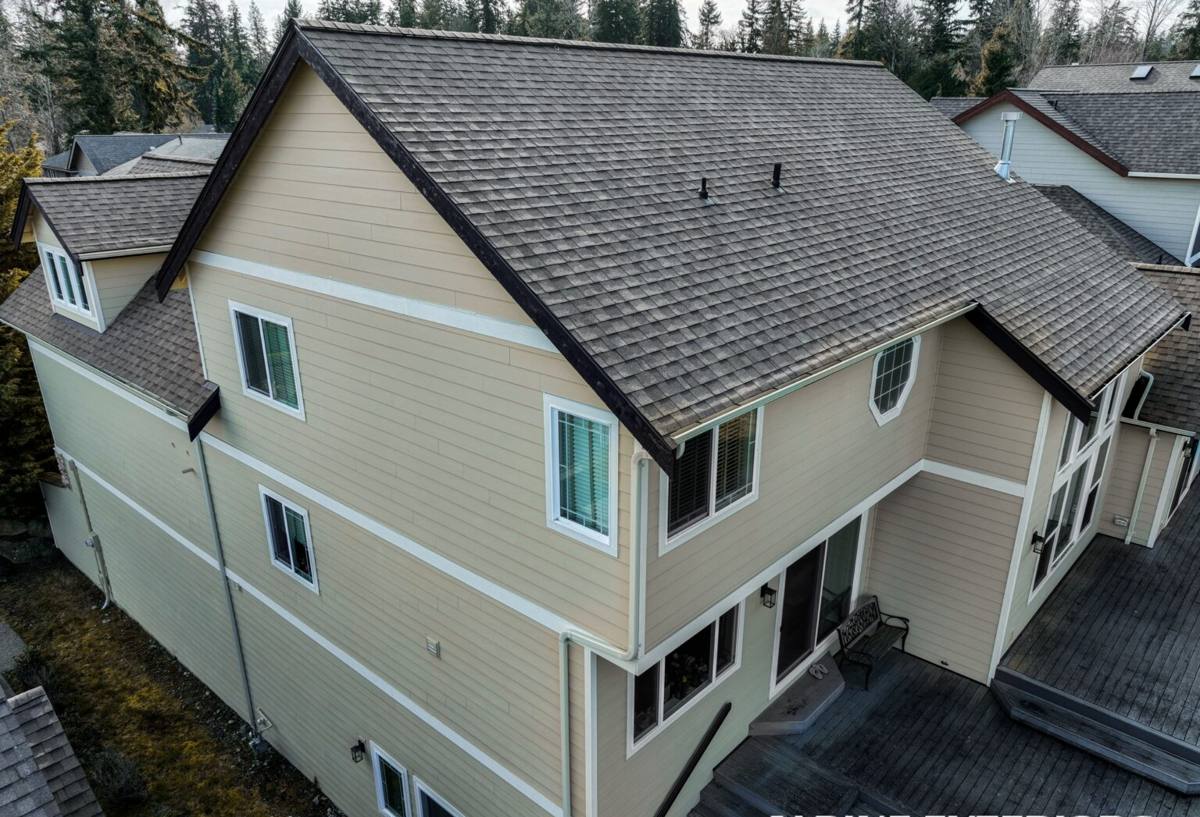
What Everson's Climate Does to a Deck
Moisture and Moss
Consistent dampness is the single biggest factor working against decks in this part of Whatcom County. Wood that stays wet for days at a time, especially in shaded or low-airflow areas, starts to grow moss and algae on the surface long before rot sets into the structure underneath. That green film isn't just an eyesore — it holds moisture against the wood and makes the surface slick and dangerous underfoot, especially on stairs.
Hidden Rot at the Connection Points
The parts of a deck most likely to fail aren't the ones you can see easily. Ledger boards (where the deck attaches to the house), post bases where wood meets concrete or ground, and joist hangers all trap moisture against fasteners and end grain. End grain absorbs water far faster than the face of a board, so a deck can look fine on top while the framing underneath is quietly rotting.
Freeze-Thaw and Seasonal Movement
Whatcom County doesn't get brutal winters, but it does get enough freeze-thaw cycling to widen small cracks in wood and concrete footings over a few seasons. Combined with wet-dry swelling as boards absorb rain and then dry out, fasteners work loose and boards cup or warp faster than they would in a drier climate.
Signs Your Everson Deck Needs Repair
Most deck problems give warning signs well before they become a safety issue. Worth checking for:
- Soft, spongy, or dark-stained spots on decking boards, stair treads, or the ledger board
- Visible gaps opening up between the deck and the house at the ledger connection
- Wobbly or loose railings, or posts that flex when pushed
- Fasteners that are rusted, popped up, or leaving dark streaks in the wood
- Standing water or slow drainage after rain, especially near the house
- Persistent moss or green algae that comes right back after cleaning
- Stairs that feel bouncy or uneven
- Visible daylight or gaps where support posts meet their concrete footings
Any one of these on its own might be minor. Several together, especially near the ledger or stair stringers, usually means it's time for a proper inspection rather than another round of surface cleaning.
What a Correct Deck Repair Job Involves
Inspection Before Anything Else
We start by getting under the deck and checking framing, not just walking the surface. A screwdriver test on the ledger, joists, and posts tells us far more than a visual check alone — sound wood resists the point, rotted wood gives way. We also check the ledger flashing, since a poorly flashed ledger board is the most common source of hidden structural rot we see on older decks in this area.
Structural Repairs Come First
If joists, the ledger, or posts have rot, that gets addressed before any cosmetic work happens. This can mean sistering a new joist alongside a compromised one, replacing a rotted post and its footing, re-flashing the ledger connection properly with house-wrap and flashing tape, or upgrading undersized or corroded joist hangers to code-rated hardware. Skipping this step and just replacing the deck boards on top of failing framing is the single most common shortcut we see, and it leaves the real problem in place.
Decking, Railings, and Fasteners
Once the frame is sound, damaged decking boards get replaced, railings get re-secured or rebuilt to current safety standards, and fasteners get upgraded to corrosion-resistant hardware suited to the wood or composite in use. Mismatched or uncoated fasteners are a quiet cause of premature failure — they corrode faster in our damp climate and stain the wood around them.
Drainage and Long-Term Protection
A repair isn't finished until we've looked at why the damage happened in the first place. That might mean adjusting board spacing for better airflow, correcting a slope issue that was trapping water, or making sure gutters and downspouts near the deck aren't dumping extra water onto it. Fixing the symptom without addressing the cause just means doing the same repair again in a few years.
Repair or Replace? What We Actually Weigh
Not every deck problem calls for a full rebuild, and not every deck is worth patching. We look at the extent and location of damage, the age of the structure, and whether the framing underneath is still sound.
| Factor | Leans Toward Repair | Leans Toward Replacement |
|---|---|---|
| Framing condition | Joists and posts are structurally sound | Rot has spread through multiple structural members |
| Age of deck | Under 15-20 years, built to reasonable standards | Older deck, outdated construction methods or hardware |
| Extent of damage | Isolated to a few boards, one post, or the ledger | Widespread rot, warping, or fastener failure |
| Code compliance | Railings and stairs already meet current safety standards | Railing height, spacing, or footings don't meet code |
| Cost proportion | Repair cost is well under replacement cost | Repairs would approach or exceed rebuild cost |
As a rough guide, a handful of rotted boards or a single post repair might run a few hundred dollars, while addressing a compromised ledger or multiple framing members climbs into the low thousands. A full rebuild is its own separate conversation and cost range. We'll always tell you honestly which side of that line your deck falls on rather than pushing a bigger job than the situation calls for.
Our Deck Repair Process
- On-site inspection. We check the deck surface, framing, ledger connection, posts, and footings, and take note of drainage patterns and moisture sources.
- Honest assessment. We walk you through what we found, what's structural versus cosmetic, and what your realistic options are — repair, partial rebuild, or full replacement.
- Written scope and estimate. You get a clear plan of what will be done, in what order, and why, before any work starts.
- Repair work. Structural issues are corrected first, followed by decking, railings, and hardware upgrades as needed.
- Cleanup and final check. We clear debris, check that railings and stairs are solid, and confirm drainage is working as intended.
Materials: What We Use and Why
For framing repairs, we use pressure-treated lumber rated for ground contact where it's in contact with posts or footings, along with corrosion-resistant fasteners and code-rated structural hardware — not general-purpose screws or nails that will corrode faster in our wet climate. For decking surfaces, both wood and composite have a place depending on the homeowner's priorities.
| Wood Decking | Composite Decking | |
|---|---|---|
| Upfront cost | Lower | Higher |
| Maintenance | Needs periodic cleaning, sealing, and moss treatment | Lower maintenance, occasional cleaning |
| Moisture behavior | Absorbs water; needs sealing to resist rot and moss | Resists rot; some products can retain surface moisture if not designed for drainage |
| Repair approach | Individual boards can be replaced easily and matched over time | Boards can be replaced, though older discontinued colors may not match exactly |
We don't push one material over the other as universally "better" — we lay out the maintenance and moisture trade-offs honestly so the decision fits your budget and how much upkeep you want to do. What matters more than the decking material, in this climate, is getting the framing, flashing, and drainage right underneath it. A deck with excellent decking but a poorly flashed ledger will still fail early.
Why Hiring a Crew That Already Works in Everson Matters
Deck repair here isn't identical to deck repair in a dry climate, and it isn't identical to repair on the immediate Whatcom County coastline either. A crew that regularly works Everson and the surrounding area knows what moisture patterns look like in this specific mix of river-valley humidity and regional marine air, has a feel for how local moss and algae behave on wood versus composite, and understands what Whatcom County's permitting process expects for structural deck work. That familiarity means fewer surprises once we're under the deck, and a repair plan that's realistic for how this climate actually treats a deck over the following years — not a generic checklist.
Get a Free, No-Pressure Estimate
If your deck in Everson has soft spots, loose railings, a ledger that looks questionable, or moss that keeps coming back no matter how often it's cleaned, it's worth getting a straight answer on what's actually going on underneath. Fill out the form below and we'll set up a time to take a look, tell you honestly what we find, and give you a clear estimate with no pressure to commit to more than the deck actually needs.