 Blaine Siding
 Point Roberts Decks Face a Tougher Climate Than Most of Whatcom County
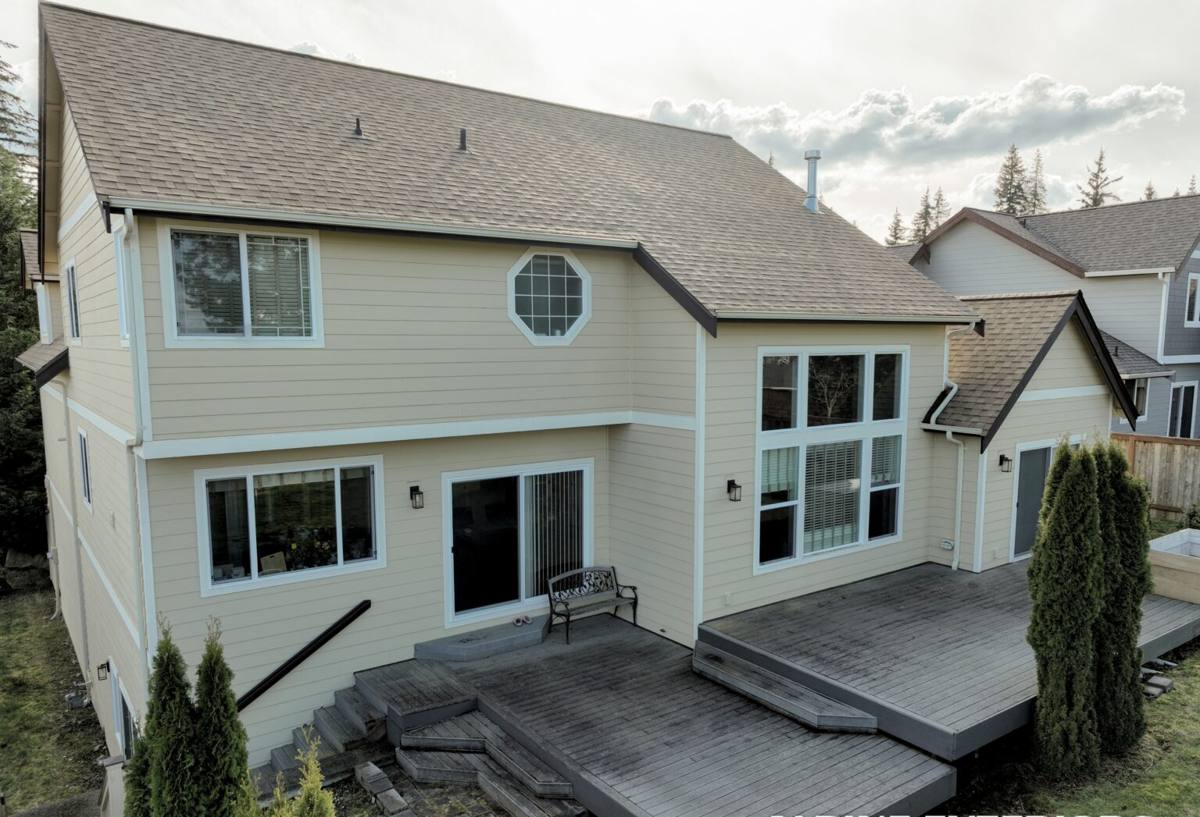
Point Roberts sits out on its own point of land, surrounded by water on three sides, which means homes here catch more salt-laden air and wind-driven rain than properties even a few miles inland in Blaine. That constant exposure changes how a deck ages. Fasteners corrode faster. Wood grain opens up and takes on water at the end grain and around every screw hole. And because the area stays damp and shaded for long stretches of the year, moss and algae get a foothold on decking boards and stair treads well before a homeowner notices any structural problem underneath.
We've repaired enough decks out here to know the pattern: the damage that actually matters is rarely the part that looks bad. Surface graying and moss are cosmetic. The real risk is hidden at the ledger board connection, inside post bases, and at fastener heads that have been quietly rusting under a coat of algae for two or three winters. A proper repair starts by separating the two.
Why Salt Air, Driving Rain, and Moss Season Matter for a Deck Specifically
Salt Air Accelerates Metal Corrosion
Standard electro-galvanized screws and nails hold up fine in a dry inland yard. Near the water, that same hardware can start rusting within a few seasons. Once a fastener corrodes, it loses grip in the wood and can streak the surrounding boards with rust stains — and a weakened fastener at a joist hanger or ledger connection is a structural issue, not a cosmetic one.
Driving Rain Finds Every Gap
Wind off the water doesn't just fall straight down — it drives rain sideways into ledger flashing, stair stringers, and any spot where two pieces of decking material meet. Small gaps that would stay dry in a calmer climate become entry points for water here, which is why so much rot in this area starts at connections rather than in the middle of a flat board.
Moss Season Traps Moisture Against Wood
Whatcom County's wet stretch runs long, and Point Roberts, being right on the water, sees moss and algae establish earlier in fall and hang on later into spring than inland yards. Moss holds moisture directly against the wood surface for weeks at a time. On a deck, that means the boards underneath a moss patch are staying wet far longer than the rest of the structure, which is exactly the condition that leads to soft, spongy wood.
The Deck Problems We See Most Often Here
Not every deck issue needs the same fix, and knowing which is which is most of the job. Here's how the common problems and their causes break down:
| Deck Component | What Causes It Here | Typical Fix |
|---|---|---|
| Ledger board connection | Driving rain behind poor or missing flashing | Pull decking back, inspect framing, reflash properly, replace rotted framing |
| Fasteners and hardware | Salt air corrosion on standard-grade screws/nails | Replace with stainless or coated exterior-rated hardware |
| Decking surface (wood) | Prolonged moisture under moss/algae | Clean and treat if sound; replace boards where soft or delaminating |
| Stair stringers and treads | Standing water and moss buildup on horizontal surfaces | Replace compromised stringers; improve drainage and slope |
| Post bases and footings | Ground contact moisture, splash-back from grade | Raise posts off grade with proper post bases, replace decayed sections |
| Railings and guard posts | Loose connections from wood movement and fastener failure | Re-anchor to code, replace any compromised posts |
What a Proper Deck Repair Actually Involves
A repair that only addresses what's visible from the top of the deck tends to come back within a season or two. We approach it differently:
1. Inspection From Underneath
Most of the real story is below the decking, not on top of it. We check ledger board attachment, joist condition, post bases, and hardware condition before deciding what actually needs to happen.
2. Probe for Soft Wood, Not Just Look
Visual inspection alone misses early rot. We probe suspect areas — ledger boards, post bottoms, stair stringers — to find soft or spongy wood that still looks fine from a few feet away.
3. Fix the Water Path, Not Just the Symptom
If a repair doesn't correct the flashing detail or drainage issue that let water in, the same spot fails again. We treat the moisture source and the damaged material as one job.
4. Match Hardware to the Environment
Given the salt air here, we use fasteners and connectors rated for coastal or treated-lumber exposure rather than standard interior-grade hardware, even on repairs where only a few screws are being replaced.
5. Confirm Structural Connections Meet Code
Ledger attachment, guard post spacing, and stair stringer support all have code requirements. A repair is also a chance to bring an older connection up to current standard, especially on decks built before local code updates.
Repair or Replace? How to Think About It
Homeowners often assume a deck with visible problems needs full replacement. That's frequently not true — but sometimes it is. Here's the honest breakdown:
| Factor | Repair Usually Makes Sense | Replacement Usually Makes Sense |
|---|---|---|
| Framing condition | Joists and beams are sound; only isolated boards or hardware are failing | Rot has spread through multiple joists or the ledger connection |
| Age of structure | Deck is under 15-20 years old with localized damage | Deck is near or past typical service life for the material used |
| Extent of moss/water damage | Damage is limited to a few boards or one area (e.g., near a downspout) | Soft wood shows up in multiple, unrelated locations |
| Original construction quality | Built with adequate flashing and code-compliant connections | Missing ledger flashing or undersized framing from the start |
| Budget goals | Want to extend the deck's life a number of years at lower cost | Want to reset the maintenance clock and possibly upgrade materials |
Material Choices That Hold Up Better in This Climate
Whatever material a deck uses, the coastal conditions in Point Roberts push some choices ahead of others when we're doing repairs or replacing sections:
- Pressure-treated lumber remains a solid, economical choice for framing and structural repairs, provided fasteners and hardware are rated to match the treatment chemicals used.
- Cedar resists rot naturally and looks good, but it still needs regular cleaning and sealing here to keep moss from taking hold — it is not maintenance-free in this climate.
- Composite decking resists rot and doesn't need sealing, which cuts down on one category of maintenance, but it still needs periodic cleaning to keep algae and moss off the surface, and the substructure underneath still needs the same moisture protection as a wood deck.
- Fasteners and connectors matter as much as the decking material itself — we specify hardware rated for the type of treated lumber and coastal exposure involved rather than defaulting to whatever is cheapest.
We don't push one product line as a fix-all. Every material has a maintenance trade-off, and the honest answer depends on how much upkeep a homeowner wants to take on versus how much they want to spend up front.
A Homeowner's Deck Inspection Checklist
Between professional inspections, these checks take fifteen minutes and catch most problems early:
- Press on boards near the ledger board (where the deck meets the house) — any give or sponginess means moisture has gotten in
- Check for rust streaks below screw heads or metal connectors
- Look underneath the deck for daylight gaps at the ledger flashing after a rain
- Wiggle railing posts by hand — any movement at the base needs attention
- Scrape a small area of moss or algae and check whether the wood underneath feels soft
- Check post bases at ground level for standing water or soil buildup against the wood
- Look at stair stringers from underneath for cracking or dark, wet-looking wood
Why Hiring a Crew That Already Works in Point Roberts Matters
Point Roberts is a bit of an outlier logistically — it's part of Whatcom County, but reaching it by land means routing through Canada, which affects how contractors schedule visits, move materials, and plan multi-day jobs. A crew that doesn't already account for that tends to under-scope the trip, showing up without the right materials or hardware on hand and needing a second visit to finish simple repairs. We plan Point Roberts jobs knowing the drive and border crossing are part of the day, not an afterthought, so material lists get built right the first time and repairs get finished in the visits we've scheduled.
Familiarity with the area also means we're not guessing at what this climate does to a deck. We've seen how quickly moss establishes on north-facing stairs here, how fast standard fasteners corrode this close to the water, and which ledger flashing details actually keep driving rain out. That's the kind of knowledge that comes from doing the work in this specific area, not from a general repair checklist.
Getting Started
If your deck has soft spots, rust streaks, persistent moss, or just feels less solid than it used to, it's worth having someone look underneath before deciding whether you're looking at a repair or a bigger project. We offer free, no-pressure estimates for Point Roberts homeowners — just fill out the form below and we'll take a look.