 Blaine Siding
 Why Deck Replacement Works Differently Here Than in Drier Climates
A deck in Sumas doesn't fail the same way a deck fails in Arizona or Colorado. Out here, the enemy is moisture that never really goes away. Whatcom County gets long stretches of steady, driving rain, humidity that lingers into the shoulder seasons, and a moss season that can run from fall clear through spring. Add the salt-laden air that moves inland off the water on the west side of the county, and you've got a set of conditions that slowly work on wood, fasteners, and framing whether or not the deck ever "looks" wet on the surface.
That combination is why a deck that's only 12-15 years old around here often needs full replacement rather than a simple resurfacing. The boards on top might look fine from a distance, but the framing, ledger connection, and fasteners underneath have usually been absorbing water for years before anyone notices a problem.
Driving Rain and the Ledger Board
The single most common failure point on decks in this region is the ledger board — the piece that attaches the deck to the house. When rain comes in sideways during a windstorm, water gets driven behind poorly flashed ledger boards and sits there. Over time that hidden moisture rots the ledger, the rim joist behind it, and sometimes the wall sheathing itself. It's a slow, quiet failure that's often invisible until someone notices the deck has developed a slight sag or bounce near the house.
Moss, Algae, and Slippery Decking
The same damp, shaded conditions that grow moss on a roof will grow it on a deck, especially on the north side of a house or under trees. Moss and algae hold moisture against the decking surface, which accelerates rot in wood and can void warranties on some composite products if buildup isn't managed. It also makes the deck genuinely dangerous to walk on when wet — a real concern given how many wet mornings this area sees each year.
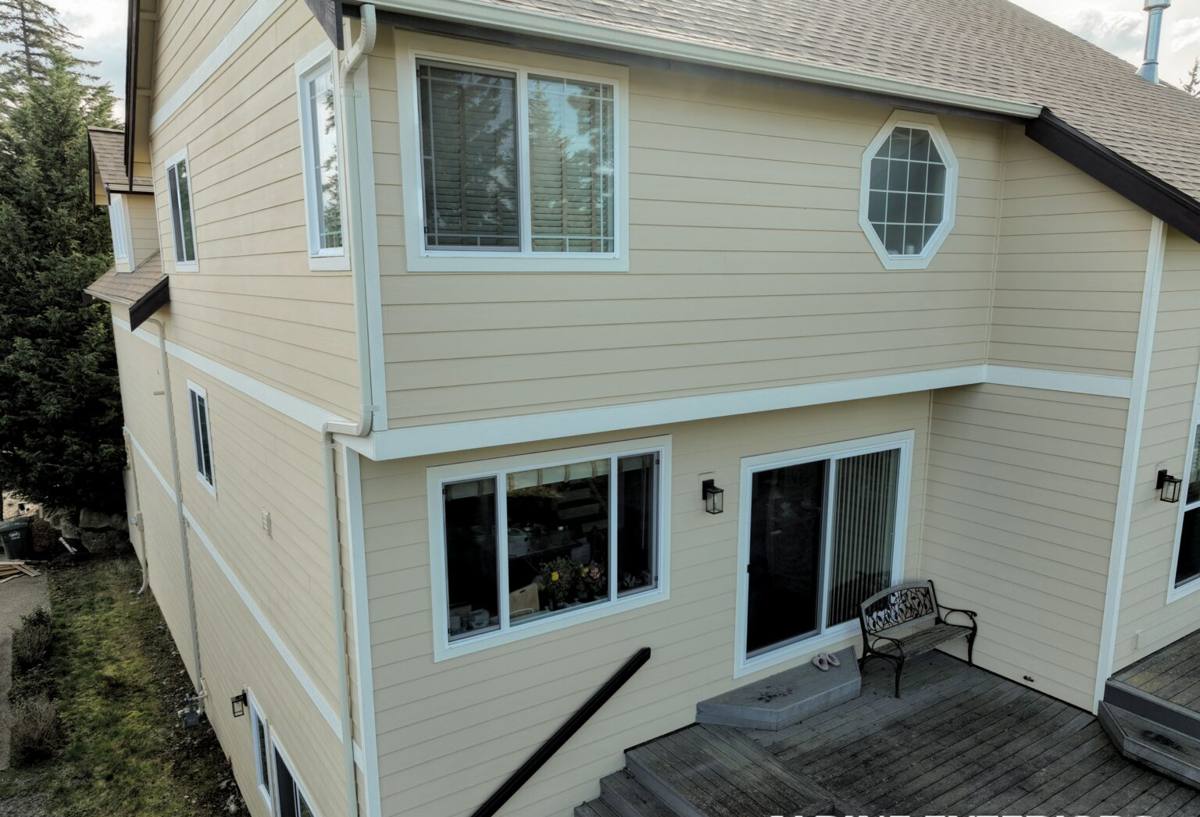
Signs a Deck Needs Replacing, Not Just Repair
Not every tired-looking deck needs to come out entirely. But there's a point where patching individual boards or sistering a joist here and there stops being a repair and starts being a way to delay an inevitable full rebuild. Here's what we look for when deciding which side of that line a deck falls on:
- Soft or spongy decking in more than one or two isolated spots
- Rot or discoloration at the ledger board where the deck meets the house
- Rust streaking or corroded fasteners, especially on older galvanized hardware
- Wobble or movement in the railing posts when pushed
- Gaps opening up between boards from years of swelling and shrinking
- Persistent moss or algae that returns within weeks of cleaning
- A support post sitting in or near standing water after rain
- Visible daylight or separation where the ledger meets the house wall
If you're seeing two or more of these, it's usually more cost-effective in the long run to replace than to keep chasing repairs on a structure that's already compromised underneath.
What a Correct Deck Replacement Actually Involves
A deck replacement is more than pulling off old boards and screwing down new ones. Done right, it's a structural project, and in a climate like this the parts nobody sees matter as much as the parts you walk on.
Framing and Footings
We check footing depth and condition before assuming the existing substructure can simply be reused. Whatcom County's freeze-thaw cycles are mild compared to inland climates, but saturated soil around undersized or shallow footings still shifts over time, and that movement shows up as a deck that's no longer level. Any footing that's cracked, heaved, or undersized for the new deck's load gets addressed, not built over.
Ledger Attachment and Flashing
Given how much ledger board failure we see, this is where we spend the most attention. That means proper structural fasteners (not just deck screws), a code-compliant flashing detail that sheds water away from the house rather than behind it, and a moisture barrier between the ledger and the wall sheathing. This single detail is the difference between a deck that lasts and one that rots from the inside out again in another decade.
Decking Material and Fastening
Board choice matters, but so does how it's installed. Hidden fastener systems, correct board spacing for drainage and seasonal movement, and proper ventilation underneath the deck all affect how well the new surface handles this region's rain and moss cycle.
Comparing Decking Materials for This Climate
There's no single "right" material for every homeowner — budget, maintenance tolerance, and how long you plan to stay in the home all factor in. Here's how the common options actually perform under Whatcom County conditions:
| Material | Moisture & Moss Resistance | Maintenance | Typical Lifespan |
|---|---|---|---|
| Pressure-treated wood | Fair — needs sealing to perform well | Annual cleaning and periodic re-sealing | 10-15 years before major issues |
| Cedar | Good natural resistance, but surface still needs care | Regular cleaning, occasional staining | 15-20 years with upkeep |
| Capped composite | Very good — resists moisture absorption | Periodic washing to prevent moss film | 25-30+ years |
| PVC / cellular decking | Excellent — doesn't absorb water at all | Occasional washing only | 30+ years |
Our standard for this region is that whatever material a homeowner chooses, it has to be installed with drainage and ventilation as a priority. A premium composite board installed over a poorly ventilated frame will still trap moisture and grow moss just as fast as cheap lumber — the material only performs as well as the structure underneath it.
What Affects the Cost of a Deck Replacement
Every deck is different, so we don't quote sight-unseen numbers, but the same handful of factors drive cost on nearly every project we look at in this area:
- Square footage and overall footprint of the deck
- Height above grade (railings and stairs add cost)
- Whether footings and framing can be reused or need full replacement
- Decking material selected — wood, cedar, composite, or PVC
- Ledger flashing and any water damage found once old decking is removed
- Railing style and any built-in features like benches or planters
Because a lot of the real cost drivers are hidden until the old decking comes up, we're upfront that an initial estimate can shift slightly once we see the condition of the framing and ledger connection underneath.
Our Deck Replacement Process
We keep the process straightforward and honest from the first visit through final walkthrough:
- On-site evaluation of the existing deck, framing, footings, and ledger connection
- Written estimate covering material options and any structural work needed
- Careful tear-off and disposal of the old deck
- Inspection and, if needed, repair or replacement of footings and framing
- Proper ledger flashing and reattachment to the house
- Installation of new decking, railing, and stairs to code
- Final walkthrough so you know exactly what was done and what maintenance, if any, the new deck needs
We don't cover up a bad ledger connection or undersized footing just to finish faster — if we find it, we tell you before we build over it.
Why It Matters That We Already Work in This Area
A crew that only occasionally works this far north in Whatcom County can miss things that are obvious to someone who sees the same conditions week after week — how a particular yard drains after a heavy rain, how much shade keeps a deck damp longer than a homeowner expects, or how far the moss season really extends compared to what the calendar suggests. We work across the wider Blaine area, including communities like Sumas, so we're used to building decks that hold up to driving rain, salt-influenced air, and a moss season that doesn't take much of a break. That familiarity shows up in the details — flashing choices, fastener selection, ventilation gaps — that separate a deck that lasts three decades from one that needs attention again in ten years.
We're also a phone call away if something needs a look after the fact, which matters more than it sounds like when you're dealing with a contractor rather than someone passing through for a one-off job.
Maintaining Your New Deck Once It's Installed
Even the best-installed deck benefits from a little seasonal attention in this climate. A quick rinse or light scrub before moss gets a foothold in the fall, keeping gutters and downspouts clear so runoff doesn't dump directly onto or near the deck, and an annual look at the ledger flashing and fastener condition will keep small issues from becoming expensive ones. We're happy to walk you through exactly what your specific material and design need — a low-maintenance PVC deck and a cedar deck have very different upkeep schedules.
If your current deck is showing its age, or you just want an honest opinion on whether it's a repair job or a replacement, we're glad to come take a look. We offer free, no-pressure estimates — fill out the form below and we'll get in touch.